
JOIN the AFICIONADOS
Get the insider news and lowdown on what we've been up to, where we've been, and who we've met along the way. Be the first to discover new places and get the scoop on our favourites.

Look closely at the boutique guesthouses and design hotels in The Aficionados collection and a pattern surfaces. A remarkable number of them were dreamt up, drawn, restored and run by women. Some inherited a building and a valley's worth of memory with it. Some arrived from other lives entirely, in engineering, finance, costume design, public relations, and taught themselves the trade on the job. Some are designers first and hoteliers second, which shows in every room. What they share is the thing we look for before anything else: a creative thread running through a place, and interiors made rather than specified.
This is Rebel Femmes, our roll call of them. Read on for the women moving things forward in design, interiors, architecture, wellness, scent and green-filled guesthouses, in Andorra, Austria, Belgium, Germany, Greece, Italy, Portugal and Switzerland.
Four of these women were handed a building. What they did next is the interesting part.
At Haus Hirt in Bad Gastein, Evelyn Ikrath grew up in the house she now runs. The main building was designed in 1924 by the architect Heinrich Hirt as a private spa villa, and by the 1930s it was taking in Thomas Mann and Stefan Zweig. Evelyn's parents bought it in 1967; she took it over in 2000 with her husband Ike, an architect, and the two of them have been quietly reordering Bad Gastein's idea of itself ever since. She is Alpine dynamite, a yogi and a dreamer, and her energy is audible in every corner of the place. Warmth, whimsy and charisma reign, and hospitality feels genuinely alive.
Higher up and further east, in the Zillertal, Brandleit has been in the Gschößer family for four generations, which makes it a good deal more than a holiday let. The family are patrons of local producers and keepers of a way of life particular to the valley. Silvia Gschößer renovated the chalet with carefully chosen materials and turned it into a retreat that still reads as somebody's family house. "Brandleit has always been a magical place for me," she says. "I do not know what fascinates me most. I associate Brandleit with wonderful childhood memories. As a family we spent many busy but at the same time wonderful and carefree hours there. And then the memories of my grandfather Peter, who spent so much time in Brandleit. Now I finally understand why he never got bored all those years without television and internet."
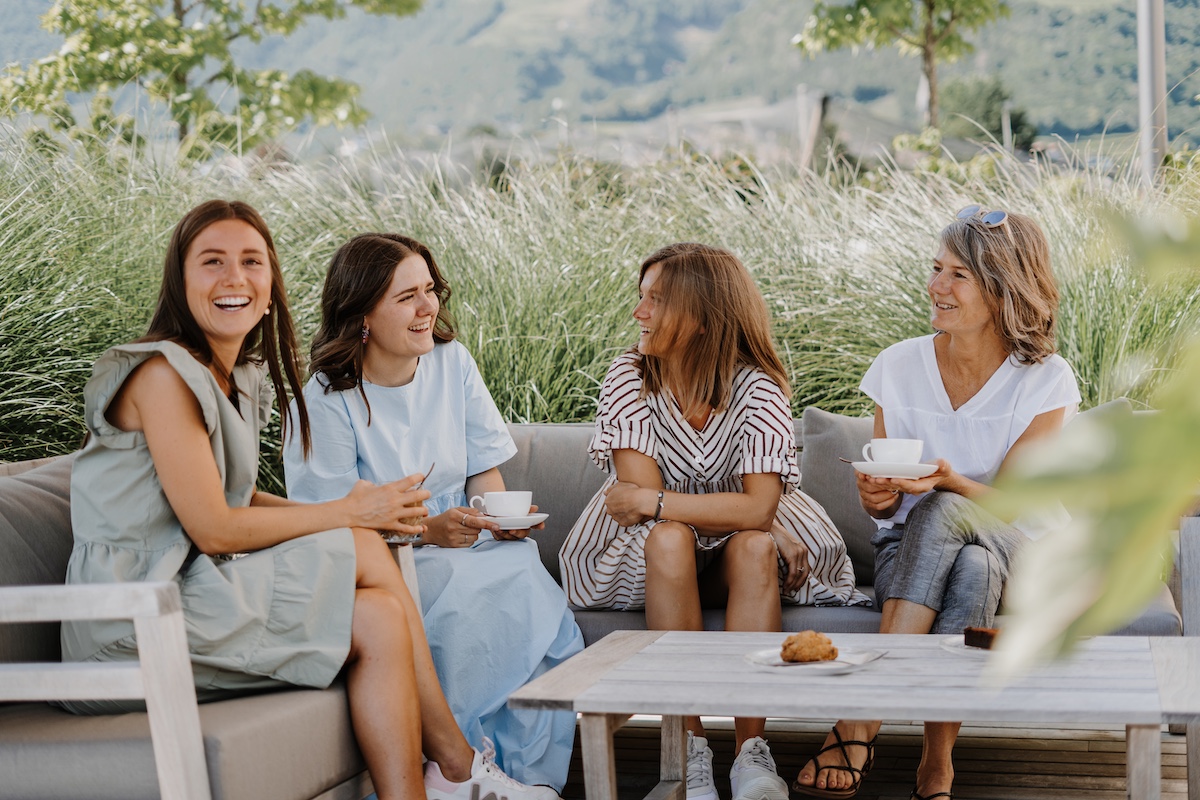
Over the border in Lagundo, above Merano, VillaVerde is run by three daughters, Judith, Lea and Paula, alongside the matriarch Heidi. Between them they have made a green idyll of the place: wild swims, coffee and cake in the afternoon, and interiors of serious calm. Four women, one house, and a rhythm that only really works when the people running it have known each other all their lives.
And at Ansitz Steinbock in Villandro, Elisabeth Rabensteiner carries a South Tyrolean hospitality legacy into a fifteenth-century castle. The Gothic grandeur has been kept intact, frescoed walls, ancient spruce floors, loam-plastered rooms, and then given deep tubs, private saunas and bespoke furniture. History and refined comfort share the same rooms without either one having to give way.
Then there are the ones who came to hotels sideways, and are frequently the better for it.
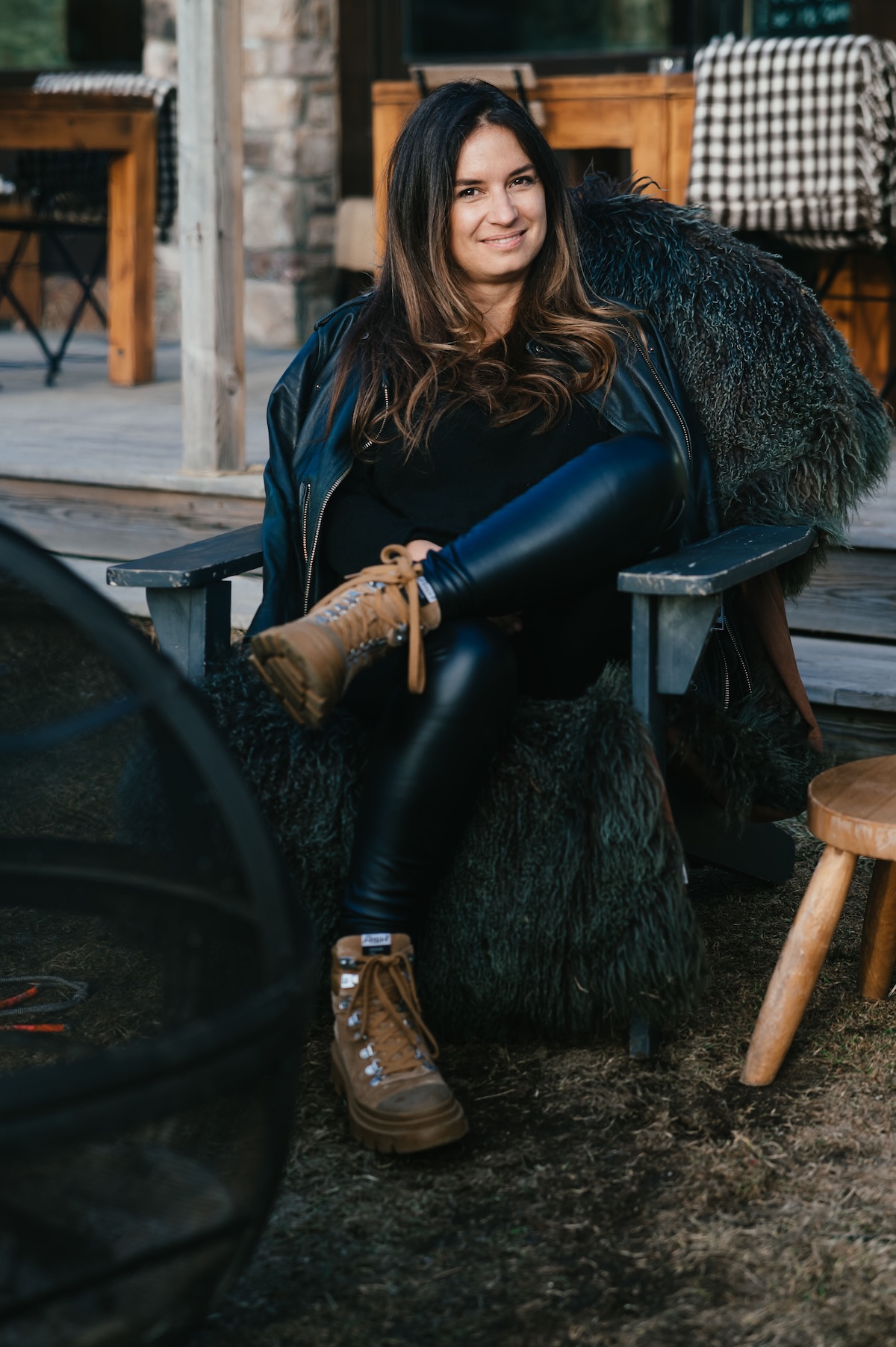
Prisca Llagostera was born in Andorra to an English mother and a Spanish father, and filled her childhood diaries with drawings of hotels from about the age of eight. She worked VIP events around the World Cup and the Olympics in London and New York, learning standards and long hours, before taking her first hospitality job managing an ice hotel: five bedrooms, built every December, melted every April. When a business partner queried the wisdom of a small property at the end of a snowed-off valley, she pointed out that she had been running an igloo. The name came later, read off a wine label in a bar on the island of Chiloé while sheltering from Chilean rain, describing the black sheep as the one that stands apart from the flock and goes its own way. L'Ovella Negra Mountain Lodge opened in the Vall d'Incles in 2018. She is generally in a black leather jacket, of which she owns several, and now divides her year between Andorra and Kokos Huis, her sibling property in the Swartland, South Africa.
In Porto, B28 is the work of Alida Jamal and her husband Miguel, both raised in the city's cobbled lanes and quietly determined to return something of it to itself. Alida trained in financial management and arrived in hospitality without a day of formal sector experience, but with an almost monastic design instinct. Her brief was plainly stated: keep the building's identity, respect its bones, fold modern comfort in without raising its voice. Six years of restoration and a Távora-led rehabilitation later, the building agrees. On the ground floor she runs a creative salon and pop-up concept store stocking Portuguese craft, organic wine, design pieces by Portuguese makers and books, with twice-monthly supper clubs, visiting chefs, yoga, workshops and coffee for anyone who wanders in.
Mouche Van Hool came to Antwerp hotels from public relations and advertising, bought a pair of adjoining sixteenth-century townhouses with her husband and opened Hotel Julien in 2004, effectively starting the city's boutique scene. Her ambition was always simple: a place that feels like staying with friends, lived-in and stylish, wrapped in Antwerp's quiet cultural pull. The 2025 renovation, with interior designer Bea Mombaers and architect Peter Ivens, took the house back towards that original idea rather than away from it. She is also behind August, the former Augustinian convent reworked by Vincent Van Duysen.
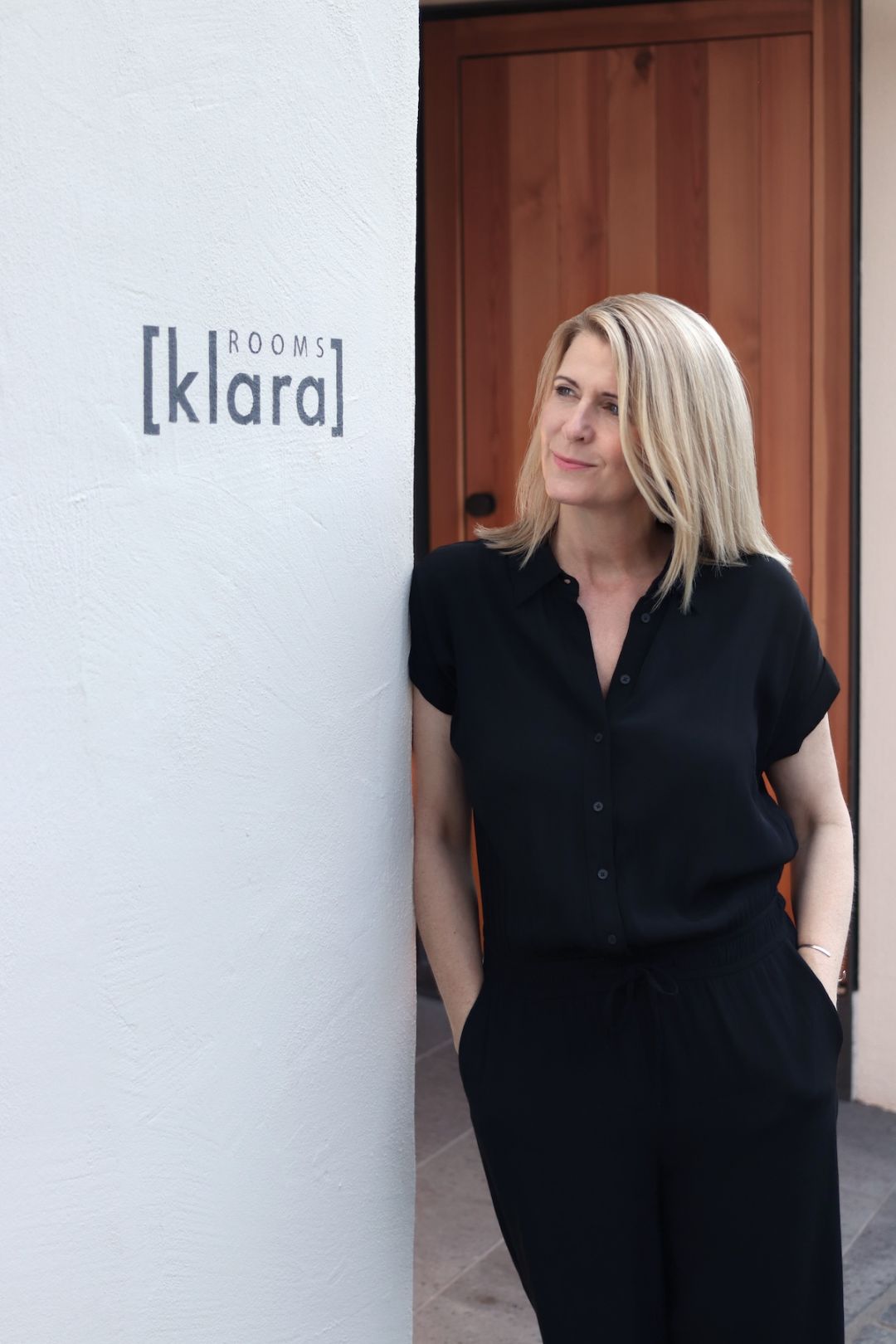
On the Middle Moselle, Klara Rooms is a family affair. Ramona Ludwig lives with her family in the house directly across the road from the 1723 slate house she spent years bringing back from decades of emptiness. Some people are born versed in the language of design, and Ramona's instinct for tactile style, for the right material, the right proportion, the moment when a room becomes a room, began in childhood, reconfiguring spaces and staging corners long before she had a building to renovate.
And on Koufonisia, Anita Papantoniou had a global career in tourism, fashion, design and media before turning hotelier. Today she is a mother and a charismatic host who, with her husband and family, built the hotel they would want to travel to themselves. Éros Kéros is their home on the island, and Anita, who speaks fluent English, Italian and French alongside Greek, is the ideal ambassador for it. Consider yourself warned about her affection for the slow pace of island life. It is contagious.
Some of these women are designers who eventually wanted a building of their own to think in.
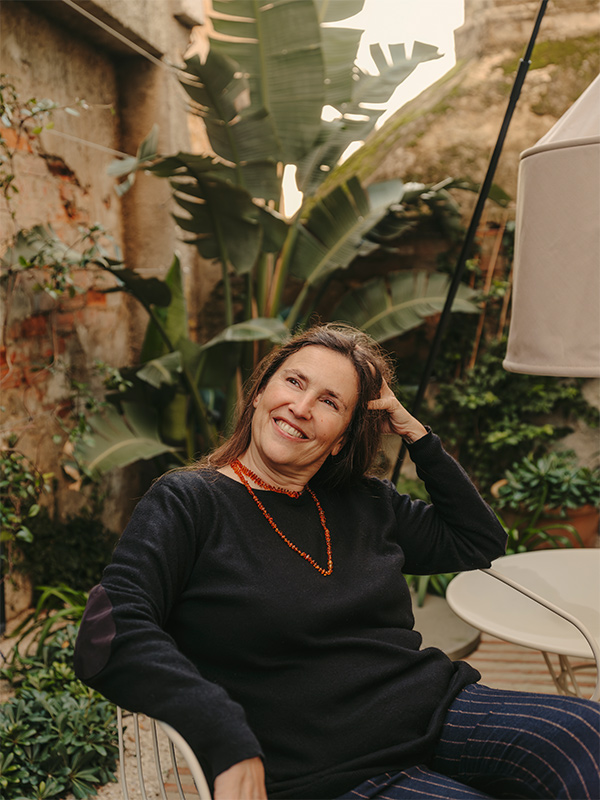
Ruth Kramer distilled her creative talents at Brücke 49 in the tiny enclave of Vals, a guesthouse in buildings dating to 1770 where Swiss and Nordic accents sit together against chalked linens, artworks and furniture icons. Her original manifesto, to listen to what the house wanted to be, has served her well, and it has since travelled: the same hand shaped Wildland's Highland houses, from Lundies House to Kyle House, where her freestanding bath frames Ben Loyal. She sits in our Scotland guide as much as in the Grisons.
Natalia Tubella fuses minimalist elegance with Portuguese craftsmanship at Pátio do Tijolo, on a quiet calçada between Bairro Alto and Príncipe Real. Natural materials, curated style and a Zen-inflected calm meet in a guesthouse built on a former timber and woodwork yard, and her attention to sustainability, cultural depth and the personal touch marks a designer connected to both craft and conscience.
At Das Wanda in Caldaro, Verena Huf's modernist vision wraps a design-led refuge in vineyards and Dolomite drama: wet-clay walls, raw timber and moody stone against sunlit palms and reflective glass. Earthy texture, slick minimalism and South Tyrolean soul in the same building, tuned to a grown-up kind of calm.
Ladina Florineth's Villa Flor in the Upper Engadin is closer to an artist's salon than a hotel, an intimate retreat where Art Nouveau meets mid-century cool and colour, pattern and personality run the show. It makes a bold, off-radar counterpoint to the polish of St. Moritz twenty minutes down the valley.
In Tuscany, Colle ai Lecci is the work of architect and designer Nina Mair and Ana Turcan, who spent years working, creating and thinking together at the award-winning Studio Nina Mair in Innsbruck before turning their energy on the revival of an old farmhouse. Their friendship grew out of a shared passion for architecture, and the hotel out of a shared entrepreneurial drive and a clear sense of hospitality. Both believe a place should do more than function: it should welcome, inspire and stay with you. Colle ai Lecci draws on Nina's early architectural studies at Florence's Accademia di Belle Arti, and that grounding in the cradle of Western art history shows in a house designed for dreamers, where creative experiments and real encounters are held inside calm interiors that defer to the landscape.
Three of the houses here run on two people rather than one.
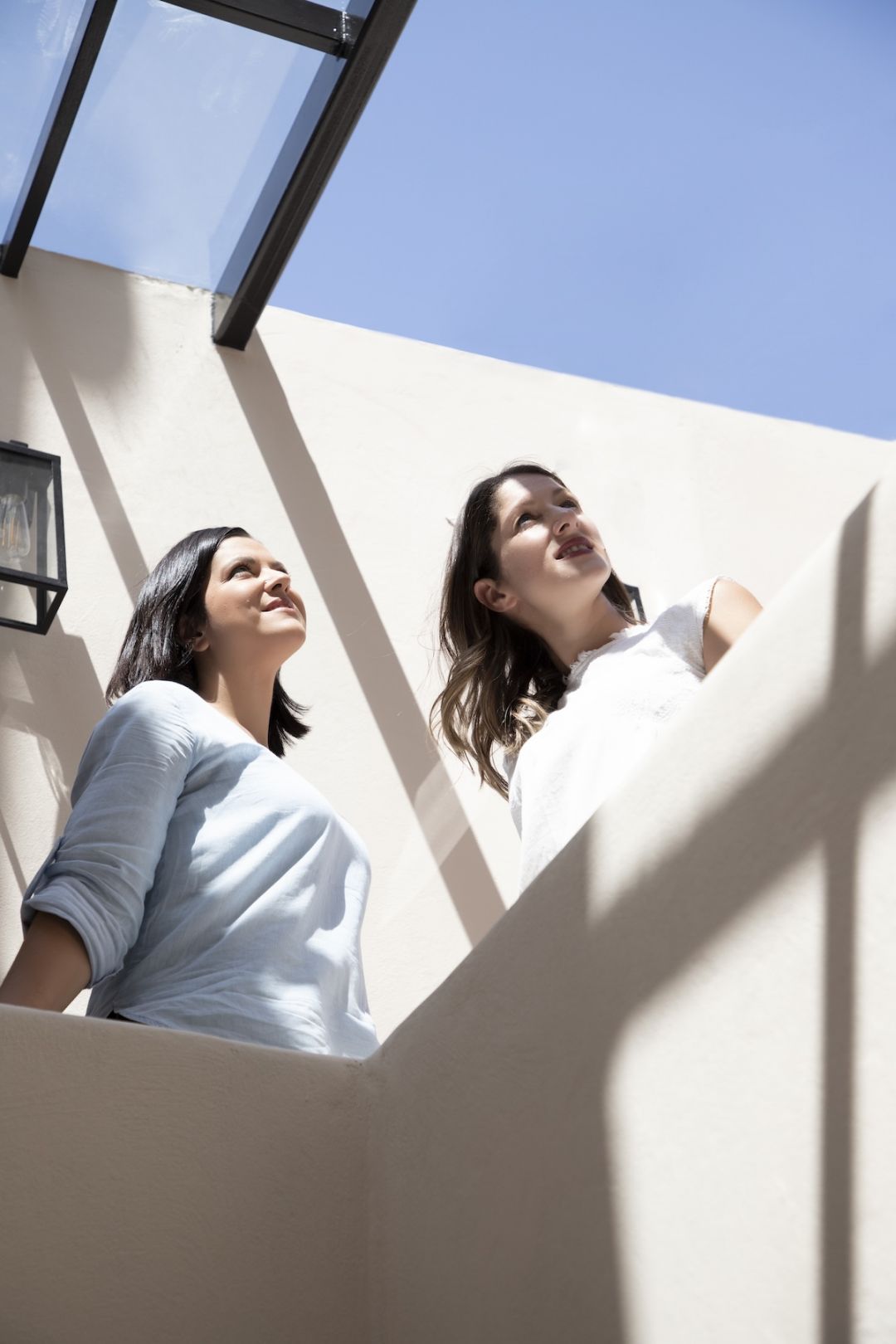
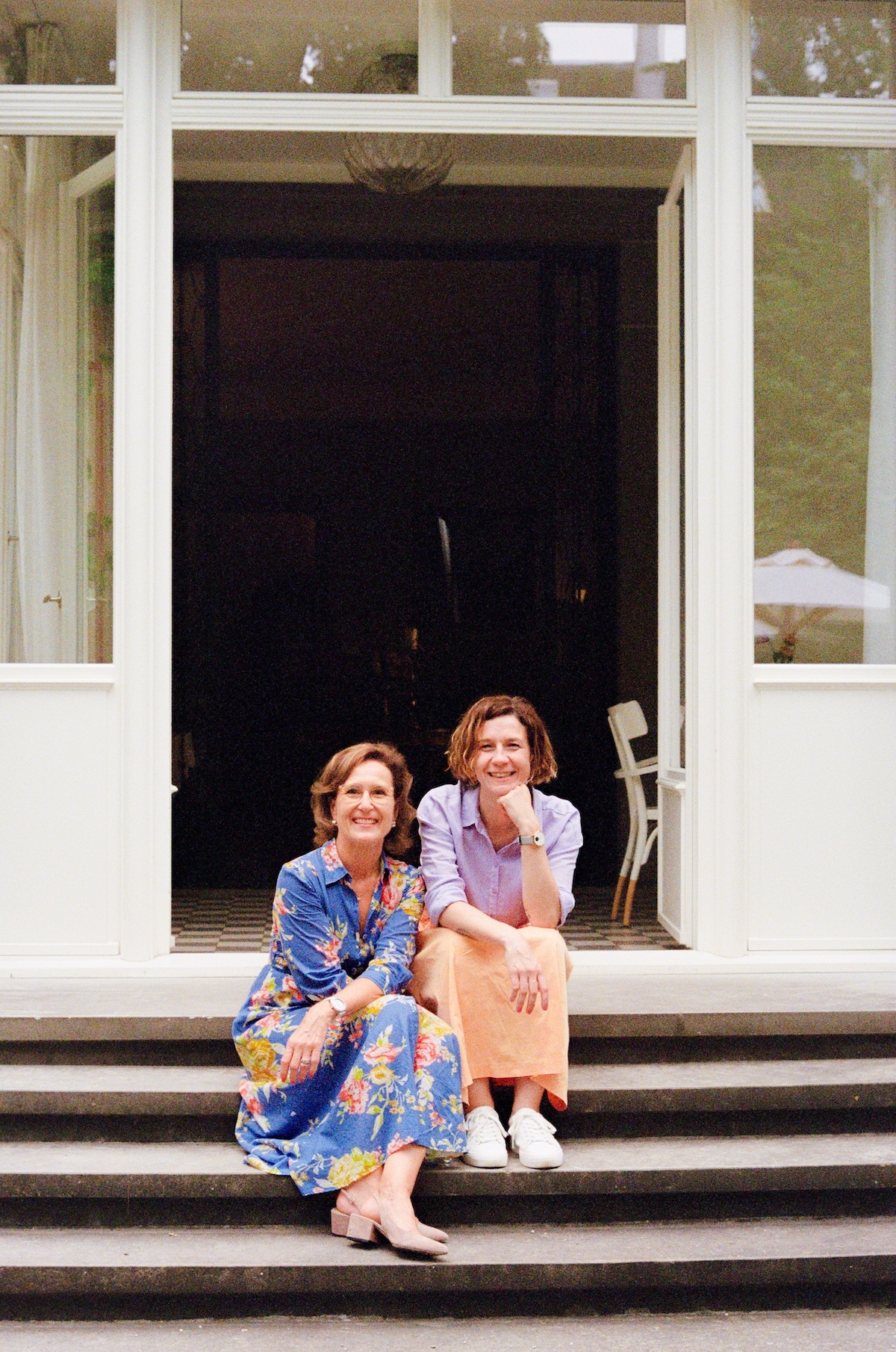
At Signau House & Garden, Regula Brucker and Tina Wiemes preside over a 1912 patrician villa in Zurich's Neumünsterquartier, nine rooms of Jugendstil restraint with a grand salon, a Salon Bleu lounge lifted from a 1920s novella, a glassy breakfast veranda and an in-house cinema, a nod to the years the building served as the Swiss bureau of Universal Studios. Both come from luxury and lifestyle hotels, and the polish shows as ease rather than formality. Their guest list runs to journalists, musicians, entrepreneurs and the neighbour who grew up three streets away.
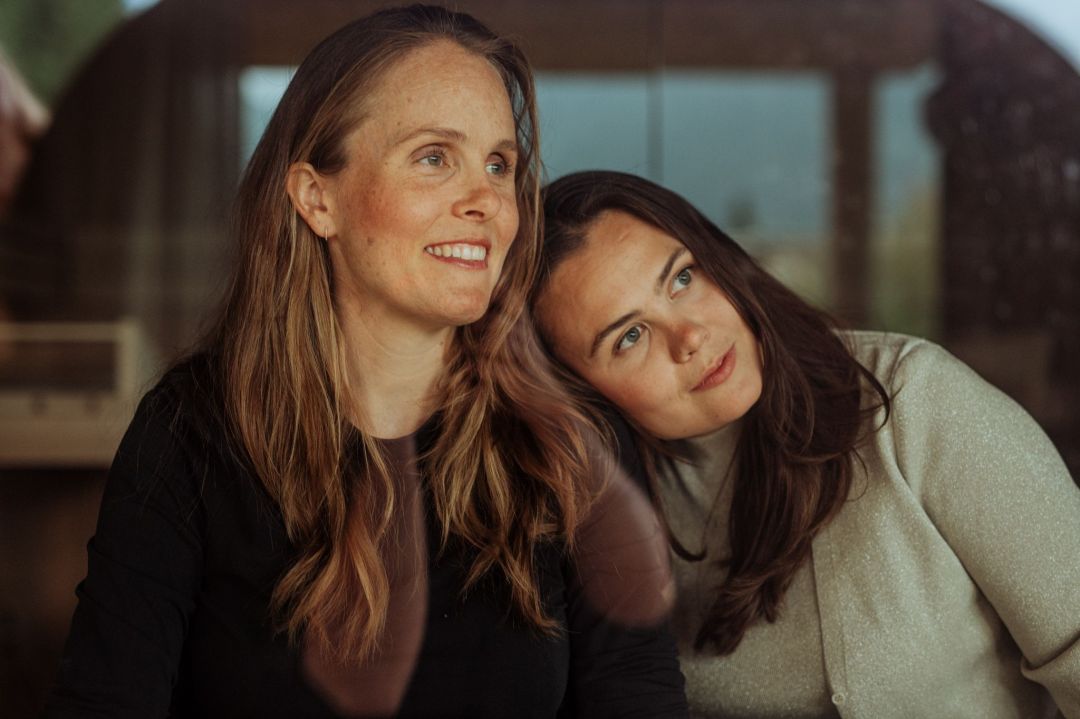
A sibling bond built Haus Aerli in Ehrwald, where sisters Sarah and Emily Schwarz set out to make a new kind of Alpine stay, antlers and fustiness gone, replaced by something pared back and modern. Their thinking extends past the aesthetic to how they want guests to spend the day. "We focused on details and left out unimportant factors like lavish decorations and TVs," Emily says. "Our goal was to create a small haven of peace that we ourselves would enjoy." They have comfortably exceeded it.
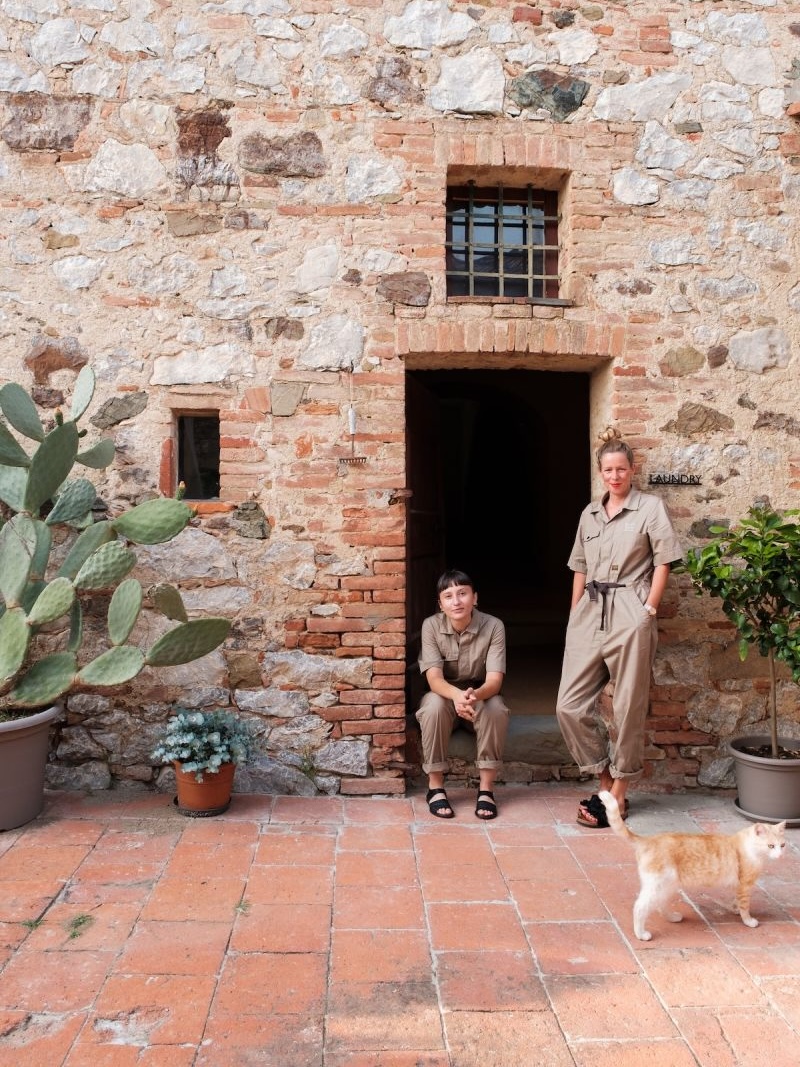
And in Athens, soul sisters Natalia and Margarita, co-founders of Monsieur Didot, met on their first day at university studying civil engineering, bonding over music and theatre, activism and conversation that refused to end. With ideals like those in common, a project combining what they loved most, Athens, people, ideas, books, art and everything true and authentic, was only ever a matter of time.
Eighteen women, fifteen houses, eight countries, and no shared house style whatsoever. A Byzantine-boned Antwerp townhouse, a melted-and-rebuilt ice hotel's spiritual successor at the top of an Andorran valley, a Moselle slate house that stood empty for thirty years, a Tuscan farmhouse, a Cycladic family home, a Zurich villa with a cinema in it. What connects them is the willingness to make a decision and stand behind it, and to put a personal hand on a building rather than a scheme. That is what we mean by character over category, and it is why these particular houses keep their guests coming back.
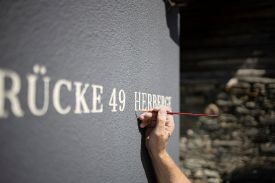
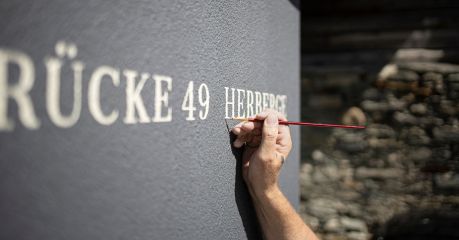
Ruth’s original manifesto to listen to what the house wanted to be has served her well. Reinvented for the curious traveller, Brücke 49 has been welcoming guests for nearly a decade.
read more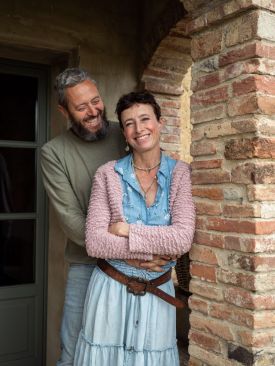
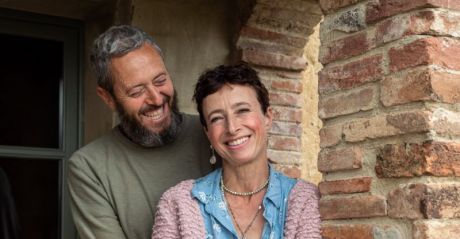
As the property neared finishing, Fabio took the decision to keep the garden wild and naturally indigenous – where the boundaries between garden and rural countryside were blurred.
read more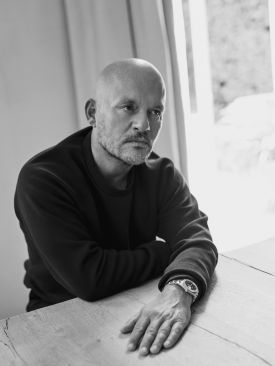
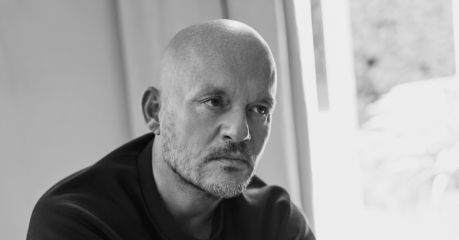
The master of reductive design, Belgium architect and interior designer Vincent Van Duysen is a behemoth legend of pared-back aesthetic and minimalist style over a spectrum of design disciplines, including furniture, textiles, and lighting.
read more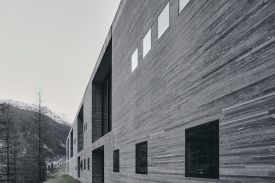
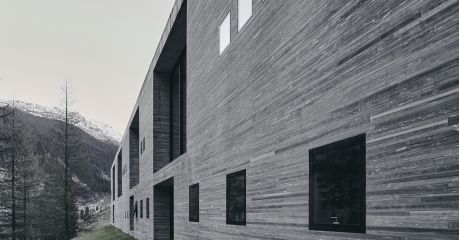
This tiny mountain hamlet is home to some stunning architecture, a sort of magnet for the craft and its followers, not least those that flock to the legendary architect Peter Zumthor's famed Therme Vals - an aqueous world that brings the mountain indoors.
read more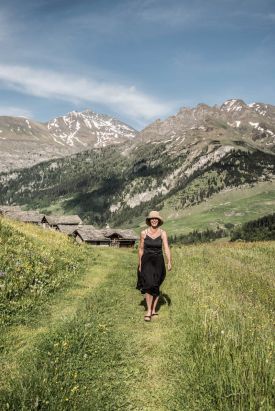
Explore the interiors of Ruth Kramer, designer of Brücke 49 in Switzerland, where soft minimalism, tactile materials and Scandinavian clarity come together in spaces shaped by heritage, intuition and place.
read more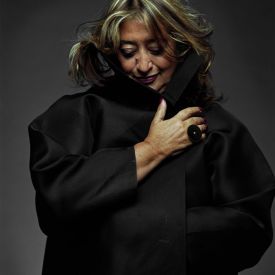
Zaha Hadid Architect's coastal Salerno Maritime Terminal in Cilento, Italy carries her hallmark curves inspired by oysters and the waves, a coastal landmark.
read more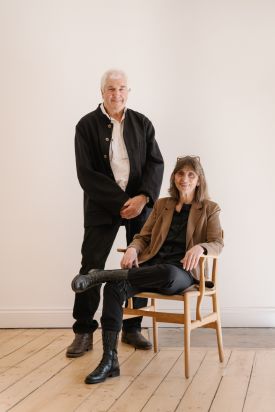
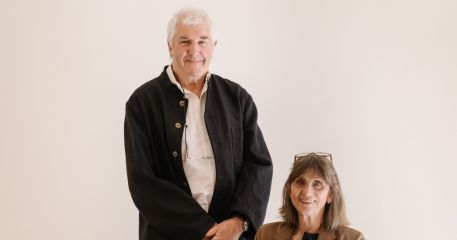
Behind some of Scotland's landmark conservation and restoration projects including the award-winning Kyle House, Hotel Lundies and Killiehuntly Farmhouse in the Highlands.
read more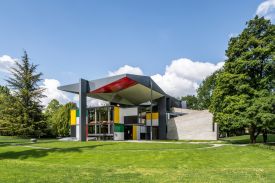
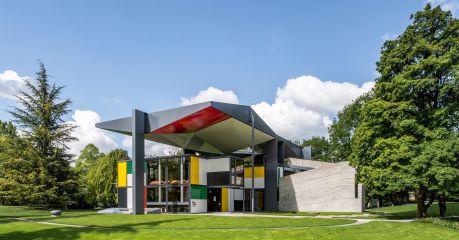
The Pavilion Le Corbusier, located in Zurich, pays homage to an architect who was the forerunner of urban design, a pioneer of sustainability, and a leader of modernism.
read more
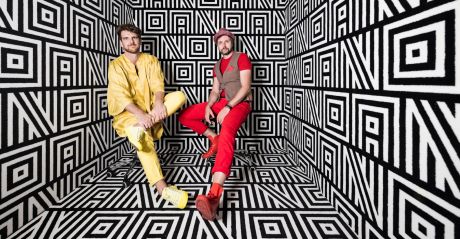
Conceiving of NOA as an ever-changing network of architects, interior designers, graphic talent to even psychologists and much more, NOA is able to incorporate a multitude of ideas and styles into its hotel projects.
read more
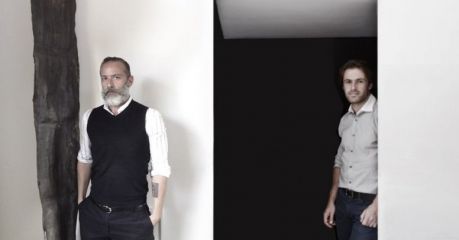
Genuizzi | Banal Architects studio based in Milano is synonymous with clear spatial design and a strong lineal aesthetic bound to the environment.
read more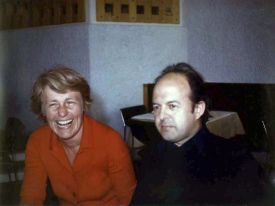
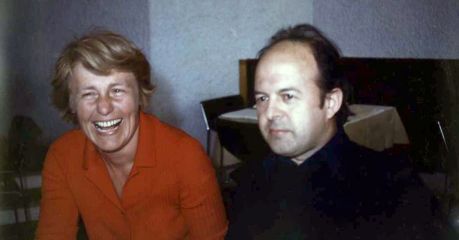
Professor, architect and designer with an intense love of concrete and the alps, architect Othmar Barth (1927-2010) was considered futuristic, often misunderstood and a bit of a silent hero of the rural monumental.
read more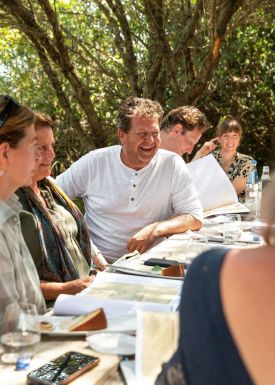
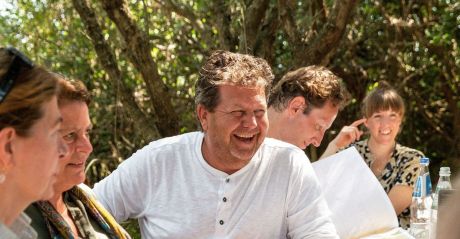
Farms, hotels, residencies and offices - meet the charismatic Founder of AEDES - an Amsterdam-based property development company as we talk about his mission to create a legacy for the future - rewilding, restoring, preserving heritage and pushing the boundaries of research and science.
read more
Get the insider news and lowdown on what we've been up to, where we've been, and who we've met along the way. Be the first to discover new places and get the scoop on our favourites.