JOIN the AFICIONADOS
Get the insider news and lowdown on what we've been up to, where we've been, and who we've met along the way. Be the first to discover new places and get the scoop on our favourites.

Mallorca has more good-looking hotels than it knows what to do with. Only a handful are genuinely Mallorquín. The distinction is not decorative. It sits in the stone a building is made from, the family whose name is still above the door, the crop that sets the kitchen's calendar and the craft that produced the mat under your feet. The four houses below, all in The Aficionados collection, hold that thread from the mountains to the sea: Ca'n Beneït above Binibona, Son Brull outside Pollença, Sant Francesc in Palma old town and Can Ferrereta in Santanyí. Take them in that order and you have a tour of the island's interior, its north, its capital and its south coast in the space of a long weekend.
Start with the names, because three of the four announce themselves before you reach the door. Ca'n, Can and Son are possessive prefixes in Mallorquín: Ca'n and Can contract casa d'en, the house of, while Son comes from ço d'en, that which belongs to. Each one records an owner. Ca'n Beneït was the principal estate of the Binibona hamlet, known first as Benimala, with roots that run back beyond the conquest of 1229. Can Ferrereta takes its name from a nickname, los Ferrereta, that the town of Santanyí gave to the Bonet family, and which travelled from the family to the house to the street. Only Sant Francesc looks outward for its name, to the basilica across the square where Ramon Llull has lain in alabaster since 1487.
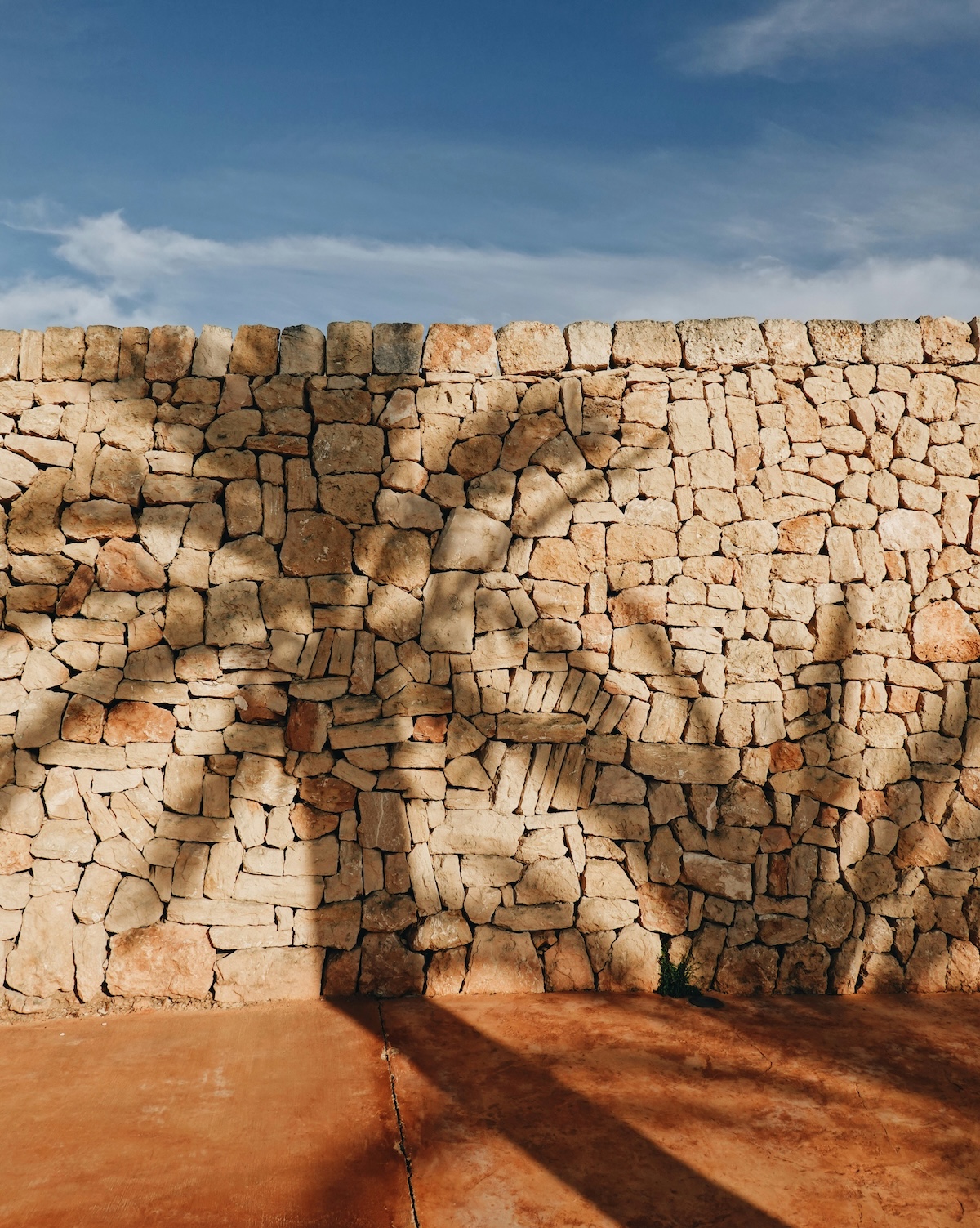
Then the materials, unusually legible on this island. Golden marès, the soft sandstone quarried near the south coast, built La Seu and built Can Ferrereta. Grey Tramuntana limestone, laid dry and unmortared, built the terraces that hold the mountain in place and the walls of Ca'n Beneït. Between them run terracotta, lime plaster, olive and carob wood, iron, linen, canyís cane ceilings and llata, the woven dwarf-palm work that Mallorcan households have made for baskets and matting for centuries. None of it is expensive in itself. All of it takes a maker.
And the land, which in all four houses sets the menu rather than decorating it: sobrasada from the black Mallorcan pig, olives pressed on the estate, flor de sal, almonds, citrus, the day's catch. What follows is a route from the interior to the sea, and four very different arguments arriving at the same conviction.
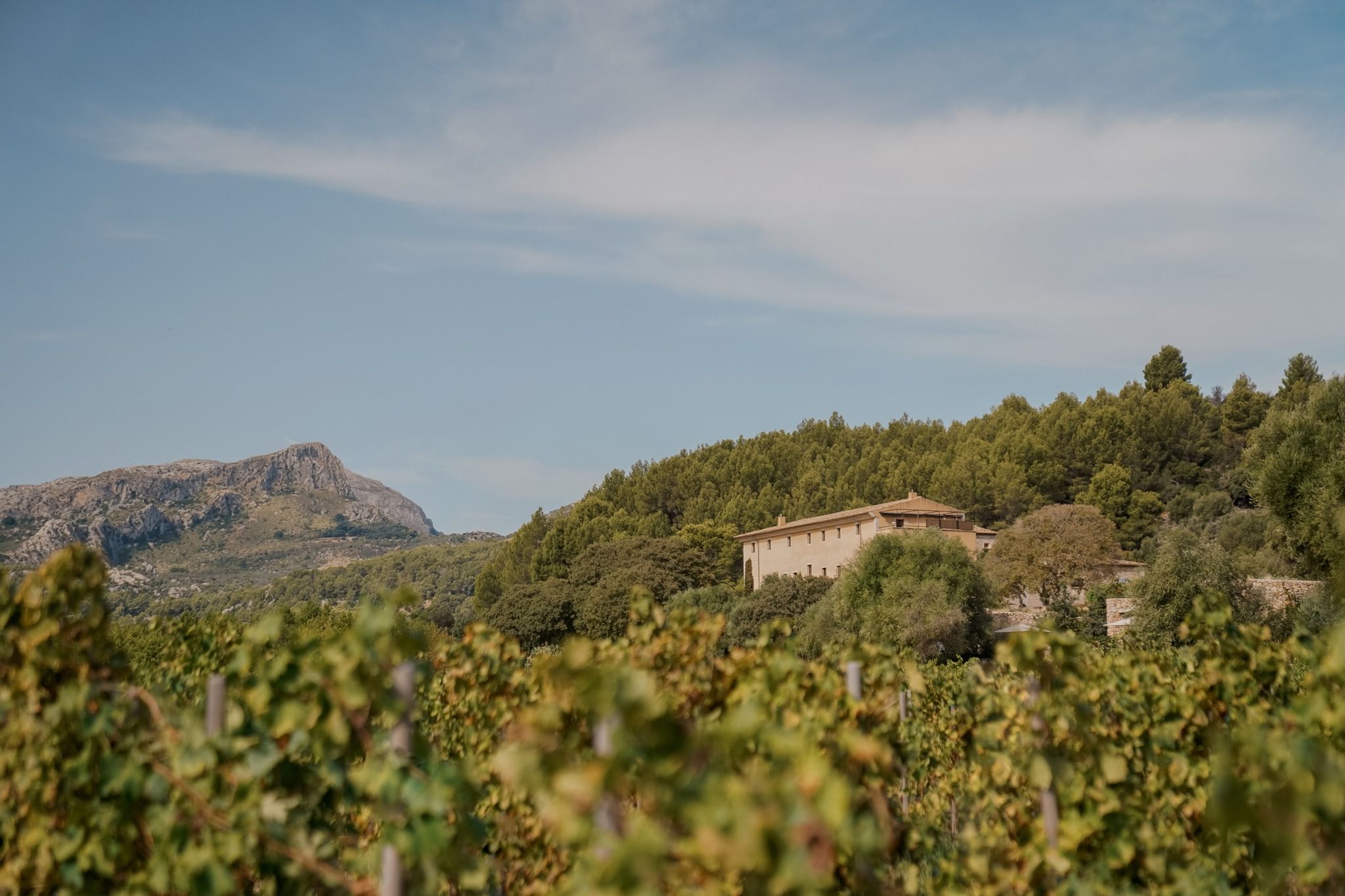
Above the valley of Binibona, in the northern interior, Ca'n Beneït spreads across seventy hectares inside the UNESCO-listed Serra de Tramuntana. This is the agricultural Mallorca of dry-stone masonry, terraced hillsides, working orchards and limestone buildings weathered slowly by the wind, a long way from the marina.
The building tells you what it was before it tells you what it is. Thick local limestone, proudly imperfect, timber beams, deep-set openings, the original farmhouse volumes left intact alongside a former chapel and a historic olive press. Parts of the estate are well over two hundred years old. Inside, terracotta floors, lime plaster, natural pigments, wood, linen and iron, much of the work carried out by local craftsmen so that the island's building traditions carry through the restoration rather than stopping at the threshold. The laced window dressings echo those of rural Mallorquín homes. Bobbin bed frames, llata mats and natural-fibre linens from Spirit of the Nomad furnish the ten rooms, which occupy restored stables and agricultural workshops across the estate and therefore refuse to match one another. A private villa with its own pool and garden sits apart, in the same language.
The kitchen is a straight read of the surroundings. Mirabona works to a seasonal philosophy set out in Mallorquín, cada estació té la seva manera d'abraçar el sabor, every season has its way of embracing flavour, and turns out suckling pig cannelloni, gilt-head bream with toasted sesame, hake-filled ravioli in green herb sauce, and a leek, truffle and anchovy tatin. Breakfast is taken slowly on the terrace while the light works its way across the valley.
Ownership matters here. Toni Duran acquired the finca in 2020 after years of running past it and quietly imagining its restoration, and he calls the arrival destiny. His guiding principle was to restore rather than reinvent, and the refurbishment proceeded largely by subtraction, removing what did not belong so that the original structure and its agricultural context could take precedence. The result reads as an estate that happens to receive guests, with Duran functioning as custodian more than proprietor.
Twenty-five minutes north, the ground shifts from valley to the foothills below Puig de Maria. Son Brull began as an alqueria, an Arabic farmhouse, in the twelfth century, became a Jesuit monastery, and fell into ruin before the Suau family took it on. The restoration story is one of the island's better ones: an overgrown estate brought back as a hotel that was rooted in its land long before anyone was marketing the idea.
Twelfth-century walls, original archways and beamed ceilings meet a minimalist hand from Barcelona's Forteza + Aparicio, with raw oak, rusted iron and black-tinted concrete answering the textures outside. Even the Mallorcan pebble is given a part to play. The more recent villa suites and the enlarged spa come from Estudio Carme Pinós, and they are notably self-effacing: from the road, the old monastery on its stone walls looks much as it always did, the terraces and dry-stone lines of the landscape left to run on uninterrupted.
Around the house sit citrus, olive and almond groves, vineyards and an organic farm, and the kitchen at 365 draws on all of it, chef Andreu Segura reworking Mallorcan tradition with orchard fruit, estate wine and oil pressed on site. The old olive press now serves as a bar, pouring a house-distilled gin infused with lemons from the estate's own trees. In the spa, treatments are built from flor de sal, citrus oils and mountain herbs. Miguel, Mar and Alex Suau run all of it as a family, and the continuity shows.
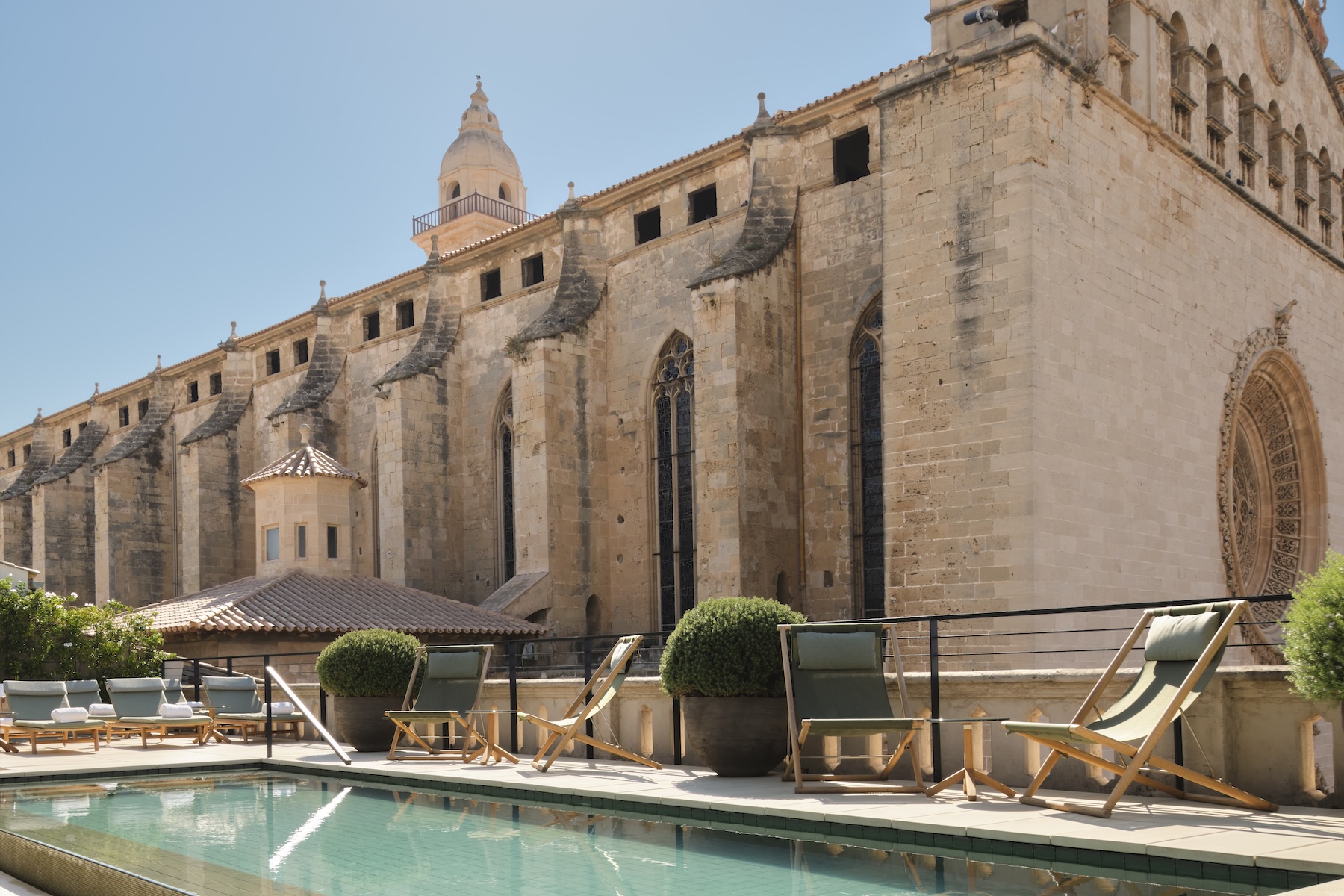
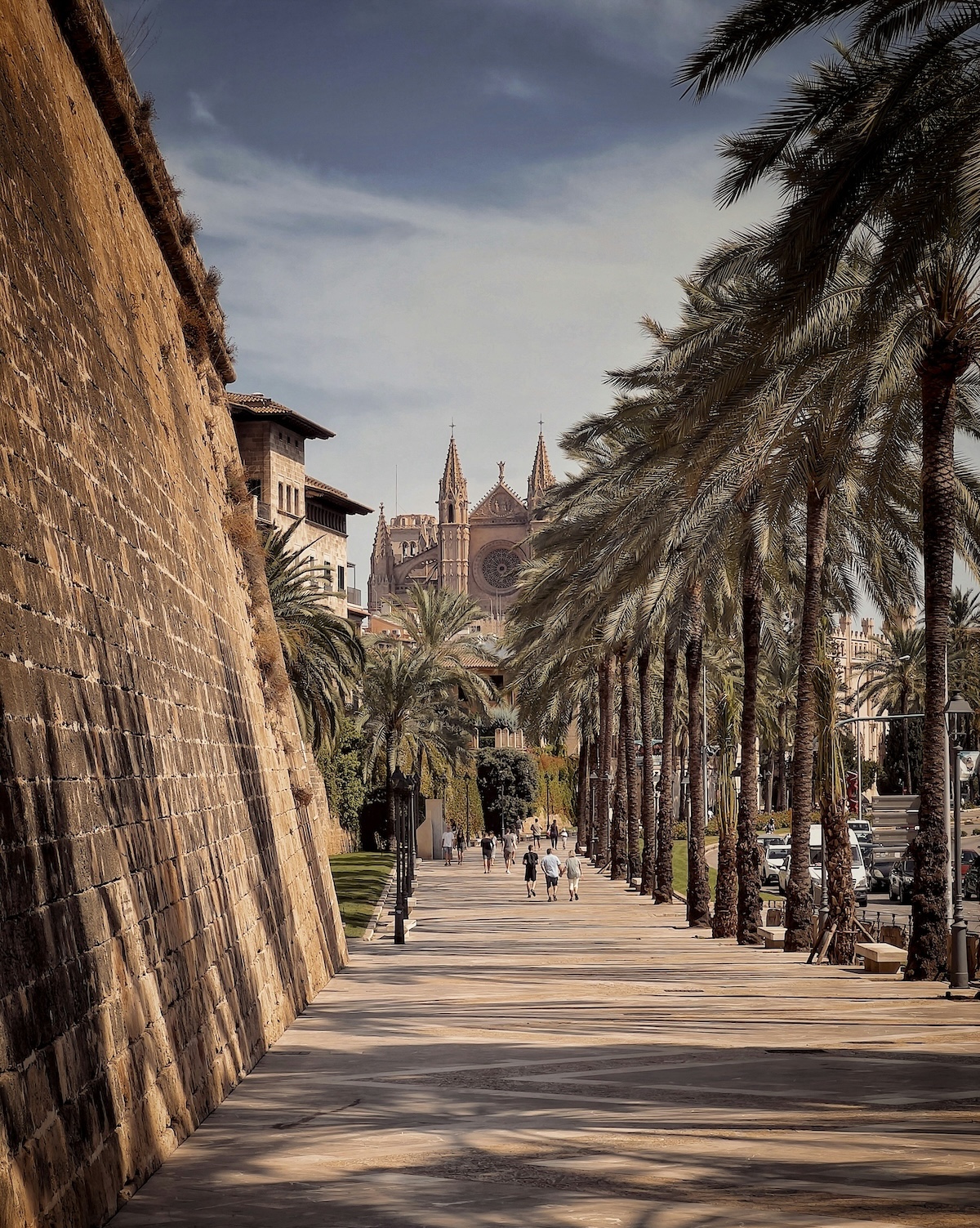
South to the capital, and the register changes from land to city without loosening. Sant Francesc occupies the 1860 Alomar Femenia mansion in Palma old town, Gothic at the door, the Moorish grid of Mayurqa behind, La Seu seven minutes away. The Soldevila Ferrer family restored it in 2015 by editing rather than rebuilding: frescoes retouched, coffered ceilings kept, Crittall windows slipped into the arches, the old cistern turned into a gym, the watchtower into a suite, the stables into a restaurant. A courtyard of olive trees rises four storeys to a square of sky.
The furniture reads like a design fair, Lissoni, Citterio, Starck, Hayón, Burks, Bermúdez, Gordon Guillaumier, lighting by Davide Groppi and Bernard Schottlander, and none of it raises its voice against the whitewashed beams and lime-washed floors. The art is where the family's hand is clearest, because almost every piece was commissioned for the building it hangs in: Guillem Nadal's gold swoop in the salon, a Riera i Aragó boat-form above reception, work by Jordi Alcaráz, Miguel Ángel Campano, Emil Alzamora and Miguel Macaya through the corridors, and Bárbara Vidal's photographs of the house as it stood before the restoration, so the building keeps a record of itself. In the former stables, Àlvar Albaladejo and Carles Forteza cook the island's larder at Quadrat: sobrasada from the black Mallorcan pig, aged steak tartare, paella, the day's catch, rice three ways on Sundays. Then the roof, a pool and two hundred square metres of terrace over Palma's terracotta with La Seu filling the view.
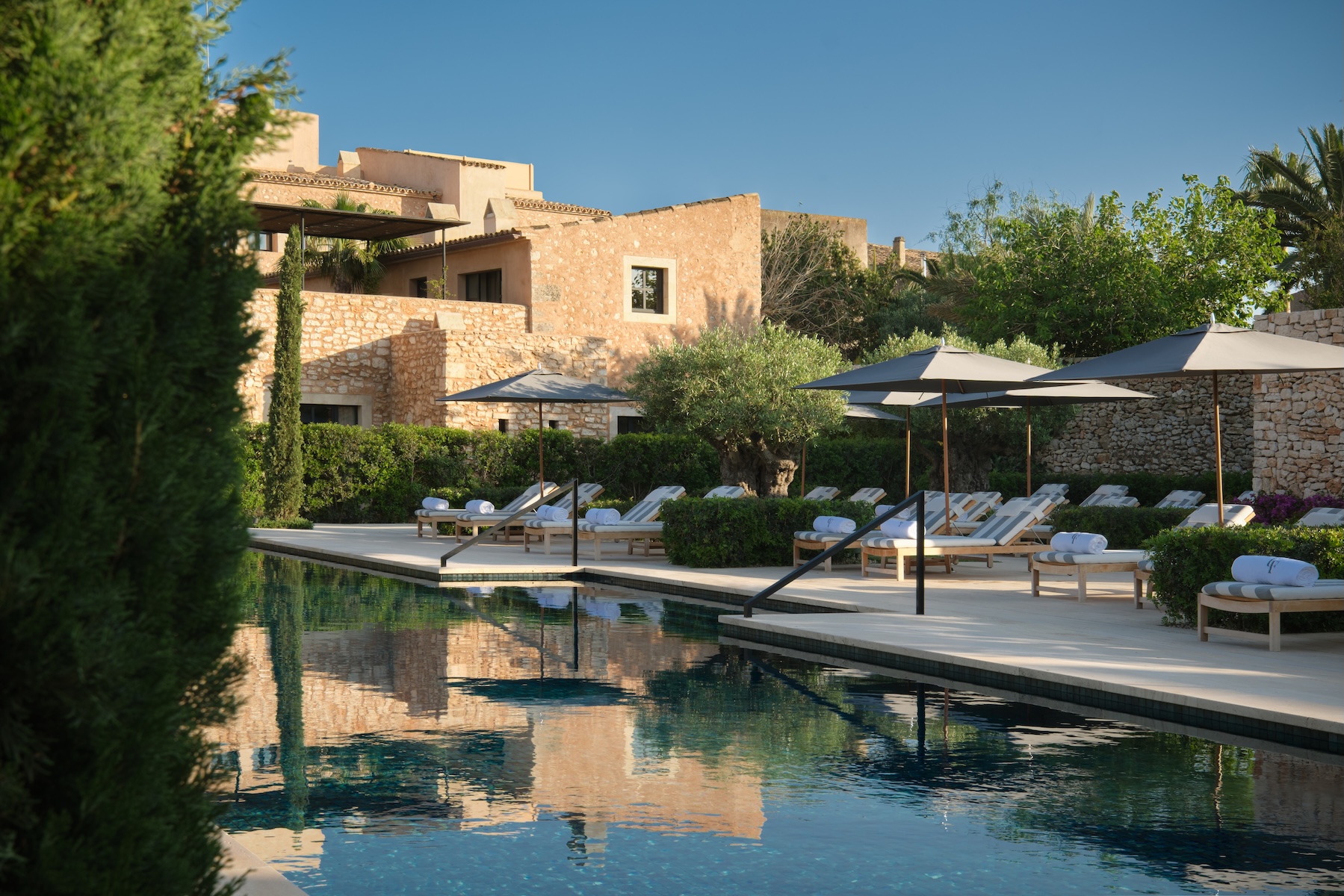
Fifty minutes south-east, in the old town of Santanyí, the same family made the same argument in warmer stone. Can Ferrereta is a seventeenth-century mansion in golden marès, standing beside the medieval Porta Murada in a quarter once fortified against Barbary pirates and now known for its galleries and its Saturday market. The local studio Bastidas led the architecture, WIT the interiors, and again the method was editing: the seventeenth-century arches stayed, along with painted wooden beams and traditional canyís cane ceilings, joined by a sculptural poured-plaster staircase, Crittall windows in the courtyard and a dry-stone shepherds' dome in the garden that reads as though it had always been there.
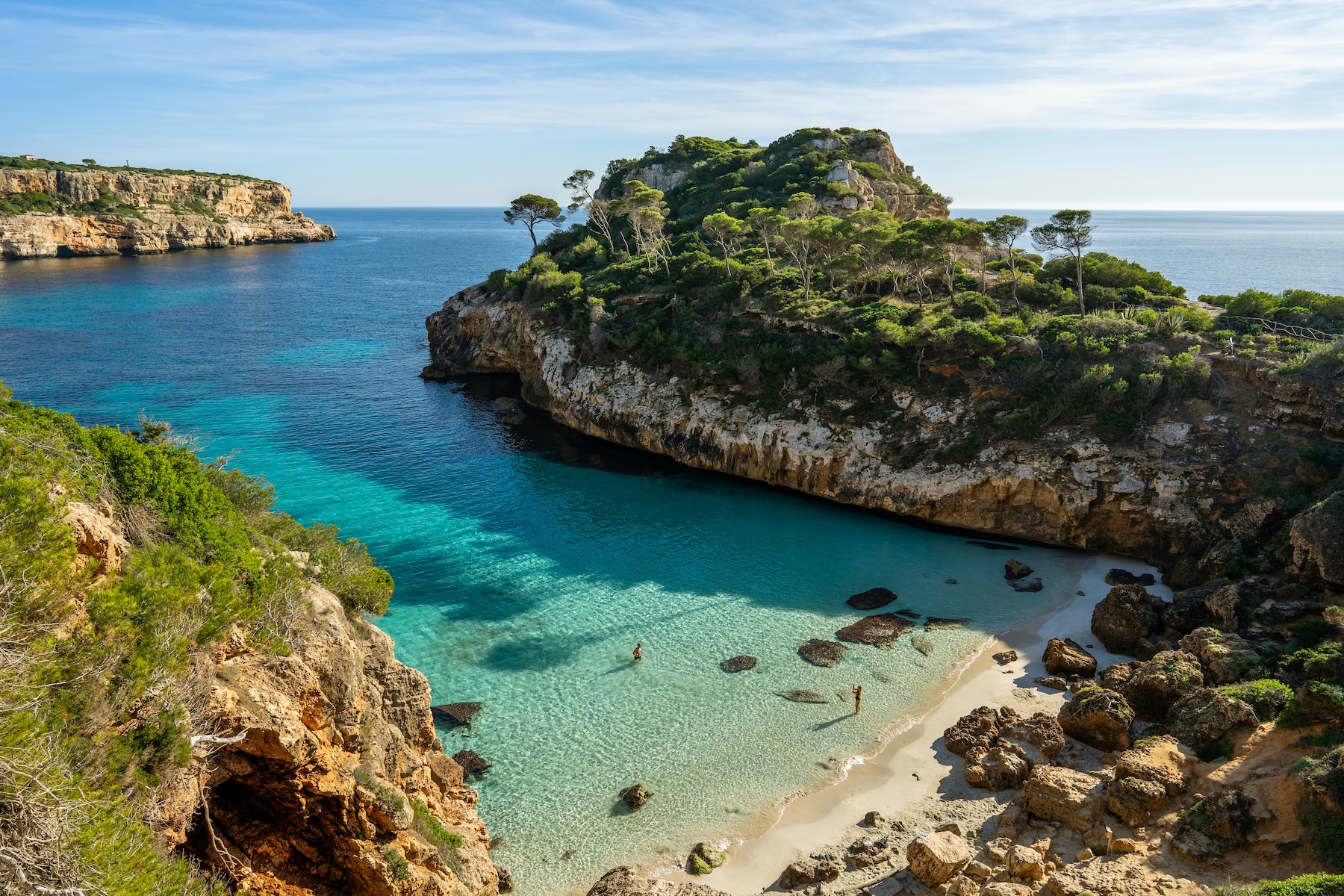
The tone is unhurried and worldly at once. Raw plaster walls, Santanyí stone underfoot, dark steel ribs framing the old arches, Hans Wegner cord chairs and pieces by Lissoni, Piet Boon, Anastassiades and GamFratesi, with the remainder commissioned from Mallorcan artisans. Hessian rugs, gingham throws, ceiling fans, French windows opening onto bougainvillaea. The art belongs to the family and is made for the rooms: a two-metre Jaume Plensa head gazing across the pool from under the olive trees, work by Joan Miró, Guillem Nadal, Jordi Alcaráz, Riera i Aragó, Miquel Planas, Manolo Ballesteros and Santiago Villanueva, threaded again with Vidal's photographs of the empty mansion. Dinner is at Ocre in the old wine cellar, named for the ochre façades Santanyí owes to the sand-bearing winds off Africa; lunch is lighter at La Fresca among the greenery. Sa Calma handles the hammam and sauna. And the sea is close: Es Caló des Moro, Mondragó, Es Pontàs and Es Trenc are each within half an hour.
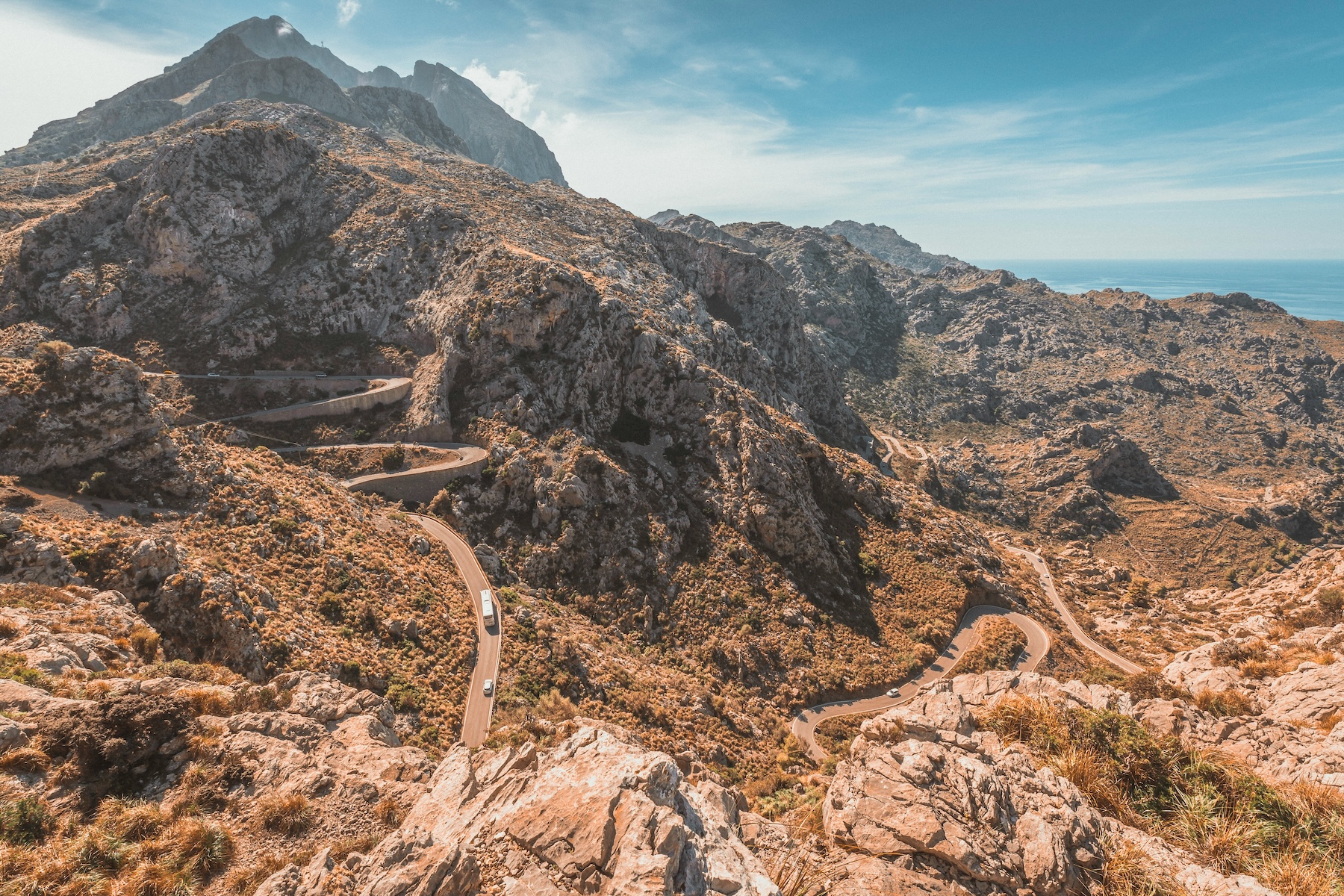
Drive the route from Binibona to Santanyí and the case makes itself. A working finca, a monastery, a city palau and a marès mansion could hardly be further apart in scale, budget or temperament, yet each was something else first, each was restored by removing rather than adding, and each keeps island material at the centre of the room: limestone and terracotta in the mountains, marès and canyís by the coast, olive trees in a Palma courtyard four storeys below the sky. Three carry a family's name over the door. Two carry a family's art on the walls. All four run on what the land gives that month. That is the Mallorquín thread, and it is a good deal harder to fake than a whitewashed wall.
What makes a hotel Mallorquín rather than simply Mediterranean? Island materials and island continuity. Marès sandstone and Tramuntana limestone, terracotta, lime plaster, canyís cane ceilings, llata palm weaving and dry-stone terracing, set in buildings that were farms, monasteries or family houses long before they were hotels.
What do Ca'n, Can and Son mean? They are possessive prefixes in Mallorquín. Ca'n and Can contract casa d'en, the house of; Son derives from ço d'en, that which belongs to. Each records the family the building belonged to.
Can you drive all four in one trip? Comfortably. Binibona to Pollença runs to around twenty-five minutes, Pollença to Palma around fifty, Palma to Santanyí around fifty. Palma airport sits roughly forty-five minutes from Ca'n Beneït and from Son Brull.
Which is best for walking and cycling? Ca'n Beneït and Son Brull, both inside or beside the Serra de Tramuntana. The GR221 dry-stone route traces centuries of agricultural infrastructure past monasteries, farmsteads and terraced valleys, and the mountain roads are among the finest cycling in Europe.
Which is best for art? Sant Francesc and Can Ferrereta. Both belong to the Soldevila Ferrer family and both hold collections commissioned for the rooms they occupy, including Bárbara Vidal's photographs of each house before its restoration.
Which is closest to a beach? Can Ferrereta. Es Caló des Moro, Mondragó, Es Pontàs and Es Trenc are each within half an hour of Santanyí.
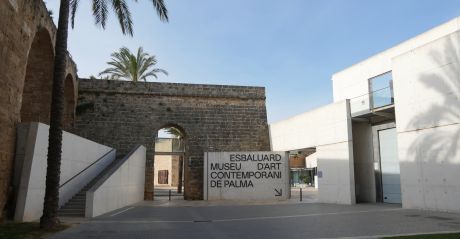
Es Baluard holds more than nine hundred works inside Palma's Renaissance walls, from Anglada-Camarasa to Miró and Barceló, with the bay laid out below.
read more
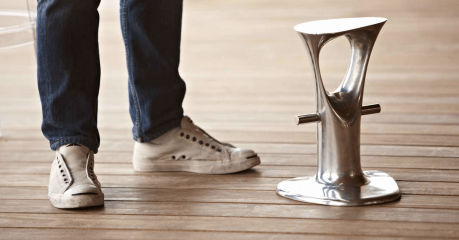
French designer Philippe Starck, himself an avid fan of sail and designer of super yachts, turned his hand to creating a new Port Adriano Marina in Mallorca – an architectural masterstroke and ‘Starck’ beautiful with not a parking lot in sight.
read more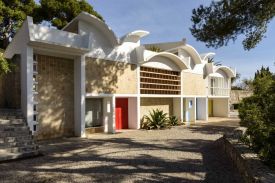
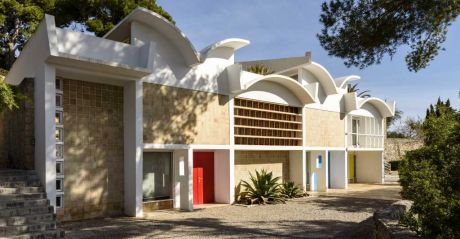
A modernist taller built by post from exile, a farmhouse covered in charcoal figures, and the Palma hillside where Joan Miró made a third of his work.
read more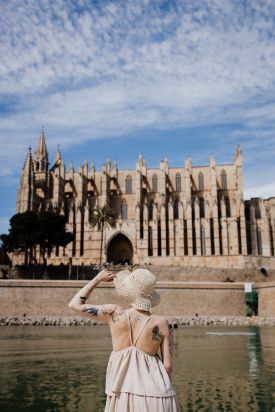
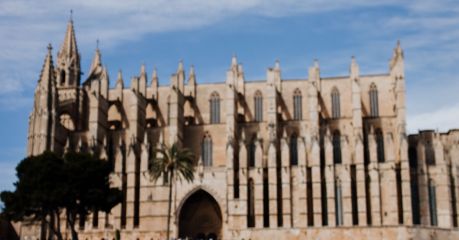
Palma's cathedral holds eighty-seven windows, the largest Gothic rose still in place, an unfinished Gaudí baldachin and a ceramic chapel by Miquel Barceló.
read more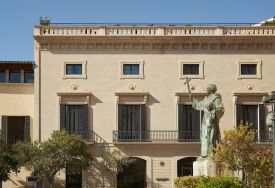
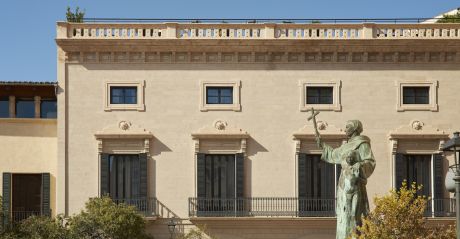
An 1860 Palma mansion turned boutique hotel, Sant Francesc pairs commissioned Mallorcan art, Lissoni and Hayón interiors and chefs Albaladejo and Forteza's Quadrat, minutes from La Seu.
read more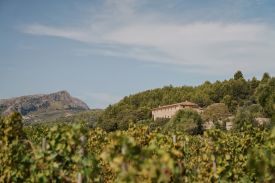
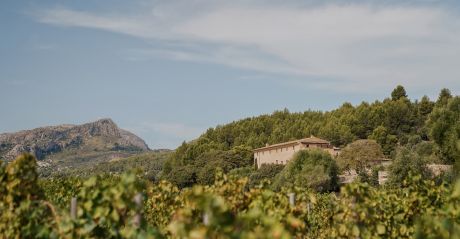
A former monastery reimagined. Son Brull is Mallorca’s cult boutique escape – heritage, design, slow food, and holistic luxury wrapped in Tramuntana’s wild beauty. A soulful retreat where past and present collide.
read more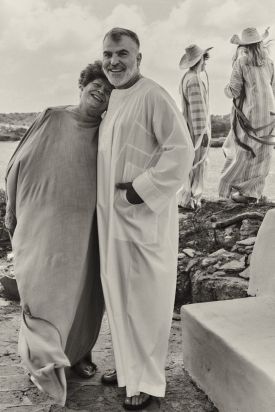
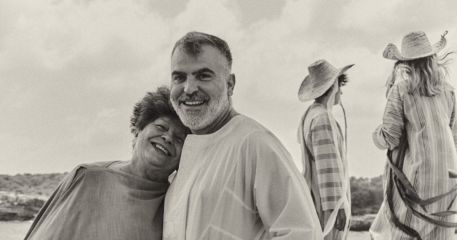
For the aficionados of easy, slow wear, Muchache is an ethical brand of soul and purpose, designed for those unfussed with gender rules, 'wear what pleases you'.
read more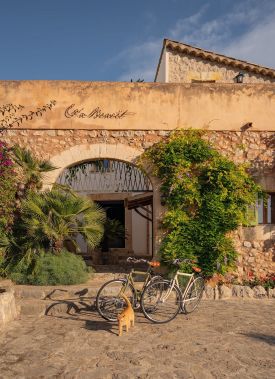
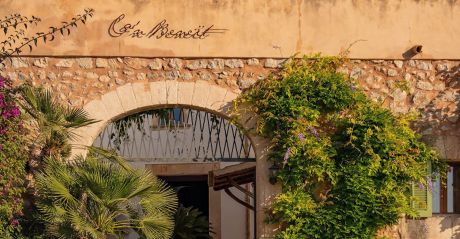
A restored Mallorquín estate set within olive groves and terraced hillsides of the Serra de Tramuntana; terracotta floors, honest materials and farm-led dining shape a quietly cultivated rural retreat.
read more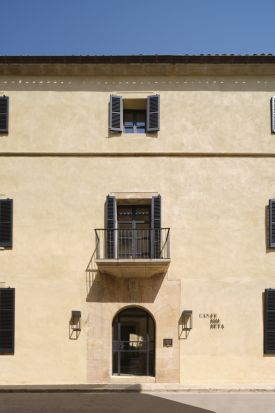
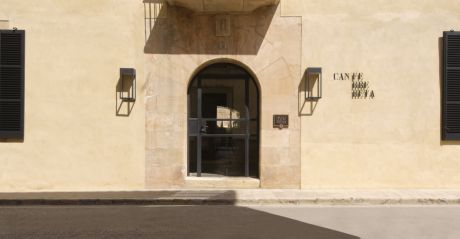
A 17th-century marès-stone mansion in Santanyí's old town, Can Ferrereta is a calm, art-filled luxury hotel with Mallorca's south-coast beaches half an hour away.
read more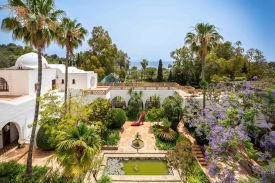
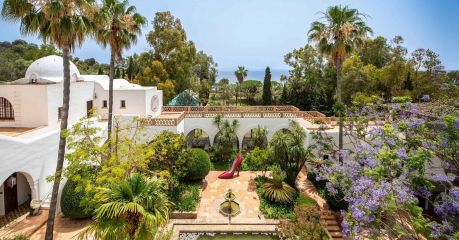
Eleven collections and the buildings they moved into, from a bastion on Palma's walls to an orange merchant's mansion in Sóller and a cistern above Alcúdia.
read more
A think tank for the bold, the curious, the creators of tomorrow. Where minds collide, conversations spark, and urban life gets redefined. If you shape the future, you belong here.
read more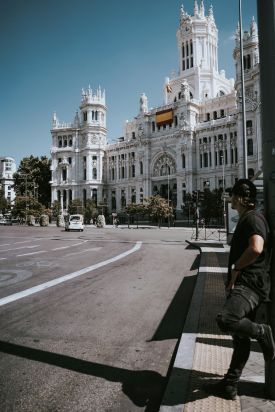
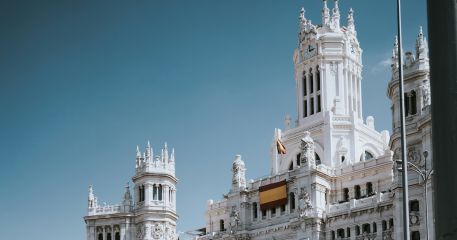
Madrid is built on routine, conversation and urban life, shaped by historic quarters, modern ambition, design culture and food, revealing itself through daily use to artists, architects and curious minds.
read more
Get the insider news and lowdown on what we've been up to, where we've been, and who we've met along the way. Be the first to discover new places and get the scoop on our favourites.