JOIN the AFICIONADOS
Get the insider news and lowdown on what we've been up to, where we've been, and who we've met along the way. Be the first to discover new places and get the scoop on our favourites.

The best art in Mallorca is almost always housed in someone else's architecture. Go looking for it and you spend as much time reading buildings as reading wall labels: a sixteenth-century artillery bastion, a convent site, a marquis's last great house, the hotel where island tourism began, an emigrant's Art Nouveau mansion in Sóller, a farmhouse cistern above Alcúdia.
This is not an accident of budget. Mallorca has spent five hundred years absorbing money made elsewhere, by corsairs and oil exporters, by fruit traders in Belfort and financiers in Madrid, and that money kept arriving in the form of houses. When the island turned to art, the houses were already standing. What follows is a route through nine of them.
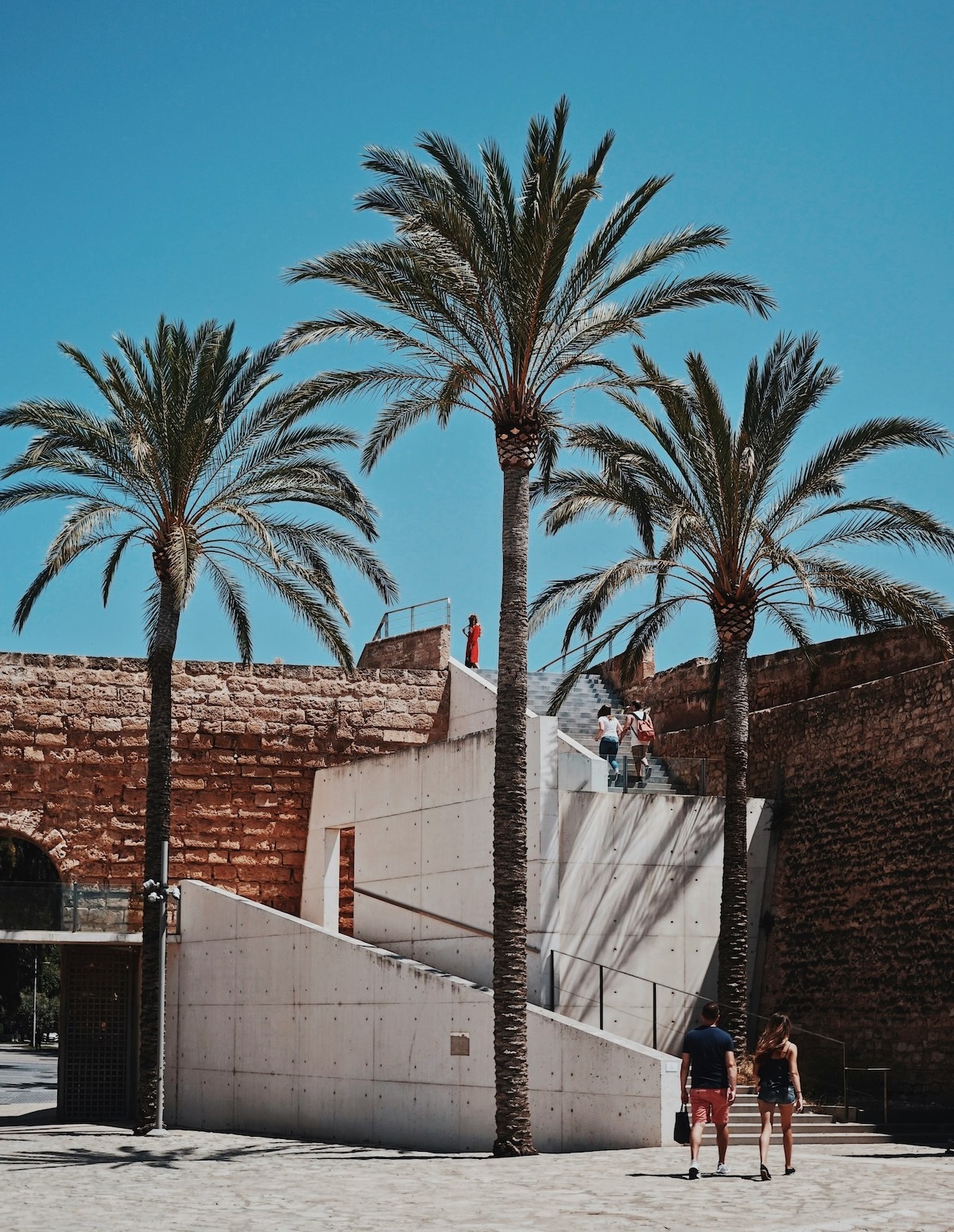
Start on the walls. Es Baluard is the largest space for contemporary art in the Balearics, built into the bastion of Sant Pere, raised in the last quarter of the sixteenth century to designs by the Italian engineer Giacomo Palearo Fratín and large enough to hold one of the great artillery schools of Europe. The military left in 1952, private owners tried to blow the wall up with lime bombs in 1963, and the city stopped them. The museum opened in 2004 on land the council had ceded seven years earlier, with concrete and glass set deliberately apart from the old stone so you can always tell the centuries apart. Underneath is the Aljub, a freshwater cistern finished in the 1640s that once supplied the port and now takes exhibitions. More than nine hundred works, and a terrace with the bay laid out below it.
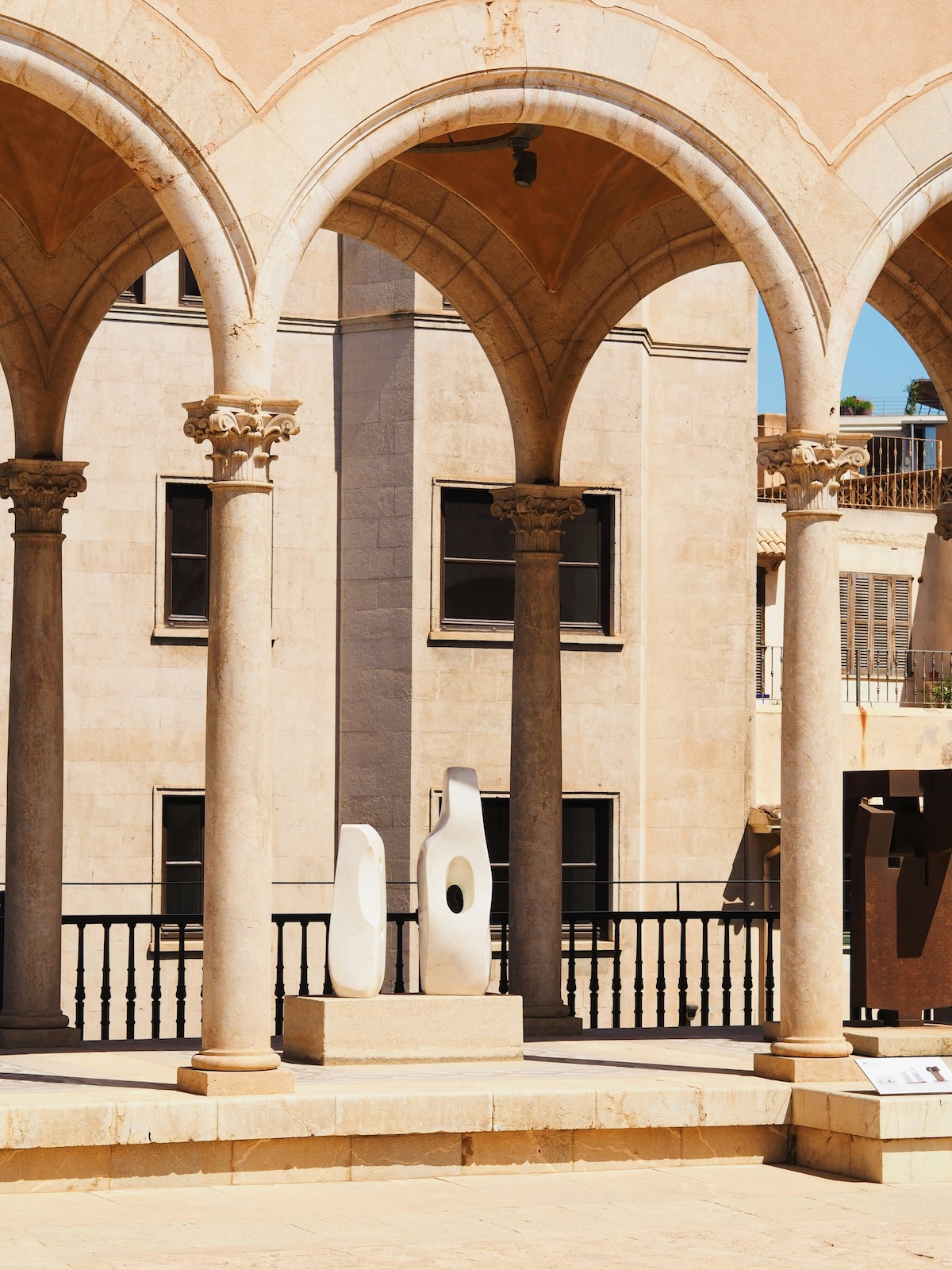
A few streets east, above the cathedral steps, the Palau March was built between 1939 and 1945 for Joan March Ordinas, the Mallorcan financier who was for a time the richest man in Spain, on roughly 1,500 square metres of the former Santo Domingo convent. It is his son Bartolomé's collection that fills it: a rooftop terrace of twentieth-century sculpture with Rodin, Henry Moore, Barbara Hepworth, Chillida and Xavier Corberó's enormous Orgue del Mar, Josep Maria Sert murals over the main staircase, portolan charts from the fourteenth century onward, and an eighteenth-century Neapolitan nativity of more than a thousand figures that is far stranger and better than it sounds.
Ten minutes north on Carrer de Sant Miquel, the Museu Fundación Juan March holds the other half of the story. The building is Can Gallard del Canyar, a seventeenth-century manor the March family acquired in 1916 and remodelled as their Palma residence, reworked again in 1990 to take the foundation's collection of twentieth-century Spanish art: Picasso, Miró, Juan Gris and Dalí, the post-war generation around El Paso, then Tàpies and Barceló. Admission is free. Two buildings, one fortune, and a great deal of the island's modern canon between them.
On the Born, the Casal Solleric was commissioned in 1763 by Miquel Vallès, Marquis of Solleric, olive oil producer, exporter and, by several accounts, corsair, and finished twelve years later to a design attributed to the Mallorcan stonemason Gaspar Palmer, with ironwork and decoration by the Italian Antonio Soldati. Santanyí stone for the walls, rose marble from Solleric and Sencelles for the columns, ironwork brought from Holland. It was among the last great casals raised in the city, and by the late nineteenth century the Morell family had turned it into a salon where Rusiñol, Sorolla and Anglada-Camarasa argued about painting. The council bought it in 1975 and opened it as an exhibition centre in 1985. It still shows contemporary art and photography, and the courtyard alone makes the walk worthwhile.
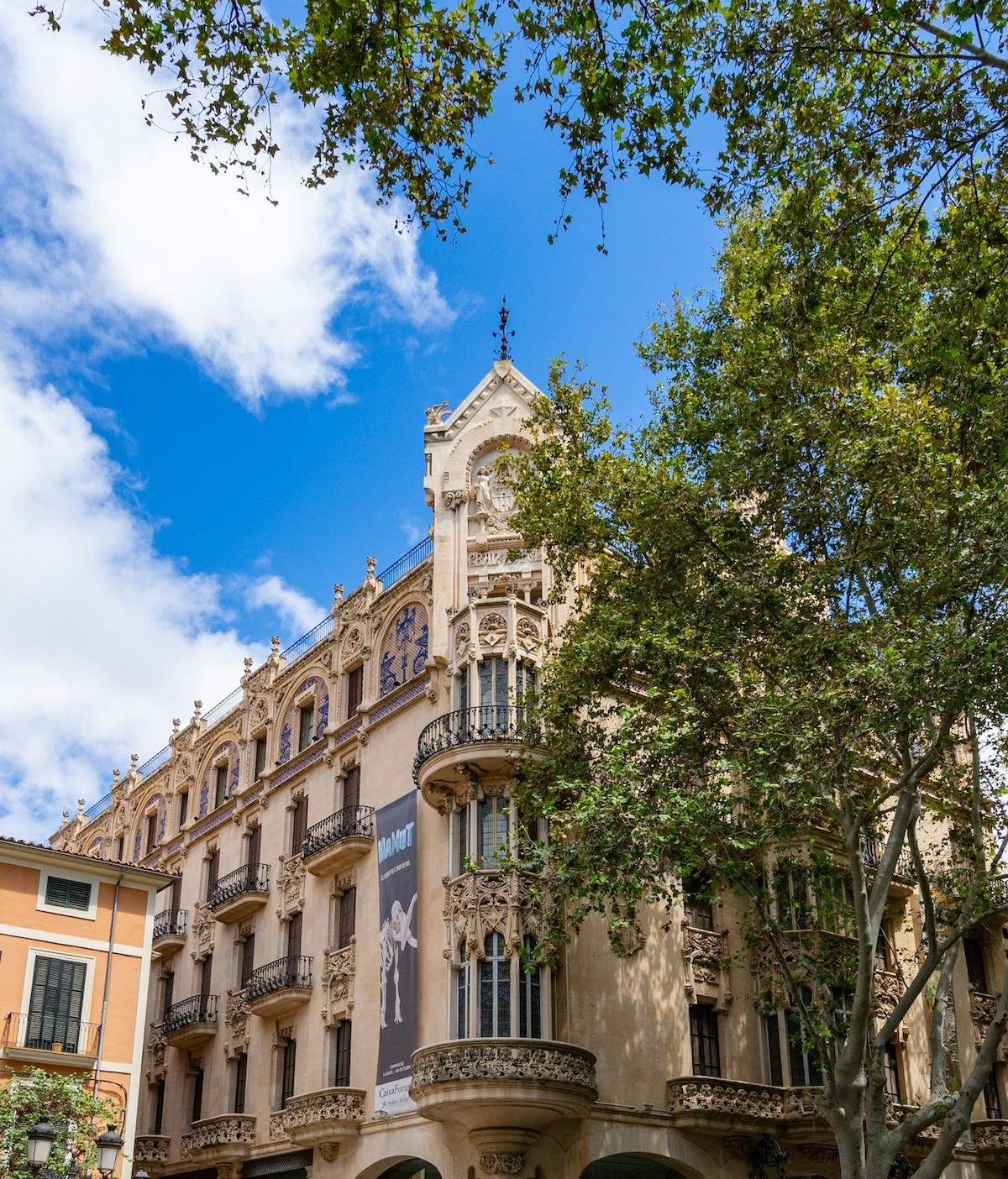
Five minutes away on Plaça Weyler, CaixaForum occupies the Gran Hotel, built between 1901 and 1903 by Lluís Domènech i Montaner for the entrepreneur Joan Palmer. It was the island's first luxury hotel, the first building on Mallorca with electricity and a telephone, and the piece of architecture that started the local appetite for Modernisme. La Caixa recovered the wreck of it in 1987 and reopened it as a cultural centre in 1993, hanging the Anglada-Camarasa collection it had acquired five years earlier on the upper floor. The painter came to Mallorca for the light and settled at Port de Pollença. The building where island tourism began now holds the work of the man tourism followed.
Over the Tramuntana, Can Prunera carries the clearest social history of any building on this list. In 1865 a blight destroyed the orange and lemon trees of the Sóller valley, and thousands of families left for France, Puerto Rico and Venezuela. Joan Magraner and Margalida Vicens, known at home as Prunera, made a fortune importing and exporting fruit from Belfort, came back, and built a house in the style they had learned to admire abroad. It went up between 1904 and 1911 in French-inflected Art Nouveau, possibly by Joan Rubió i Bellver, a collaborator of Gaudí who was working on the Banc de Sóller and the church of Sant Bartomeu at the time, though no plans survive to confirm it. The Fundació Tren de l'Art, backed by the historic Sóller railway, restored it and opened it as a museum of Modernisme in 2009. Original marquetry furniture on the lower floors, Miró, Picasso and a room for Juli Ramis above.
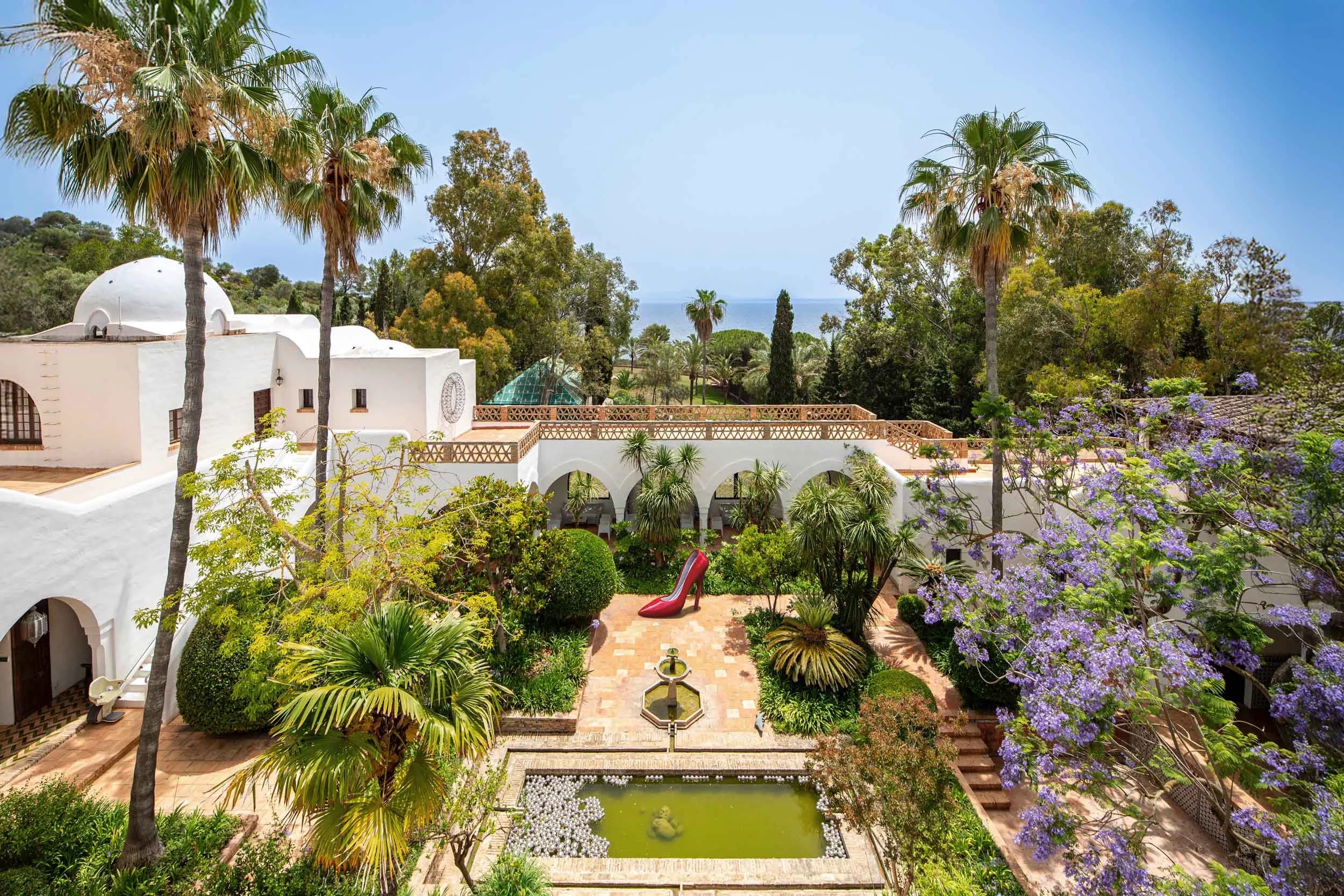
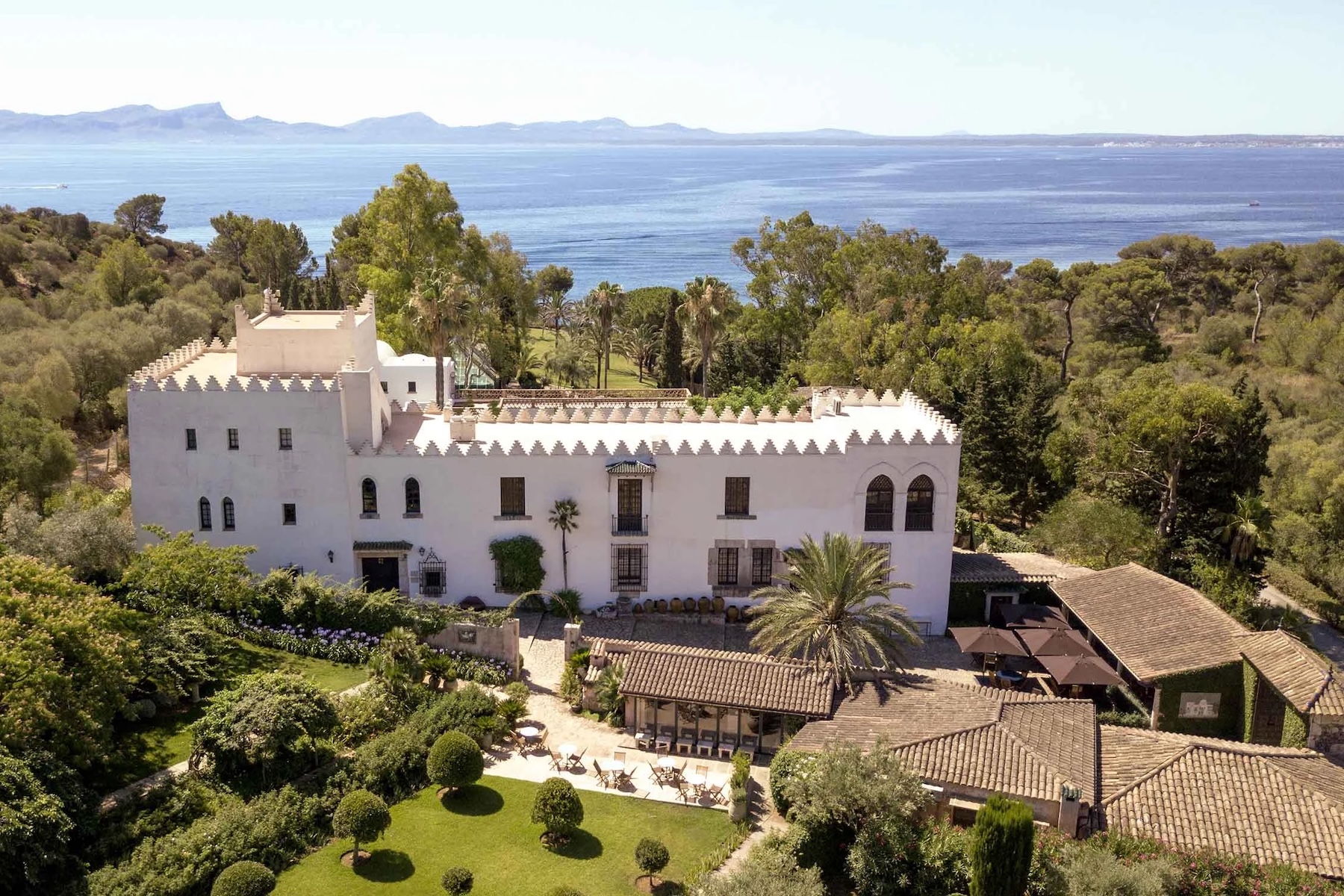
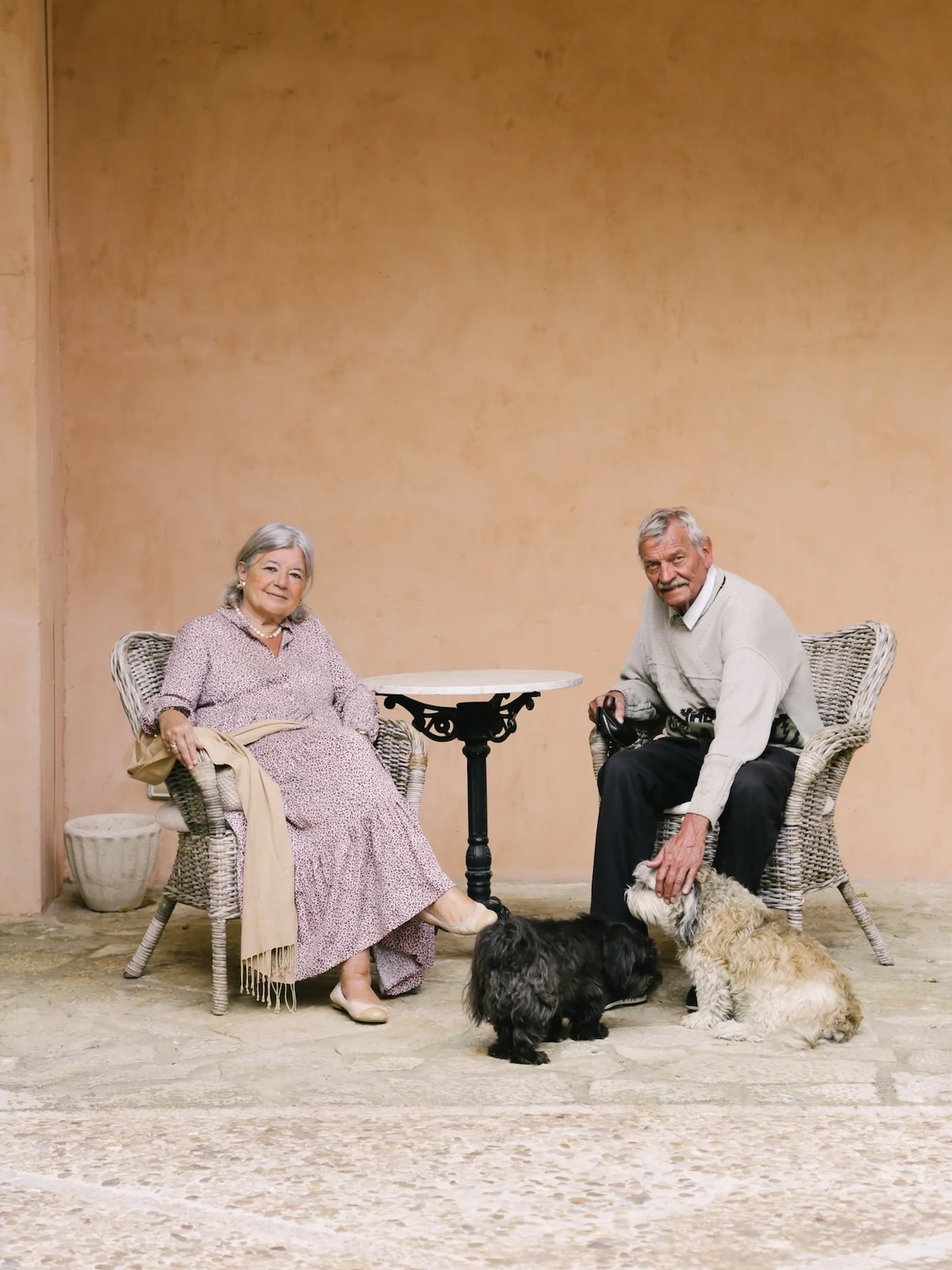
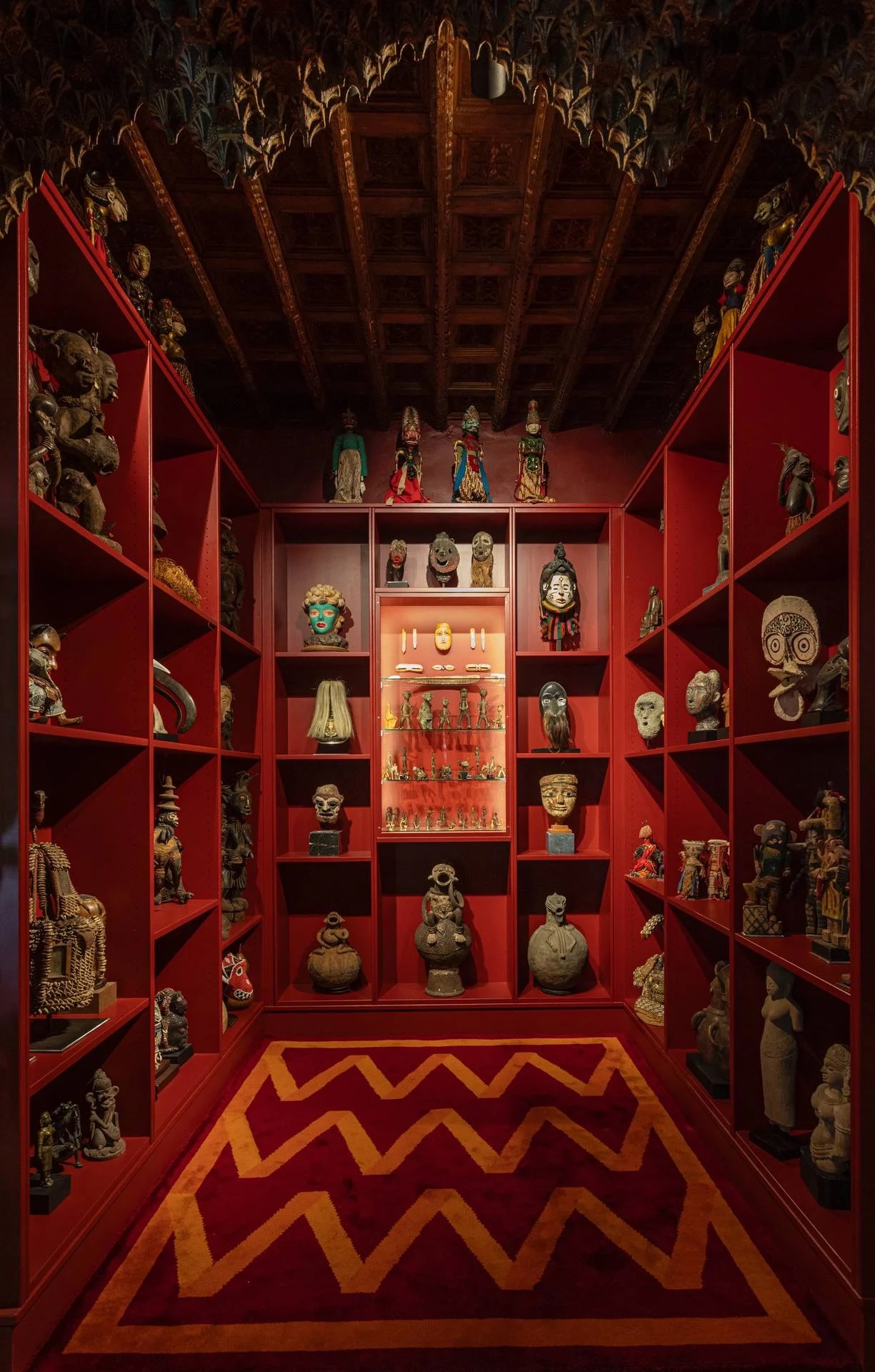
North-east, in protected woodland above Alcúdia, Sa Bassa Blanca began as a seventeenth-century Mallorcan finca. In 1978 the artists Yannick Vu and Ben Jakober commissioned the Egyptian architect Hassan Fathy to build them a house on it, his only work in Europe, Hispano-Moorish in plan around a central court and listed by the Balearic heritage commission in 2011. Inside sits a fifteenth-century Mudéjar coffered ceiling. The foundation was established in 1993, after the death of the couple's daughter Maima, and the collection that gave it its name lives underground: the Nins, more than 150 portraits of children painted between the sixteenth and nineteenth centuries, hang in the property's old aljub. A second cistern, then, does the same work as the one under Es Baluard. Around it are a sculpture park of granite animals and a walled rose garden of more than a hundred Old English varieties.
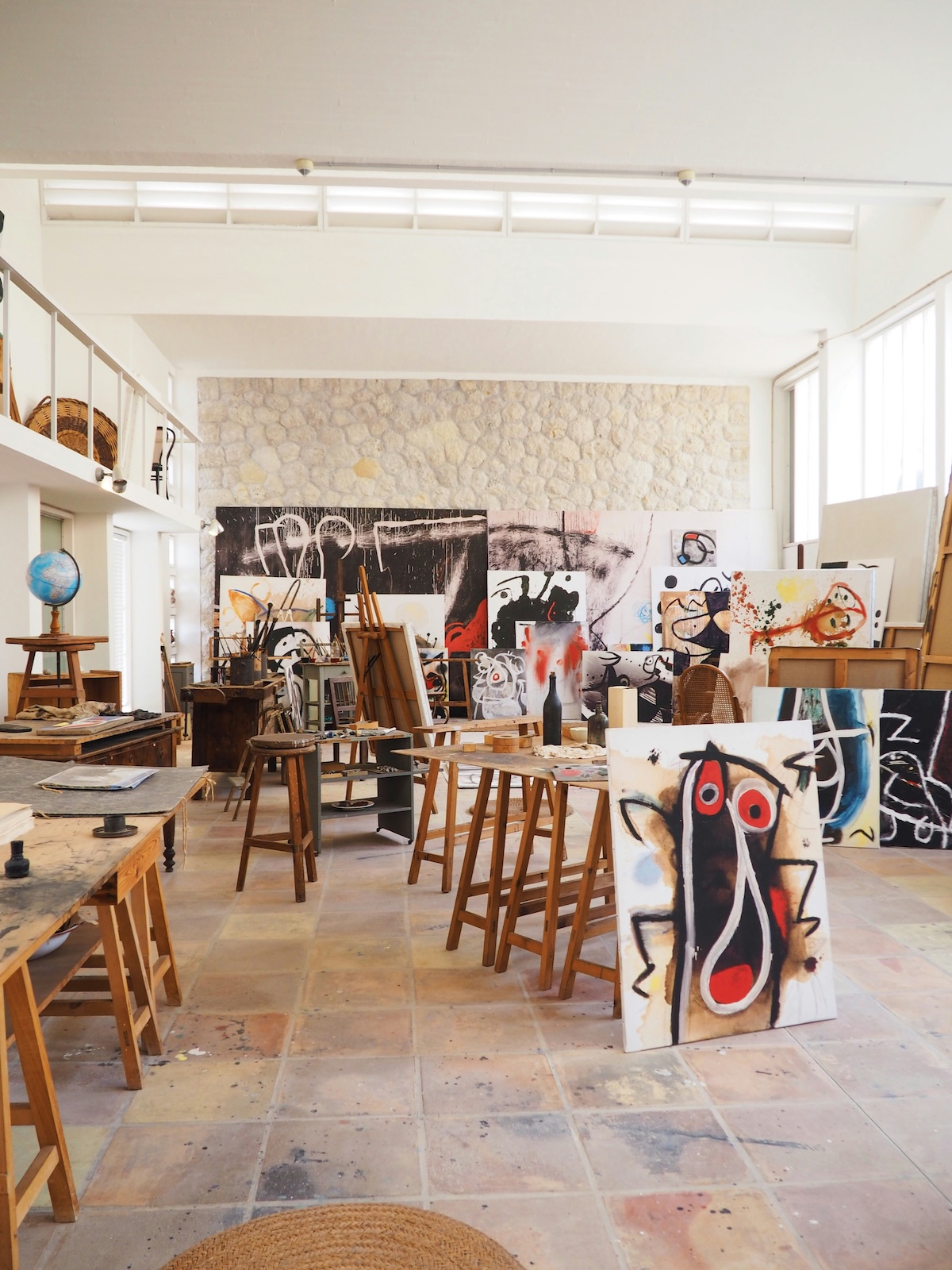
Two places break the pattern, and it is worth seeing how. At the Fundació Miró Mallorca in Cala Major, Josep Lluís Sert designed the studio Miró had wanted all his life, purpose-built, by correspondence, from exile. Then in 1959 Miró bought the eighteenth-century farmhouse next door and covered its walls in charcoal. Even the artist who got the building he asked for went straight out and borrowed another one.
CCA Andratx, below the Tramuntana, is the true exception: four thousand square metres founded in 2001 by the Danish gallerists Jacob and Patricia Asbaek, designed by Jacob himself with a local technician, on land that came with a finca they had bought. It was built to be what it is, a gallery, kunsthalle and studio programme in one. And it is built of marés, the island's own sandstone, around a cloistered courtyard that reads as a monastery. Even from scratch, the vernacular got the last word.
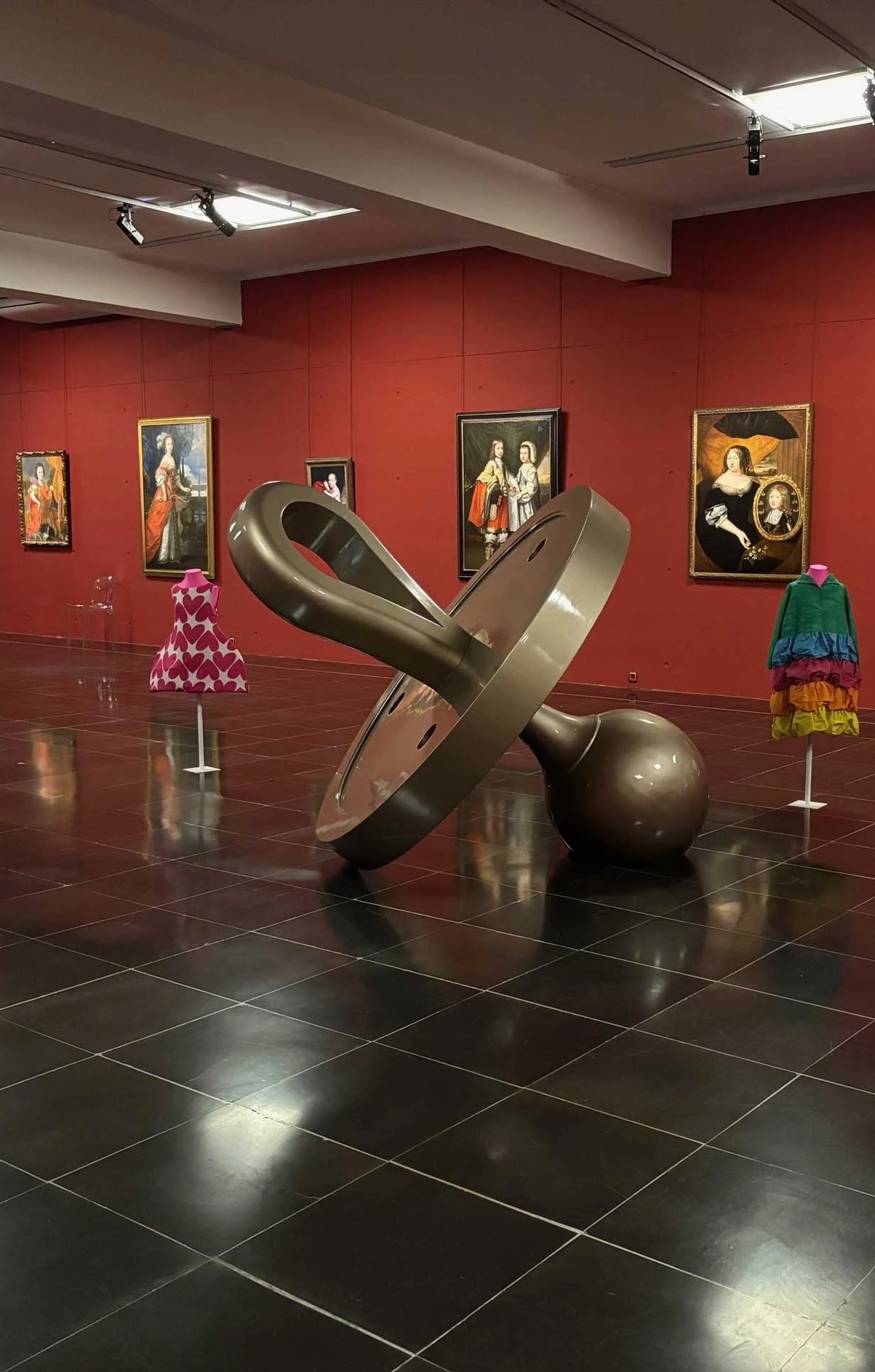
Look closely at who owns what and the island narrows considerably. The founding core of Es Baluard came from the Fundació d'Art Serra, and most of the works at Can Prunera belong to the same Serra collection, held under agreement with the foundation chaired by Pere A. Serra Bauzà. The March fortune underwrites both Palau March and the Museu Fundación Juan March. Two families, four institutions, and a good part of what a visitor sees in a week.
That concentration is worth knowing rather than deploring. It is the mechanism by which private taste on this island became public access, and it is the reason so much of the art sits in domestic rooms with fireplaces and courtyards rather than in white boxes. You are usually standing in someone's house.
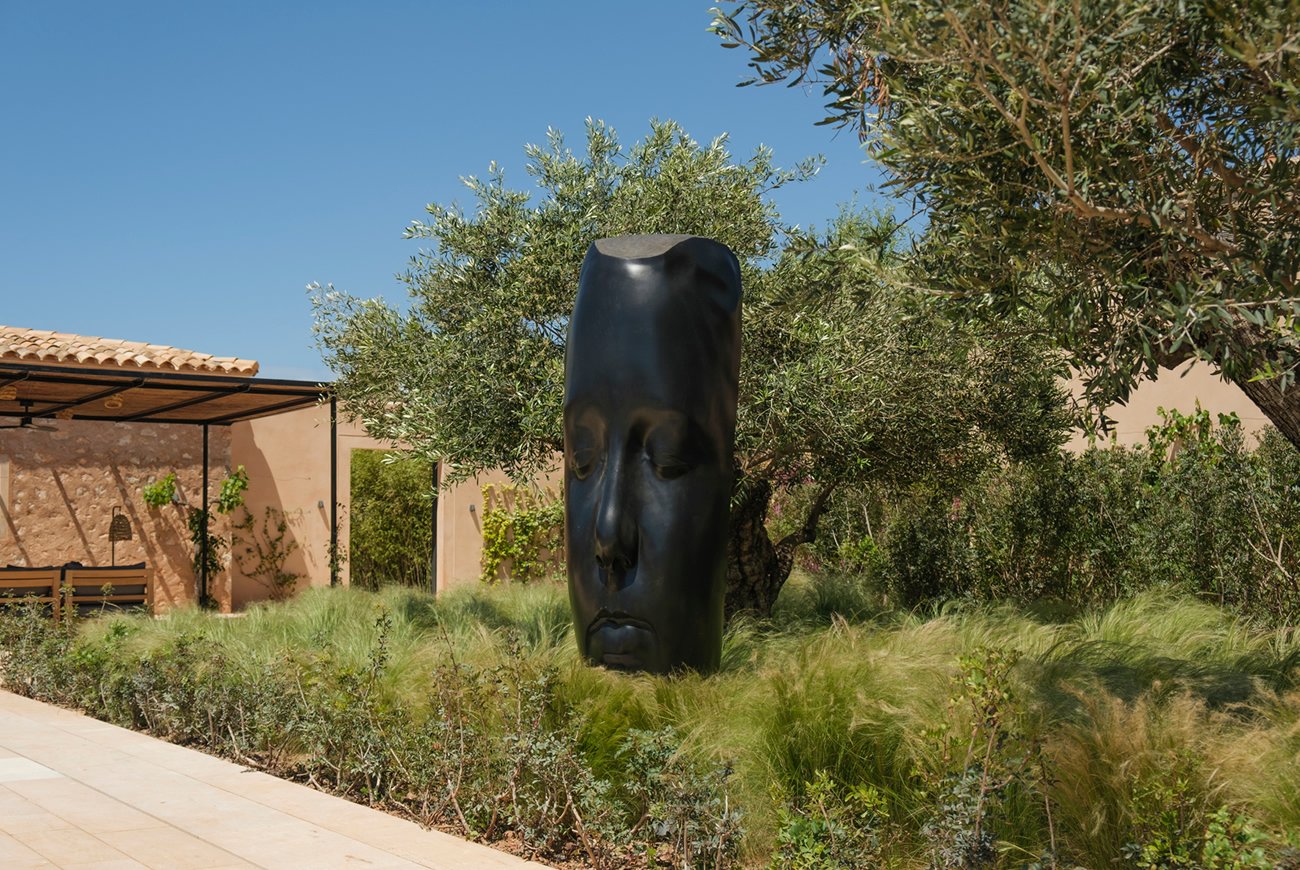
Palma repays two unhurried days: Es Baluard, Palau March, Juan March, Casal Solleric and CaixaForum are all walkable, with the Miró studios twenty minutes out at Cala Major and Sant Francesc a few minutes from any of them. Sóller, Andratx, Santanyí and Alcúdia each want half a day and a car, and Can Ferrereta makes the natural second base for the south. Inland and north, Son Brull is a former Jesuit monastery above Pollença with a vineyard and an olive press turned bar, and Ca'n Beneït is a working finca in the Serra de Tramuntana that makes the argument of this piece in another key: keep the building, change what happens inside it.
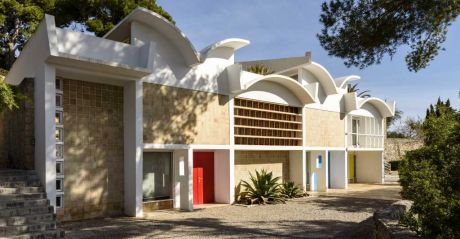
A modernist taller built by post from exile, a farmhouse covered in charcoal figures, and the Palma hillside where Joan Miró made a third of his work.
read more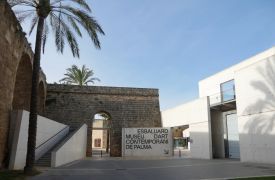
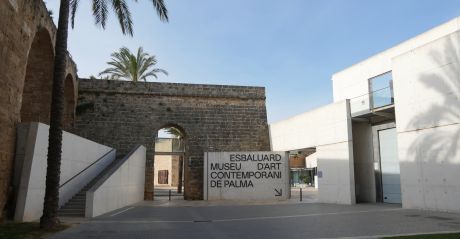
Es Baluard holds more than nine hundred works inside Palma's Renaissance walls, from Anglada-Camarasa to Miró and Barceló, with the bay laid out below.
read more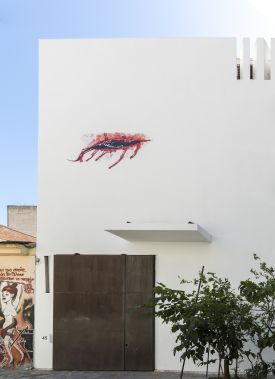
Radical, sometimes political and always on the pulse of Athens’ ever-evolving art scene, The Breeder Gallery is housed in an old ice cream factory, redesigned by architect Aris Zambicos.
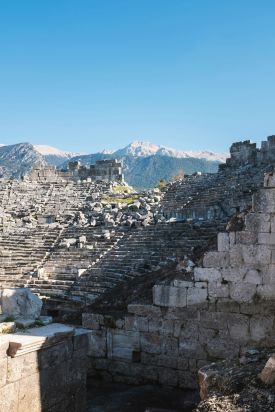
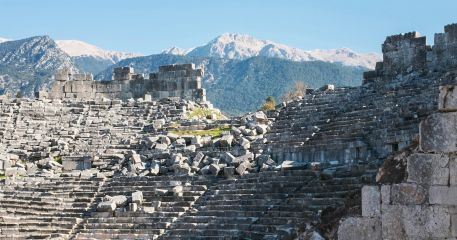
From the cliff-carved tombs of Tlos to the ghost village of Kayaköy, trace the soul of ancient Lycia along the Turkish Riviera’s sunlit coastline and mountain-framed archaeological wonders.
read more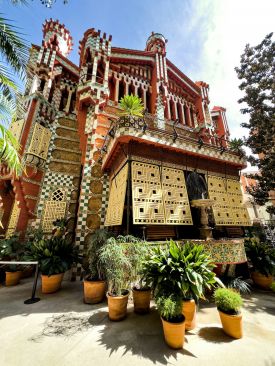
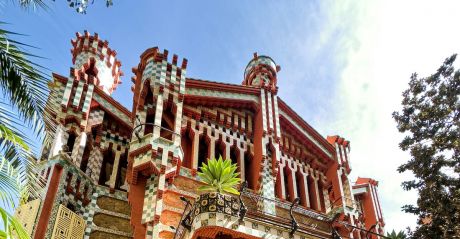
Gorgeously flamboyant, Casa Vicens is a riot of colour and fantastical architectural detailing - bearing the hallmarks of Barcelona hero, Antoni Gaudi.
read more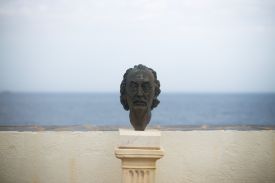
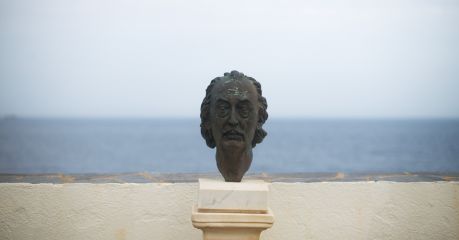
Ava Gardner came here to film Pandora and the Flying Dutchman in Tossa de Mar and was soon followed by Truman Capote, Josep Pla, Picasso, Miro and Duchamp, who, like Dalí loved to capture the refraction of light on water.
read more
A think tank for the bold, the curious, the creators of tomorrow. Where minds collide, conversations spark, and urban life gets redefined. If you shape the future, you belong here.
read more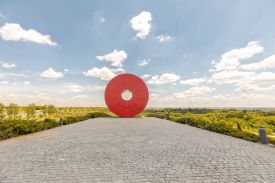

Madrid’s culture and art scene is shaped by galleries, artist-led spaces and institutions, from Lavapiés and Matadero to the Prado and Reina Sofía, unfolding through conversation, continuity and everyday use.
read more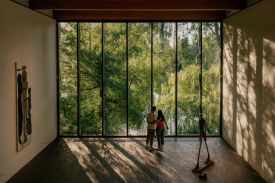
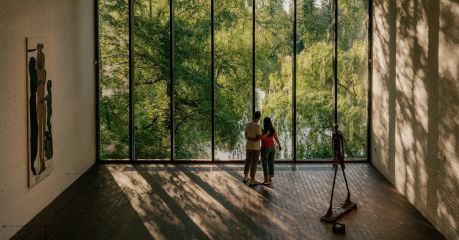
Where modern art meets coastline and clarity, Louisiana Museum of Modern Art turns a museum visit into a coastal walk, framing global creativity through architecture, light and landscape.
read more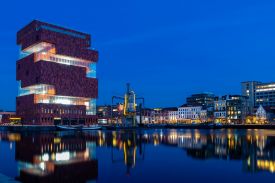
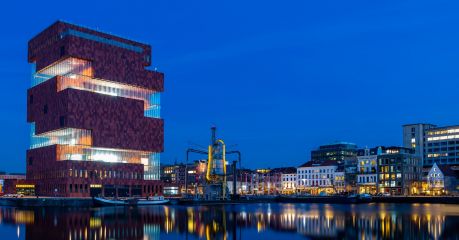
Antwerp is one of Europe's cultural hotbeds with historical landmarks and art institutions. And while Antwerp has plenty of those – we turn our focus on the smaller-scale contemporary culture must-sees the Flemish city has to offer.
read more
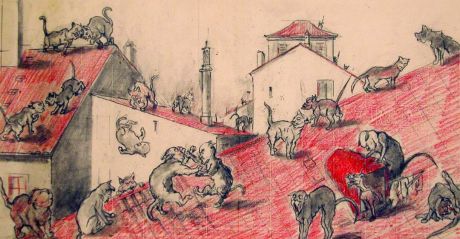
With an extraordinarily creative mind, Rafael Bordalo Pinheiro (1846 – 1923), was known for taking his own approach which can be seen in this revealing museum which showcases his graphic arts, caricatures, ceramics, object design and decoration.
read more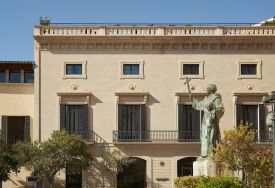
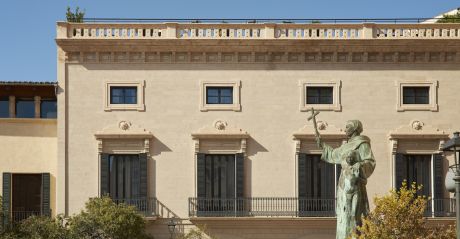
An 1860 Palma mansion turned boutique hotel, Sant Francesc pairs commissioned Mallorcan art, Lissoni and Hayón interiors and chefs Albaladejo and Forteza's Quadrat, minutes from La Seu.
read more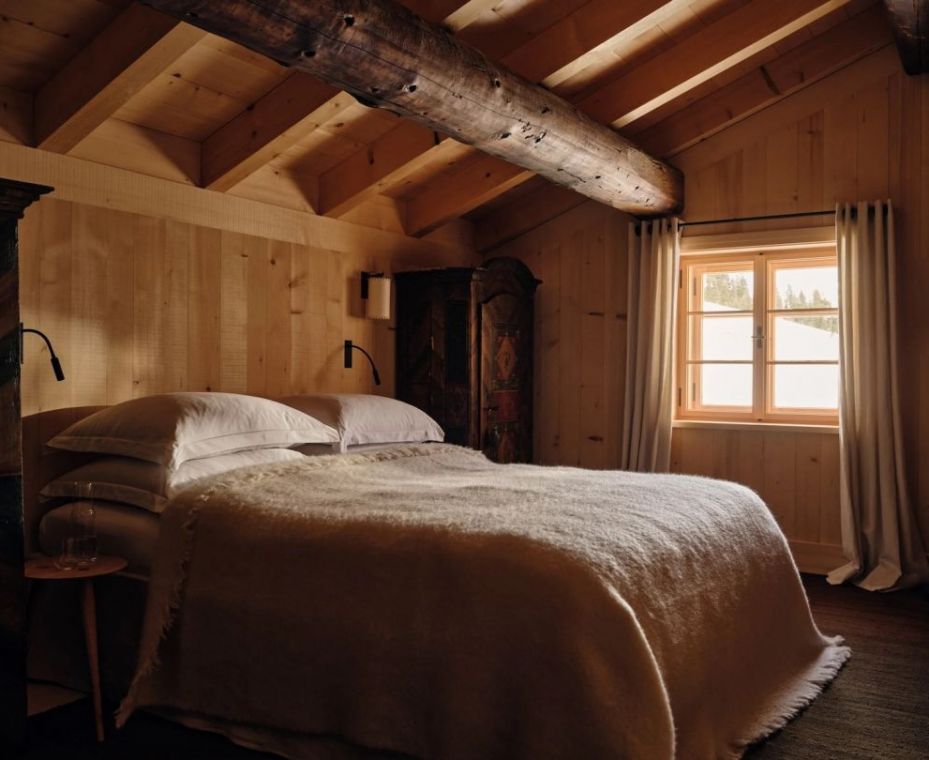
Get the insider news and lowdown on what we've been up to, where we've been, and who we've met along the way. Be the first to discover new places and get the scoop on our favourites.