JOIN the AFICIONADOS
Get the insider news and lowdown on what we've been up to, where we've been, and who we've met along the way. Be the first to discover new places and get the scoop on our favourites.

In the old quarter of Andorra la Vella there is a cupboard with seven locks. It stands in Casa de la Vall, a fortified stone house of 1580 that served as the country's parliament from 1702, and it held the national archive: charters, land rights, the paperwork of a small state that had every reason to keep its papers safe. Each of the seven parishes held one key, so the cupboard could only be opened when all seven turned up. The Armari de les Set Claus is Andorra in a single object, a country that has always been a federation of valleys first and a nation second.
Those valleys are the point. Andorrans call their country the Valls d'Andorra, and the seven parishes (parròquies) are folded into 468 square kilometres of the eastern Pyrenees between Catalonia and the French Ariège. Andorra la Vella sits at 1,023 metres, making it the highest capital in Europe, and it is the only one of the seven to have been split in living memory: Escaldes-Engordany was carved out as the seventh parish in 1978. Catalan is the sole official language, and each parish still runs its own comú, a council with genuine powers over land, roads and local life. Spanish, French and Portuguese are spoken everywhere, the last of these thanks to decades of arrivals who came to build the roads and hotels and stayed.
The arrangement that governs all this is medieval and still working. Under the pareatges of 1278 and 1288, an act of shared lordship designed to settle a long quarrel, sovereignty was divided between the Bishop of Urgell and the Count of Foix. The Foix half passed by inheritance to the French crown and, after the revolution, to the French head of state. So Andorra remains a co-principality with two princes, one a Catalan bishop ten kilometres down the road in La Seu d'Urgell, the other the president of the French Republic, and neither has ever lived here. The national anthem, El Gran Carlemany, credits Charlemagne with founding the place, which is legend rather than record, but it tells you how the Andorrans like to date themselves.
A written constitution arrived only in 1993, the year Andorra joined the United Nations and became a parliamentary democracy with its own foreign policy. Before that, the most eventful interruption came in 1934, when a Russian adventurer named Boris Skossyreff talked his way into the valleys, proclaimed himself Boris I, promised a constitution and a casino, and was escorted out by Spanish police within the week.
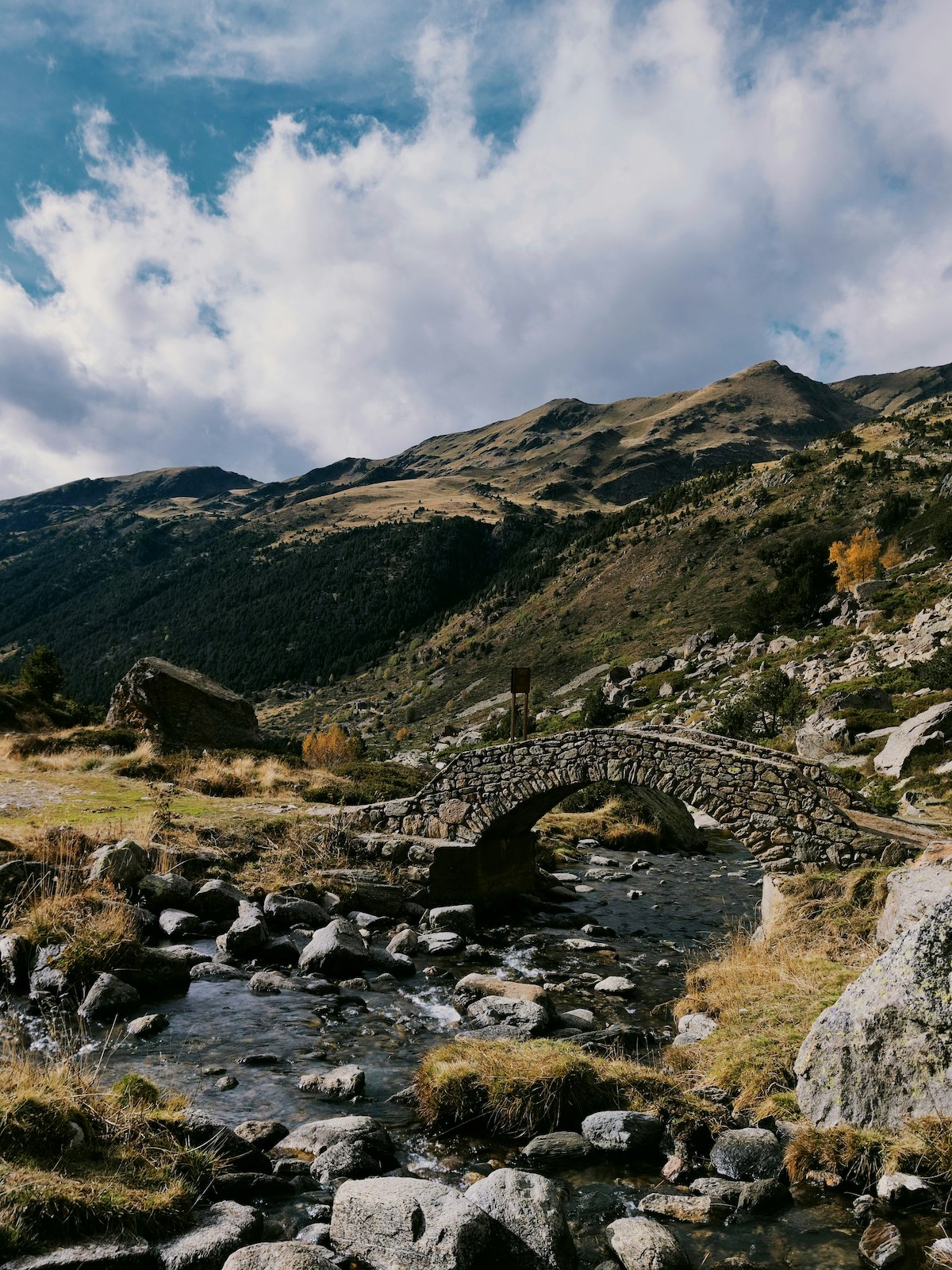
Some forty Romanesque churches survive in the valleys, built by masons working the same Lombard idiom found across Catalonia and left alone by the wars that flattened so much else. Santa Coloma keeps a pre-Romanesque nave and a rare circular bell tower, the only one of its kind in the region. Sant Joan de Caselles stands by itself on a terrace above Canillo, with a stucco Christ in Majesty above the altar. Sant Martí de la Cortinada, in Ordino, holds 12th-century wall paintings that were only rediscovered under later plaster. Down the valley at Meritxell, the sanctuary of the national patroness burned in 1972 and was rebuilt by Ricard Bofill, whose arches and pale stone make a deliberate modern answer to the churches above it.
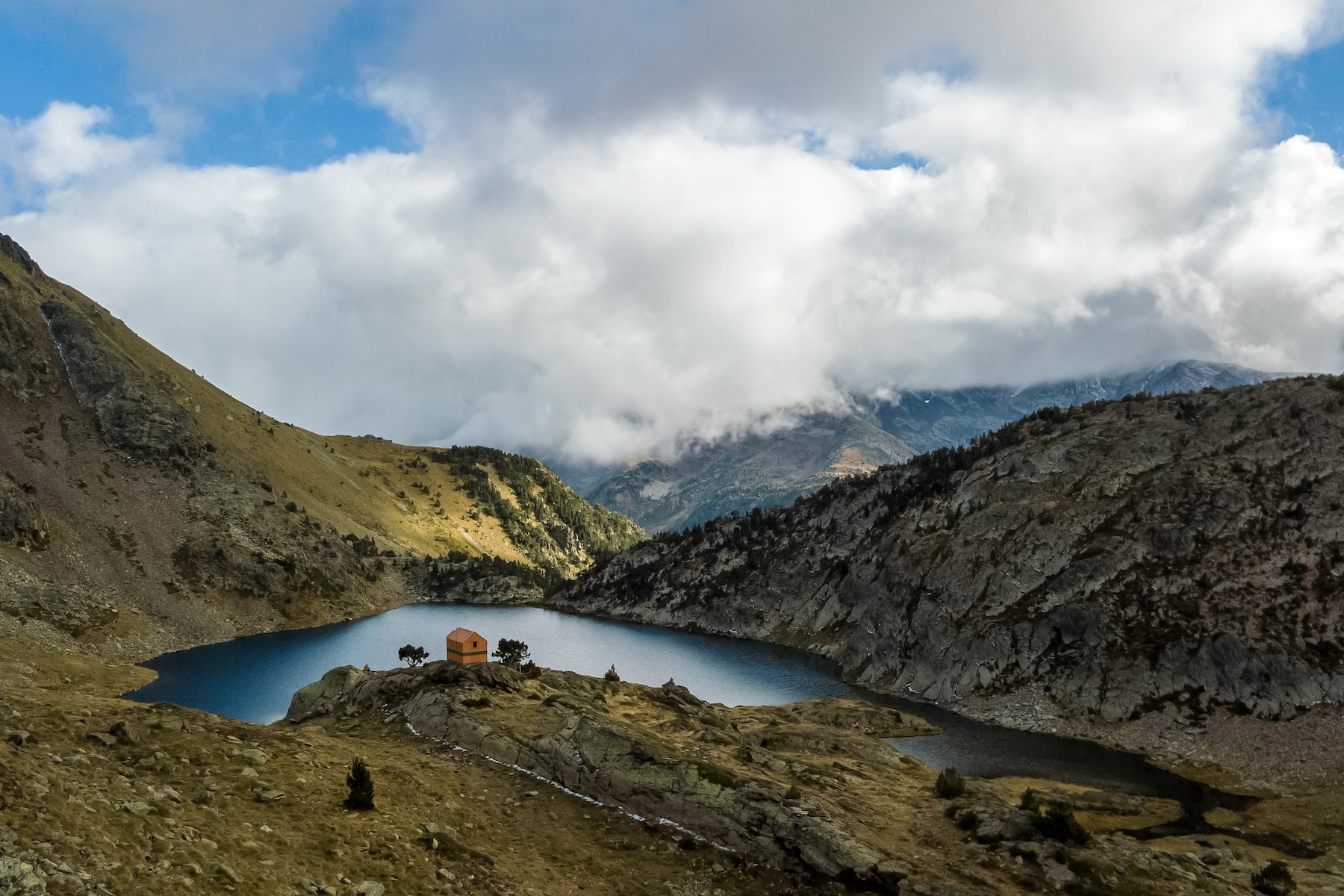
The most remarkable landscape in the country has no road into it at all. The Madriu-Perafita-Claror valley was inscribed by UNESCO in 2004 as a cultural landscape, roughly a tenth of Andorra's territory, and you walk in or you don't go. Its slopes carry the working architecture of high pasture: summer farmsteads (cortals), stone barns (bordes) and the drystone shepherds' huts called orris, some of them still in use, all of them evidence of a way of grazing these mountains that ran for seven centuries.
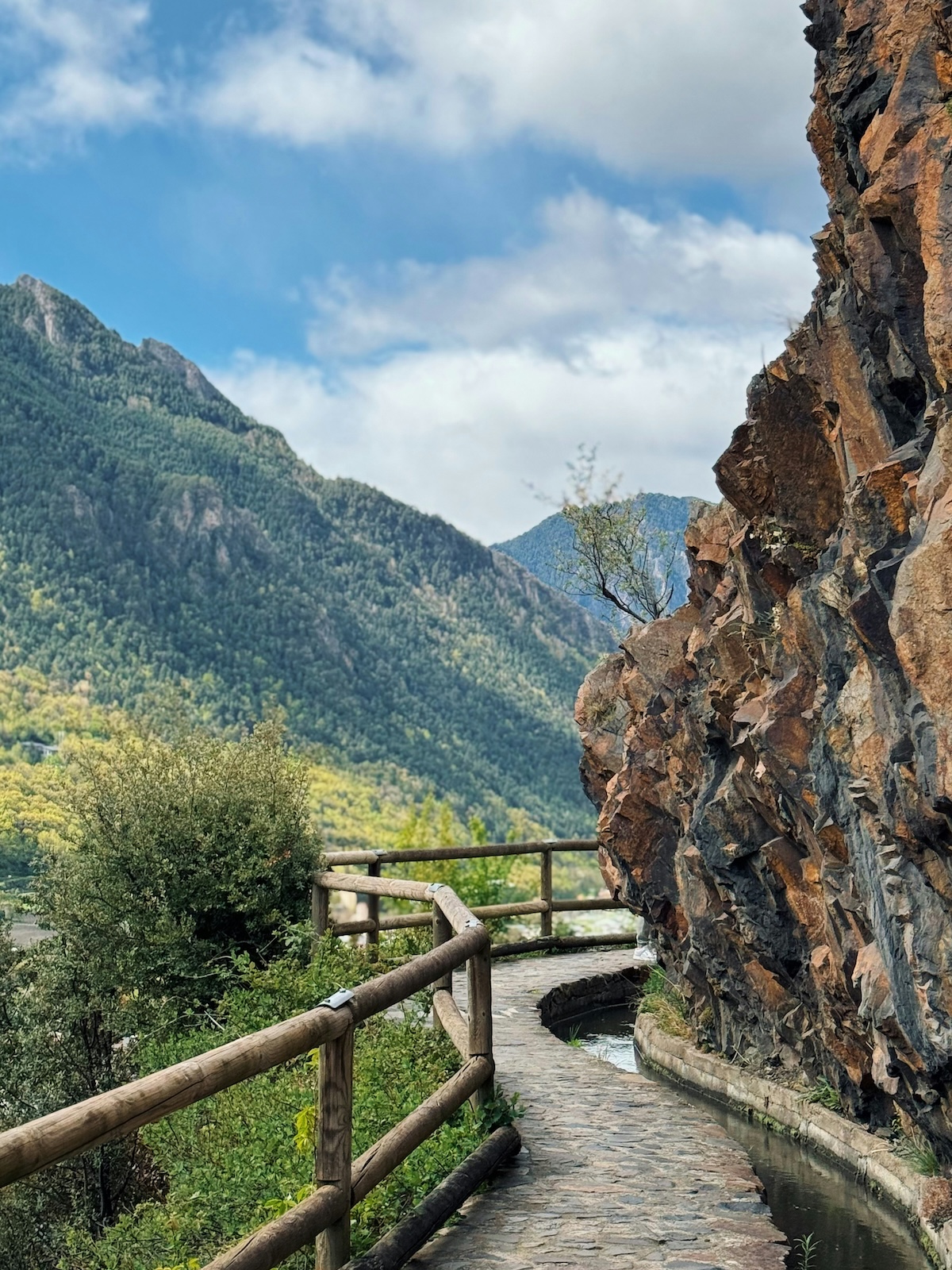
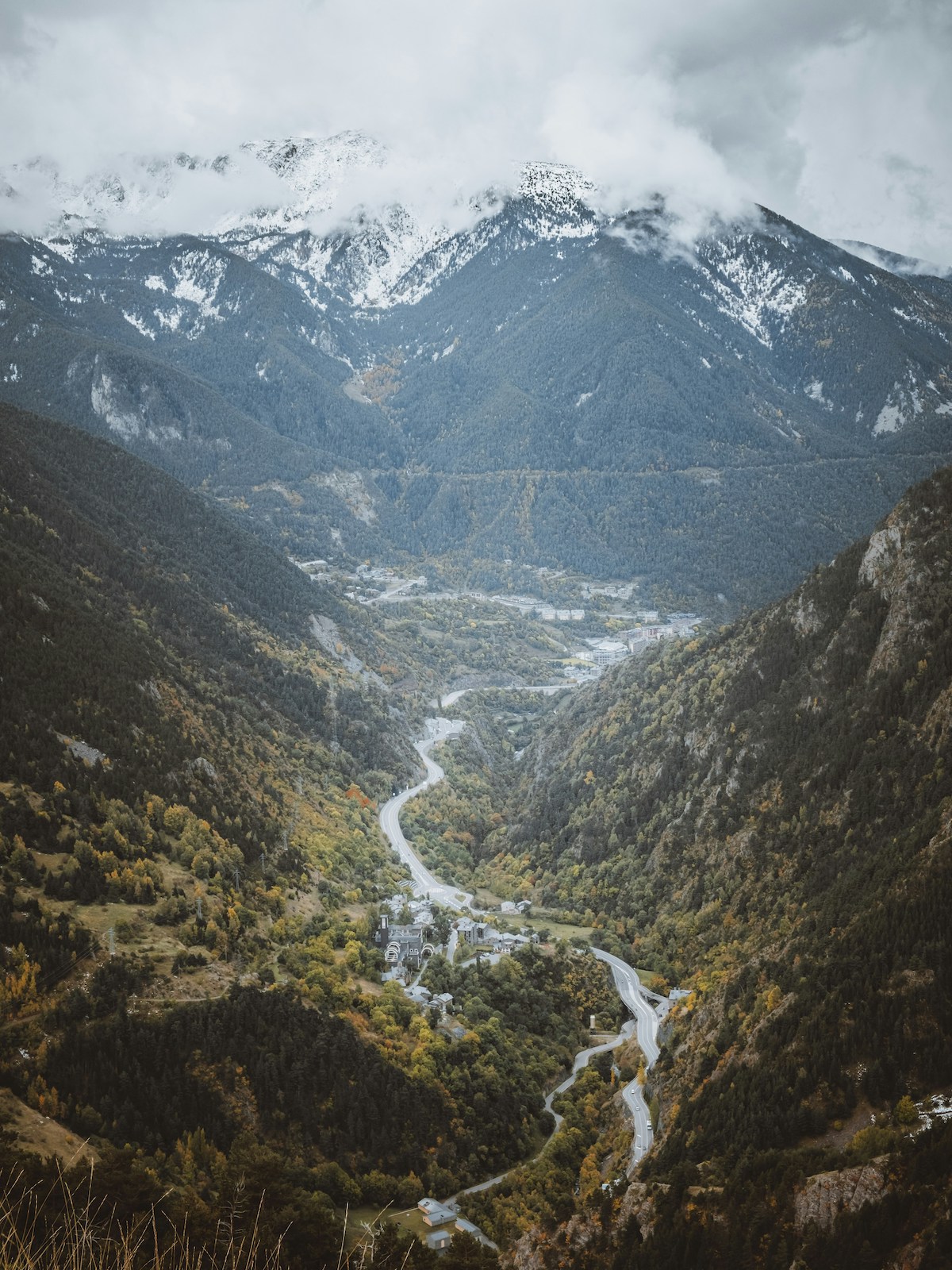
Two head valleys drain the range and give the country its shape. The Valira del Nord comes down through Ordino and La Massana, the Valira d'Orient through Canillo and Encamp, and they join at Escaldes-Engordany to form the Gran Valira, which leaves Andorra past Sant Julià de Lòria. Coma Pedrosa is the summit at 2,942 metres, with Pic de l'Estanyó close behind, and Casamanya at 2,740 metres gives the classic walk, a steady climb from the Coll d'Ordino with the whole principality laid out below. The Tristaina lakes sit in a granite bowl under Arcalís in the far north, Ordino parish is a UNESCO Biosphere Reserve, and the Port d'Envalira, at 2,408 metres on the road to France, is the highest paved pass in the Pyrenees.
Winter runs under one name. Grandvalira Resorts links the country's three ski areas on a single Andorra Pass, some 308 kilometres in all: Grandvalira itself, 215 kilometres across seven connected sectors from Encamp up to Pas de la Casa on the French frontier; Pal Arinsal, 63 kilometres above La Massana and a serious bike park once the snow goes; and Ordino Arcalís, smaller at 30.5 kilometres, north-facing, cold, and long established with freeriders. In summer the same ground carries the GRP, the circuit that rings the country stage by stage, along with the road climbs that draw the Tour and the Vuelta back every few years.
Andorra worked iron before it sold ski passes. The restored Farga Rossell in La Massana shows how the Catalan forge turned local ore into bars for export, and the border crossing into Spain is still called La Farga de Moles after another of them. Tobacco came next, grown on terraces above Sant Julià de Lòria and still grown there, with a museum in the old Reig factory to explain how a leaf became the country's duty-free trade. The table stays firmly mountain Catalan: escudella, trinxat of cabbage and potato, tupí cheese kept in earthenware, coques for a feast day. At Sant Julià's festa major the old contrapàs and marratxa are still danced in the square. In Escaldes, the hot springs that gave the parish its name feed Caldea, a glass spire of a thermal complex that is among the largest in southern Europe.
The borderlands repay a day each way. La Seu d'Urgell, seat of the co-prince bishop, holds the only Romanesque cathedral in Catalonia and a Tuesday market worth timing a drive around. West lies the Pallars Sobirà and the wild Vall Ferrera, east the wide meadows of the Cerdanya, and north the Ariège, where the road drops from Envalira into a French valley that feels centuries away from the shops of the capital.
There is no railway and no commercial airport in the country. The nearest railhead is l'Hospitalet-près-l'Andorre in France, the small Andorra-La Seu d'Urgell airfield takes private and seasonal flights, and Barcelona and Toulouse are each about three hours by road. That last stretch of driving is what keeps the valleys as they are.
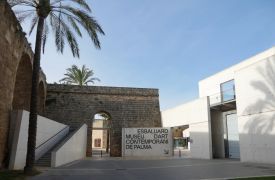
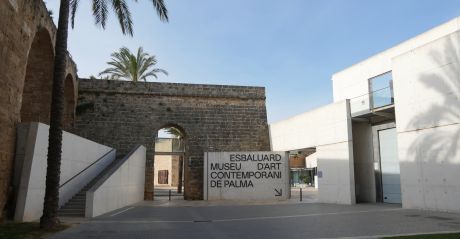
Es Baluard holds more than nine hundred works inside Palma's Renaissance walls, from Anglada-Camarasa to Miró and Barceló, with the bay laid out below.
read more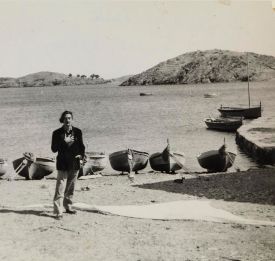
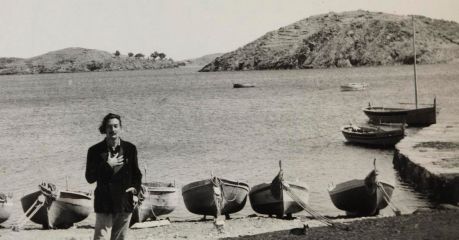
"My mystical paradise starts on the plains of the Empordà” were the words of Dalí describing his homelands blacked by the Pyrenees mountains inland and edged by the Costa Brava Mediterranean coastline.
read more
A think tank for the bold, the curious, the creators of tomorrow. Where minds collide, conversations spark, and urban life gets redefined. If you shape the future, you belong here.
read more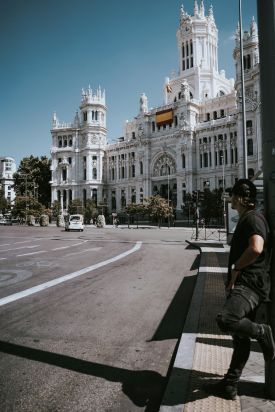
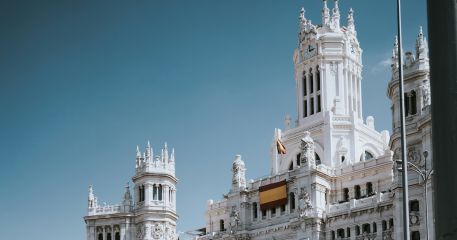
Madrid is built on routine, conversation and urban life, shaped by historic quarters, modern ambition, design culture and food, revealing itself through daily use to artists, architects and curious minds.
read more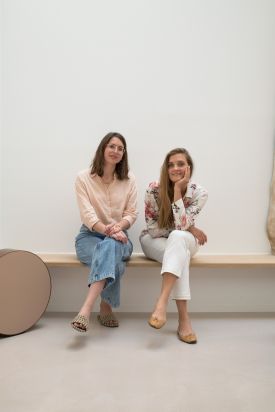
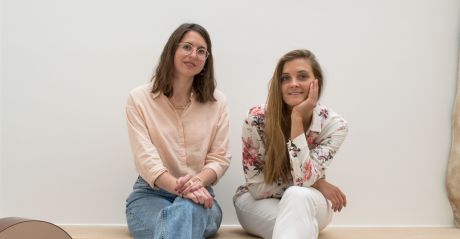
Just off Rue des Martyrs in Paris, in the 9th arrondissement, Zeuxis Contemporary Art Gallery created by Amélie du Chalard is the Maison d'Art Amelie - a showcase for paintings, engravings, sculptures, photographs, videos and works of art set within a magnificent apartment.
read more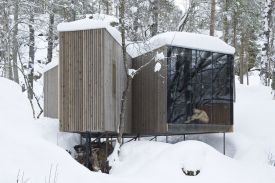
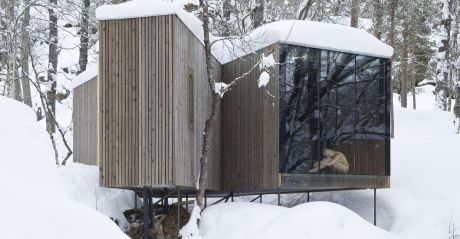
Four cute bastions of style and snuggle up in the duvet sentiments for winter, none of which are in France.
read more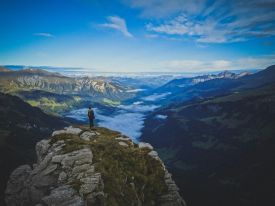
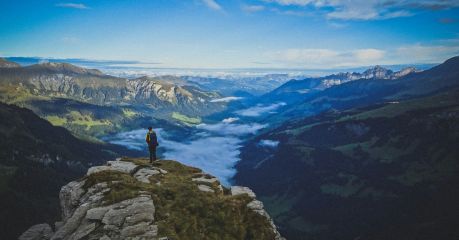
High above Adelboden, three peaks hold the line: Wildstrubel, Lohner and Bunderspitz. This is the Bernese Alps as pilgrimage — elemental, poetic and shaped by silence, not speed.
read more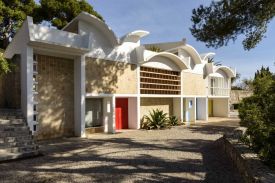
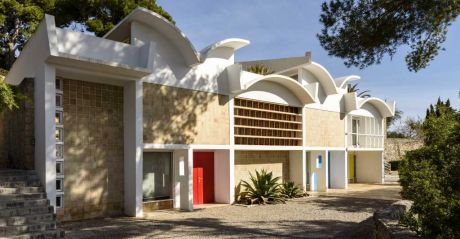
A modernist taller built by post from exile, a farmhouse covered in charcoal figures, and the Palma hillside where Joan Miró made a third of his work.
read more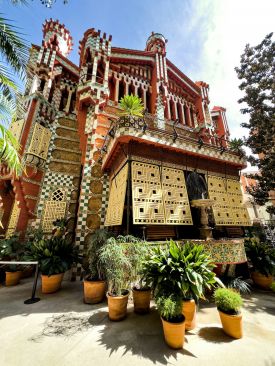
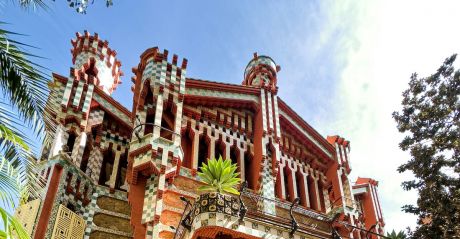
Gorgeously flamboyant, Casa Vicens is a riot of colour and fantastical architectural detailing - bearing the hallmarks of Barcelona hero, Antoni Gaudi.
read more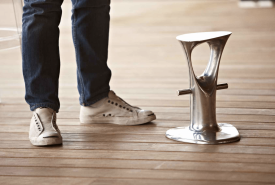
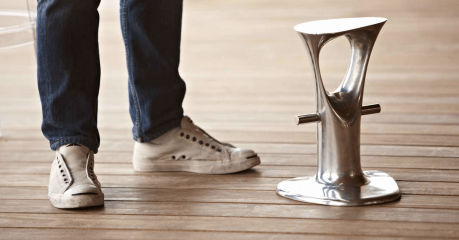
French designer Philippe Starck, himself an avid fan of sail and designer of super yachts, turned his hand to creating a new Port Adriano Marina in Mallorca – an architectural masterstroke and ‘Starck’ beautiful with not a parking lot in sight.
read more
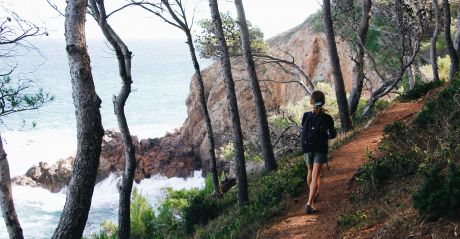
Spain's 150km Camí de Ronda is a historic walking trail that passes through the rugged beauty of Costa Brava’s Catalan coastal routes from Blane, Begur to Calella de Palafrugell and La Fosca.
read more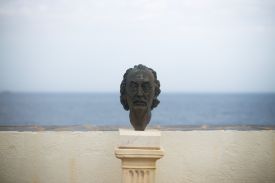
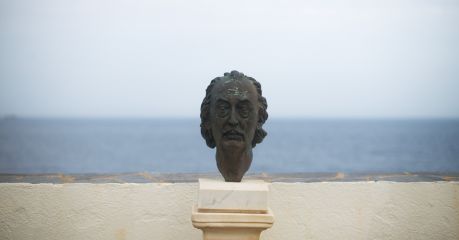
Ava Gardner came here to film Pandora and the Flying Dutchman in Tossa de Mar and was soon followed by Truman Capote, Josep Pla, Picasso, Miro and Duchamp, who, like Dalí loved to capture the refraction of light on water.
read more
Get the insider news and lowdown on what we've been up to, where we've been, and who we've met along the way. Be the first to discover new places and get the scoop on our favourites.