JOIN the AFICIONADOS
Get the insider news and lowdown on what we've been up to, where we've been, and who we've met along the way. Be the first to discover new places and get the scoop on our favourites.

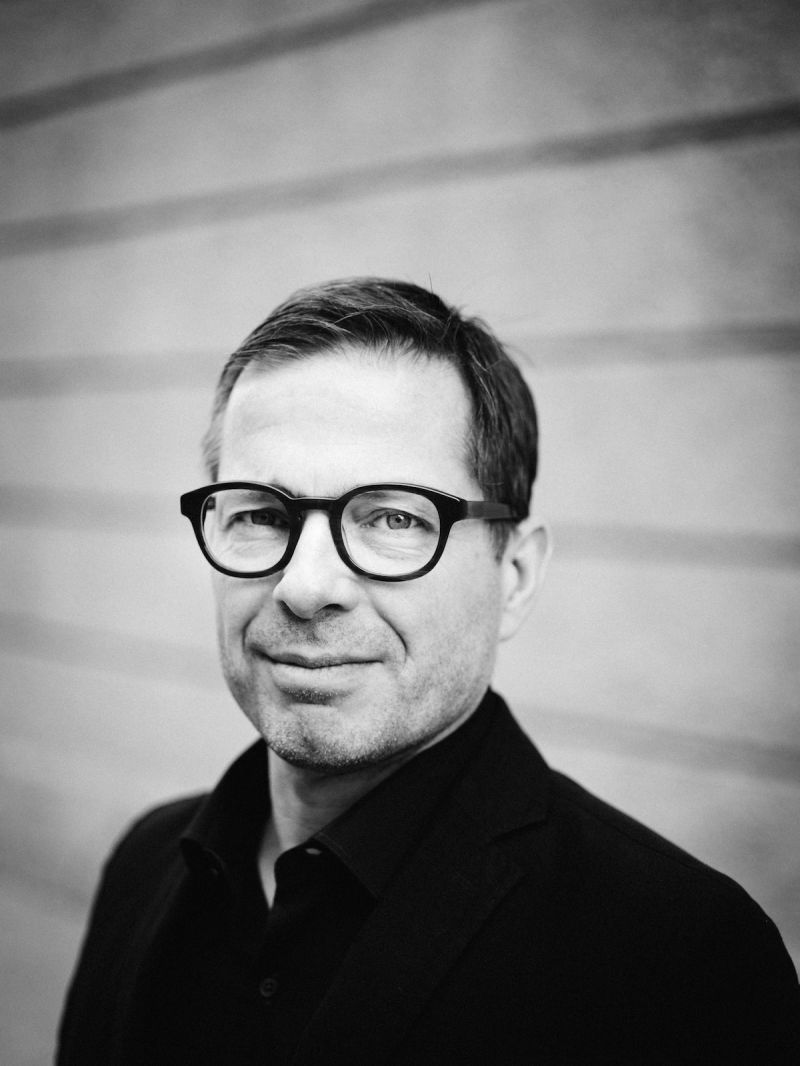
Salzburg's oldest inn has been trading since 1350 and in the Gfrerer family for a century. Andreas Gfrerer has spent twenty-nine years turning it into the city's only art hotel, and rather longer arguing that a city built on its past still owes something to the present.
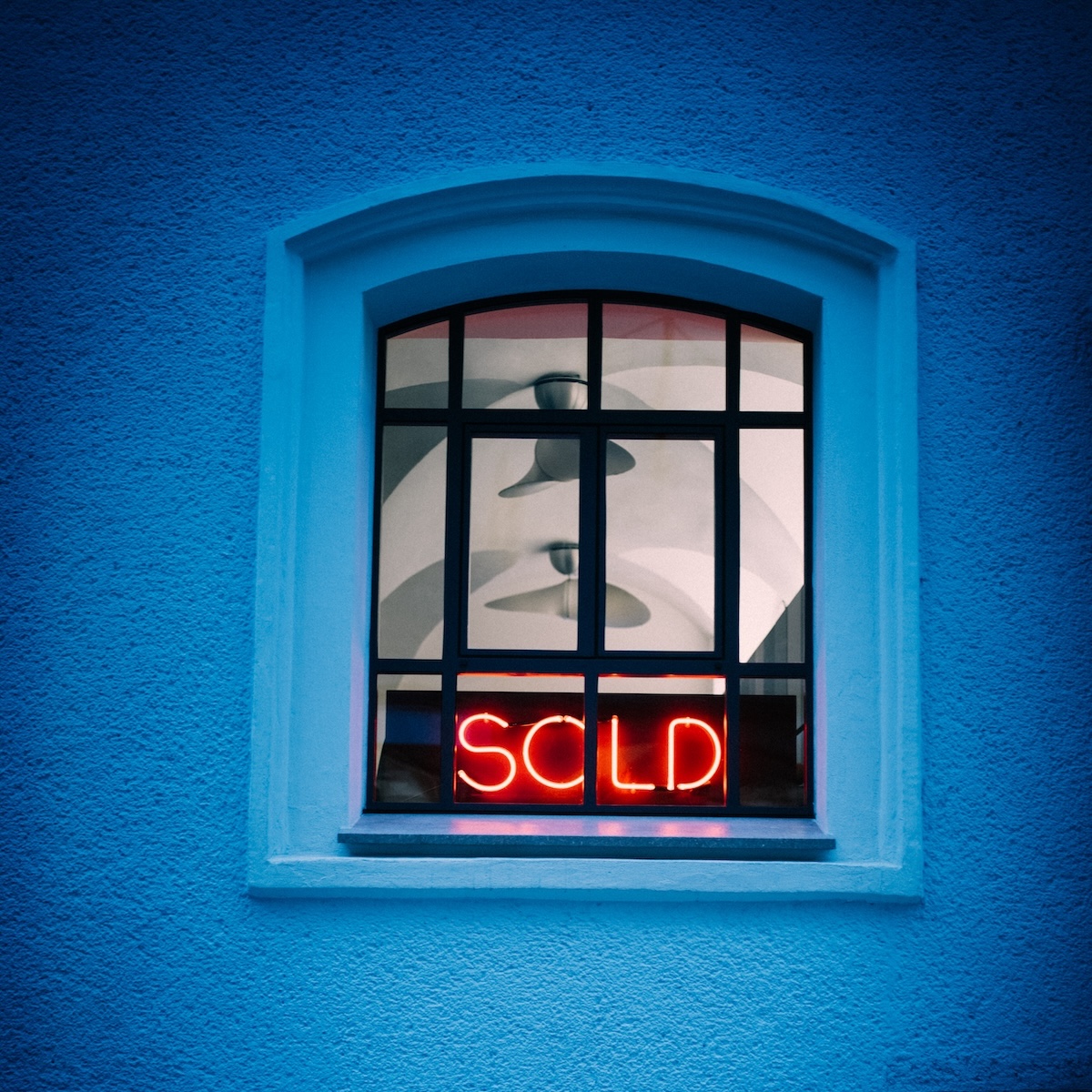
A red neon sign in a window on Getreidegasse spells the word SOLD. It was the first artwork Andreas Gfrerer put into the Blaue Gans, and guests still misread it. They assume the hotel is full. "But I can live with that," he says, which tells you a good deal about how the house is run.
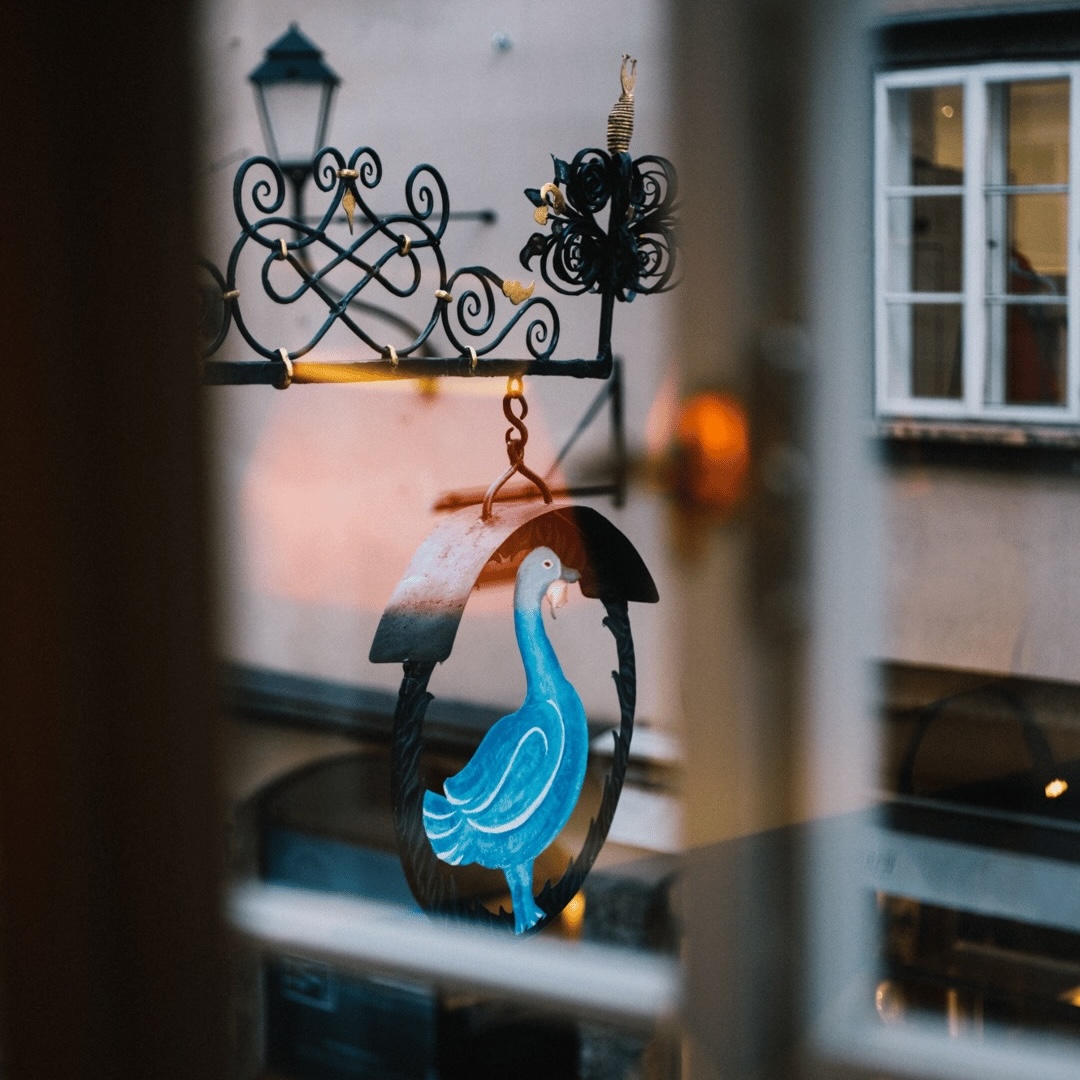
The Blaue Gans has served food and offered rooms since 1350, making it Salzburg's oldest inn. It has belonged to the Gfrerer family for around a hundred years, although not all generations, like his parents, actually ran the house; now, with Andreas at the helm, the house is firmly in family hands. The name came from a mistake: the house was to be called Zum Fasan, the pheasant, and the craftsman who painted the sign produced a bird the neighbours took for a blue goose. Nobody has bothered to correct it since about 1601.
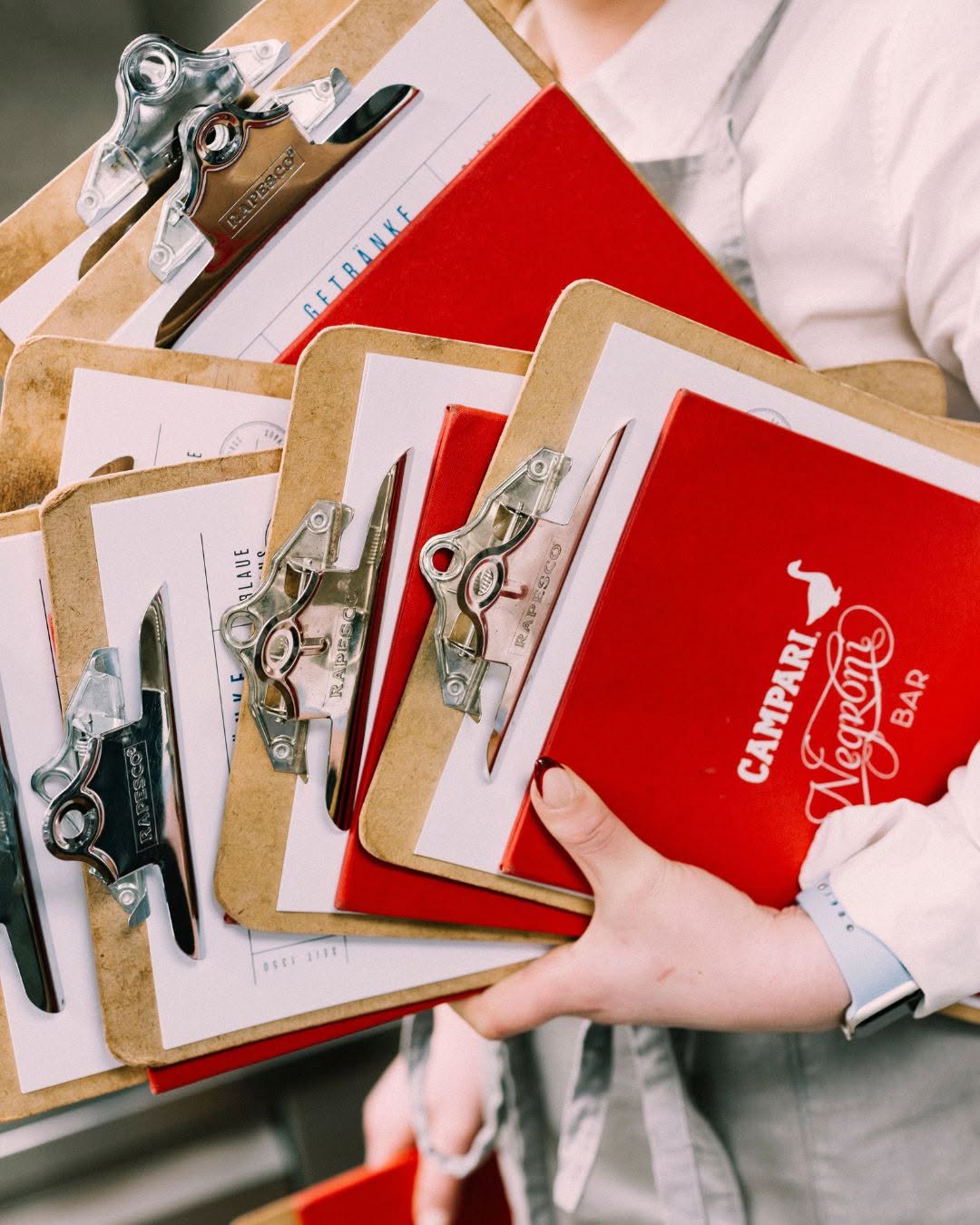
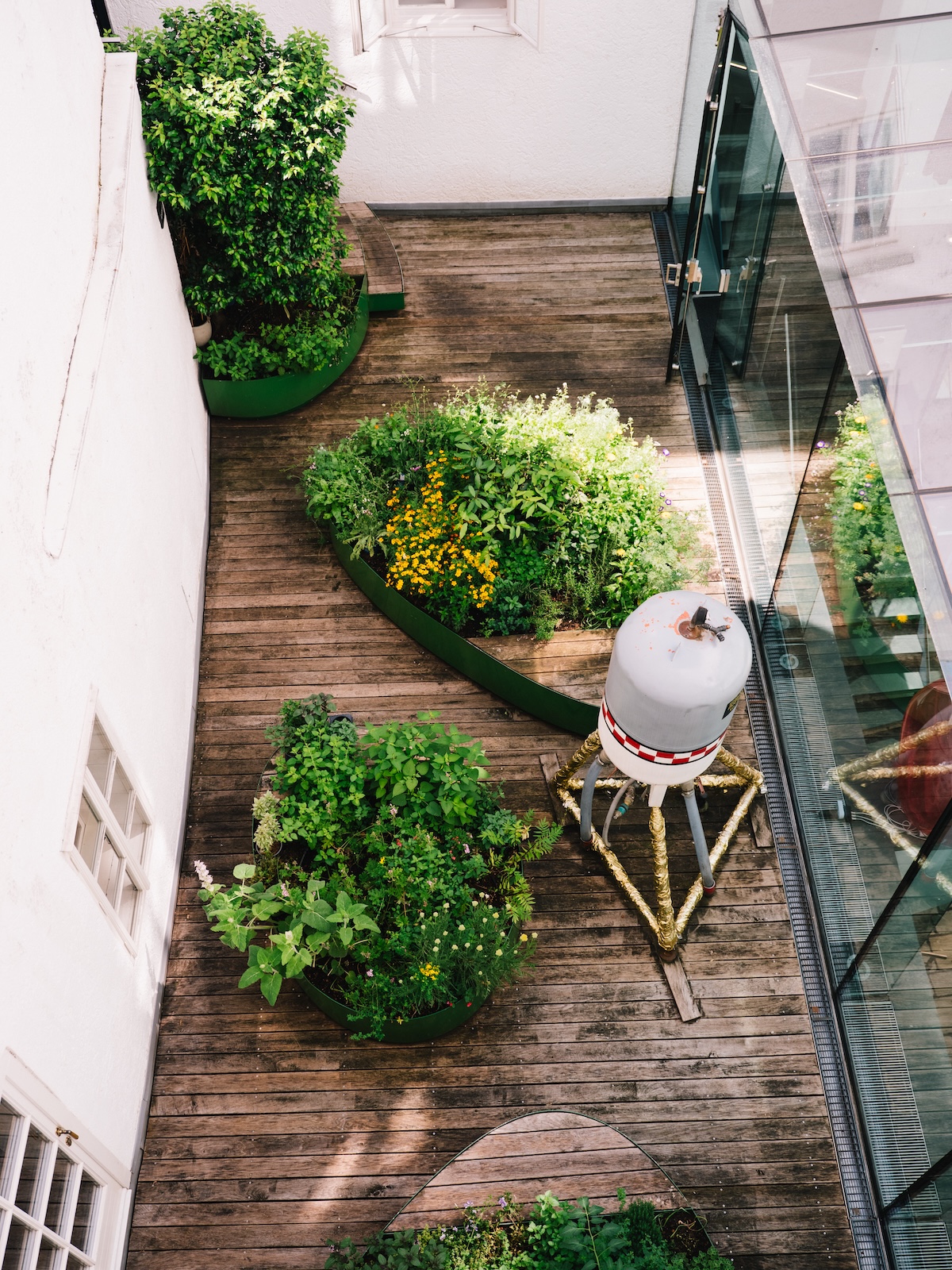
Gfrerer took the building on in October 1997. He was twenty-six and studying in San Francisco when a twenty-five-year lease ran out, and someone called asking him to return. What he began almost at once has run to eight separate rebuilds, the most recent finished for the house's twenty-fifth anniversary in May 2023. A glass body was dropped into the courtyard for light. A motorcycle parking space became a garden restaurant. An empty unit became a red Campari bar.
The art arrived alongside the building work. The first purchase came from his first self-earned money as an owner: a Staudacher, "Seelengarten," which still hangs in the house. There are now more than three hundred works by over sixty artists, almost all originals, hung through the rooms, corridors, stairwell and wine archive. There is no gallery space and no wall label. A video installation sits at reception. A photograph waits by the lift. A piece of firewood is signed by Joseph Beuys. Asked once what his collecting concept was, his first answer was that he did not have one.
He arrived at a better one on reflection, and it is the right one for a hotel: encounter. He once drove the South African artist William Kentridge, whom he admires a great deal, and his wife out to Schloss Fuschl, showed them the lakes and took them to dinner. "When I walk past his work, I remember that."
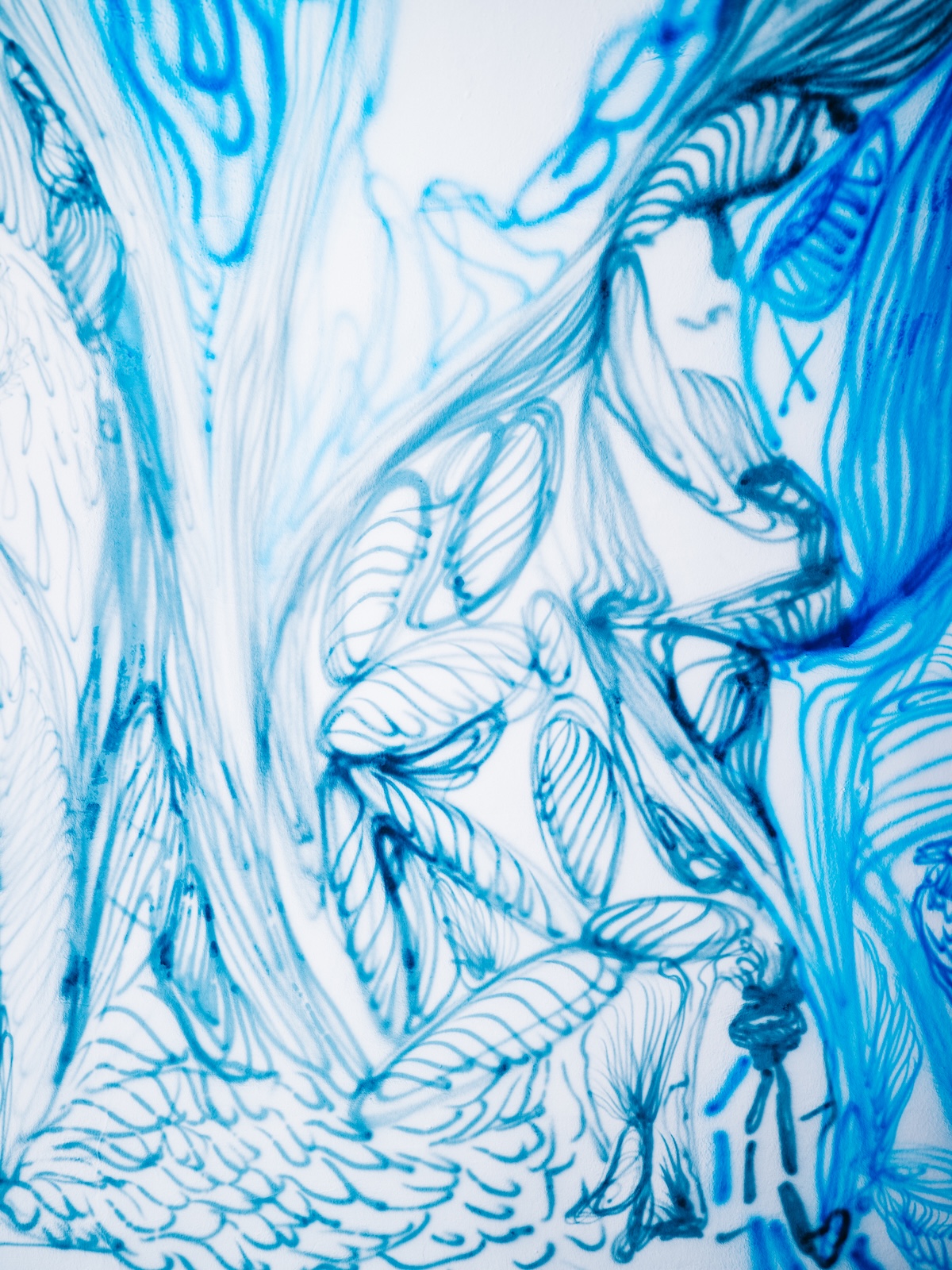
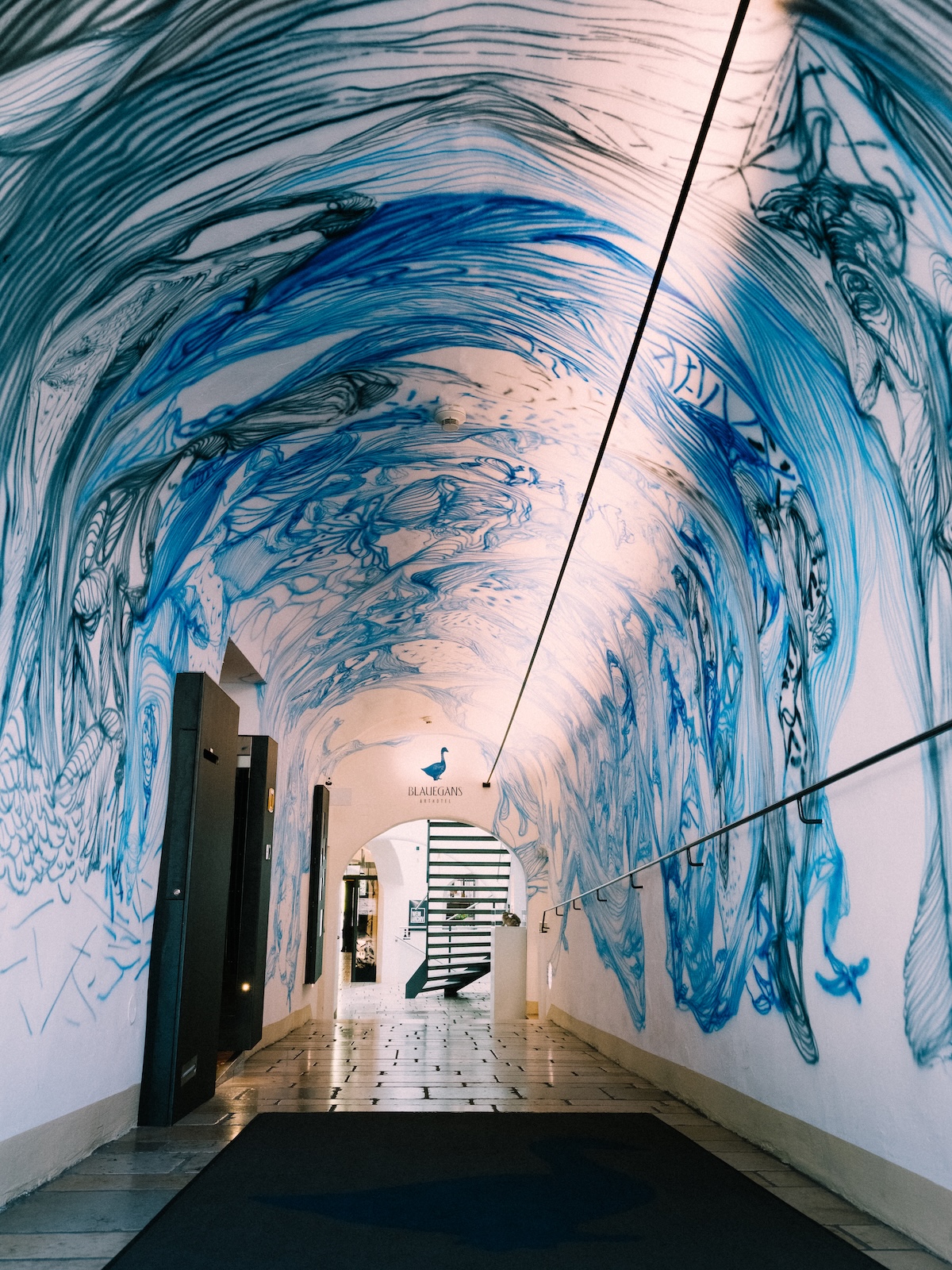
The part he is proudest of is the commissioned work, and the clearest case sits at the front door. In 2022 he asked Christian Schwarzwald, born in Salzburg the same year as Gfrerer and now a professor at the Akademie der bildenden Künste in Vienna, whether he could bring the passageway between the new reception and the lounge to life so that guests would step into a blue world. Schwarzwald prepared the work on a computer and applied it by airbrush over a full day and a night. Blue because it is in the hotel's name, and because blue is a writing colour. It is now the most photographed room in the building.
Asked to name one work in the house he would least want a guest to walk past, Gfrerer chooses that one, and not for the reason you would expect. "Not necessarily because the sheer spread of the colour makes it the most spectacular work in the house, but because it shows how art and architecture can become a single experience. It does not meet the guest as an object on a wall, but as a space you move through. I had begun to understand that we are not a hotel with art in it, but that art can become part of the identity of the house. Anyone who pauses there for a second may understand rather better what the Blaue Gans is actually trying to be."
That distinction governs how he commissions. "The most important thing is that artists do not try to meet my expectations. If I invite someone, it is because of their perspective. I am not interested in a decorative solution for a lot of white walls, but in an artistic response to a place. That is why many projects begin with long conversations rather than with sketches or budgets." Success is measured by friction rather than fit. "If a guest only thinks 'that sits nicely there,' it is not enough. It becomes interesting where a work keeps its own voice and would hold up outside the Blaue Gans as well." He has a taxonomy for this, built out of three sounds. "AHA moments, which are discovery: I have never seen or heard that before. MHM moments, which are confirmation: that is me, that is how I see it too. And HÄ? moments, which are friction: I do not understand it, but I feel it has something to do with me. All three are legitimate, but the HÄ? moments carry the most potential for change."
The house makes room for all three. Tim Etchells's red Emergency Phone hangs indoors and David Moises's Vertigo Rocket stands in the atrium garden. Niklaus Troxler's music-inspired mural lines the passage to the guest quarters. An original Alfred Kubin drawing was added recently to a collection otherwise entirely contemporary; the writer having used the Blaue Gans repeatedly as a setting in his 1909 novel "Die andere Seite"; Gfrerer calls it the Kubin altar. He says he hates carpet, and that patina is welcome, being the laughter line of things.
None of this stays inside the building, which matters for Salzburg. Gfrerer sits on the board of the Salzburg Foundation, the private initiative set up in 2001 as a deliberate answer to the city's older tradition of patronage. Its Walk of Modern Art commissioned one artist a year from 2002 to 2011, among them Anselm Kiefer, Marina Abramović, James Turrell, Christian Boltanski and Erwin Wurm, each choosing their own site in a World Heritage city. Two decades on he is neither sentimental about it nor apologetic. "I still believe cities are at their most interesting where their present, and their unselfconscious use, is visible. Historicity is valuable, but on its own it is not enough. Otherwise, the city is no longer even a stage, only a backdrop." The Stage of the World is Salzburg's own tourism brand, which he knows perfectly well. "A comparable project started today would probably have to be more dialogic. At the same time, you must not lose the nerve for artistic autonomy. Good art rarely comes out of consensus. The decisive measure would not be immediate approval, but whether the works are still putting relevant questions to the city in ten or twenty years."
He has been prepared to defend that at some cost. In 2008, when Kiefer's walk-in pavilion in the Furtwänglerpark was threatened with removal from the Festspielbezirk, Gfrerer helped assemble more than forty prominent Salzburgers in front of it within two days and offered some thousand euros of his own money to move it within the park. He is careful not to overstate what it achieved. "I am not sure you can speak of any great change brought about by a single action. What it did do was make audible the voices that existed alongside the tabloid press's campaign: that art in public space does not have to please everybody in order to matter." Then the line that explains the rest of his public life: "For me the responsibility of an art hotel does not stop at its own front door. Cultural politics does not begin in party programmes. It begins where people take responsibility for the cultural space."
The record bears him out. He took the original idea for what became Jazz & The City to the Altstadtverband, and in 2021 handed the hotel over for four days to musicians, who moved in and ran it. He chairs his own talk series in the building, the Gänsehaut-Salon, and has put questions there to the state governor. He served on the Altstadt association's board for more than twenty years, latterly as chairman, until 2022. He has described himself as a keeper of the flame, on the grounds that Salzburg has more than enough administrators of the ashes.
Which leaves the question of what a thirty-five-room hotel can do for living artists that an institution cannot, in a country whose cultural reputation rests almost entirely on the dead. His answer starts by conceding the inheritance. "Austria has an extraordinary cultural inheritance and we are entitled to be proud of it. At the same time there is always the danger that the past becomes so dominant that the present fades beside it. A hotel has a particular role here: it is not a museum, and it does not have to follow an art-historical narrative."
Then he turns the history around. "It amuses me that the collections of the princely houses, the Wunderkammern, became the museums we now celebrate as assertions of the bourgeoisie. At the same time, hotels often become Wunderkammern in their own right through serious collecting. Except that in our houses the wonder of resonance and human encounter is added to it. People meet art here by chance and without any fear of it. Artists meet travellers, neighbours, regulars, and sometimes people who would never otherwise set foot in a gallery." It is an ambition he has stated before that the Blaue Gans should become a genuine Wunderkammer, and after twenty-nine years and eight rebuilds it is close to having arrived. "If it can contribute anything, perhaps it is exactly that: an open space for contemporary happenings, in the middle of everyday life rather than outside it."
The SOLD sign stays in the window.
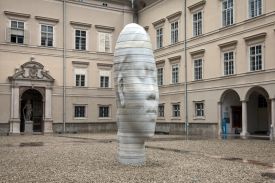
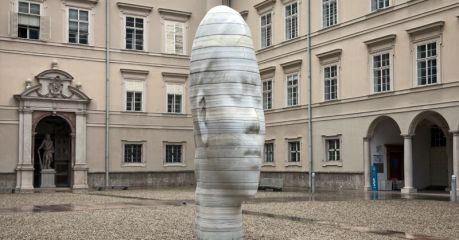
Kiefer, Turrell, Abramović, Plensa and Wurm, set into Salzburg's squares, courtyards and cliffs: the city's free sculpture route, walked in order from Getreidegasse to Mirabell.
read more
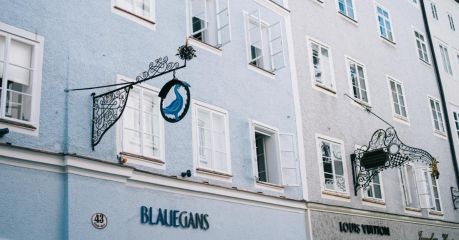
A cradle of the arts and style where twisted beams and heritage-thick walls flank a contemporary curatorial scene at this historic coaching inn and foodie haunt since 1350.
read more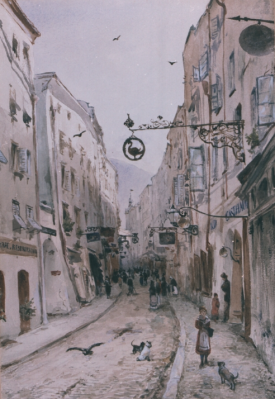
When dealing with one of the oldest buildings in Salzburg, it takes the architect’s clever manipulation of architecture and design to create an exciting, inspiring atmosphere that coverts the old and the new to extreme yet complimentary dimensions.
read more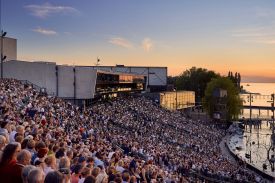
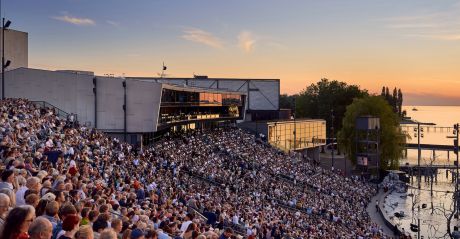
Bregenz Festival, an operatic culture den on Austria's Lake Constance is one of Austria's biggest art events, home to the world's largest floating opera stage.
read more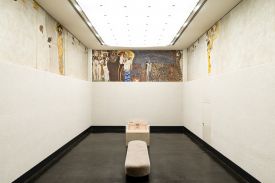
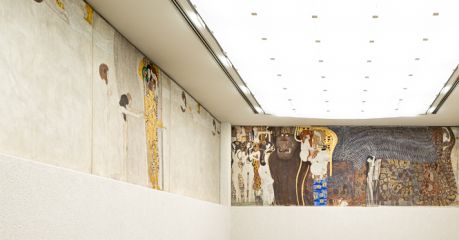
Browse our unique Vienna Art Guide below for all there is to know about Austria’s art and culture capital. Once the epicentre of the longstanding Habsburg empire, Vienna is awash with galleries, artists, museums and odes to moments of age-defining culture, as well as a new generation of creatives call this city home, once again.
read more

A fabulous Winter Festival in Austria's snowy Salzburg - Salzburg Winter Festival December 2025 celebrates Contemporary Circus with acrobatics, juggling, music and Machine de Cirque - fun from France, Canada & Austria.
read more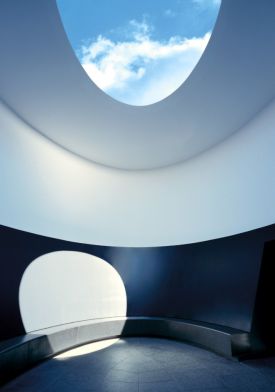

Turrell’s latest skyspace is such an iteration, located in Lech, a little skiing town in the Arlberg mountains, Austria. At a height of almost 1800 meters above sea-level, The Skyspace-Lech, a lightroom inside a stone building at the end of a 15-metre tunnel, is set in alpine terrain, and is only accessible by foot or by skiing – so wear your walking shoes and your best raincoat.
read more
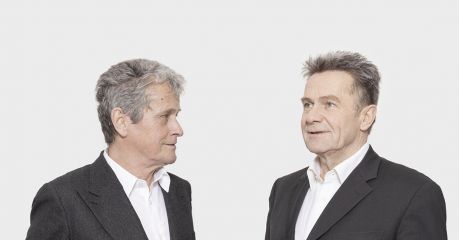
With more than 9000 artworks, Vienna's Museum Moderner Kunst Stiftung Ludwig Wien, MUMOK for short, sits au courant against the vast MuseumQuartier designed by Ortner&Ortner Architects.
read more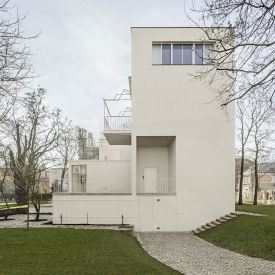
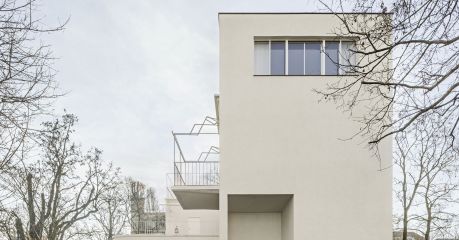
Josef Frank’s Villa Beer reopens in Vienna in 2026 following a careful restoration, offering rare access to one of his most important architectural works and a deeper understanding of the ideas that later shaped his celebrated interiors and textiles for Svenskt Tenn.
read more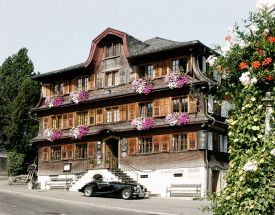
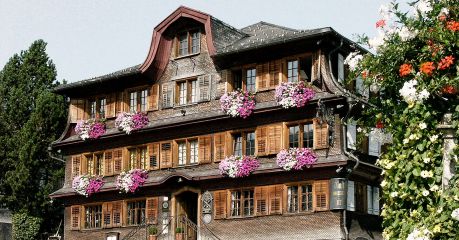
Ten generations, one crooked 1755 inn reborn: the Hirschen pairs sweet Bregenzerwald heritage with cool urban calm, a Michelin green-star kitchen and award-winning timber bathhouse.
read more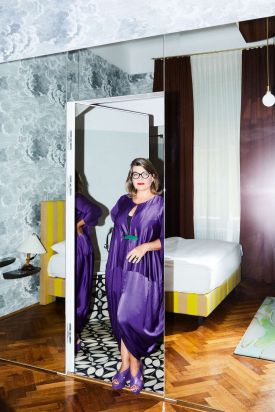
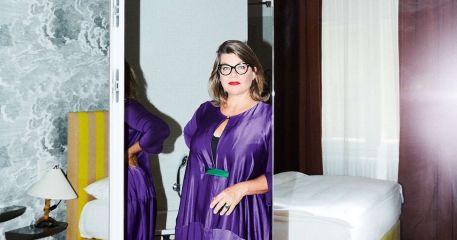
Director of internationally acclaimed Vienna Design Week, Lilli Hollein had never yet turned her eye to interior design until Vienna's Hotel Altstadt came knocking.
read more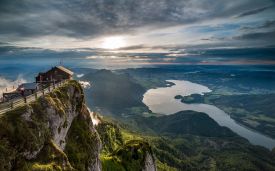
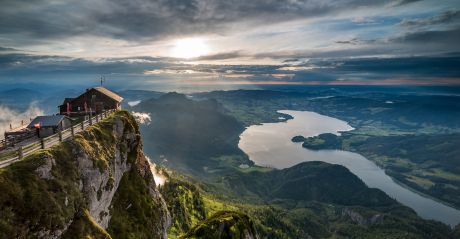
Austria's famed Lake District, Salzkammergut, lies just south of Salzburg, bursting with natural beauty and special 'points of happiness'.
read more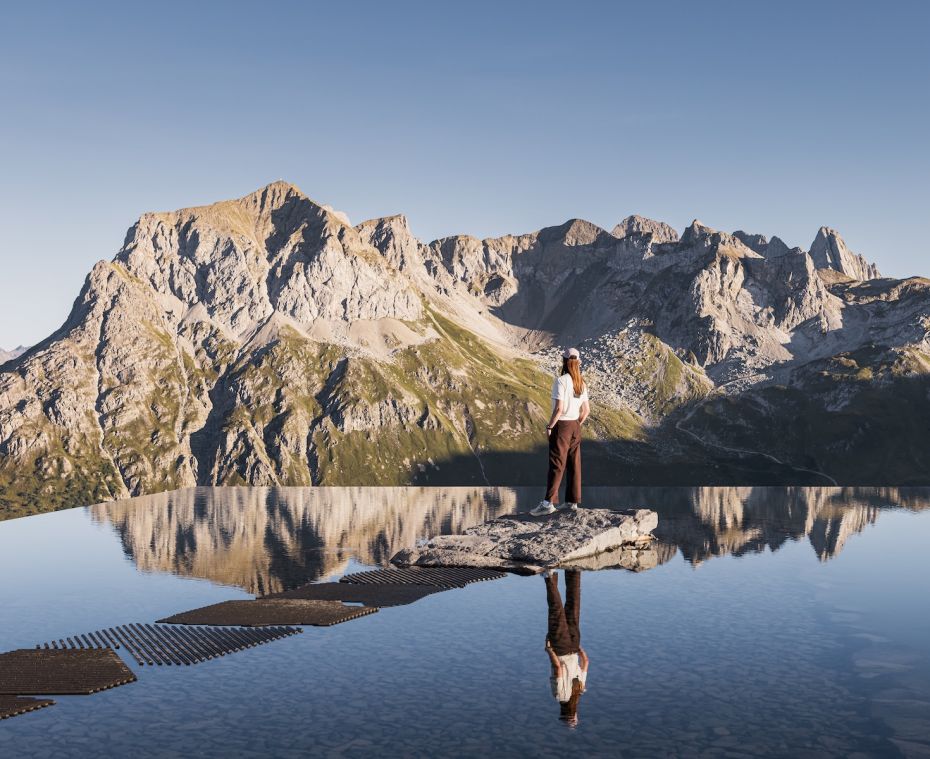
Get the insider news and lowdown on what we've been up to, where we've been, and who we've met along the way. Be the first to discover new places and get the scoop on our favourites.