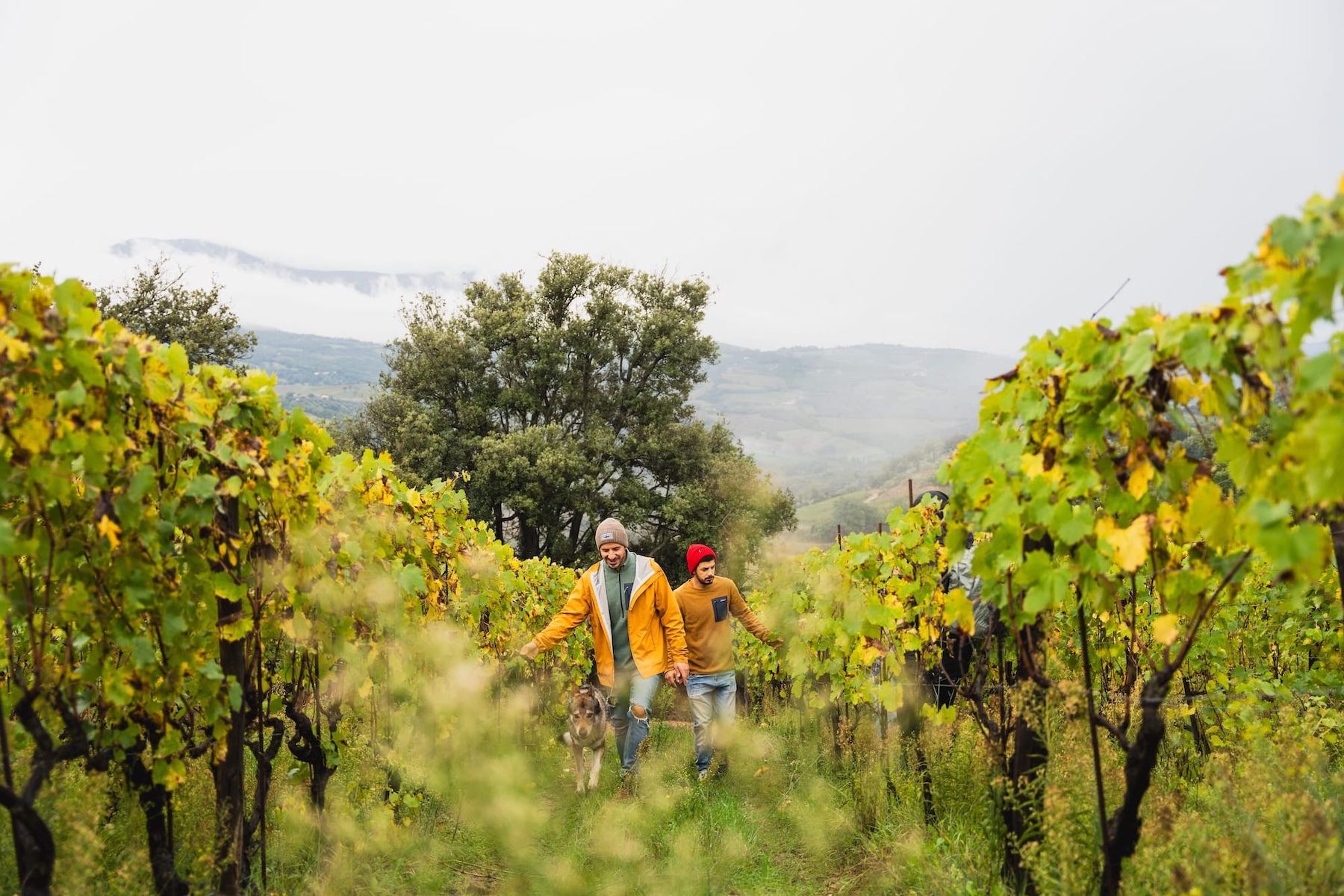
JOIN the AFICIONADOS
Get the insider news and lowdown on what we've been up to, where we've been, and who we've met along the way. Be the first to discover new places and get the scoop on our favourites.

Italy has been taking the middle of August off since 18 BC. In honour of the oldest holiday in the calendar, we have gathered nine of our Italian wine journals into one long, unhurried lunch, running from a vertical slope in South Tyrol to a teardrop grape on the Adriatic.
Ferragosto is Italy's mid-August holiday, held on 15 August, and it is the closest thing the country has to a national instruction to stop. Shutters come down, cities empty toward the water and the mountains, and lunch expands to fill the afternoon. The vines, three weeks or so from harvest, are doing the same thing everybody else is: sitting in the heat, quietly getting on with it.
The name gives away the age of the thing. Feriae Augusti, the holidays of Augustus, were instituted by the emperor in 18 BC as a period of rest once the hardest agricultural work of the year was behind the farms. They gathered up older rites as they went, among them the Consualia, held in honour of Consus, god of the grain store, when working animals were garlanded and let off their labour and races were run in their honour. Siena still runs its Palio on 16 August, which is about as long a memory as a holiday can hope for. The Church later fixed the Assumption of the Virgin on the same date, so a pagan season of idleness became a feast day without anybody having to give up the lunch.
The modern version, the gita fuori porta, owes something to the railways. In the 1930s the state ran cheap Ferragosto excursion trains that put the sea and the mountains within reach of families who had never had a holiday at all, and the habit stuck. What survives is a very Italian arrangement: two thousand years of theology and imperial decree, resolved into a day at the lake with a cold bottle and too much food.
Which is our cue. What follows is a route down the country through nine of our own wine journals, each one reported with the people who actually live there.
>> at the edge of the possible
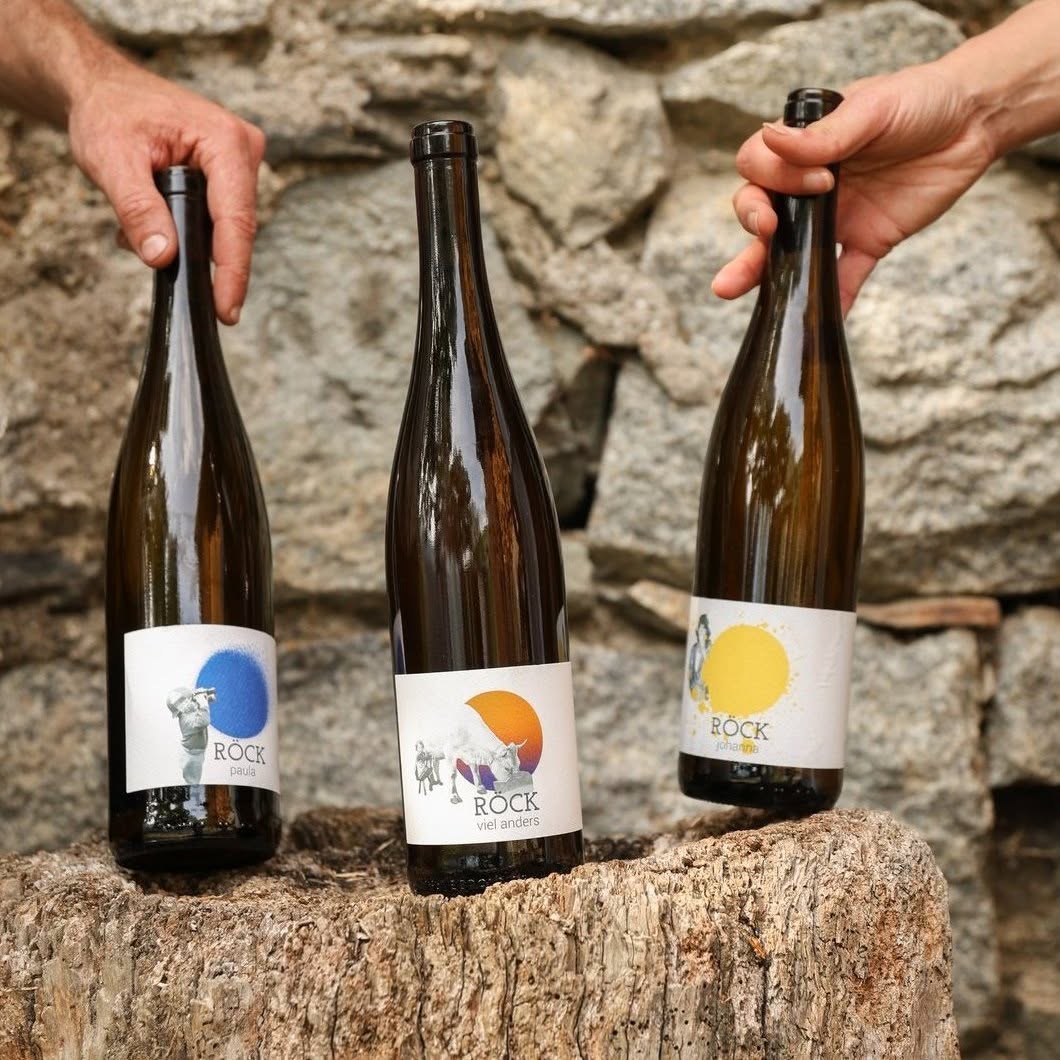
Start where viticulture runs out. In the Eisacktal valley, on the gravelly quartz phyllite slopes above Villanders, Carmen and Hannes Augschöll came home to a 400-year family legacy and set about dismantling how it made wine. Their father Konrad turned the mixed-crop farm into a vineyard in 1988 and played it safe in the cellar; the siblings, back from years abroad and converted to low-intervention winemaking, talked him out of almost every intervention he had. Wines of high-altitude tension, and a philosophical horseshoe that lands them back where their grandfathers started.
Roots and Altitude: How Röck Wines is Reclaiming a 400-Year Legacy in South Tyrol
>> three biodynamic neighbours at Kaltern am See / Caldaro al Lago
An hour south, on one of the loveliest wine lakes anywhere, Verena Huf of Das Wanda grew up among these vines and gave us her three. Manincor, biodynamic and grand, with buildings dating to 1608 and a modern cellar sunk beneath them. Thomas Niedermayr at Hof Gandberg, where sunflowers, sweet clover and free-range chickens do the work pesticides would otherwise be asked to do, and the fungus-resistant PIWI whites are the reason to come: Bronner, Souvignier Gris, Solaris. And St. Quirinus, organic on a slope the Benedictines planted first, with a cellar by Walter Angonese and a sparkling white that is hard to leave alone.
>> the lake list, with Amarone and a rogue Nebbiolo
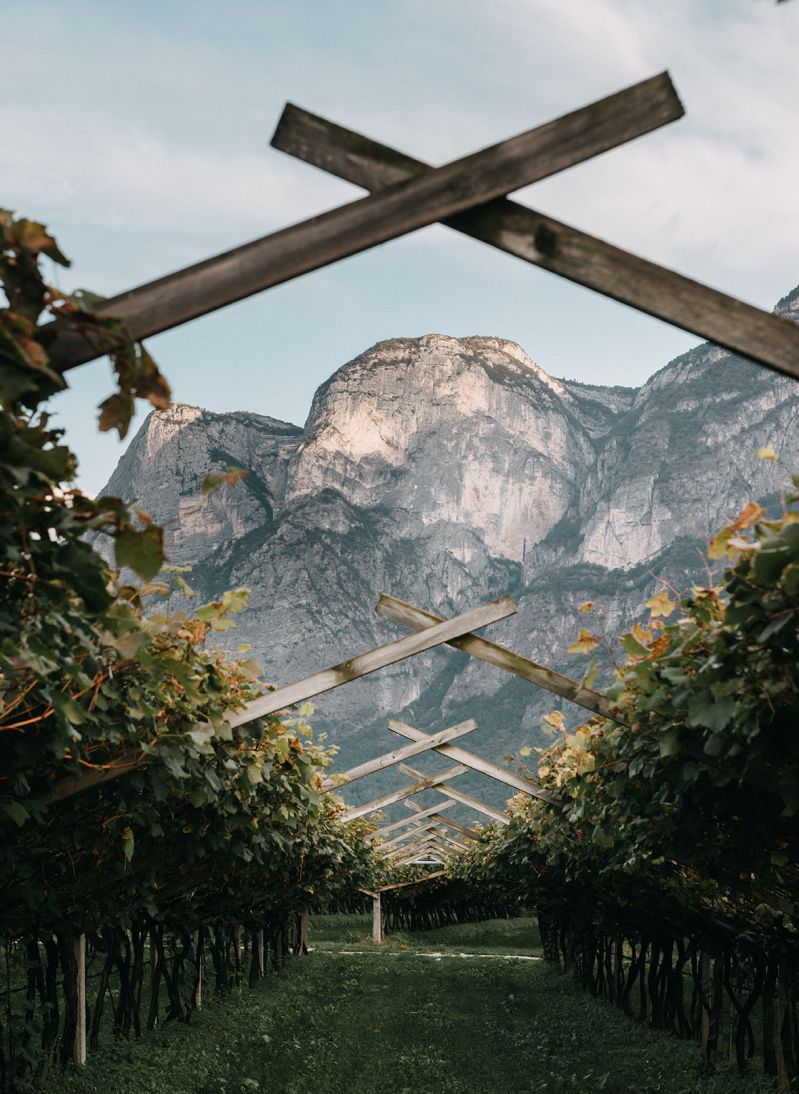
Federica Mometto and Massimiliano Guidetti of Aqva Boutique Hotel in Sirmione keep the sort of address book you want on a Ferragosto weekend. The late Giuseppe Quintarelli, Bepi, who carried Valpolicella onto the world stage, and a Classico Superiore aged seven years in Slavonian oak. The Girelli brothers at Montonale, obsessed with calcareous clay on the hills of Desenzano, and their Lugana Riserva Orestilla. Cantrina at Bedizzole for the Rosanoir, a rethought chiaretto. Then, further afield, Eugenio Rosi in Trentino, Elisabetta Foradori's biodynamic estate, and ARPEPE's terraced Nebbiolo, carried up the cliffs in baskets and bottled by the phases of the moon.
>> Lambrusco, taken seriously
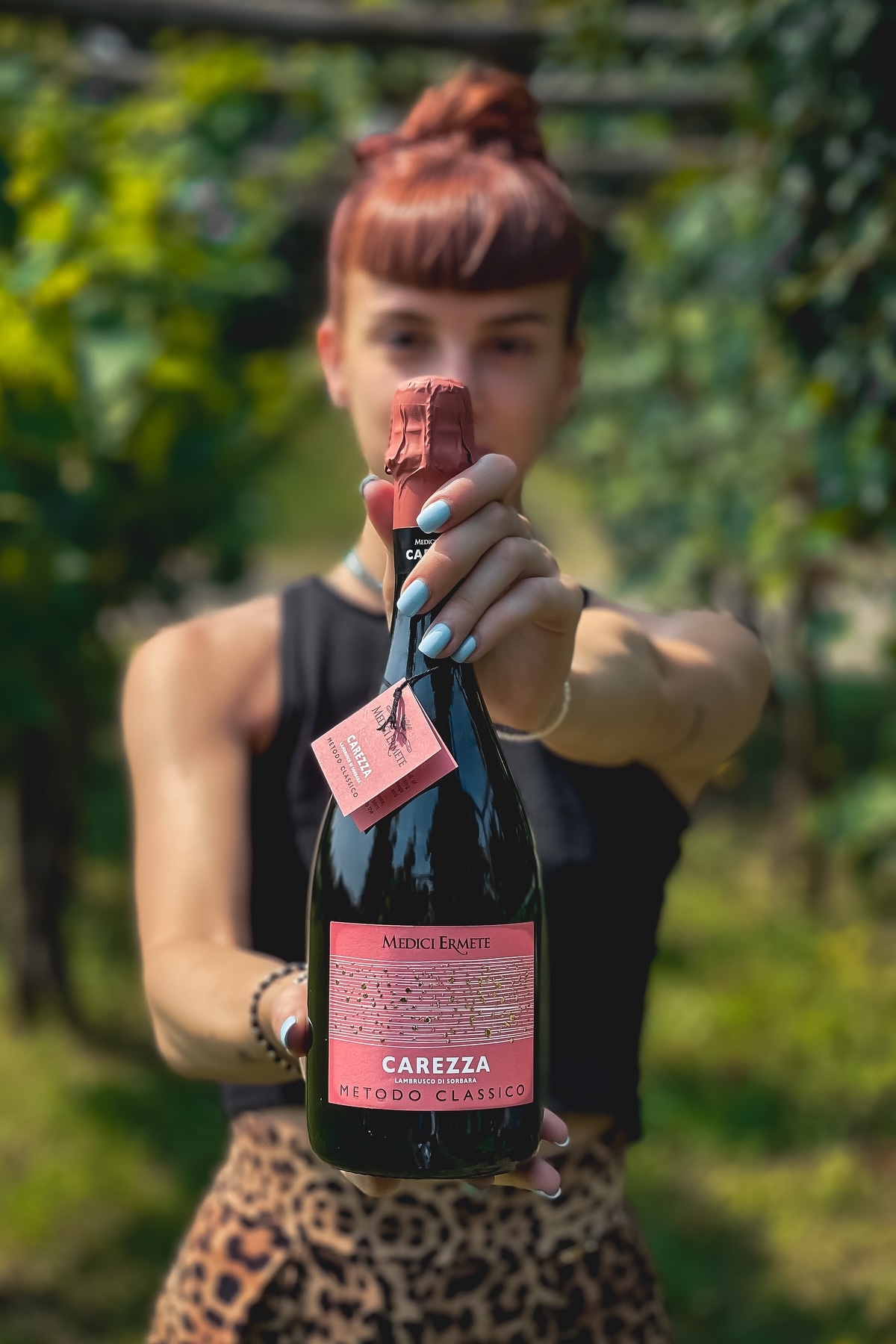
The most useful thing you can do this August is reconsider Lambrusco. It is not one grape but a family of at least eight, each with its own appellation and character: Sorbara light, dry and fresh; Salamino di Santa Croce floral over riper fruit with a dusty grip; Grasparossa di Castelvetro rich, firm, fuller. A generation of producers has moved the attention back into the vineyard and, in some cellars, into the bottle, with metodo classico and ancestral-method wines resting years on their lees. One of Cantina della Volta's top bottlings sits on lees for over seven years, more than twice the legal minimum for vintage Champagne. Pour it cold against aged Parmigiano-Reggiano, prosciutto di Parma or gnocco fritto and the case makes itself.
Long Live Lambrusco: Rediscovering Emilia-Romagna's Superb Sparkling Wines
>> the estate that rescued the reputation
The rehabilitation has an address. In the hills of Matilde di Canossa between Parma and Reggio Emilia, Venturini Baldini farms 130 hectares on an aristocratic estate whose bones go back to the sixteenth century, and became the first certified organic vineyard in Emilia-Romagna. Julia Prestia and her husband Giuseppe made the remarketing of Lambrusco their mission, and their chilled sparkling red is exactly the bottle this holiday was designed around. The estate now has a hotel to match, Relais Roncolo 1888.
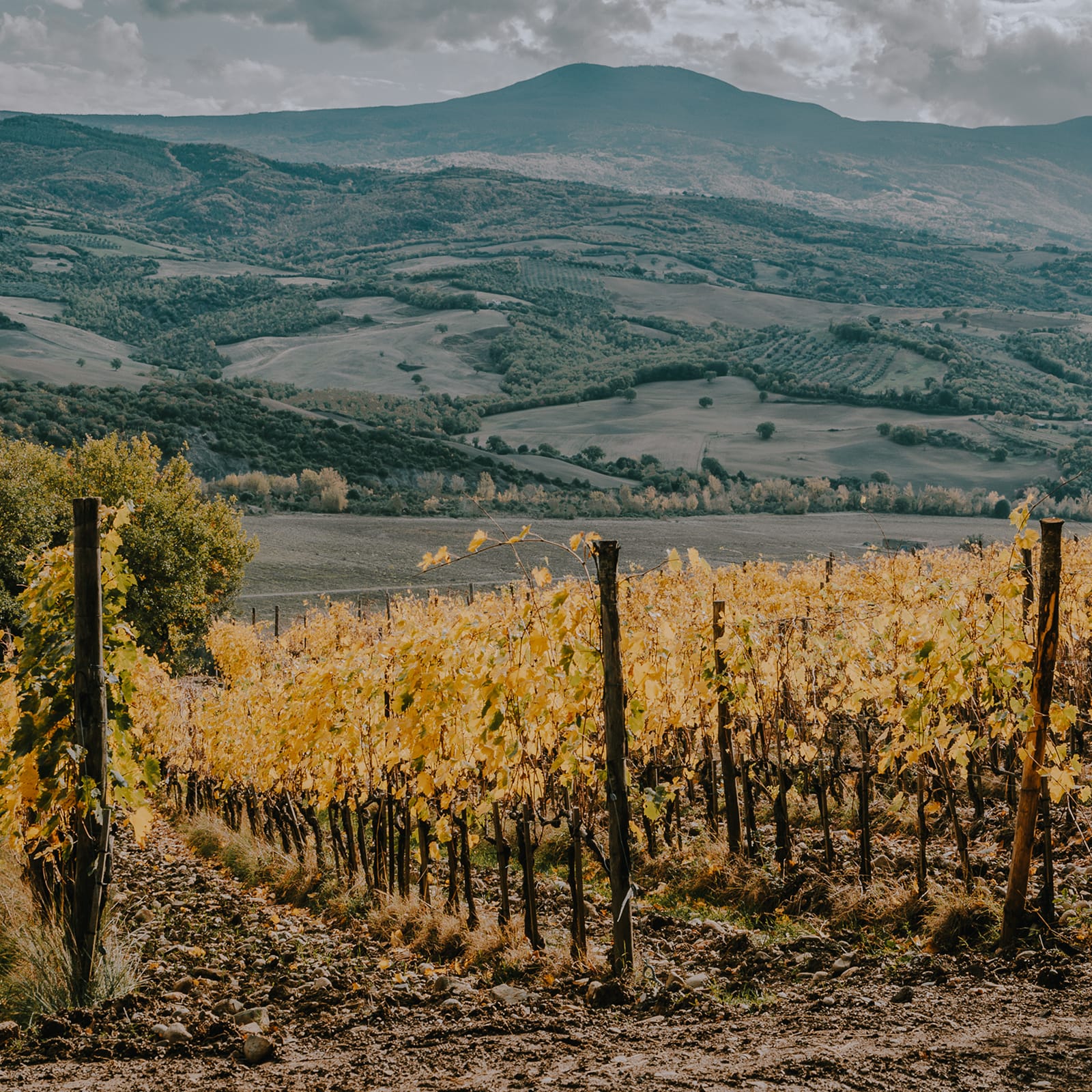
>> John Voigtmann's Val d'Orcia four
Every hilltop here has vines, which is precisely the problem, so we asked John Voigtmann of La Bandita in Pienza where he actually drinks. Cupano, tiny, where Ornella Tondini and Lionel Cousin arrived from Paris in the 1990s, found land that had never met a chemical, and made Brunello with a French hand on the oak. Sesti, which he calls a magical castle, magical family and magical wine, on the sunny southern slopes of Montalcino. Podere Sanguineto, run by Dora and Patrizia with no tasting room and no framed awards, source of his favourite Vino Nobile di Montepulciano. And Castello di Ama for Chianti Classico and an open-air art collection that runs from Anish Kapoor to Louise Bourgeois.
>> Fabio Firli's four, from Montepulciano to Montalcino
A second Tuscan list, from Fabio Firli of the farmhouse guesthouse Follonico. Fattoria della Talosa, three generations of the Jacorossi family, with a sixteenth-century cellar beneath two of Montepulciano's oldest palazzi where the Vino Nobile ages two years in oak. Podere Le Ripi, where beehives, olives, forest and clay are tended as one ecosystem and the golden cellar is built of clay and lime mortar by ancient methods. Uccelliera, Andrea Cortonesi's small vineyard at Castelnuovo dell'Abate under the old volcano of Amiata, making Brunello from pure sangiovese. And Capitoni Marco at Podere Sedime, six hectares, tastings tapped from the barrel and conversation expected.
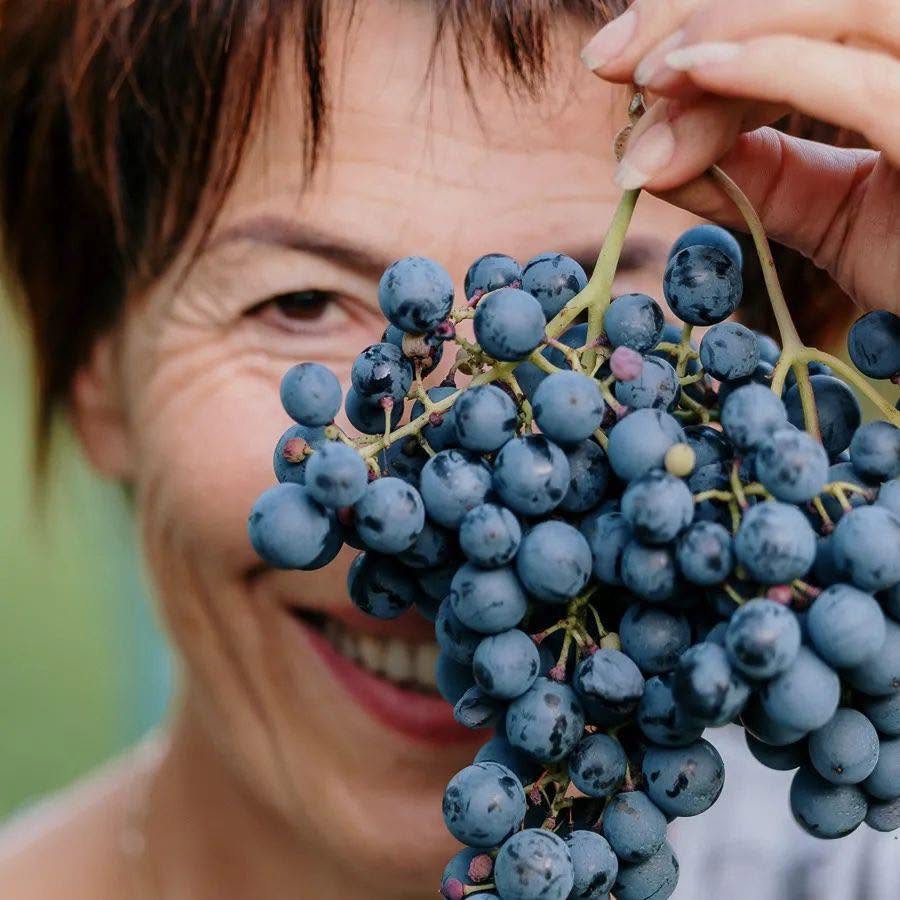
>> Verdicchio, Conero and a sparkling red from Dante
Down onto the Adriatic side, where the region runs from the coast to the spine of the Apennines and the wines vary as much as the ground does. Verdicchio is the calling card, in two guises: the softer, sunnier Castelli di Jesi near the sea, and the leaner, mineral, higher-acid Matelica in the hills inland, a tenth the size. The reds lean on Montepulciano, full-bodied and age-worthy in Conero, juicier and softer blended with sangiovese in Rosso Piceno. Then the curiosity: Vernaccia di Serrapetrona, a sparkling red made from partially dried grapes across around twenty hectares, and mentioned by Dante.
Verdicchio, Lacrima and a Sparkling Red from Dante: Drinking Your Way Through Le Marche
>> the teardrop that nearly vanished
Finish with the strangest glass on the table. Lacrima means teardrop, for a skin so thin the grape weeps its own juice, and by the 1980s there were seven hectares of it left. A DOC in 1985 and a handful of stubborn growers have taken it past 300 hectares. Related to Muscat, it smells of rose, violet, Turkish delight and white pepper, then arrives with bramble fruit and chalky tannin. Frederick Barbarossa is said to have developed a taste for it while besieging Ancona in 1167, which is the right sort of provenance for a Ferragosto bottle.
Nine journals, nine regions, one holiday that has been insisting on exactly this since the reign of Augustus. Pick a bottle, pick a shaded table, and give the afternoon over to it. Buon Ferragosto.
|
Region |
Journal |
What to open |
|
South Tyrol |
Röck Wines, Villanders |
Low-intervention high-altitude whites and reds |
|
South Tyrol |
Kaltern Wines: The Producers |
Manincor's Sophie, Niedermayr's PIWI whites, St. Quirinus sparkling |
|
Lake Garda and Trentino |
The Wine Producers of Lago di Garda |
Lugana Riserva Orestilla, Amarone Riserva, Rosanoir chiaretto |
|
Emilia-Romagna |
Long Live Lambrusco |
Sorbara, Salamino di Santa Croce, Grasparossa di Castelvetro |
|
Emilia-Romagna |
Venturini Baldini |
Organic sparkling red Lambrusco |
|
Tuscany |
La Bandita's four producers |
Brunello, Rosso di Montalcino, Chianti Classico |
|
Tuscany |
Follonico's four producers |
Vino Nobile di Montepulciano, Brunello |
|
Le Marche |
Drinking Your Way Through Le Marche |
Verdicchio di Matelica, Conero, Vernaccia di Serrapetrona |
|
Le Marche |
Lacrima di Morro d'Alba |
Lacrima, still or pét-nat |
What is Ferragosto? Italy's mid-August public holiday, on 15 August. The name descends from the Feriae Augusti, the rest days instituted by the Emperor Augustus in 18 BC once the year's heaviest agricultural work was done. The Assumption of the Virgin was later fixed on the same date, and the two have shared it since.
Why does Italy close for it? Because it has always closed for it. The holiday was rest by imperial decree, and the day trip that defines it now, the gita fuori porta, was popularised by cheap Ferragosto excursion trains in the 1930s.
What do Italians drink at Ferragosto? Whatever the region pours, served cold where it can be. Sparkling Lambrusco against Parmigiano-Reggiano and prosciutto in Emilia-Romagna; Lugana or a chiaretto rosé on Garda; a high-altitude white in Alto Adige; Rosso di Montalcino or Vino Nobile in Tuscany; Verdicchio with the dayboat catch on the Adriatic.
Is it a good time to visit wineries? It is the calm fortnight before the vendemmia, so the vines are full and the cellars unhurried, but many small estates close around the holiday and tastings are almost always by appointment. Book well ahead, and favour the week after 15 August over the week of it.
Which Italian wine regions are covered here? South Tyrol, Eisacktal and around Kaltern am See, Lake Garda and Trentino, Emilia-Romagna, Tuscany's Val d'Orcia and Montepulciano, and Le Marche from the Castelli di Jesi to Morro d'Alba.
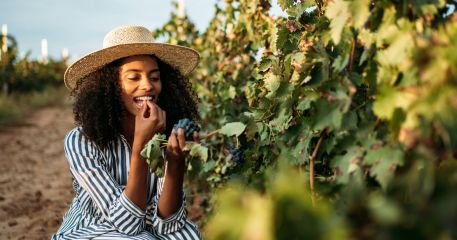
Wheat, olives and old bushvines on granite and shale, farmed by growers who share cellars, lend hands at harvest and put up almost no signage.
read more
The first organic certified vineyard in Emilia-Romagna with 130-hectares of land cradled between Parma and Reggio Emilia. The hilly area, ideal microclimate and verdant encircling forest was deemed the perfect spot for growing grapes.
read more
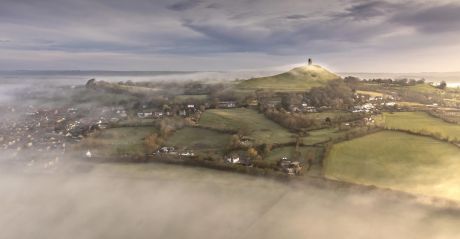
Bruton? It’s the Somerset village that swapped wool for world-class culture. Think Hauser & Wirth, Michelin stars, floral architecture and design studios shaping England’s most creative countryside escape.
read more
Experience Italy’s golden autumn at Filodivino, a vineyard hotel in Le Marche where harvest fills the air, truffles tempt the palate and Verdicchio flows with soulful charm.
read more
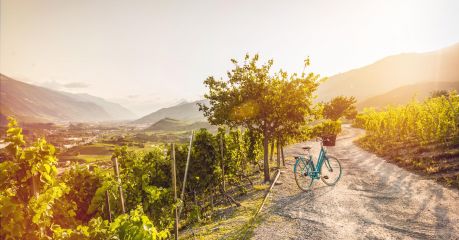
One for you travelling oenophiles - Switzerland's beautiful Valais holds the highest vineyard in Europe, and wines that are regarded as "the pearl of the Alps".
read more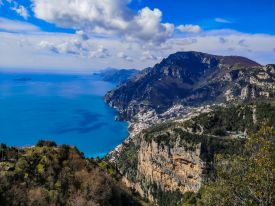
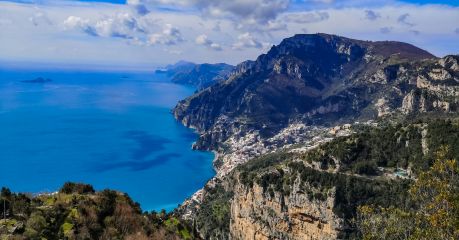
Amalfi and the Path of the Gods - Sentiero degli Dei is magical, an easy, two-hour amble for mortals like us, spy the Amalfi Coast’s breath-taking UNESCO World Heritage site in all its glory from a lofty, God-like height, tracking the path from Agerola’s Bomerano near Amalfi to Positano’s pause-worthy Nocelle.
read more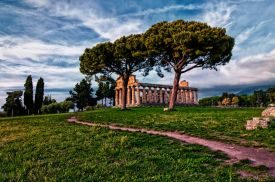
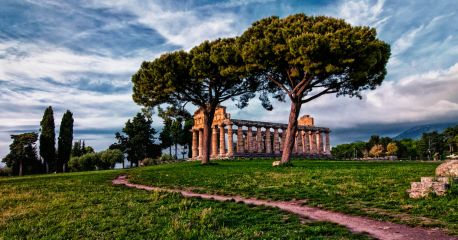
Paestum Temples in Southern Italy is one of those ancient antiquities that you have to visit – this UNESCO World Heritage Site in Cilento Campania is a treasure trove of ancient Greece including three of the world’s best-preserved temples.
read more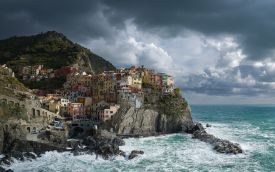
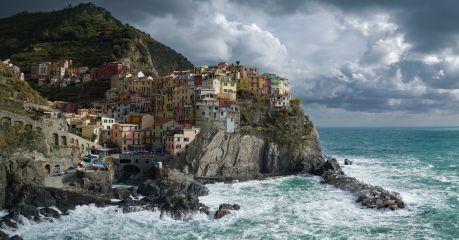
Cinque Terre in the Slow Lane – Ensconce yourself at a secluded retreat where the pleasures of slow living are championed in a peaceful and tradition-filled Ligurian way of life.
read more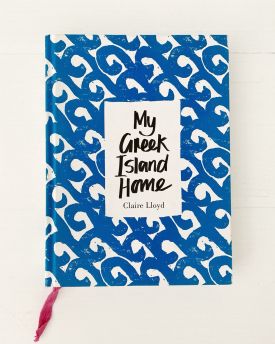
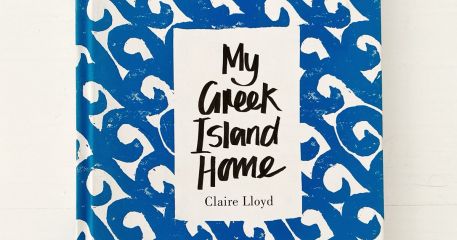
My Greek Island Home by Claire Lloyd is always out of the bookcase, an ever-present friend that tells the tale of falling in love with a Greek island and finding that a simpler life is not so bad after all.
read more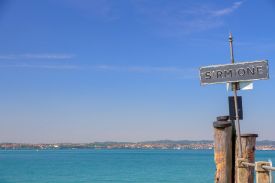
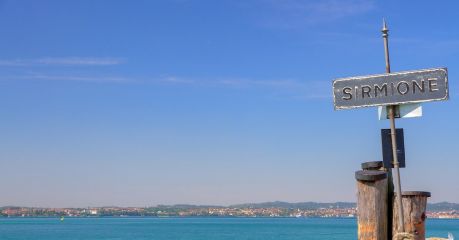
An absolute charm ball landmarked by pillars, arcaded colonnades from the Roman archaeological ruins of "Grotte di Catullo" to the 13th-century fortress, Scaligero Castle.
read more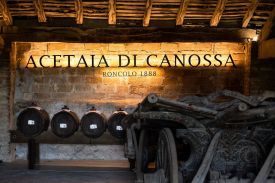
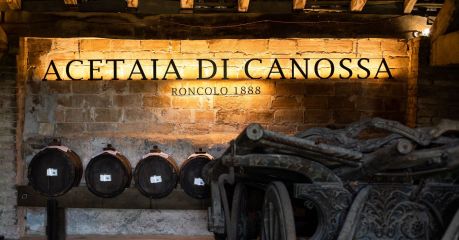
The making of balsamic is said to have been created as far back as 1046, when Henry III, Holy Roman Emperor, requested a gift of vinegar from the Tuscan marquis Bonifacio, father of Matilde di Canossa.
read more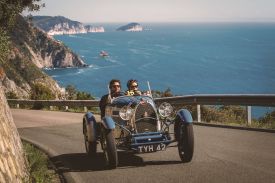
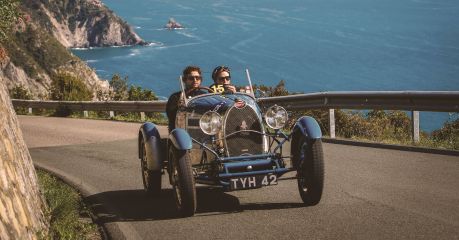
A 600km cavalcade of classic cars roaring through Italy’s Motor Valley, Tuscan hills, and coastal gems – Terre di Canossa is where motoring nostalgia meets Michelin-starred indulgence and la dolce vita.
read more
Get the insider news and lowdown on what we've been up to, where we've been, and who we've met along the way. Be the first to discover new places and get the scoop on our favourites.