JOIN the AFICIONADOS
Get the insider news and lowdown on what we've been up to, where we've been, and who we've met along the way. Be the first to discover new places and get the scoop on our favourites.

Lisbon gets called pretty, and it is, in the way a city can be pretty when it has been pillaged, shaken, torched and rebuilt enough times to stop taking any of it too seriously. Pastel façades, tiles catching the light, a tram groaning up an absurd gradient. That is the version that sells the fridge magnets. Walk the place properly for a few days and a stranger city climbs out from under the postcard: louder, contrarian, a little feral at the edges. This is a round of that Lisbon, the one worth the climb.
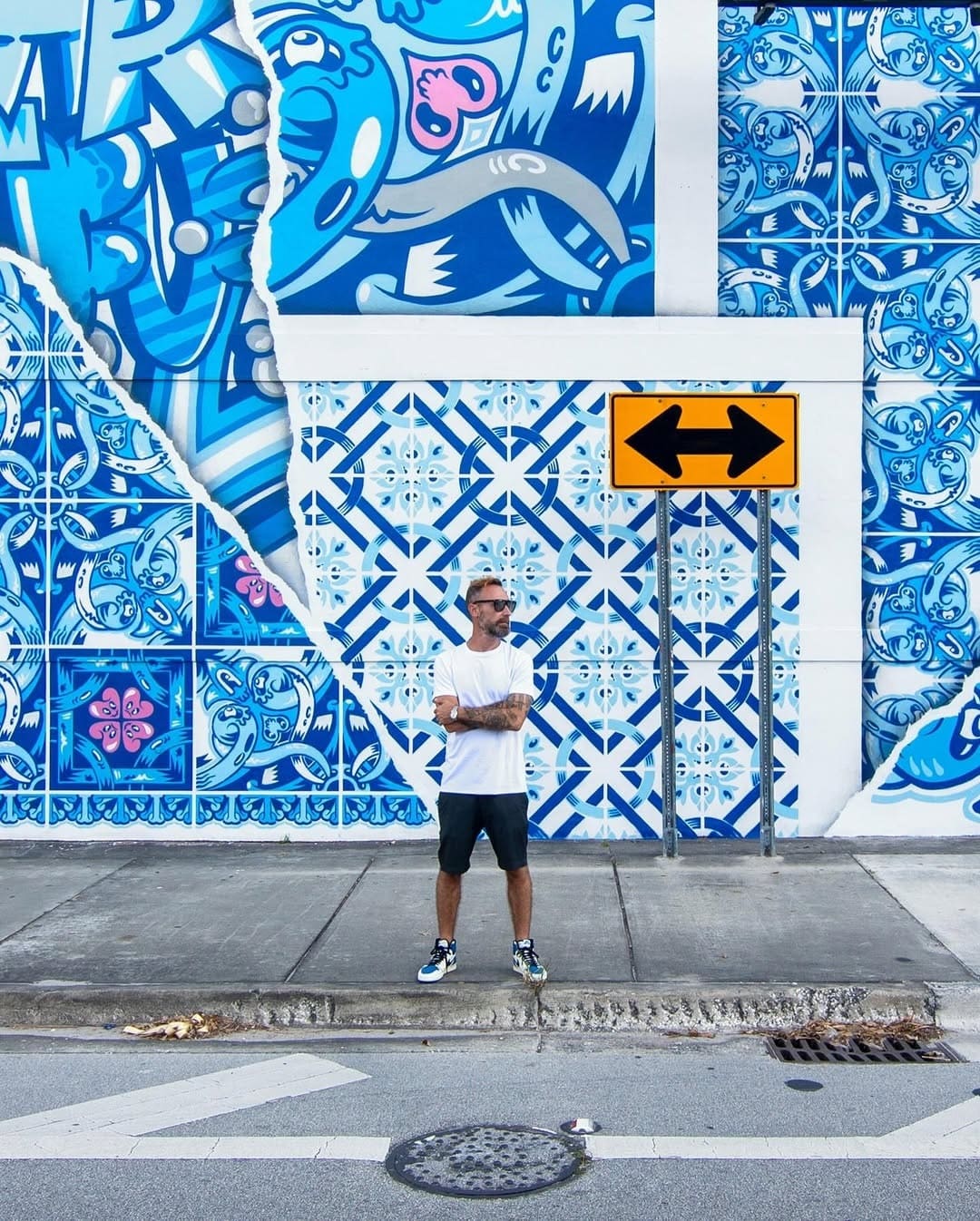
Start with the tiles, because everyone does, and then watch what the city has done to them. The azulejo has covered Lisbon's walls for four centuries, cobalt and white, saints and ships and geometric daydreams. It could have calcified into heritage. Instead a generation of artists picked up the pattern and ran. Chief among them is Add Fuel, the stencil alias of Diogo Machado, who takes the classic tile motif apart at wall scale, glitching the symmetry until the tradition looks like it has been through a broken printer and come out better for it. The city is complicit, running an urban-art department (the GAU) and a festival (MURO) that hand Machado and his collaborator Vhils the walls other cities would whitewash by Tuesday. The past here is not behind glass. It is out on the street, getting reworked in daylight.
From there, pick a hill. Each of Lisbon's quarters is running its own experiment, and the fun is in feeling the register change as you cross a single street.
Bairro Alto is the one the guidebooks reduce to a stag-do punchline, which is a shame, because by day it is one of the most quietly literary neighbourhoods in Europe. This was the quarter of tailors and typesetters, and the ghosts of Pessoa, Sá-Carneiro and Camões still loiter in the doorways. Florists arrange native blooms, antique dealers keep odd hours, old townhouses have been hollowed into minimalist boltholes. Then the light goes and the whole thing turns inside out. Guitars get tuned behind shutters and fado leaks out of tavernas like Tasca do Chico, aching with a saudade that fills the room before anyone has decided to perform. Climb to the Miradouro de São Pedro de Alcântara for the view, then duck into the Igreja de São Roque for the shock of a plain face hiding one of Europe's most extravagant baroque interiors, all gold and lapis and Jesuit swagger.
Cross into Príncipe Real and the volume drops to a cultivated hum. This is Lisbon's green crown, leafy and liberal, laid out under jacarandas and a vast parasol cedar in the Jardim do Príncipe Real, the district's outdoor living room. Palacetes have been coaxed into concept stores without anyone shouting about it. The neo-Moorish Embaixada palace sells Portuguese ceramics, leather and scent beneath keyhole arches, while Rua Dom Pedro V runs to antique dealers, vintage bookshops and new-wave florists. Wander far enough and you slip into the Jardim Botânico, 1,400 species gone gloriously feral behind the university, near-extinct cycads under Victorian glass, invisible from the street until you are inside it. Evenings favour candlelit cocktails and backroom jazz over anything resembling a queue.
For the properly contrarian move, go to Amoreiras, the quarter the crowds forget. This is Lisbon in quiet rebellion, where an 18th-century aqueduct marches across the skyline on gravity-defying arches, and a cluster of red-clad postmodern towers by Tomás Taveira glowers back at it from the 1980s, a building that split the country's opinion and knew it. The district is named for the mulberry trees that once fed a silk industry, and the old Royal Silk Factory now holds the Fundação Arpad Szenes / Vieira da Silva, modernist painting inside 18th-century walls. Add Fuel's tiles turn up here too, stitched into the streets as part of an open-air museum. It is aristocracy gone slightly to seed, and all the better for it.
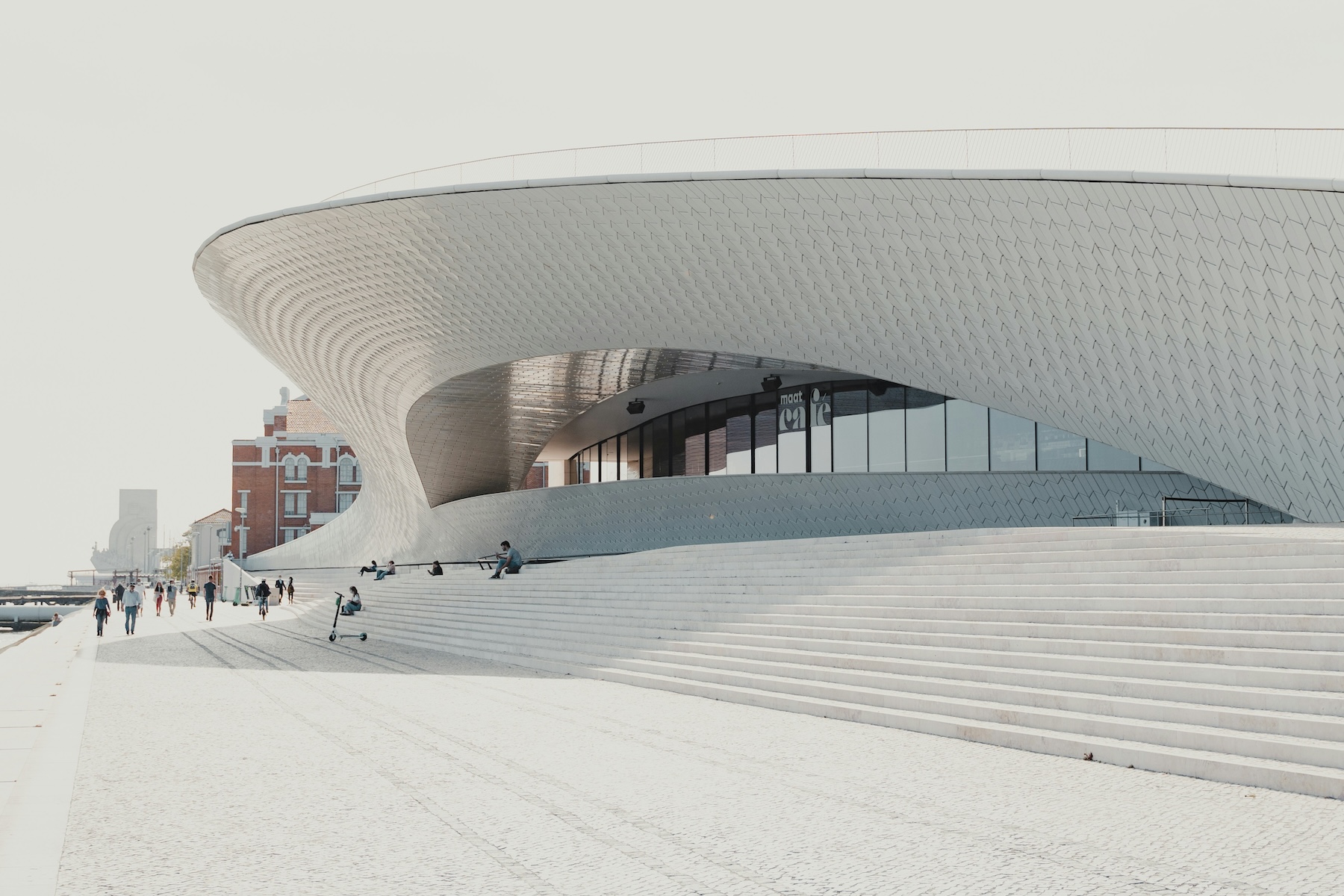
When you want the future rather than the ferment, follow the river west to Belém and MAAT. Amanda Levete's museum of Art, Architecture and Technology pours itself along the Tagus like a wave that thought better of breaking, a low white curve clad in crackle-glazed tile (of course it is tile) that you climb rather than enter. Set against the red-brick bulk of the old power station next door, it has two centuries staring each other down across a plaza. Levete said she wanted a building you drift into, and it has become the pin on which Lisbon's contemporary cultural map now turns.
Lisbon does its other museums with the same disregard for the expected. The Calouste Gulbenkian Foundation is the heavyweight, an Armenian oil magnate's private hoard of Rembrandt, Rubens, Monet and a whole room of Lalique glass, wrapped in a modernist campus and a secret garden that Kengo Kuma has just extended into the trees. For something with more mischief, the Bordalo Pinheiro Museum celebrates a 19th-century satirist who worked out his low opinion of polite Lisbon society in caricature and ceramic: cabbage-leaf plates, grinning frogs, Art Nouveau creatures fired at the family faience factory.
Design is less a district here than a habit, and our Lisbon Design Guide maps the proof: LX Factory under the 25 de Abril bridge, a print-works turned warren of studios and rooftop bars; the MUDE design museum; and Pensão Amor in Cais do Sodré, a former 18th-century brothel now running as a bar, erotic bookshop and cabaret with the original frescoes left cheerfully intact. Time it right and the whole city becomes the exhibition. Lisbon Design Week takes over ateliers across Marvila, Ajuda and Estrela each spring, five days where Portuguese hand-craft and the avant-garde share a bench.
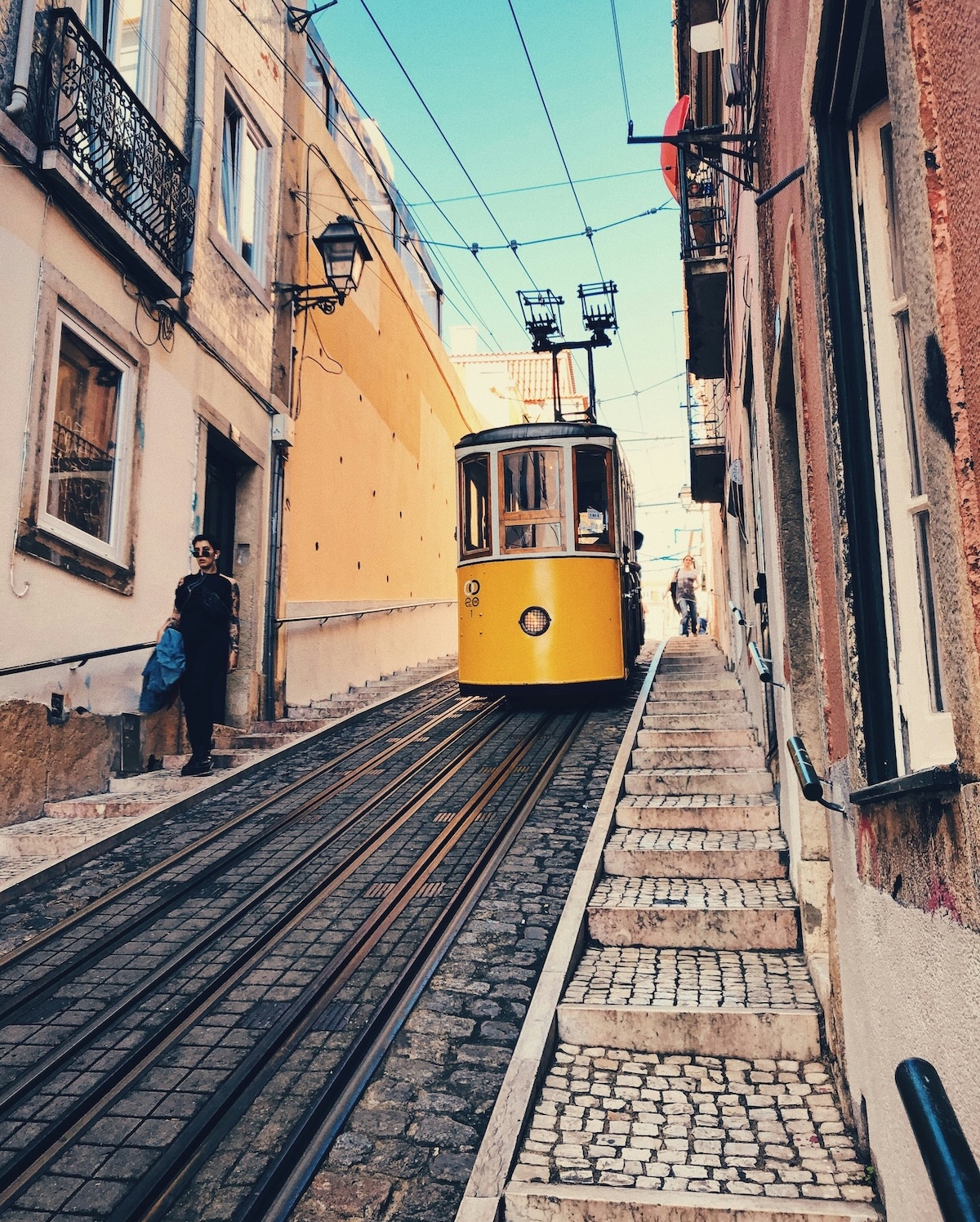
Between the set pieces, the city keeps its real character at street level. A glass of ginjinha knocked back in a doorway hole-in-the-wall. Sardines grilling kerbside in Alfama while somebody's grandmother presides over the coals. The miradouros that pay back the calf-burn with the whole city below, and the yellow trams doing the climbing you would rather not. It is also where the drinking gets interesting. Lisbon sits inside a ring of badly underrated wine country, and our guide to Lisbon wine points past the tourist lists to the good stuff: the ungrafted, sand-planted Ramisco reds of Colares, the citrus-and-beeswax whites of Bucelas, the nutty fortified Carcavelos staging an unlikely comeback. Order the one you cannot pronounce.
By now you will want feeding, and Lisbon has learned to make even dinner a piece of theatre. The most unhinged, in the best sense, is Palácio do Grilo out in Beato. An 18th-century palace once dreamed up by a duke with more imagination than sense, it has been resurrected by a French theatre impresario into a living stage set where costumed performers work the rooms while you eat. Azulejos, painted ceilings, velvet, a Portuguese-French menu, and the growing suspicion that you have wandered into somebody else's fever dream. Book it for the nights you want dinner to misbehave.
Shopping deserves the same suspicion of the obvious. Skip the international flagships and work our Lisbon Shopping Gems instead: SOLAR, the ancient antiques house sitting on the largest hoard of original tiles anywhere, some five centuries old; Pelcor, turning humble cork into MoMA-approved objects; A Vida Portuguesa, reissuing the country's old soaps and stationery with a straight face and a wink; and Vintage Department for mid-century names from Eames down. This is the stuff worth wrestling into hand luggage.
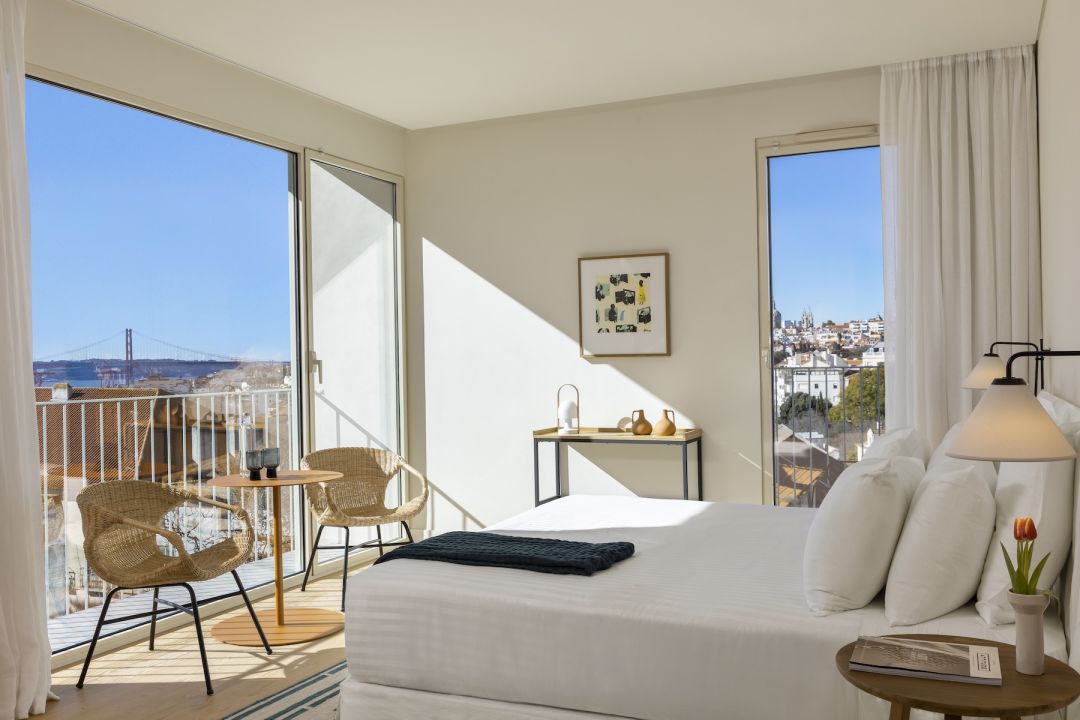
Then, at some point, you have to sleep, ideally somewhere that gets the whole contradiction. Pátio do Tijolo does. Built on a scrapped timber yard on the seam between Bairro Alto and Príncipe Real, it is a design guesthouse with Zen in its bones: mid-century pieces, Serra da Estrela wool, Extremoz marble, a hidden tropical patio and the Tagus laid out beyond. Twenty-four rooms, a deliberately slow pulse, the ideal base camp. To widen the search, our six design hotels across Portugal run from Porto to the Algarve for the trip that refuses to stop at the capital.
And when the seven hills have finally had their way with you, the escape hatch is Sintra, forty minutes by train into a damp green fairytale of Romantic palaces, Pena's custard-and-blood-orange towers rising out of the mist like something Lord Byron hallucinated, which, more or less, he did. Queijadas for the road, then back down the hill to the city that will not sit still.
That is the thing about Lisbon. It has spent its whole life being remade, by earthquakes and empires and now by a design energy the rest of the world has started to notice, enough that Monocle chose it to host its Quality of Life gathering, and it has come out the far side refusing to behave like a museum. Come for the pretty. Stay for the parts that answer back. The full run of our Lisbon writing lives on the Lisbon hub, one hill at a time.
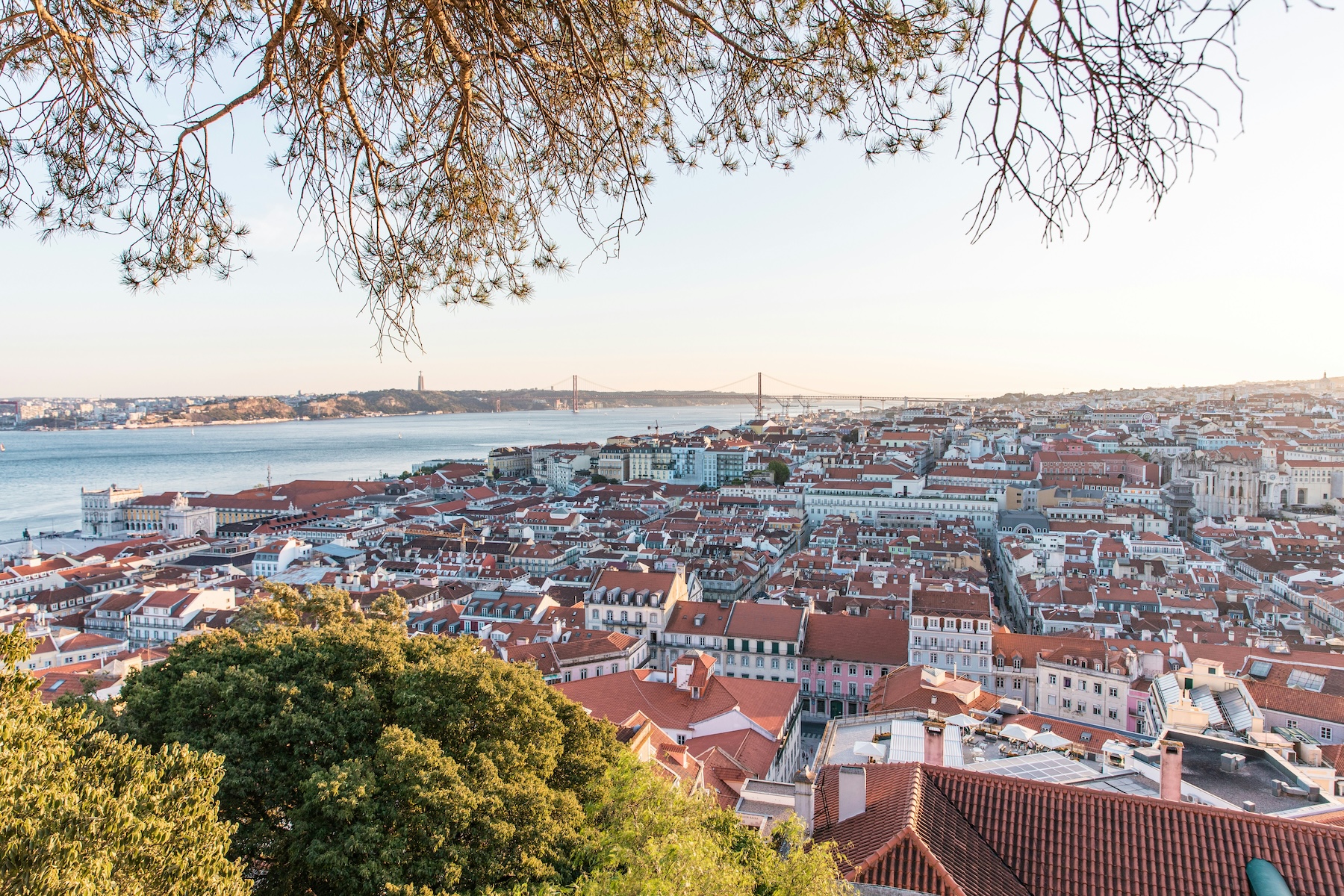
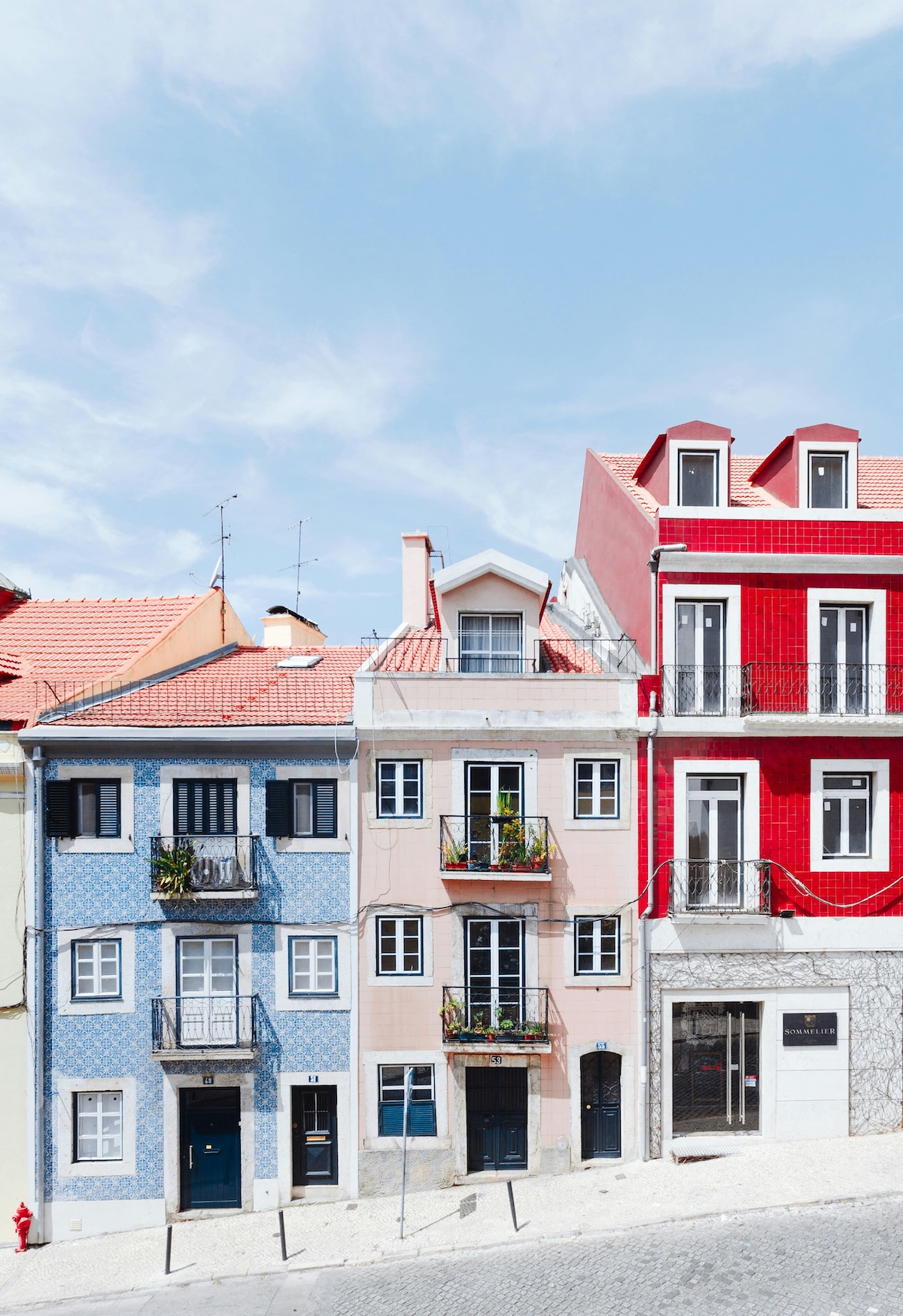
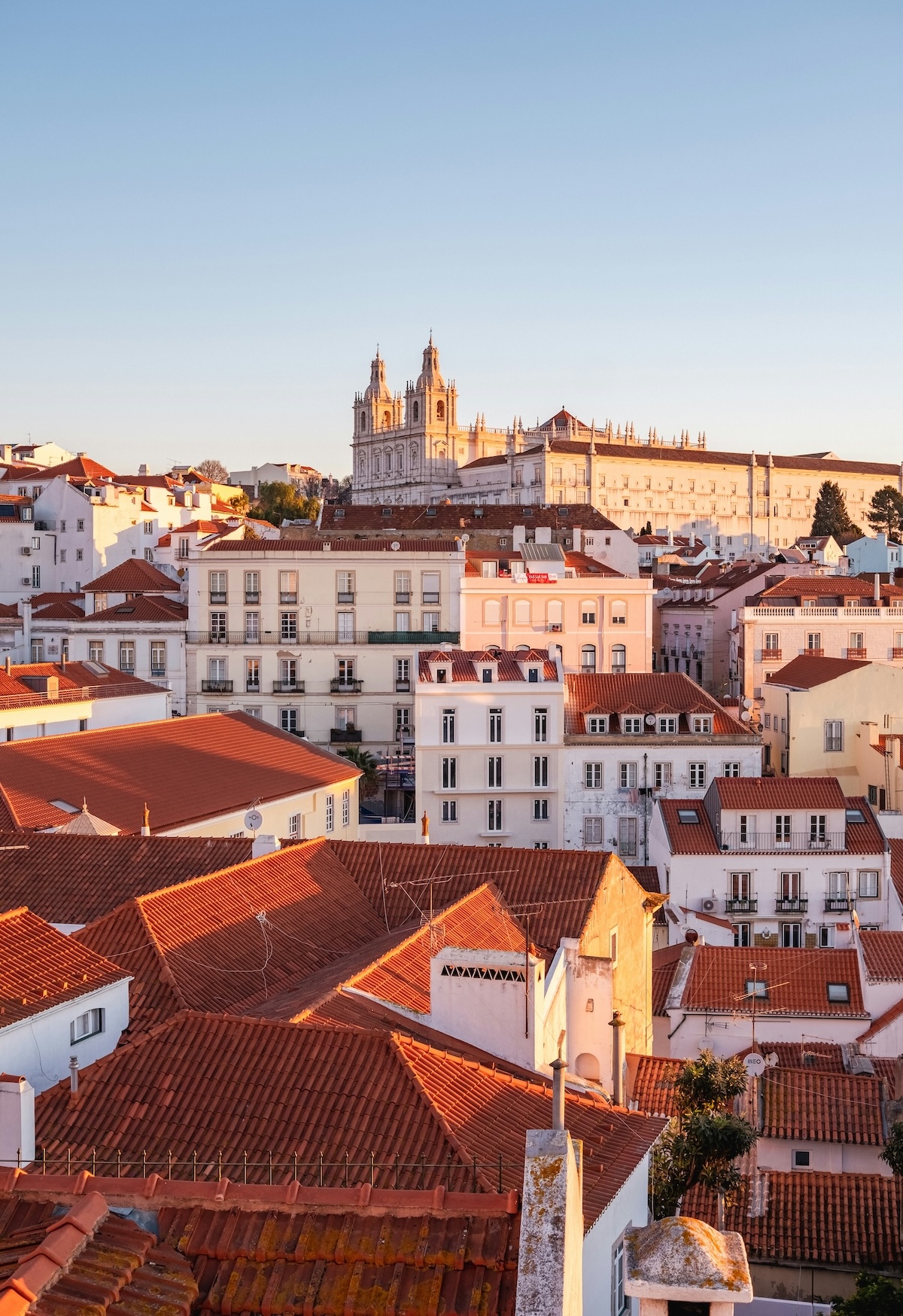
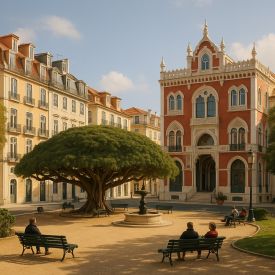
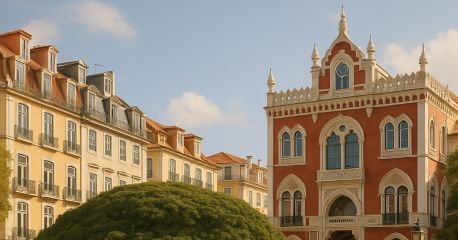
Príncipe Real is Lisbon’s green crown: palacetes, cedar gardens and design ateliers shape a district of lyrical calm. A cultured quarter where heritage, creativity and elegance drift together beneath jacaranda-lined boulevards.
read more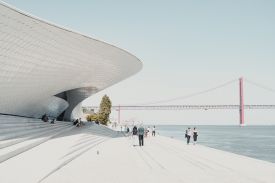
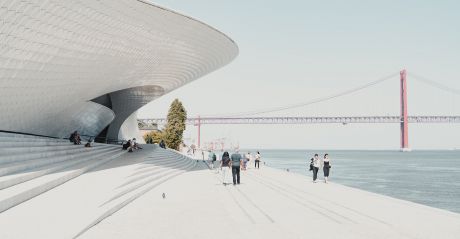
Lisbon's sleek MAAT is the city's latest cultural hub, where the worlds of architecture, art and tech collide - a museum of force in glazed ceramic form.
read more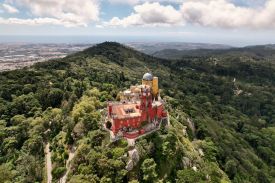
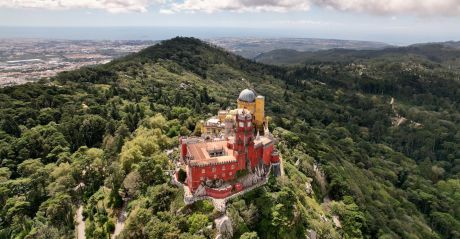
Travel to Portugal's fairytale den of Sintra, just outside Lisbon, for a world full of rolling hills and castles, once referred to by Byron as "glorious Eden".
read more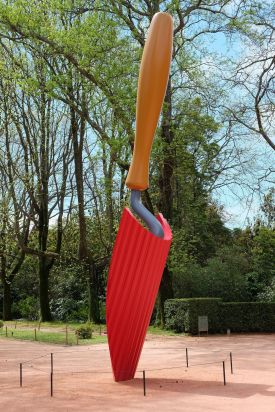

Porto for culture seekers - we explore the Serralves Foundation comprising of a dusty pink 1930-40s’s Art Deco villa designed by Porto architect José Marques da Silva, a landscape-specific contemporary museum designed by Álvaro Siza.
read more
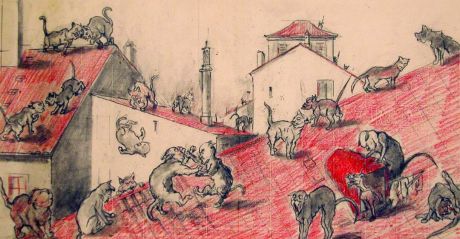
With an extraordinarily creative mind, Rafael Bordalo Pinheiro (1846 – 1923), was known for taking his own approach which can be seen in this revealing museum which showcases his graphic arts, caricatures, ceramics, object design and decoration.
read more
Monocle's Quality of Life Conference returns to Lisbon this September, three days of ideas, design and city living at the Gulbenkian. Here's who and what to expect.
read more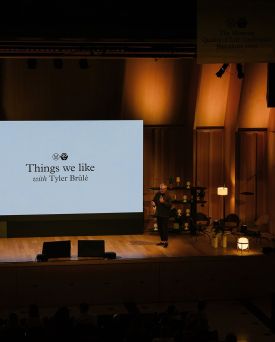
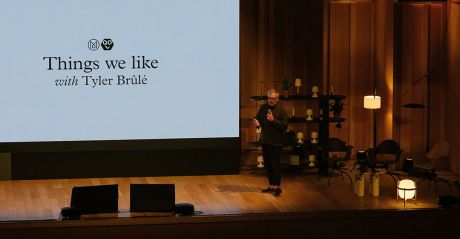
Meet the voices taking the stage at Monocle's Quality of Life Conference 2026 in Lisbon: mayors, architects, designers and makers shaping how we live in cities.
read more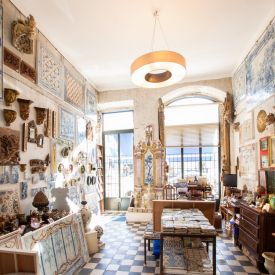
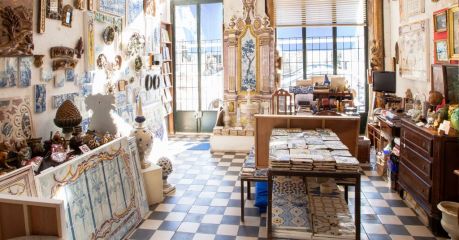
A Lisbon shopping guide for those under-the-radar gems spanning fashion, antique tiles, vintage furniture, design den interiors & all things children's gifts.
read more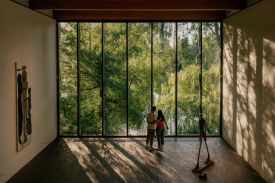
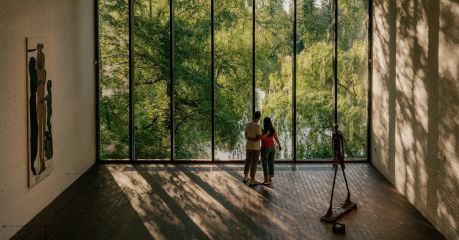
Where modern art meets coastline and clarity, Louisiana Museum of Modern Art turns a museum visit into a coastal walk, framing global creativity through architecture, light and landscape.
read more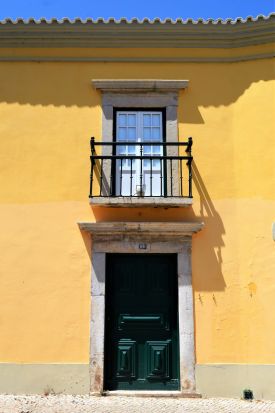
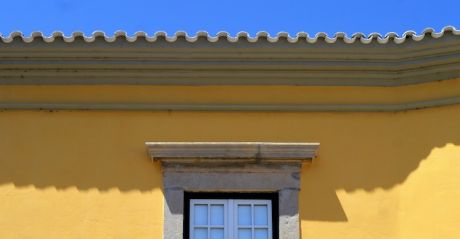
Faro is the gateway to Portugal's Algarve but don't be tempted not to visit this wonderful medieval port and culture stuffed city dating back to the 8th Century.
read more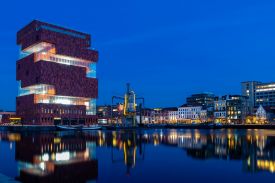
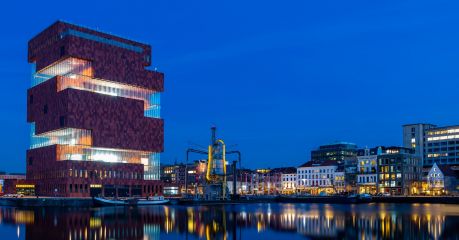
Antwerp is one of Europe's cultural hotbeds with historical landmarks and art institutions. And while Antwerp has plenty of those – we turn our focus on the smaller-scale contemporary culture must-sees the Flemish city has to offer.
read more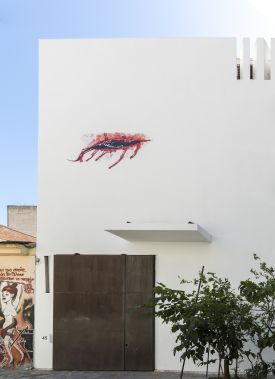
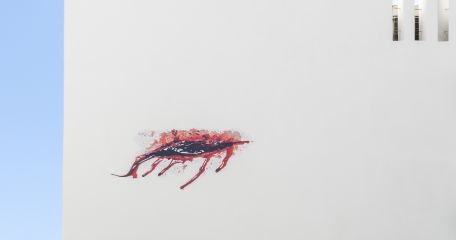
Radical, sometimes political and always on the pulse of Athens’ ever-evolving art scene, The Breeder Gallery is housed in an old ice cream factory, redesigned by architect Aris Zambicos.
Get the insider news and lowdown on what we've been up to, where we've been, and who we've met along the way. Be the first to discover new places and get the scoop on our favourites.