JOIN the AFICIONADOS
Get the insider news and lowdown on what we've been up to, where we've been, and who we've met along the way. Be the first to discover new places and get the scoop on our favourites.

In the rice country of Niigata, chef Makoto Fuse cooks for one table a night at Auberge Né: thirteen courses of bear, bee larvae, dried abalone, a tomato that never ripened, and the long patience of a snowbound winter.
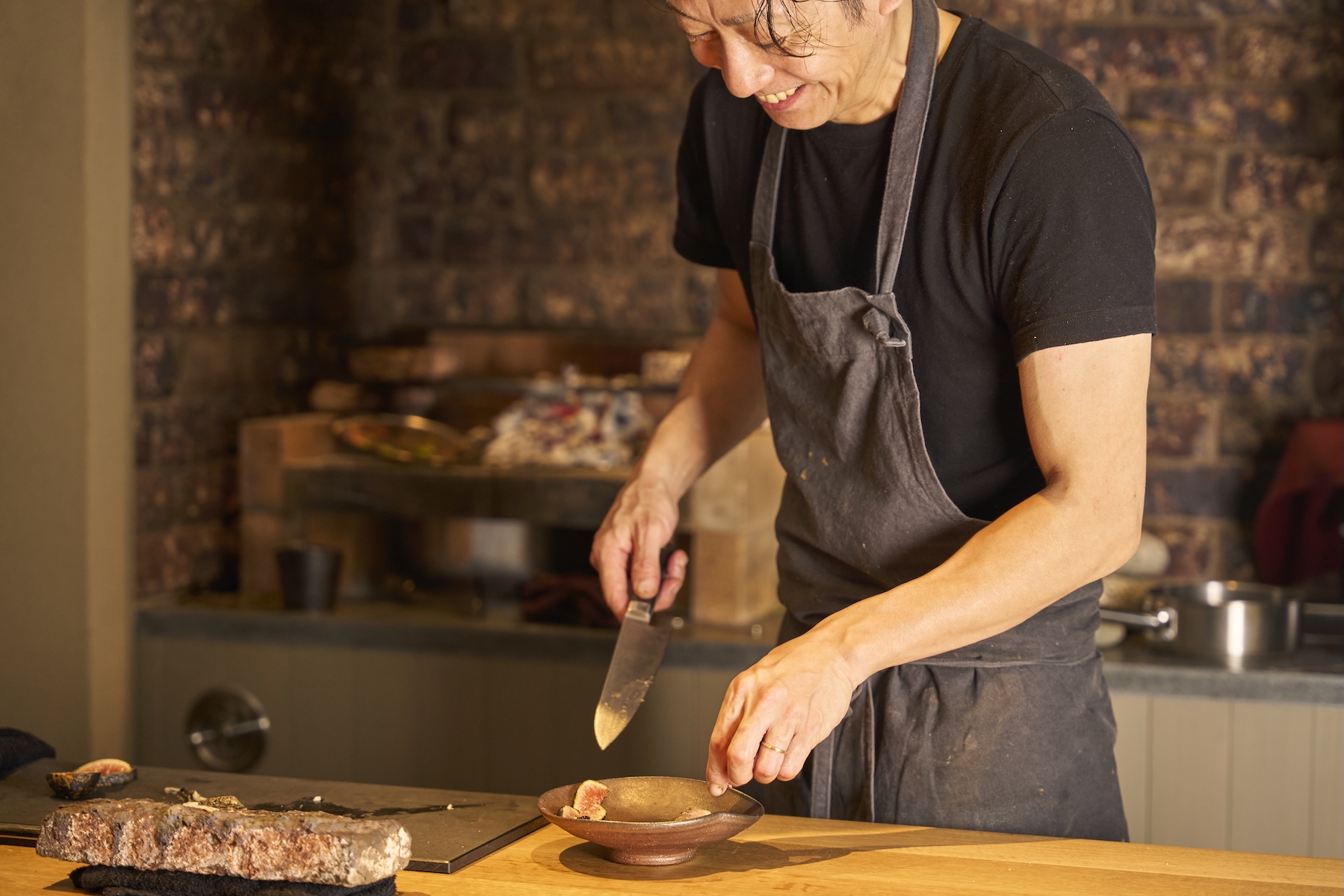
It began with a frog. Not long after Makoto Fuse moved from Tokyo to Shibata in 2025, he caught one in the wet margins of Niigata's rice country, killed it, skinned it and watched it become meat. He had cooked professionally for years by then: in Paris, as a chef de partie in Antoine Westermann's kitchen, and in Tokyo, where he went on to lead kitchens of his own. Yet he dates the thinking behind his food at Auberge Né to that moment, and to the long winter that followed. "My body understood that reality before I found words for it," he says.
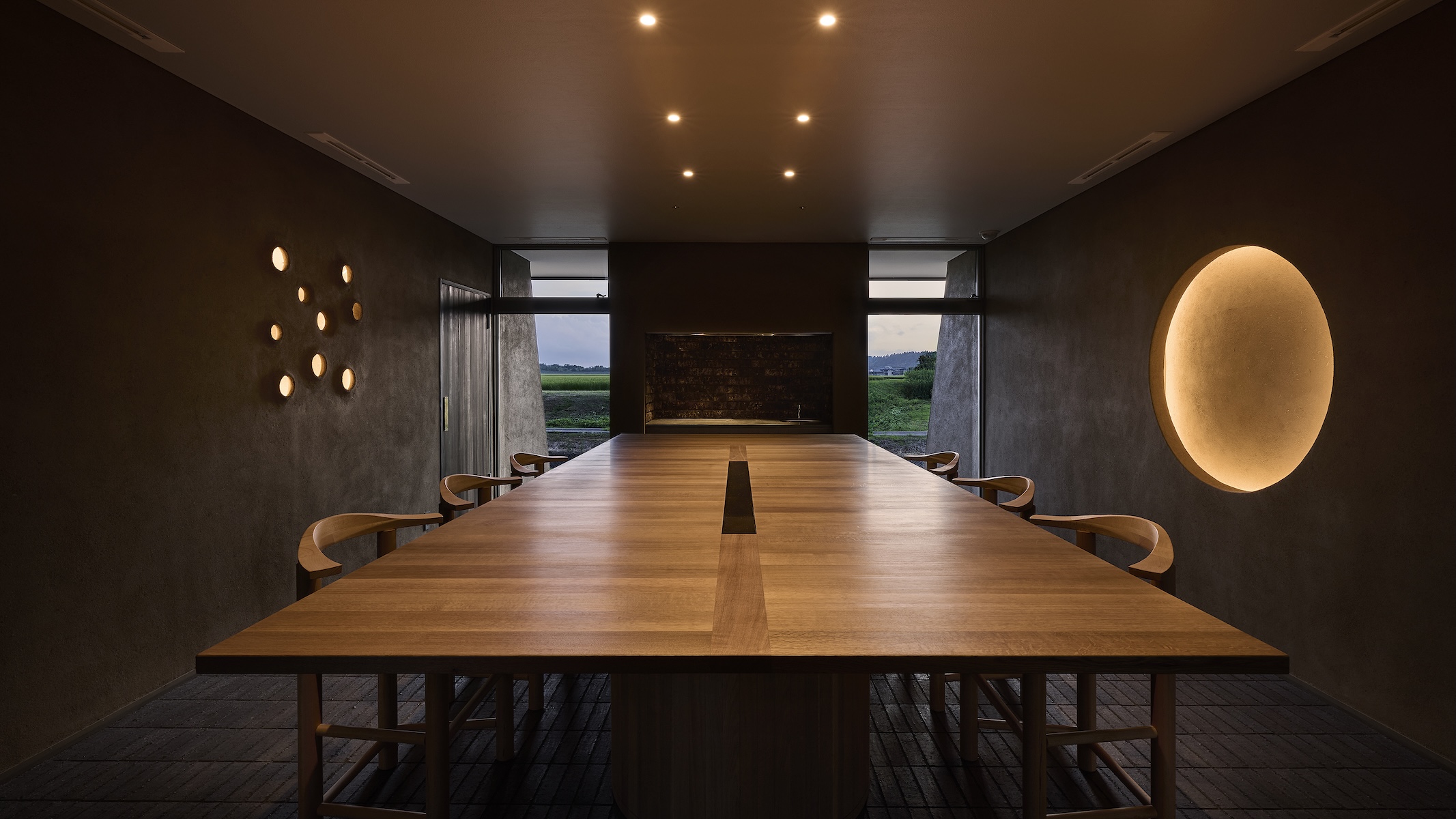
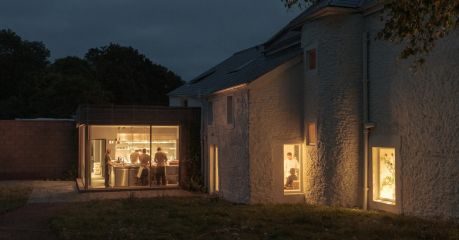
Auberge Né opens for a single party each day. It stands on part of the former Honma family residence, land the family has tended since the Edo period, with paddies running out towards the Echigo Mountains. The architect Kenta Fukunishi built it on timber piles in place of a concrete foundation and plastered its walls with earth dug from the site, mixed with straw and left to ferment for more than six months. Dinner begins at six and lasts around three hours, at a long table of solid timber with the fields filling the windows. Fuse finishes each dish in front of his guests and talks them through it as he goes.
The name carries his brief. Né means born in French, and in Japanese ne sounds like the word for root. Fuse's cooking takes both seriously.
As a child, Fuse loved literature, painting and music, and found himself drawn as much to the people who made them as to the works. "I think I wanted to spend my life making something, too," he says. "Cooking grew from that desire." A meal is eaten and gone, which he admits can seem a strange thing to devote a life to. He sees the value in exactly that: something that exists only on one evening, "in another person's body and memory". He chose French cuisine because, at the time, he believed it was the finest in the world.
What Paris left him was a question more than a rule. "Is this truly delicious?" He still asks it of every plate. A dish may carry an idea, he says, but if it fails to move someone at the table, the idea has not arrived. The French training is "still in my hands", yet he no longer thinks of his food as French cooking adapted to Japan. "I do not want to fit Niigata's ingredients into an existing form. I want to work with them until a dish emerges that did not exist before."
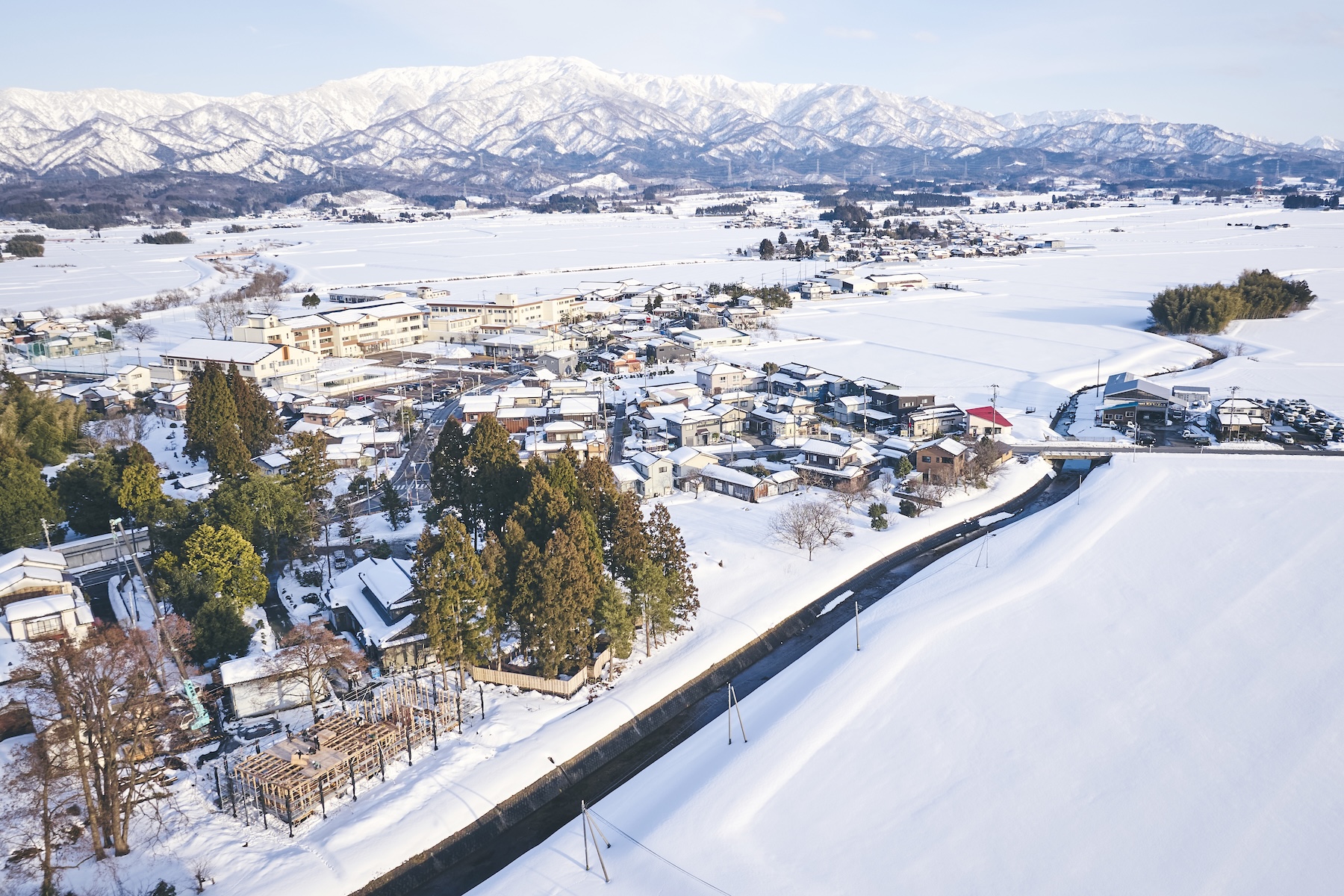
Niigata's winters are long and heavy, and they reshaped how Fuse thinks about time. When snow closes the land there is little to gather, and what you have must be carried into another season. Preservation stops being a technique and becomes a way of continuing to live. Fruit falls and decays before anything grows again; an animal caught by your own hands becomes meat. "In those experiences, life and death cannot be kept neatly apart," he says. "One form ends and something else begins."
Japanese cooking has long prized shun, the fleeting peak of an ingredient. At Né, Fuse gently loosens that idea and follows time itself, through fermentation, drying, smoking, salting, ageing and pickling. Every ingredient comes from Niigata except the sugar. He makes seasonings from mountain herbs and draws broths from fermented vegetable liquor. "Fermentation, drying and salting do not stop time," he says. "They allow us to work with change, alter its pace and pass something forward in another form."
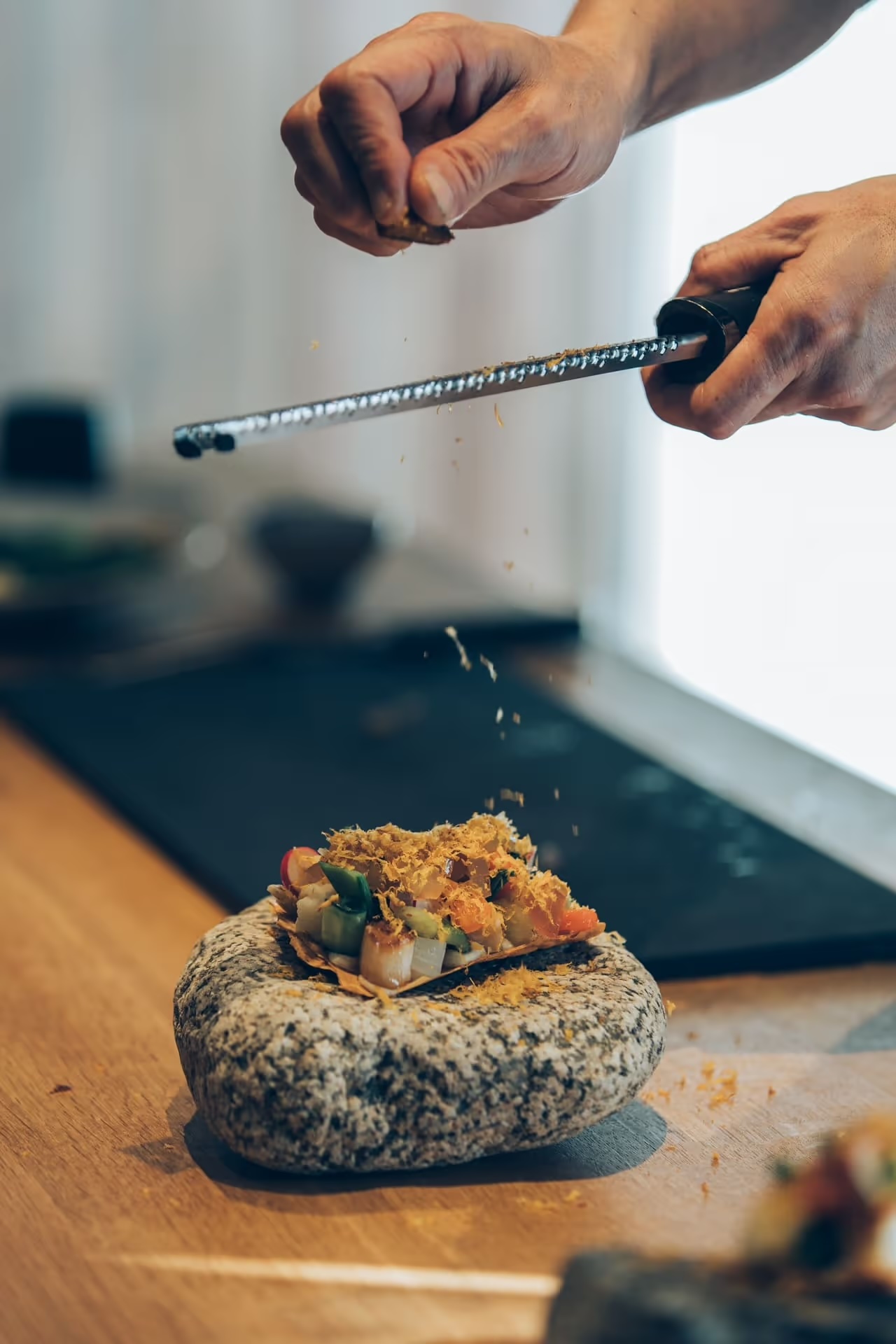
The course runs under a single theme, From the End to the Beginning, Until a Moment Becomes Eternity, and the dishes carry no conventional names. Guests receive short written passages as the evening unfolds, and a small booklet to read once dinner is over. The plates change with the seasons, so the texts hold the ideas while the ingredients move.
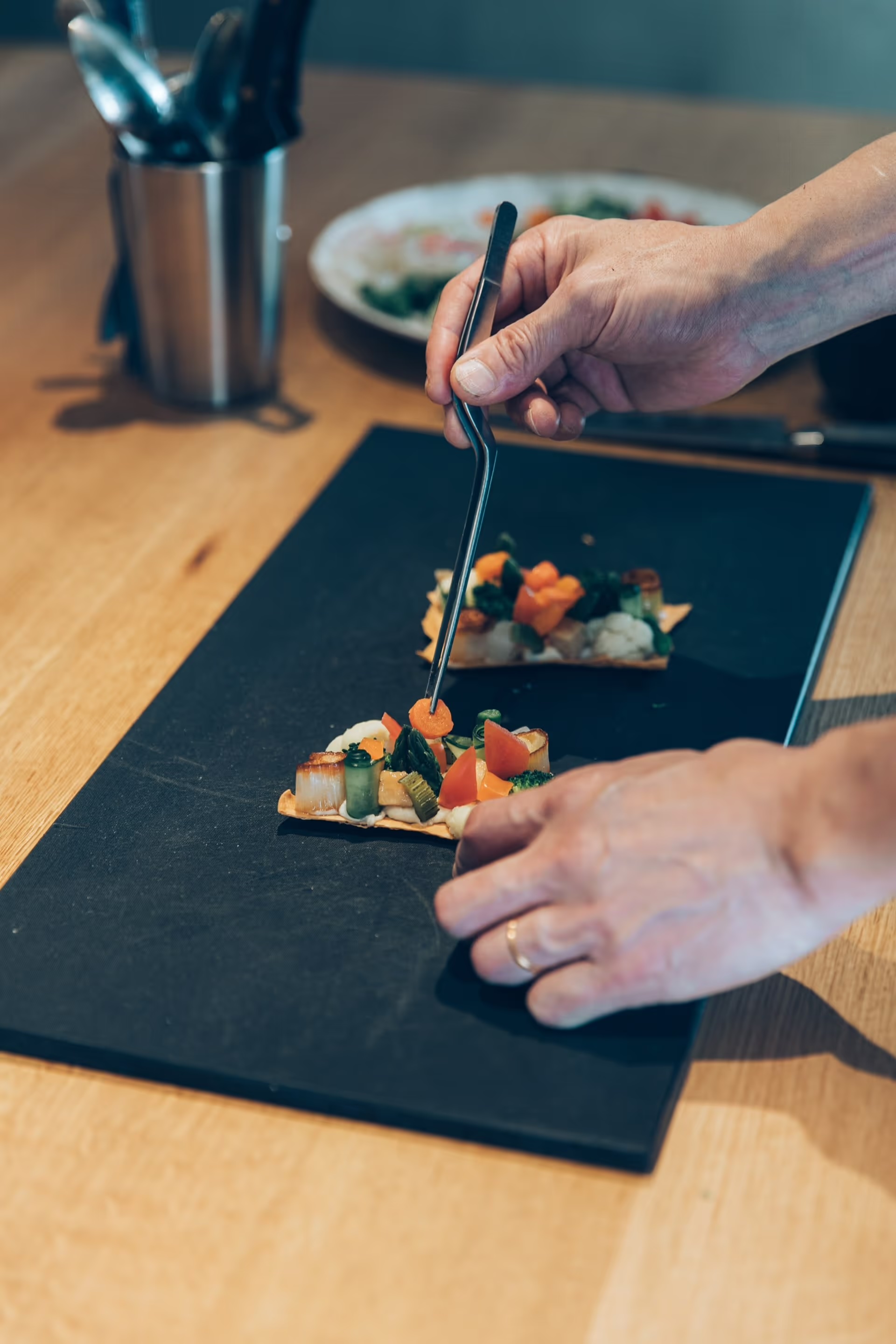
In one recent version, the evening opened with a fallen leaf beside a thin crisp of foxtail and barnyard millet, small grains that take root in poor ground. Bee larvae followed, then charred ayu layered with white koji, red shiso and cucumber, and mahata grouper with taro stem, sushi rice and red ume vinegar. Long-dried abalone was softened slowly in broth with a sauce of its liver and fermented butter. Bear meat was given time in place of fierce heat, until its hardness loosened; deer arrived sharply defined, with mushrooms, grapes and the aroma of fire. Rice came next, cooked in a clay pot, as close to an everyday meal as the evening gets. The close was milk with bee pollen, and finally jam. The pairing, on Fuse's account, is non-alcoholic.
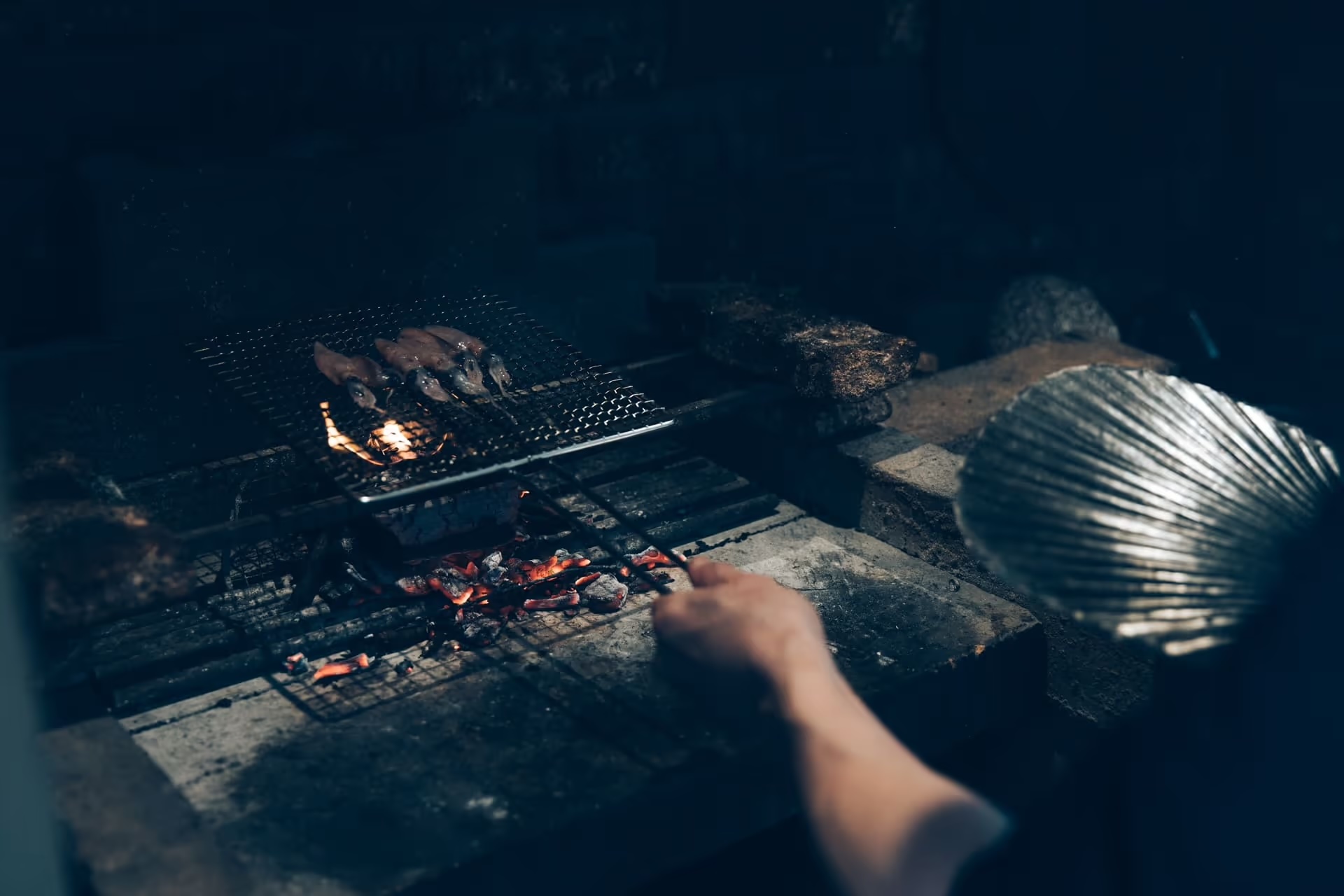
Two dishes say most about how Fuse cooks. In one, American bullfrog and red swamp crayfish, both brought to Japan by people and now treated as pests, are wrapped in a soybean-flour batter and fried. "Cooking them does not resolve the situation people created," he says. "Still, I want to look at them as more than a nuisance, and not treat the time they lived as though it never happened." Cooking bear brings a similar feeling: "I am not standing outside nature, looking in. I am part of it, and I live by receiving other lives."
In the other, a green tomato picked before it could ripen gives its sharp acidity to a cold dessert, set beside peanuts. "Unripe" becomes a flavour in its own right. For Fuse, discovery is as much about finding new value in something overlooked as it is about finding something new.
He is careful about how much of this he explains at the table. "The ideas matter, but the food must first be extraordinarily delicious," he says. "What they feel afterwards belongs to them."
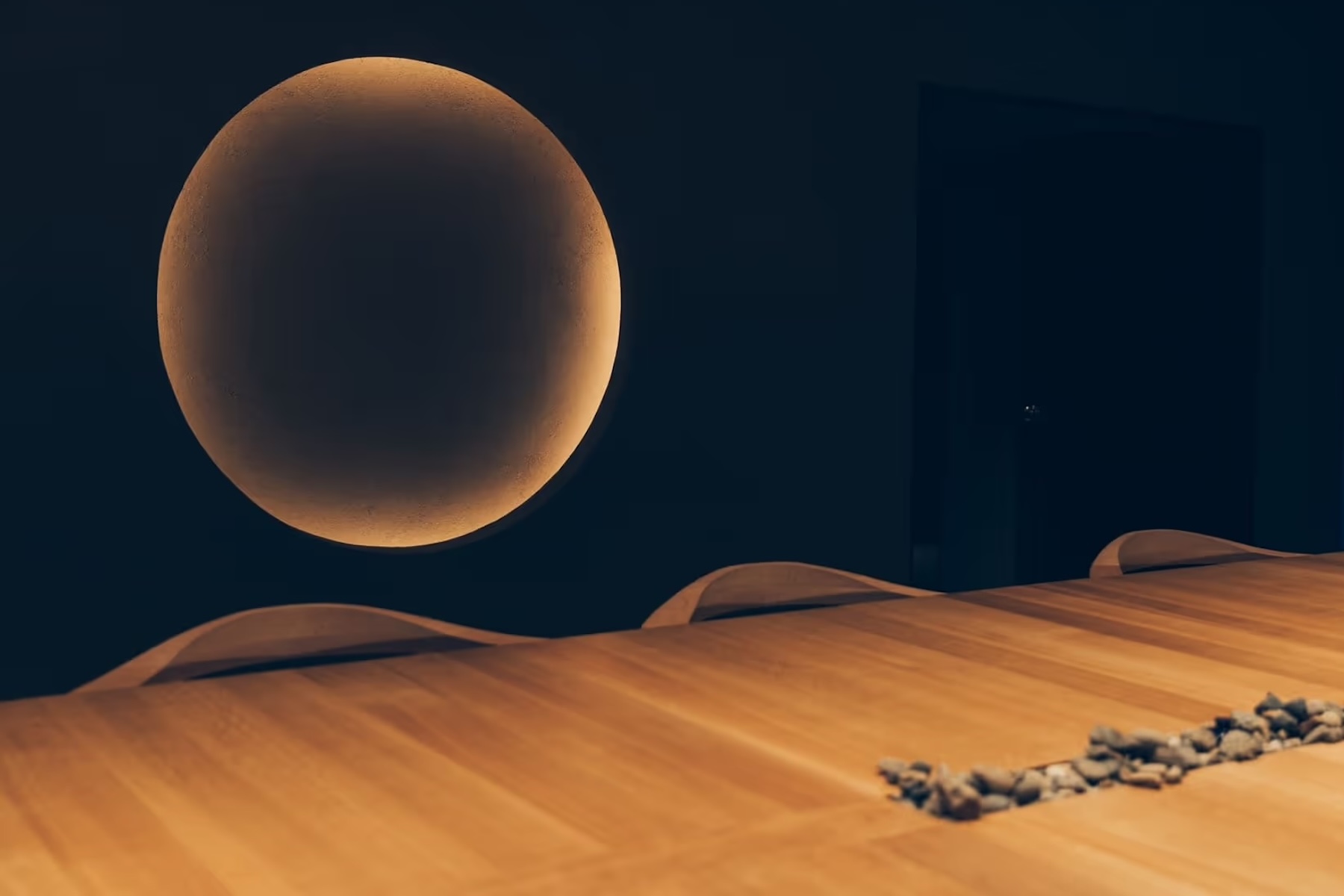
Fuse has not borrowed shapes from Fukunishi's building and set them on a plate. What the house gave him, he says, is "a different sense of time". Its fermented earth and the ingredients he ferments in the kitchen were both shaped by human hands working alongside natural change. The quiet of the earthen walls, the music, the conversation and the guests' own responses all become part of the dish. "A plate does not become complete in the kitchen alone."
There is a larger reason for all of this. Shibata's population is falling and more fields are going out of use; the ingredients remain, but the people and systems that grow, gather and pass them on are thinning. Auberge Né began with a question: whether the ingredients, skills and memories still here could be gathered again through cooking and a stay, and carried a little further forward.
Fuse calls what has taken root in him "a wish to make a next form from what is being lost". He talks about helping to create a new tradition, one that carries what has reached him through change and loss into the land's next chapter. The jam that ends the meal makes the point quietly: it carries a taste that existed for only a moment into someone else's memory. The booklet guests take home ends on the same note. We do not yet know what will bear fruit. Still, we plant seeds.
That conviction runs through the whole of Auberge Né. Its founder, Motoki Kumagai, was born in Niigata and has long believed that the future of rural Japan lies in the layers already present in the land: its agriculture, craft, landscape and ways of living. Soil, architecture and food form the three sides of that idea. Earth from beneath the paddies became Fukunishi'swalls; the same fields, rivers and forests stock Fuse's kitchen; and the guest, staying in the one suite or sitting at the one table, carries it out into the world. The house was conceived as a small engine of regional renewal, bringing visitors, work and value back to a district that has been quietly losing all three. It is, in the end, a hotel of a single room: one earth-walled suite for up to four guests, with Fuse's thirteen courses part of every stay. Dinner, bed and breakfast come as one, so the evening at the table and the night beneath the plastered walls belong to the same experience. Guests may take the house as a private world of their own, orarrive as a couple and share the table with a handful of fellow diners who have travelled just as far for the food.
Michelin-starred Osip in Bruton, Somerset, from chef Merlin Labron-Johnson, pairs farm-to-fork dining with boutique rooms. A soulful retreat where food, design and Somerset terroir create a singular cultural escape.
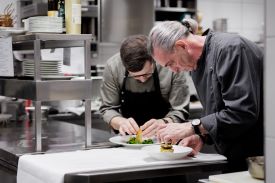
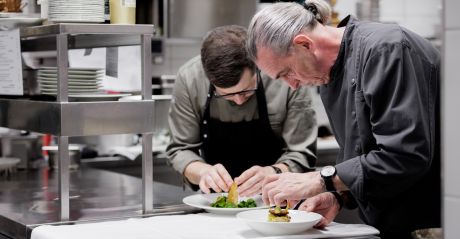
Alexander Hundt cooks at Toque level in a Bavarian town of twelve thousand. His tasting menus are a pleasure; his Chef's Table is a privilege.
read more

This summer, Hospedaria's terrace in Tavira becomes home to Pop-Up Peruano: Chef Miguel Hernandez cooking where Peru meets Portugal, with Algarve seafood, Peruvian flavour and a long evening ahead.
read more

Dramatic, elaborate, sensorial and everyone is an actor -Palacio Do Grilo in Lisbon’s eastern Beato neighbourhood is a theatrical foodie experience set to opulent surroundings.
read more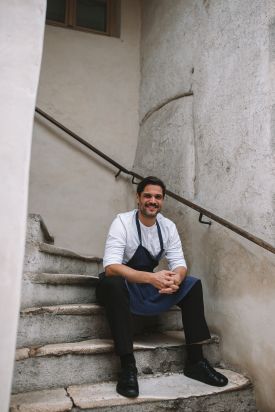
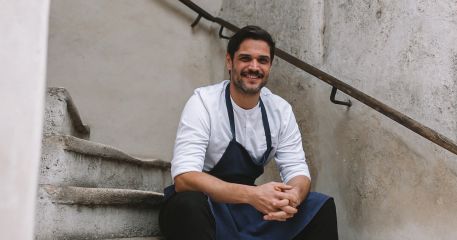
Christoph Huber, a 17th-century inn outside Merano, a chalkboard borrowed from French novelist Dumas, and one menu for everyone.
read more

Exceptional, natural goodness sourced in Greece is what Neolea is all about following the mantra: 'love more, live better and get more taste out of life'.
read more

Greece and herbary go way back in time to antiquity. Throughout its history, the aromatic and medicinal herbs described by Hippocrates, Theophrastus, Dioscorides and Galen have long been a part of their rich holistic culture.
read more

Albin Widmann is Chef at the Seehotel Ambach, the cult lakeside refuge on Caldaro Lake's shores in South Tyrol. Dramatic nature, funky interiors, and an architectural landmark are also a famed bolthole for good food connoisseurs.
read more

A slow-food philosophy that Chef Massimo Geromel describes as 'keeping things simple, pure and rooted', he presides over the culinary realms of the MIRAMONTI, a style hotel and spa destination in Avelengo/Hafling, South Tyrol/Alto Adige.
read more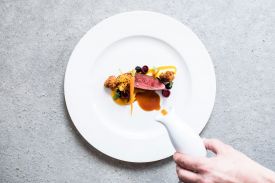
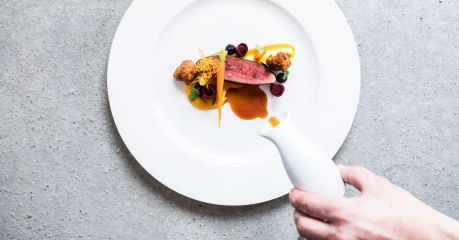
Food is high on this region's agenda, also known as the Garden of the Alps - the cuisine is a menagerie of hearty Laden Alpine dishes, Italian classics and lightness from the Mediterranean. It is not Italian nor Austrian; it is an epicurean marriage that occasionally dips into Hungary.
read more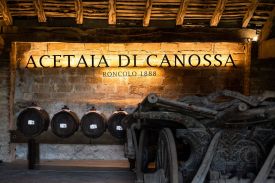
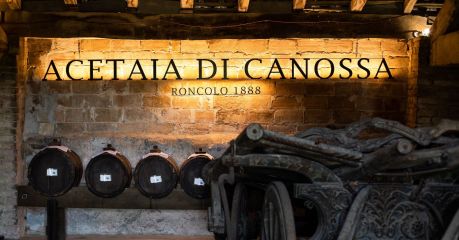
The making of balsamic is said to have been created as far back as 1046, when Henry III, Holy Roman Emperor, requested a gift of vinegar from the Tuscan marquis Bonifacio, father of Matilde di Canossa.
read more
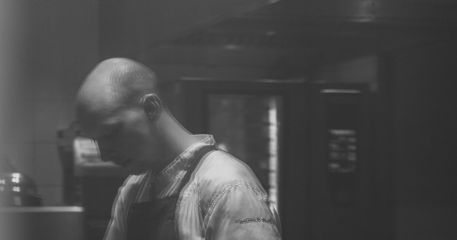
Chef Pieter Starmans returns to August, the Van Duysen convent hotel in Antwerp, with a looser menu, two secret gardens, and produce finally given the leading role.
read more
Get the insider news and lowdown on what we've been up to, where we've been, and who we've met along the way. Be the first to discover new places and get the scoop on our favourites.