Auberge Né | Eco Design Hotel & Resturant in Rural Japan | Shibata, Niigata

Architectural Rice

Intro

Soil, architecture and food form the triangular philosophy behind Auberge Né, a singular one-suite design house and bijou restaurant tucked into the northwestern corner of Japan, in the homelands of rice, sake, raw nature and the living heritage of Edo-period crafts.

An architecture of the land narrated the construction of Auberge Né, a build that exists in deep collusion with the ancient traditions of rice cultivation, the earth beneath its foundations, towering cedar and birch, and the weight of heavy winter snows.

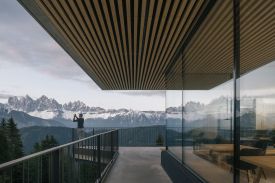
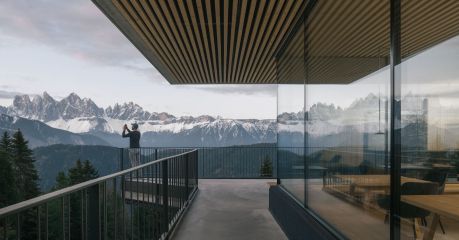
It sits within this diorama of agricultural landscape in Shibata, Niigata Prefecture, surrounded by an infinity of patchwork rice paddies, the distant snow-capped Echigo Mountains and a fringed coastline looking out towards Sado Island in the Sea of Japan.

When the architects first encountered the site, the wide rural horizon and the seasonal rhythm of Niigata's rice country suggested an approach entirely grounded in place. Rather than importing materials or defaulting to generic construction systems, the project explores how architecture, cuisine and landscape might emerge from a single, shared source: the indigenous. The name Né carries a dual meaning. In Japanese, ne means root. In French, né translates as born. Together, they frame the philosophy at the heart of the project: architecture deeply rooted in its landscape, yet wholly contemporary in encounter, rewriting the ryokan spirit for the conscientious modern nomad who cares as much about the land and materiality as they do about the provenance of what is on the plate.

Auberge Né can be read in more than one way. A design suite (that can accommodate four guests) with a culinary restaurant as its quiet centrepiece. A destination dining experience with a hotel suite on its left wing. Booked in its entirety as a private world, or simply as a couple with fellow diners at the table, intimate by design. However one perceives Auberge Né, it is rare, beautiful and a consummate original, sitting quietly over the soils of the once-known Kawahigashi Village. A little eco hotel of style, a place where dinner, bed and breakfast have been considerably rethought, as if the building itself has grown from the soil.

Rewriting the ryokan spirit for the conscientious modern nomad who cares as much about the land and materiality as they do about the provenance of what is on the plate

Design by Soil

Timber Piles natural construction Japan | Auberge Né | Eco Design Hotel & Resturant in Rural Japan | Shibata, Niigata | The Afficionados Natural constuction methods rural Japan | Timber Piles natural construction Japan | Auberge Né | Eco Design Hotel & Resturant in Rural Japan | Shibata, Niigata | The Afficionados

Rice cultivation shapes the land through narrow ridges known as azé and planting furrows called uné. These forms informed the building's spatial composition, allowing the architecture to extend naturally from the fields.

One of the defining features of the project is the use of earth taken directly from the site. Soil was collected, aged and fermented for more than six months before being used to create earthen plaster finishes for both exterior and interior walls. Through this process, the building rises directly from the land. The colour and texture of the architecture originate from the soil beneath it.

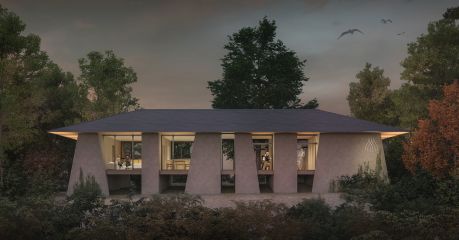
Instead of a conventional concrete foundation, Auberge Né is supported by a traditional wooden pile system. Numerous timber piles are driven into the ground to compact the soil, allowing the structure to stand through friction between wood and earth. This approach eliminates excavation and minimises disruption to the natural soil structure.

The architects, Kenta Fukunishi Architecture Office and Hideaki Hamada Structural Design, collaborated closely with local craftsmen throughout the project, learning from regional techniques and material traditions. Auberge Né contains beech timber from Niigata's forests, snow beech used for custom furniture pieces, Yasuda roof tiles produced from Niigata clay and designed to withstand heavy snowfall, Shibata cedar used throughout the structure and interiors, and natural rice straw incorporated into woven architectural elements and furnishings. Some plaster wall substrates incorporate 3D-printed components, allowing contemporary fabrication to work alongside traditional craft techniques.

Encircling the balance of living well, Auberge Né includes the Forest Sauna Sui, set within the natural environment surrounding the house, as well as outdoor terraces.

The result is an architecture that maintains a direct relationship with the earth and can eventually return to nature. It is, by deliberate intent, a building of low imprint.

The Aesthetics of Calm

Polished interiors Modern Japanese, eco style |Timber Piles natural construction Japan | Auberge Né | Eco Design Hotel & Resturant in Rural Japan | Shibata, Niigata | The Afficionados Red bed seductive lighting | Modern Ryokan |Timber Piles natural construction Japan | Auberge Né | Eco Design Hotel & Resturant in Rural Japan | Shibata, Niigata | The Afficionados

The interiors continue the logic of the building itself: spaces formed directly from the earth beneath them. Soil excavated during construction was reused to produce the earthen walls, which give the rooms their warm, textured palette and an atmosphere that feels continuous with the surrounding landscape. The plan unfolds as a sequence of volumes hollowed from that earthen mass, dissolving the boundary between inside and outside.

Shibata cedar forms the structural framework throughout. A defining feature underfoot is the wood brick floor, constructed from 2,220 individually cut cedar blocks, each 90 by 90 millimetres, assembled by hand. One of the most memorable spaces is the Burrow, a contemplative room enclosed entirely by earthen walls, quiet and immersive in equal measure. The plasterwork and tiling by Aga Global and the luminous, considered lighting by New Light Pottery deepen that sense of stillness.

Every fitting and finish carries the memory of its origin. The joinery was crafted from Shibata cedar by local artisans at Takahashi Joinery, finished using fuki leaf extract and iron mordant, coaxing beauty from timber once considered unfit for the purpose. Furniture by Suzuki Kogei and textiles by ISANA are made from snow beech native to Niigata, with woven rice straw running through the soft furnishings. Ceramics from Aoto Kiln are thrown with local clay and wood ash, and even the washbasins carry that same mineral memory. The tatami mats, handmade by Takano Tatami Shop using traditional rice straw, bind the building to the deep agricultural legacy that defines this corner of Japan. Underfoot, carpets by Hotta Carpet and hardware by Hori Shoten complete an interior in which every touch point has been considered, sourced and made with intention.

The hotel suite follows the same material honesty. Earthen plaster walls, cedar structure and custom regional furniture create interiors that are calm, tactile and unhurried. To stay at Auberge Né is to inhabit the architecture as fully as the culinary programme.

Jap'rench Chef

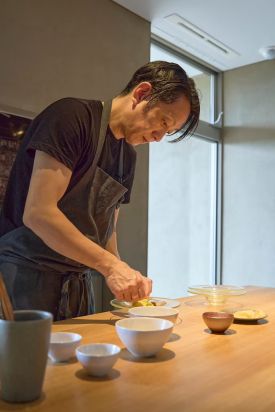
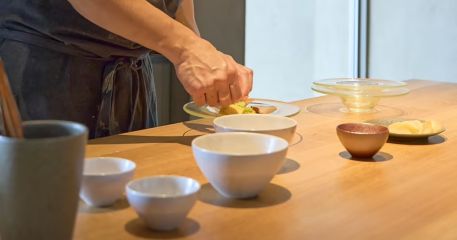
Executive Chef Makoto Fuse | preparing French-Japanese Foods | Timber Piles natural construction Japan | Auberge Né | Eco Design Hotel & Resturant in Rural Japan | Shibata, Niigata | The Afficionados

There has long been a quiet kinship between the cuisines of Japan and France. Siblings in the art of delicacy, texture, lightness and the distilled essence of flavour, the two traditions share a reverence for the ingredient above all else. At Auberge Né, that kinship finds its most considered expression yet.

The kitchen is led by Executive Chef Makoto Fuse, a Japanese chef shaped by the discipline of French culinary tradition. After five years refining the fundamentals of French cooking in Japan, Fuse travelled to Paris in 2009, training under Christian Constant, one of the most quietly influential mentors in modern French gastronomy. He went on to spend two years in the kitchen of three-Michelin-star chef Antoine Westermann, deepening both his technical rigour and his creative instinct. In 2019, he co-founded IWAI OMOTESANDO alongside chefs who had trained at Mirazur, ranked first in the World's 50 Best Restaurants, and the two-Michelin-star Aquavit in New York.

Now, in Shibata, something quieter and more rooted is underway.

Niigata's winters are long and its growing seasons brief. From that limitation, a culture of patience has taken hold over centuries. Fermentation, pickling and salting are not techniques here so much as a language, a way of extending life, deepening flavour and honouring the brief window in which the land offers its best. Fuse arrived in Shibata and began, slowly, to learn that language: seasonings drawn from dried mountain herbs, spices from crushed branches, broths pulled from fermented vegetable essence. Each element a study in place.

Dinner is a curated journey of approximately ten courses, rooted in the seasonal rhythms and culinary heritage of Niigata, paired with local sake. Neither French nor Japanese in any conventional sense, it is something rarer: a cuisine born entirely from its landscape, one that could not exist anywhere else, or at any other moment.

The name says it plainly. Né means root in Japanese, and born in French. By cooking what has been inherited from the past and tasting it in the present, something is quietly passed forward. At Auberge Né, that gentle, unhurried cycle begins again with every sitting.

Native Curator

Motoki Kumagai is the founder of Auberge Né and the creative force behind the project. Born in Niigata, he has long believed that the quiet landscapes of rural Japan carry a richness shaped by nature, history and living cultural traditions.

For Kumagai, the future of regional communities lies not in imitating cities, but in revealing the cultural and ecological layers already embedded in the land: its agriculture, craftsmanship, landscapes and ways of living. Auberge Né emerged from this belief: that connecting the nature, history and culture of a place with the wider world can become a genuine path toward regional renewal, breathing life back into rural economies that have long faced quiet decline.

Rather than importing luxury, the project seeks to express what already exists here: the soil, the rice fields, the water and the knowledge that has shaped them over generations. In this sense, Né is less a hotel than a conversation between land and visitor, rooted deeply in Niigata yet open to the world.

Location

Auberge Né stands in Shibata, Niigata Prefecture, on Japan's west coast: a landscape of fertile plains, patchwork rice cultivation and winters defined by deep, heavy snowfall.

From Tokyo, take the JR Joetsu Shinkansen to Niigata Station (approximately two hours), from which a complimentary shuttle runs directly to the property (approximately 40 minutes; advance reservation required). Guests arriving at Narita Airport should proceed to Tokyo Station and take the Shinkansen, which takes approximately 3.5 to 4 hours in total.

Further afield, Sado Island, visible on clear days from the Niigata coastline, rewards those who make the crossing by ferry from Niigata Port. Closer to hand, Tsukioka Onsen lies just twenty minutes from the property by car, its sulphurous waters long celebrated as among the finest in Japan. In winter, the region's heavy snowfall transforms the surrounding mountains into pristine terrain for those who seek it. In every other season, the cedar forests, coastline and the largely undiscovered rural landscape of Niigata offer a quieter encounter with Japan at its most elemental.

editors PICK


JOURNAL

Axel Vervoordt + The Greenwich Penthouse


Wabi sabi, the Japanese phrase derived from two distinct roots – ‘wabi’ for simplicity and ‘sabi’ for the on-going movement of time – is a concept that celebrates the beauty found in imperfection. Quiet and slow, it observes cracks, ageing and above all, authenticity; an attitude that iconic Belgium interior designer, Axel Vervoordt has adhered to all his life.

read more
JOURNAL

The Japonesque Greek - Maru Meleniou


Athens-based ceramist, art and design lab Maru Meleniou creates pieces in both the fields of sculptural artworks in the form of stoneware objects and makes 'everyday' a ceremony in tableware that is anything but ordinary.

read more
Inai Haven Lapland: Luxury Timber Villas on Lake Inari, Finland Inai Haven Lapland: Luxury Timber Villas on Lake Inari, Finland
Villas - Lapland, Finland

Inai Haven


Architect crafted timber villas above the Arctic Circle, offering lake views, Nordic minimalism, Sámi heritage, private saunas and serene immersion in untouched Lapland wilderness.

read more
Ca’n Beneït Mallorca – Historic, Boutique Hotels in the Serra de Tramuntana, Spain Ca’n Beneït Mallorca – Historic, Boutique Hotels in the Serra de Tramuntana, Spain
Hotel - Mallorca, Spain

Ca’n Beneït


A restored Mallorquín estate set within olive groves and terraced hillsides of the Serra de Tramuntana; terracotta floors, honest materials and farm-led dining shape a quietly cultivated rural retreat.

read more

RELATED