JOIN the AFICIONADOS
Get the insider news and lowdown on what we've been up to, where we've been, and who we've met along the way. Be the first to discover new places and get the scoop on our favourites.

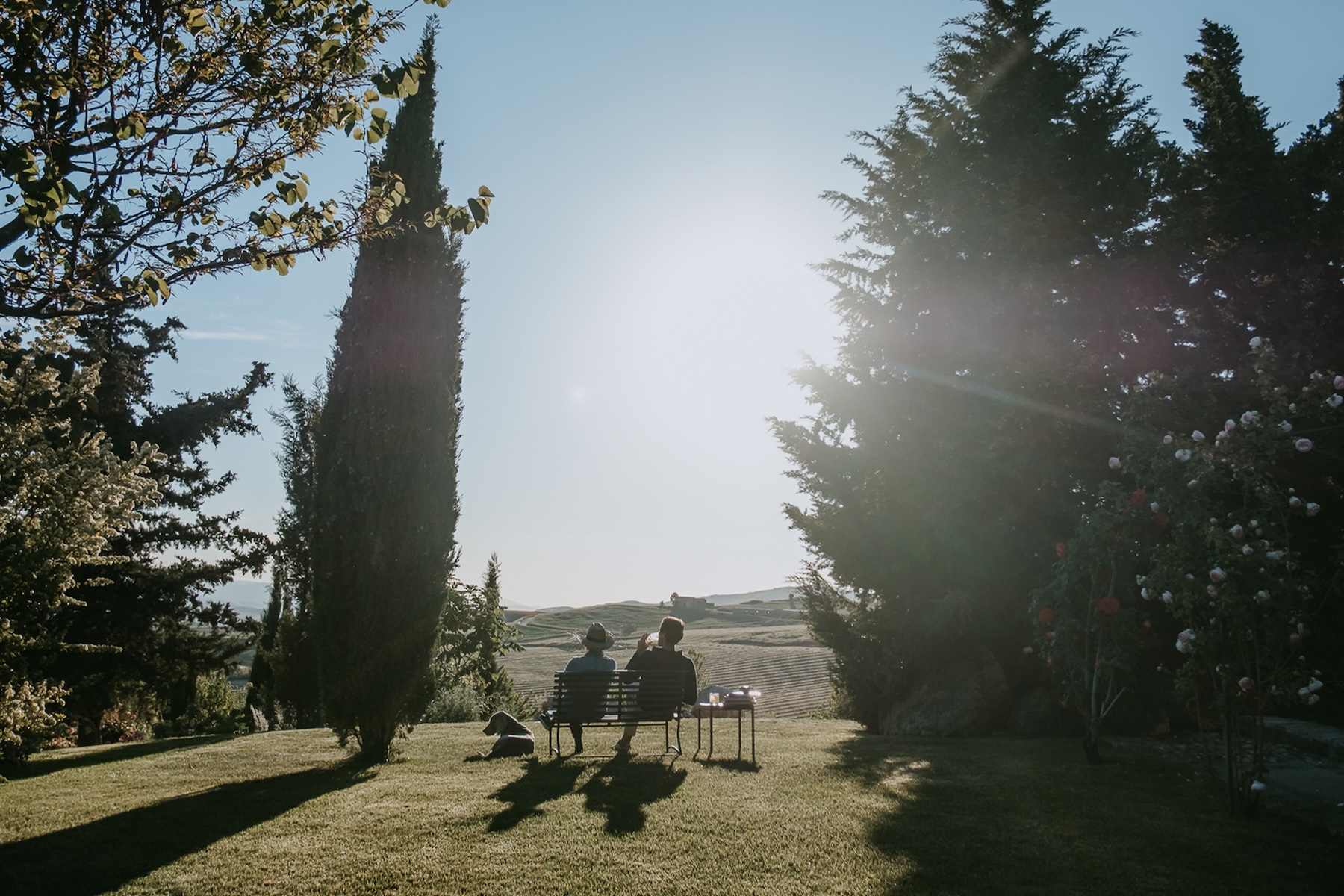
Susafa, the country boutique hotel set on a five-hundred-hectare Masseria in the foothills of the Madonie above Polizzi Generosa, has been the Saeli-Rizzuto family's working concern for five generations, with a farming history reaching back to 1870. The current chapter, written by Manfredi Rizzuto and his sister Sara, has taken its working philosophy from one of the estate's own initiatives: let's sow the future.
The phrase began as the name of a project. Susafa runs a scheme by which someone living in a city, far from any agricultural rhythm, can adopt a cherry tree, an olive tree or a field of wheat on the estate, and receive, in due course, the year's harvest at home: jam, extra-virgin olive oil, flour, pasta from the farm. As a piece of direct-to-consumer farming, it is rather lovely. The figurative version, the one Manfredi Rizzuto has been living since he came home in 2008, is larger again.
Manfredi is the fifth generation of the Saeli-Rizzuto family on this land. He returned after a working life that had taken him to Canada and Belgium; the pull of a particular set of buildings on a particular hillside eventually outweighed the pull of elsewhere. Operating the hotel alongside his sister Sara, with two centuries of family farming in the background and a Weimaraner named Bruno usually somewhere in the foreground, he set about reconsidering what the estate might mean for its land, for its produce and, in due course, for its guests. His response to a five-hundred-hectare Masseria in working order was not to convert but to continue. The estate would remain a working farm. It would, in addition, welcome guests.
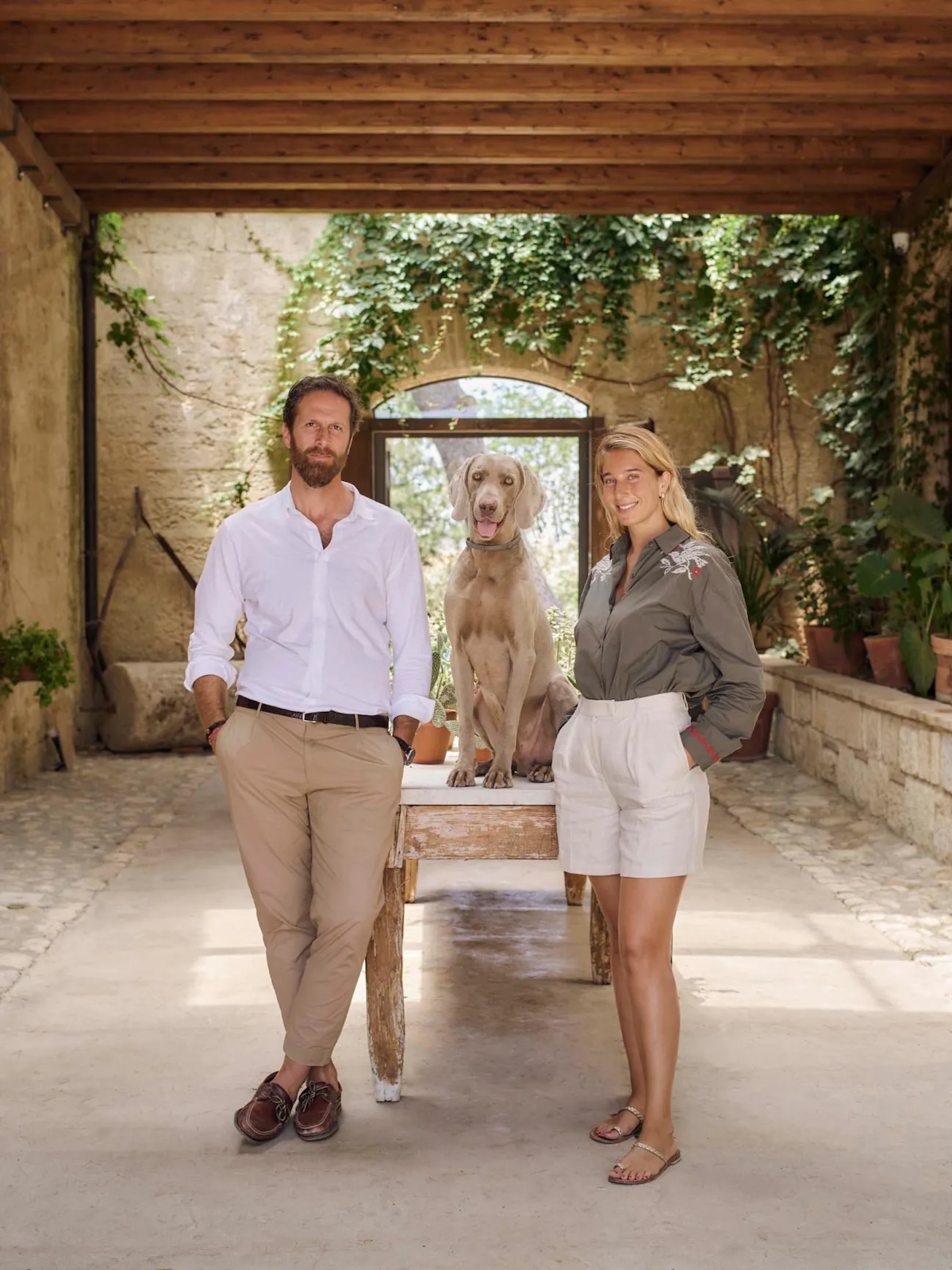
Manfredi's earliest decisions were agricultural rather than hospitable, and they have shaped everything that has followed. Pesticides and chemical fertilisers were banned outright. Weeds, where they appear, are removed by hand. More than forty hectares are now under certified organic cultivation. Around 6,000 square metres of garden, conceived in 2014, have been given over to local flora, with rare wild plants invited to take their chances alongside deliberate planting. Fifty hectares of woodland have been reforested over the same arc. Rewilding, in the contemporary sense the term has acquired, was already underway at Susafa before the contemporary sense had really arrived.
This is the foundation on which everything else stands. At Susafa, the food on the plate, the produce in the kitchen garden, the colour of the surrounding hills in spring, are the result of decisions made about the soil first. Hospitality, in the marketing sense, follows.
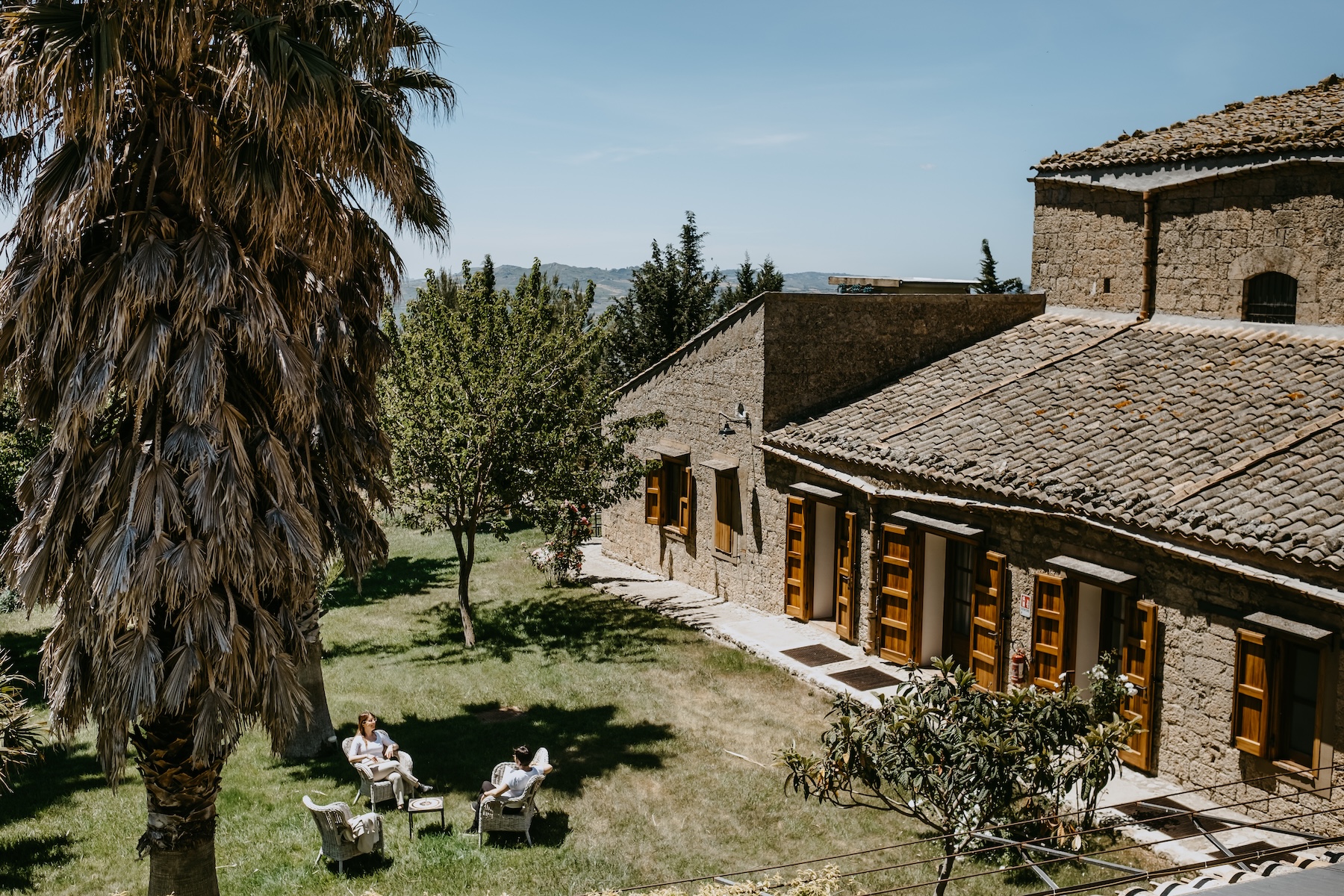
The restoration has been, by design, conservative. The two-hundred-year-old stone façade was kept; the old granary now functions as the restaurant; the rooms and suites have been carved out of what were once the stables, the armoury, and the dwellings of the bakers, the sharecroppers, the winemaker, the dairy master. The new is held to a standard set by the old, rather than the other way around. Photovoltaic panels handle hot water and electricity for year-round energy autonomy, rainwater captured in cisterns irrigates the gardens entirely, the laundry runs on eco-label products dispensed from re-fillable bottles, and a charging point waits outside for the electric car that, it is hoped, brought you here. None of this is announced in the room. It simply is.
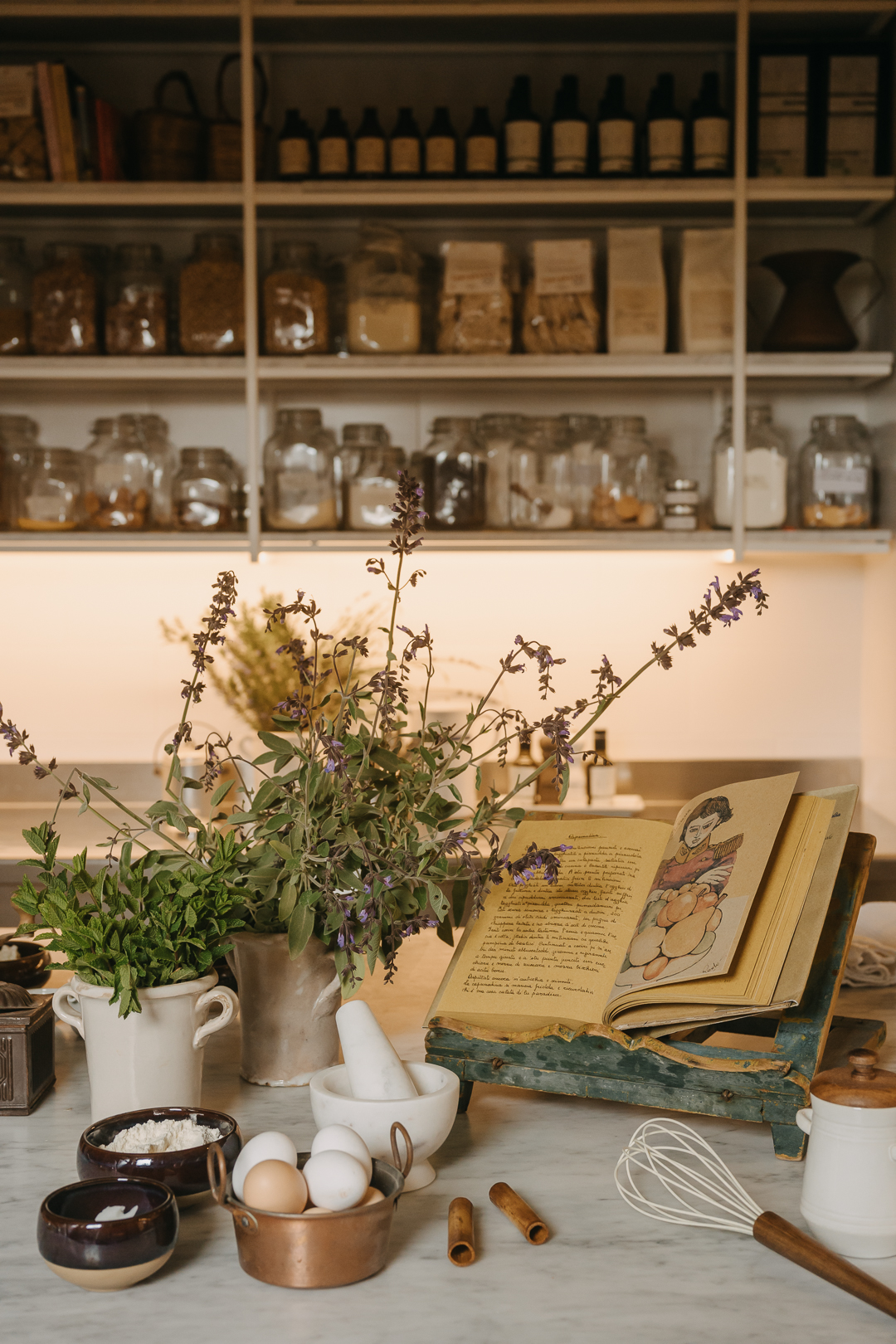
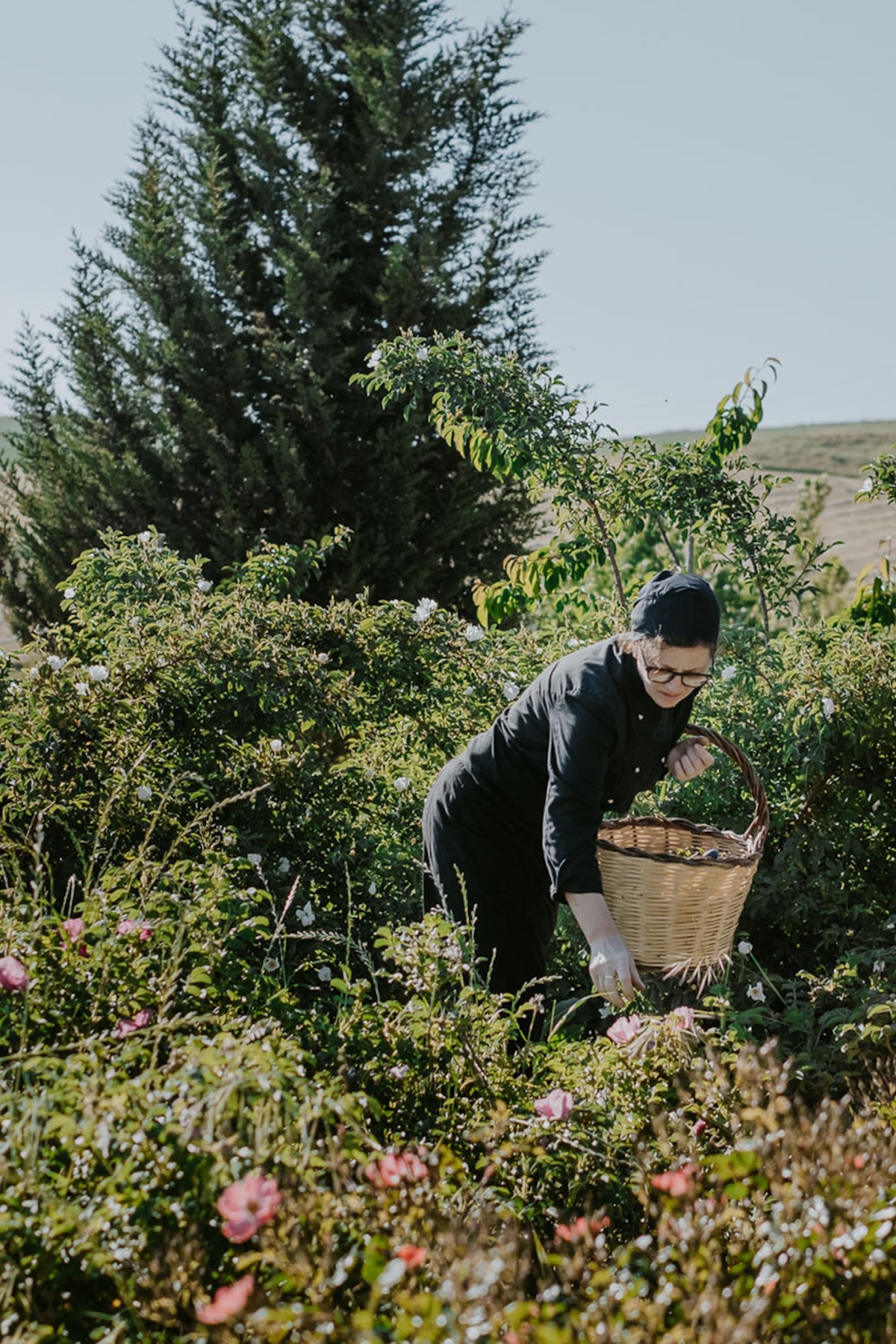
The kitchen is where Susafa's environmental thinking becomes most legible. The menu is built around zero-kilometre, plant-forward ingredients, much of it grown in the kitchen garden itself, picked when the season suggests and not before. Cheeses and dairy come from neighbouring farms; meat from local breeders; fish only on request. The wine list leans on Castellucci Miano and Tenute Tasca d'Almerita, two cellars that sit roughly twelve kilometres from the gate. Organic waste is composted and returned to the garden, completing a quiet domestic loop that any farmer of the last several centuries would recognise as common sense.
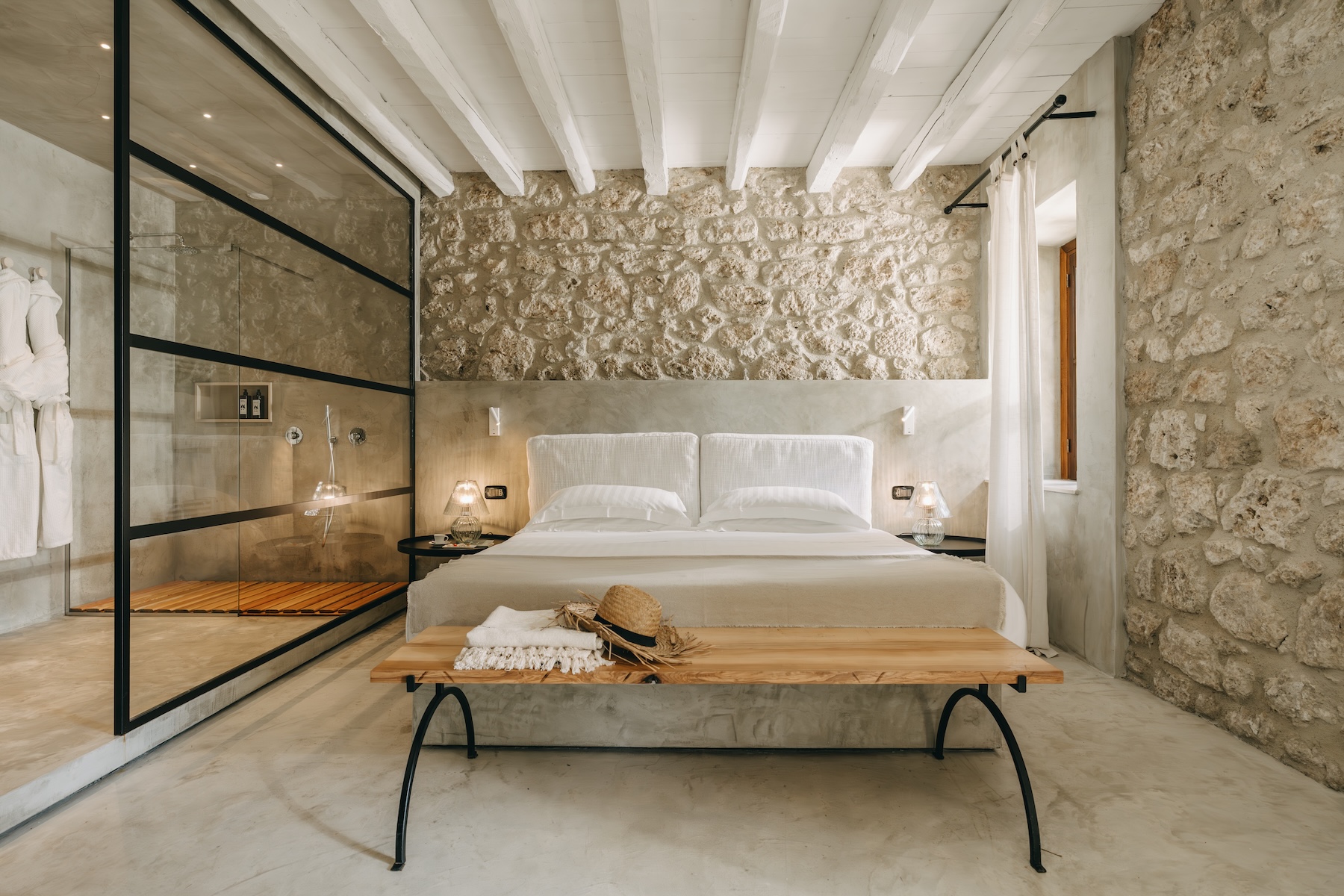
It is worth briefly dwelling on what Susafa has decided not to put in your room. There is no television. There is no minibar. These are not oversights and they are not a marketing affectation; they are considered withdrawals, made to reduce energy consumption and the inevitable parade of single-serve waste, and to nudge the guest, gently, toward what the surrounding countryside is generously offering anyway. In their place: visits to the kitchen garden, cookery lessons drawing on whatever the season has brought up out of the soil, cheese-making demonstrations, massage in the spa gazebo, a swim in the pool set within the botanical garden, stargazing under a bracingly dark Sicilian sky. The place itself is the entertainment.
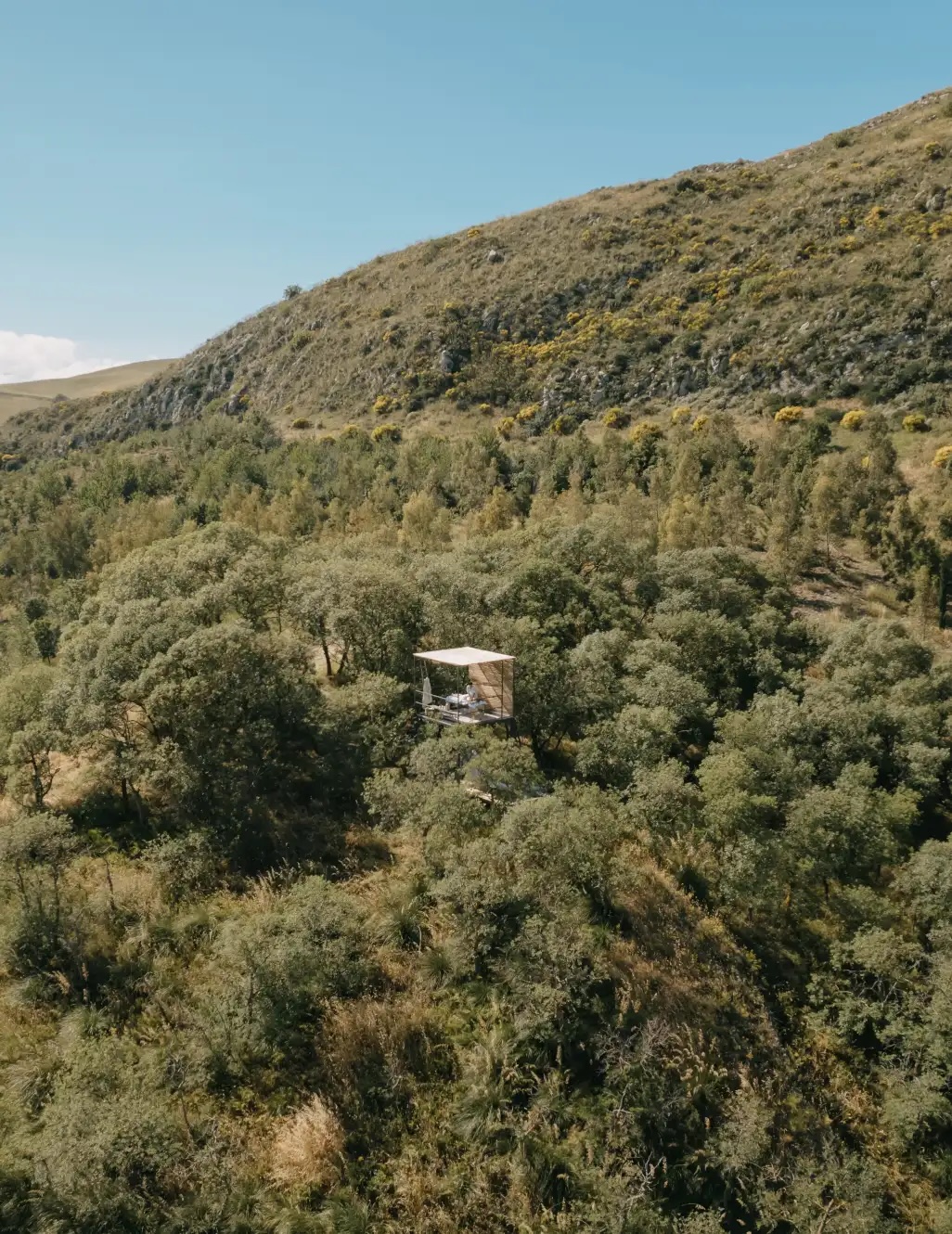
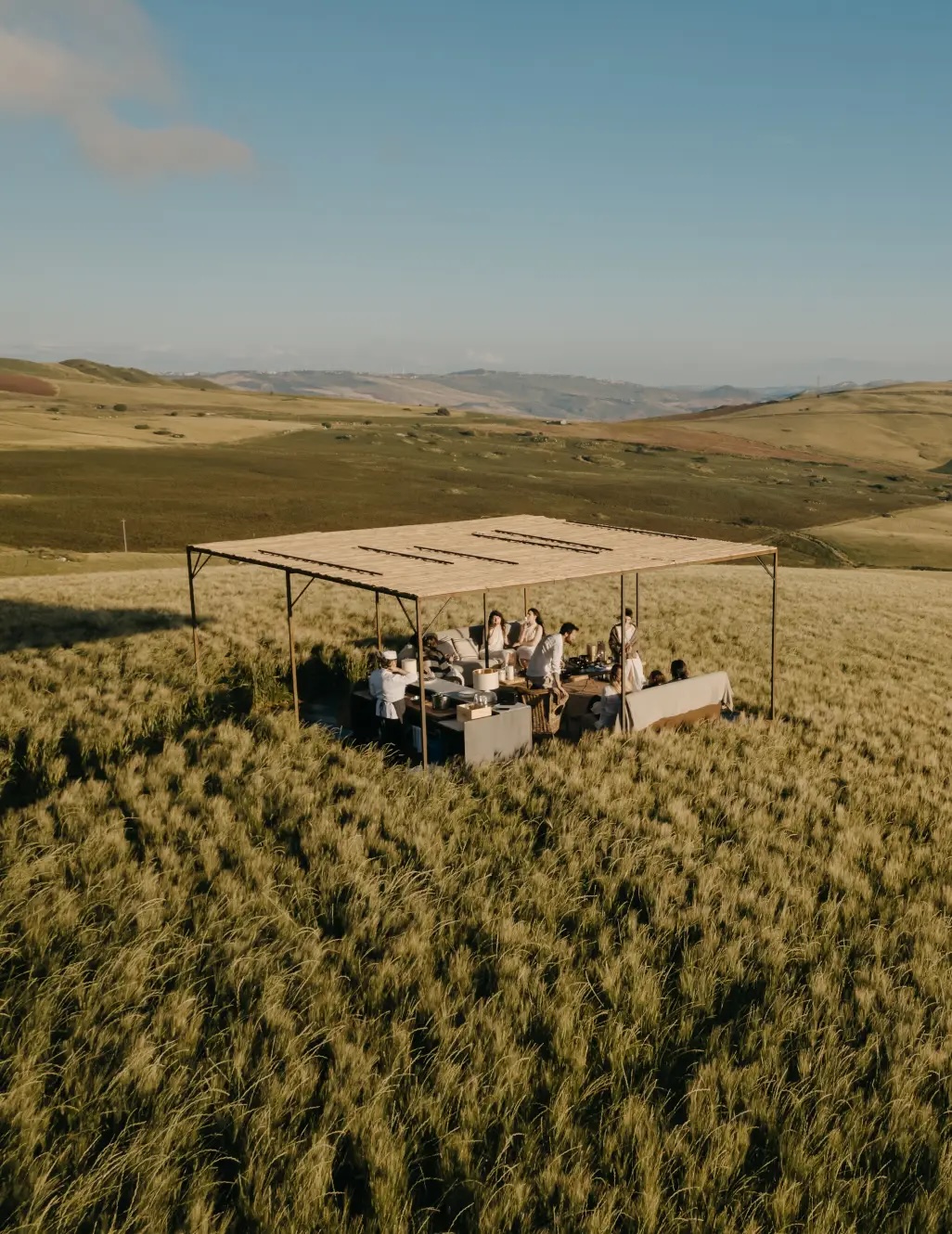
Back, then, to the project that gave the piece its title. Let's Sow the Future, in its literal form, is the adoption scheme. A cherry tree, an olive tree, a field of wheat can be adopted by someone living a long way from any of those things, and the year's harvest, in due course, finds its way to them at home. It is a piece of direct-to-consumer farming the global grocery industry has, overall, failed to deliver. It is also an environmental and educational gesture, building a small network of urban consumers who, through adoption, become custodians of a particular tree on a particular hillside in inland Sicily. The shift in attention, from anonymous purchase to seasonal kinship, is not insignificant.
What ties all of this together is a coherence of intention rather than an inventory of measures. The estate is a working farm and behaves like one. The hospitality is layered onto that fact rather than displacing it. Manfredi and Sara, the Saeli-Rizzuto family before them, and Bruno the Weimaraner alongside, have been making the small, considered decisions for longer than most, and intend to continue.
There is, as it happens, a final piece of language earning its keep on the gate. Susafa itself, in the local Sicilian, is a contraction of three words: si può fare. They translate, with appropriate conviction, as: it can be done. The estate has, all along, been the argument.
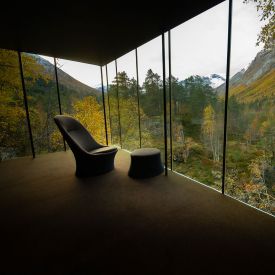
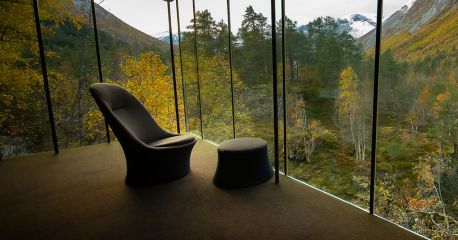
Where wilderness meets radical architecture, soulful stays and culture-led adventures – join us in chasing raw nature, good people and unapologetically beautiful escapes across the wild corners of the world.
read more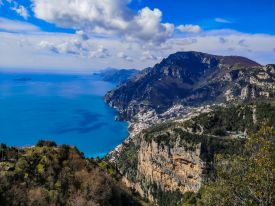
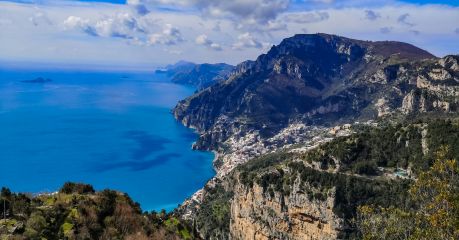
Amalfi and the Path of the Gods - Sentiero degli Dei is magical, an easy, two-hour amble for mortals like us, spy the Amalfi Coast’s breath-taking UNESCO World Heritage site in all its glory from a lofty, God-like height, tracking the path from Agerola’s Bomerano near Amalfi to Positano’s pause-worthy Nocelle.
read more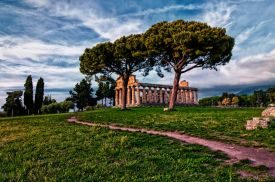
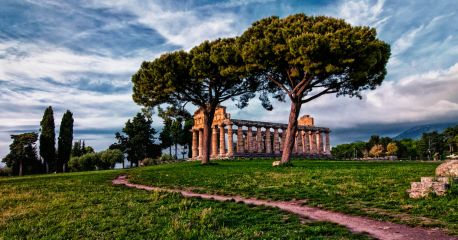
Paestum Temples in Southern Italy is one of those ancient antiquities that you have to visit – this UNESCO World Heritage Site in Cilento Campania is a treasure trove of ancient Greece including three of the world’s best-preserved temples.
read more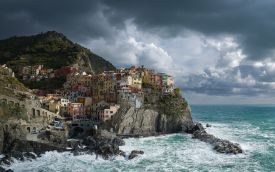
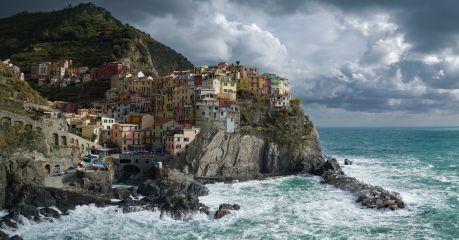
Cinque Terre in the Slow Lane – Ensconce yourself at a secluded retreat where the pleasures of slow living are championed in a peaceful and tradition-filled Ligurian way of life.
read more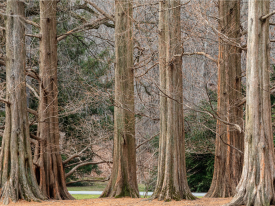
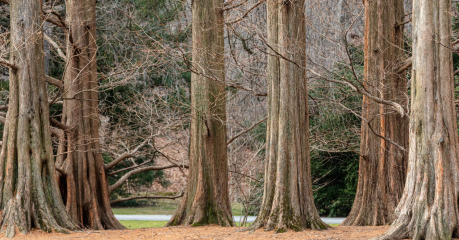
New York Botanical Garden, or the NYBG as it’s affectionately known, is a whopping 250 acres, landscaped with one million living plants, and located in the Bronx.
read more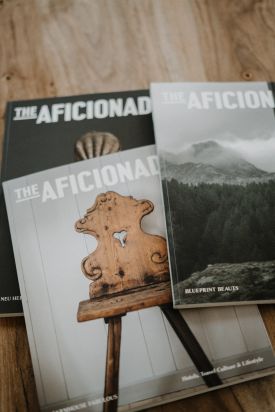
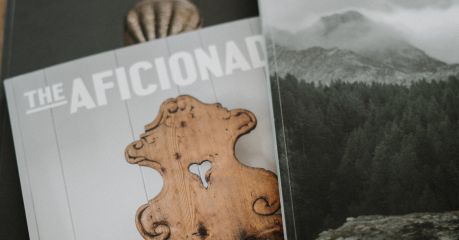
Anchored to specific genres of hotel design, The Aficionados print editions: Unwaxed Lemons, Neu Alpinistas, Farmhouse Fabulous, Casa Gorgeous, Blueprint Beauts, Neu Heritage, Eclectic Rebels, Design Natives and Alchemists of Italy take the reader through the creation narratives. A sourcebook for hoteliers, travellers, style aficionados and those who appreciate design.
read more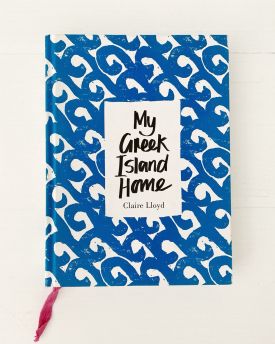
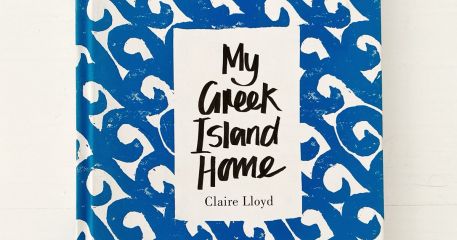
My Greek Island Home by Claire Lloyd is always out of the bookcase, an ever-present friend that tells the tale of falling in love with a Greek island and finding that a simpler life is not so bad after all.
read more
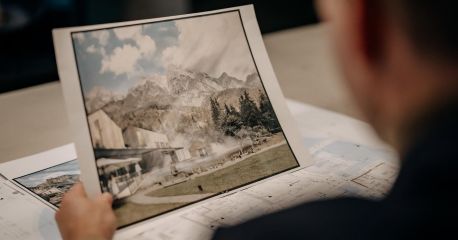
Architect Andreas Hallinger's three new five-star suites at Naturhotel Forsthofgut: organic materials, pitched Alpine rooflines and picture windows over the Leogang Mountains and organic bathing lake.
read more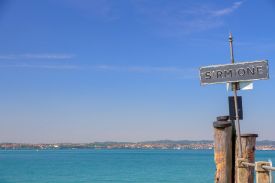
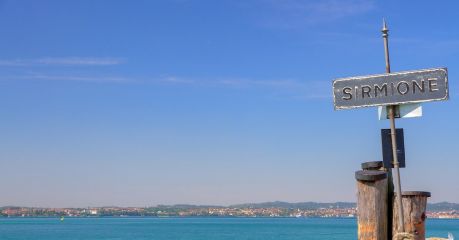
An absolute charm ball landmarked by pillars, arcaded colonnades from the Roman archaeological ruins of "Grotte di Catullo" to the 13th-century fortress, Scaligero Castle.
read more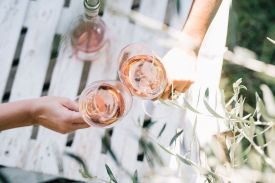
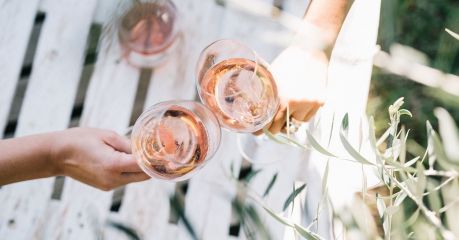
The first organic certified vineyard in Emilia-Romagna with 130-hectares of land cradled between Parma and Reggio Emilia. The hilly area, ideal microclimate and verdant encircling forest was deemed the perfect spot for growing grapes.
read more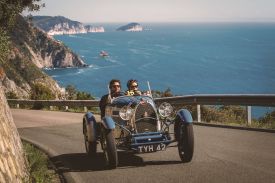

A 600km cavalcade of classic cars roaring through Italy’s Motor Valley, Tuscan hills, and coastal gems – Terre di Canossa is where motoring nostalgia meets Michelin-starred indulgence and la dolce vita.
read more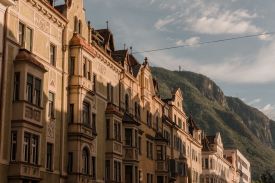
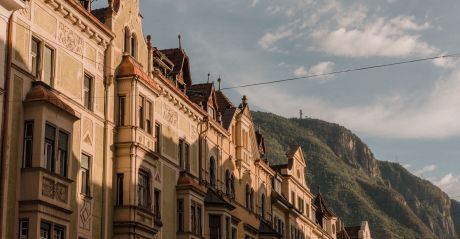
From its cultural heart to the altitudinous pleasures it offers, we put Bolzano in the headlights to explore its heritage core, architectural merit, stylish stays, foodie forays and more.
read more
Get the insider news and lowdown on what we've been up to, where we've been, and who we've met along the way. Be the first to discover new places and get the scoop on our favourites.