JOIN the AFICIONADOS
Get the insider news and lowdown on what we've been up to, where we've been, and who we've met along the way. Be the first to discover new places and get the scoop on our favourites.

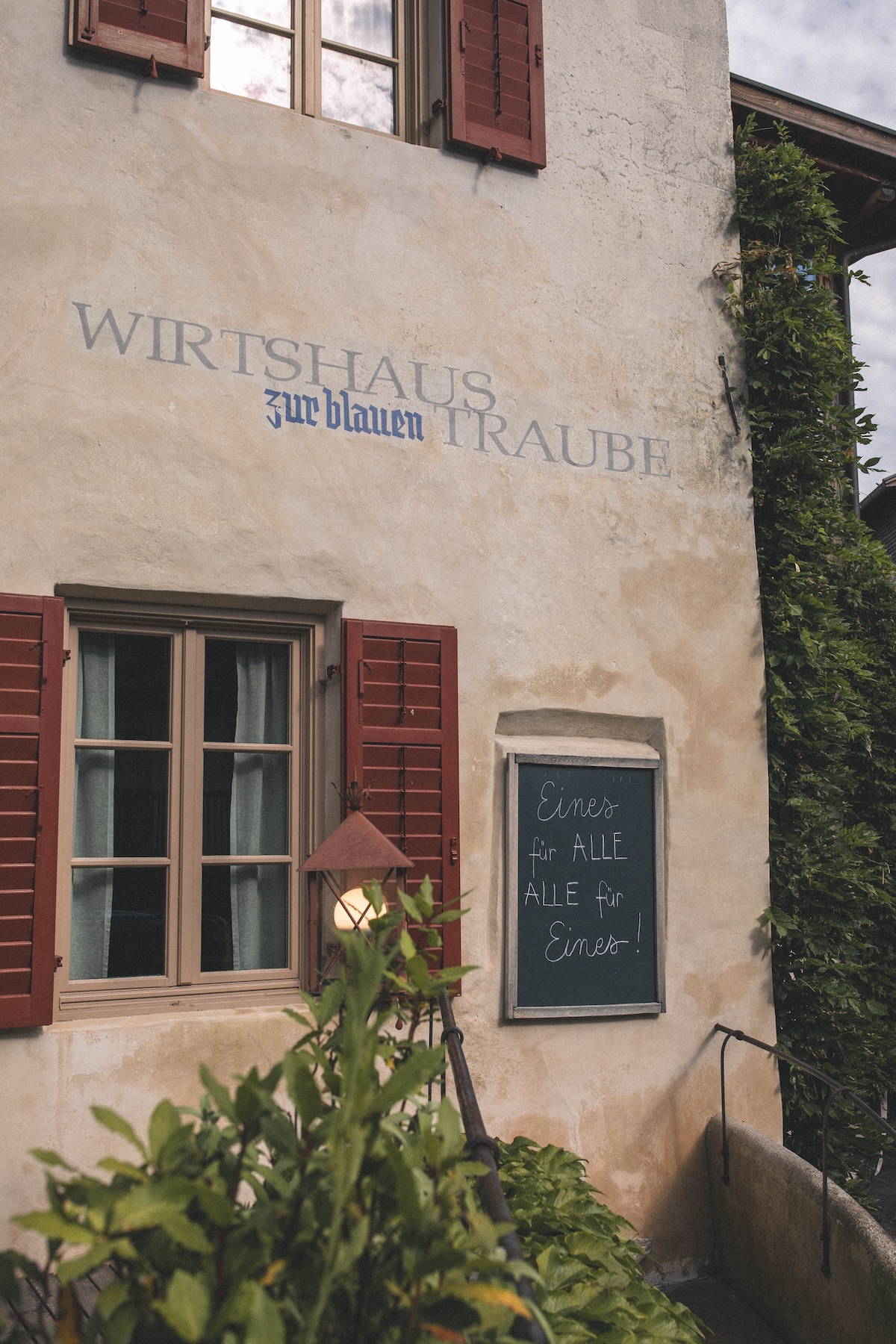
Eines für ALLE, ALLE für Eines. ‘One for all, all for one’, in German: Dumas's Three Musketeers put through the Tyrolean wringer, chalked onto a slate in a stone-framed window beneath the upstairs shutters, and, as a credo for the restaurant behind it, totally accurate.
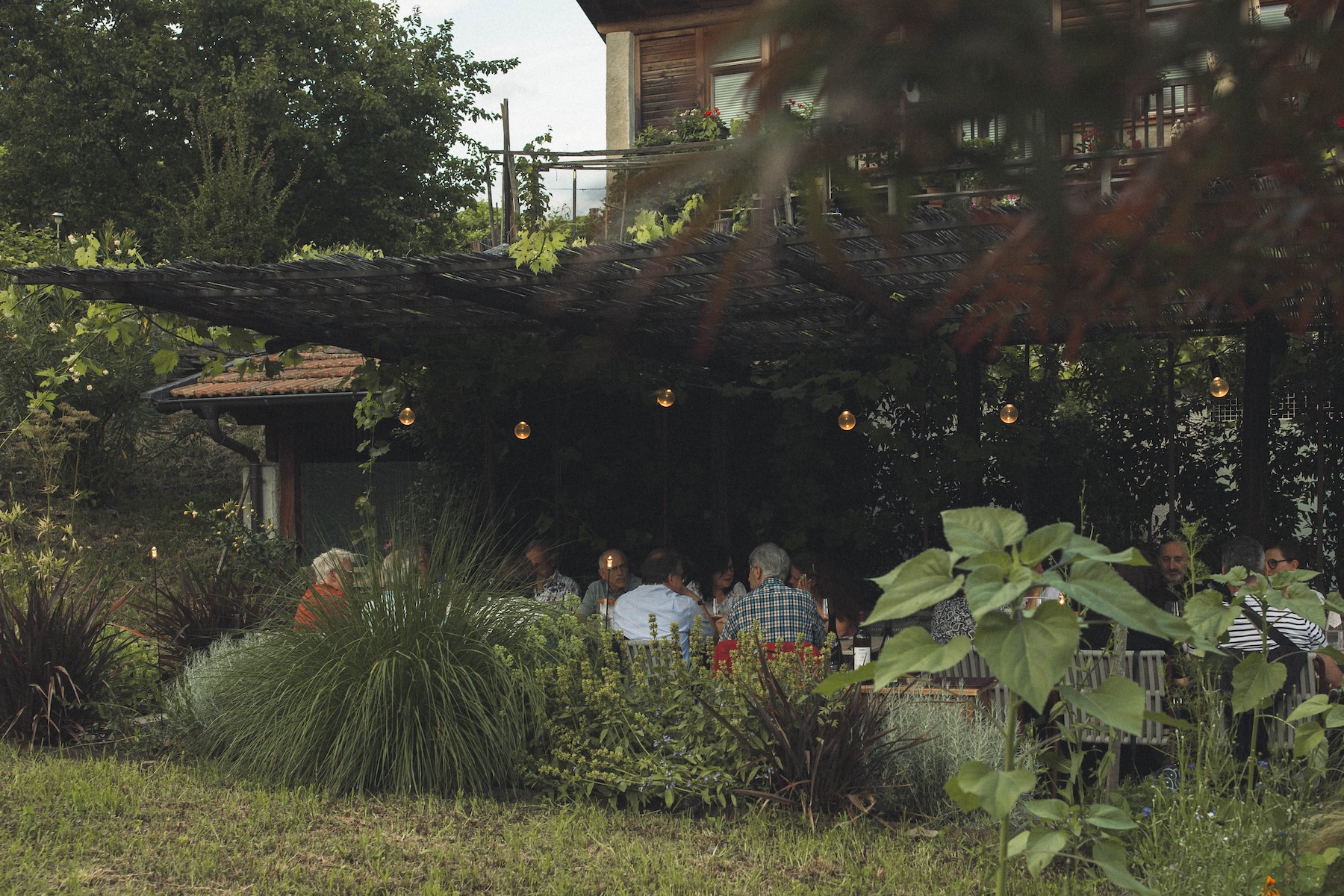
This is Restaurant Blauen Traube, on the Alte Landstraße in Algund (Lagundo, on the Italian side of the timetable), just outside Merano, where Chef Christoph Huber has spent six years making a quiet, mischievous case for South Tyrolean cuisine. The facade is ochre stucco and rust-red shutters, with WIRTSHAUS and TRAUBE hand-painted in faded Roman capitals and Zur blauen tucked in blackletter blue between them. Out the back, an ancient vine pergola does most of the architectural work, candlelit tables beneath it, wild grasses pressing in at the edges.
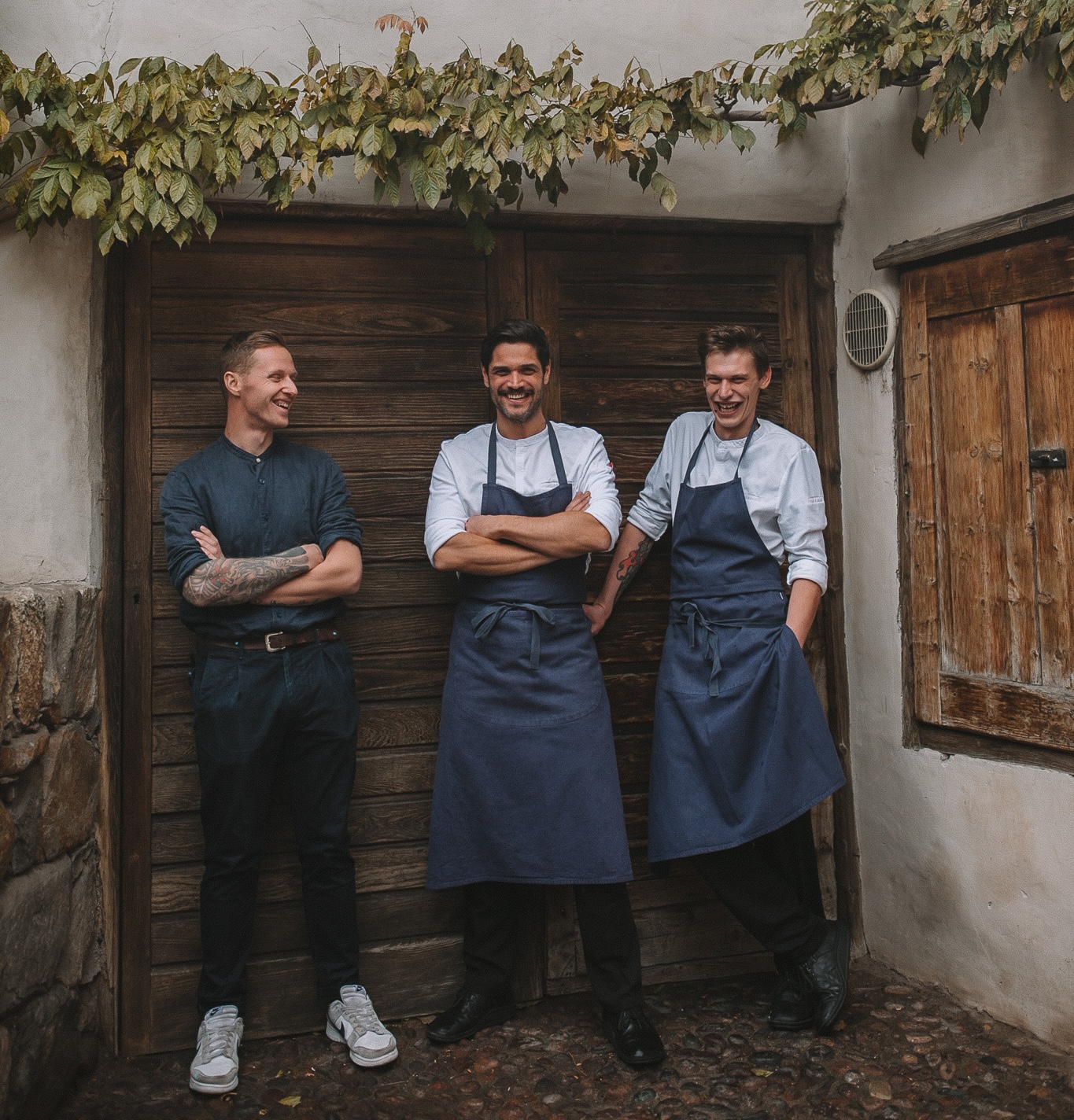
Huber arrived in March 2019, a sous chef in the way James Bond used to be a commander: technically true, somewhat understating the case. He had cooked under Chef Christian Jürgens at Überfahrt Tegernsee (then three Michelin stars) and spent his most formative seasons as Chef Gerhard Wieser's right hand at the Trenkerstube, with the long shadow of Norbert Niederkofler's Cook the Mountain over the valley. To inherit a country pub with that curriculum vitae is, you imagine, both the gift and the gauntlet.
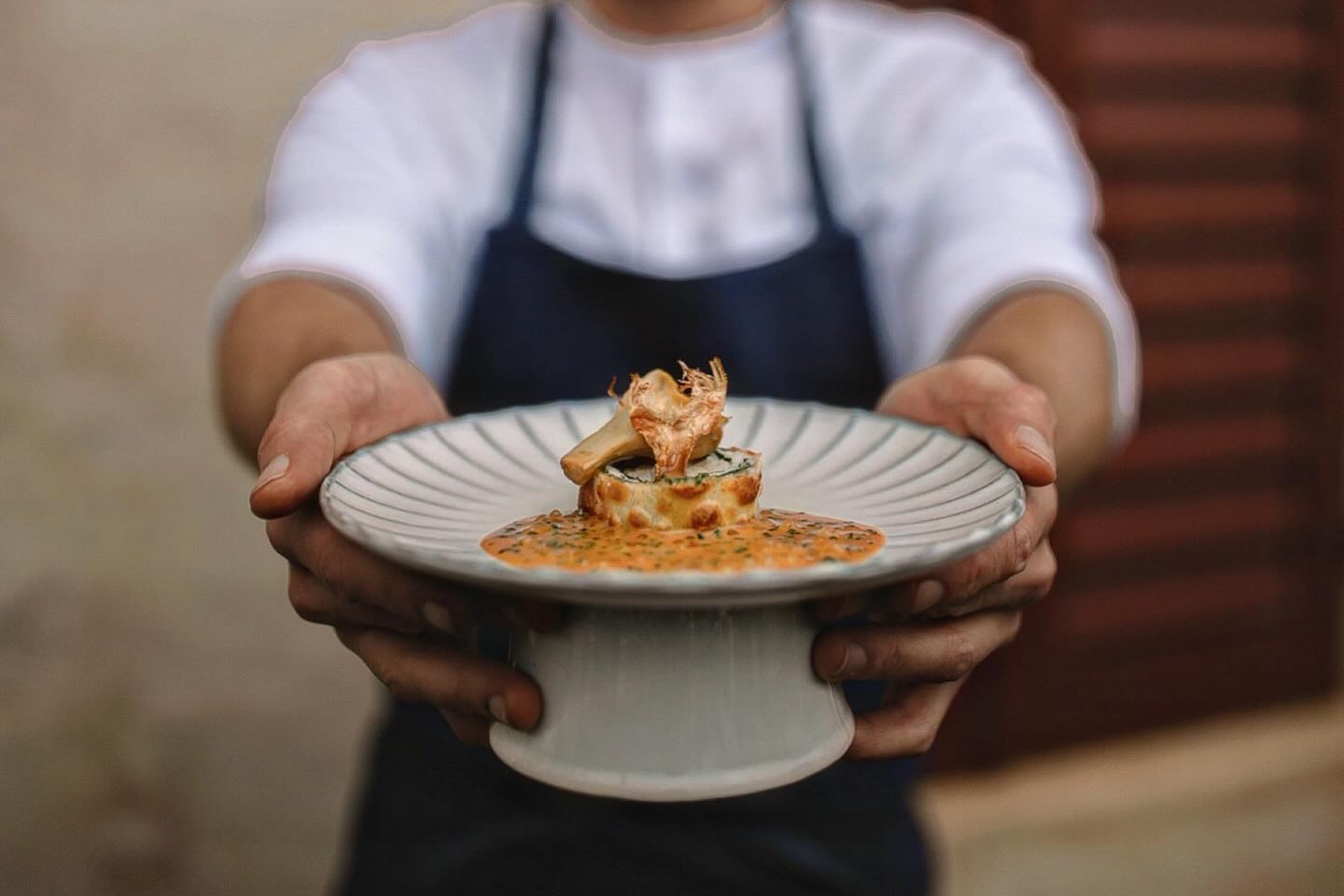
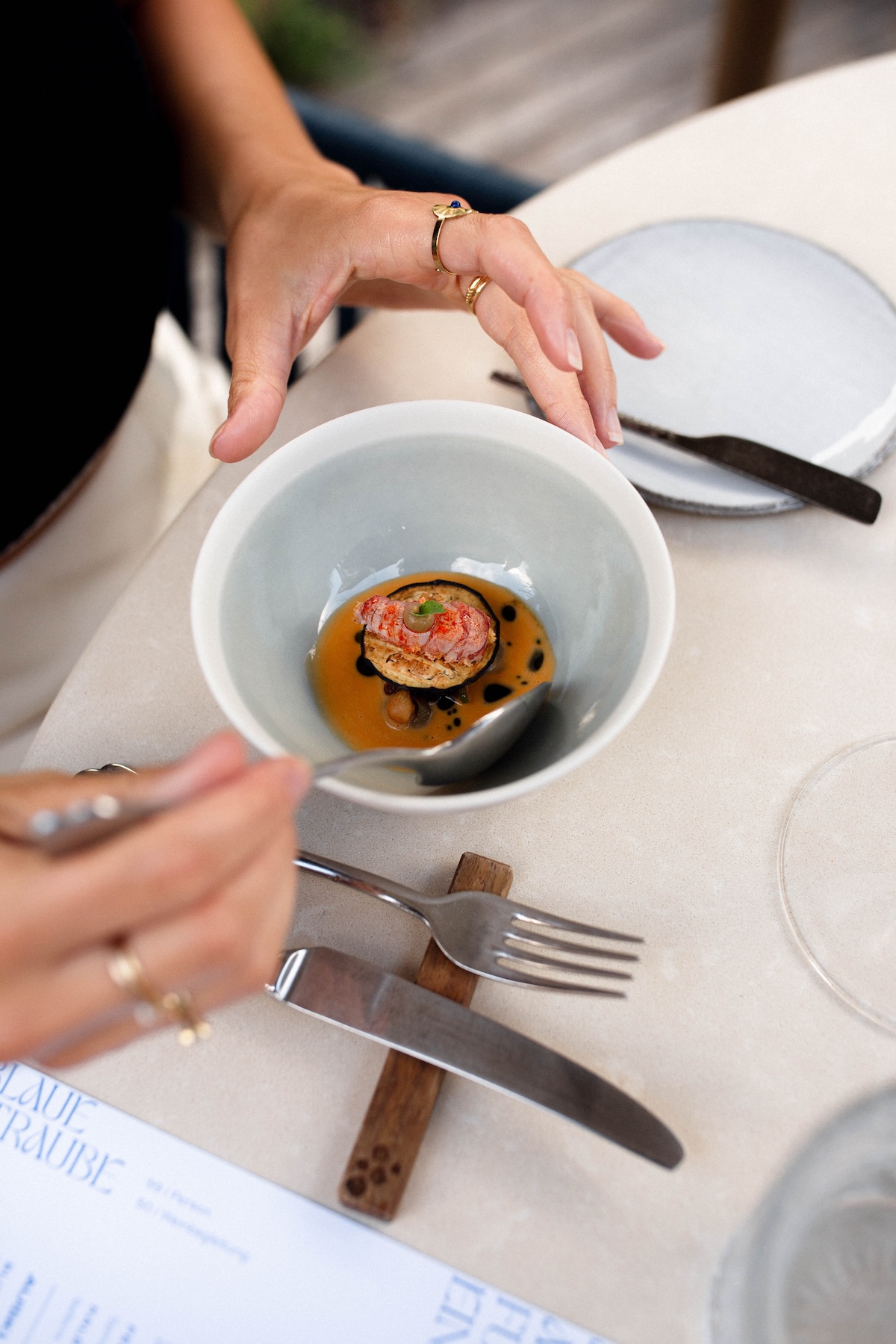
He calls his kitchen radikal lokal, which translates rather better as "brutally regional" and rather less well as anything else. By day the dining room behaves itself: the lunch menu is à la carte, dine-in only, and gloriously unbothered - spinach spätzle, crisp meat fritters, and a vitello tonnato. By night, the menu narrows to a single point. There is one evening tasting menu, ninety-nine euros, the same for every table: a lovingly imposed tyranny in which the only real decision left to you is whether to add the optional Tyrolean ossobuco (Reader, you add it).
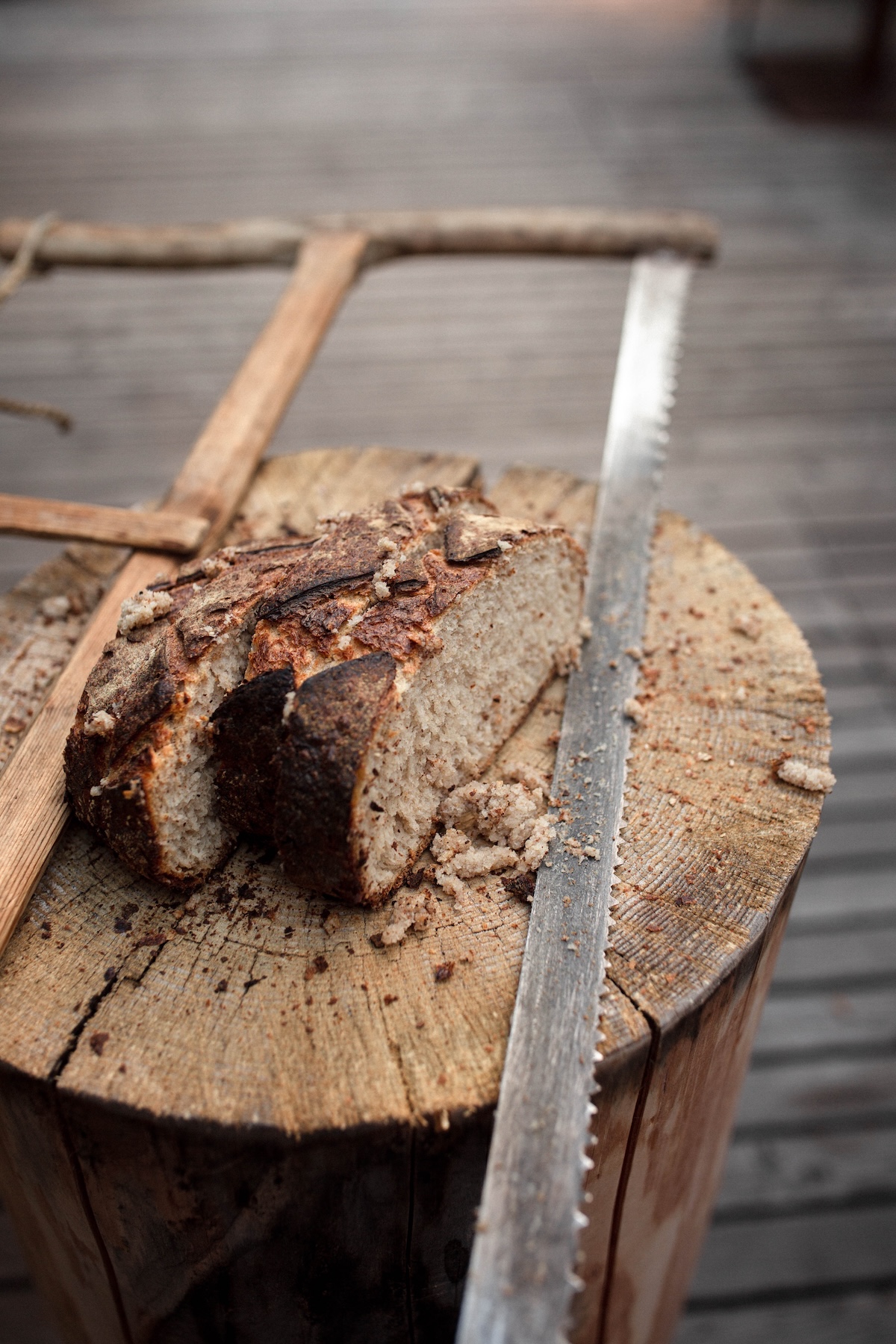
It opens, properly speaking, with the bread. A dark, charred sourdough is brought down the room on a stump of birch and quartered with an old carpenter's bow saw, the kind a grandfather might have hung above his workbench. It is theatre, of course, and like all the best theatre, it has the decency to be useful as well: the crust resists, the saw earns its keep, and the room lets out the sort of conspiratorial laugh good rooms reserve for the chef who has chosen to wink.
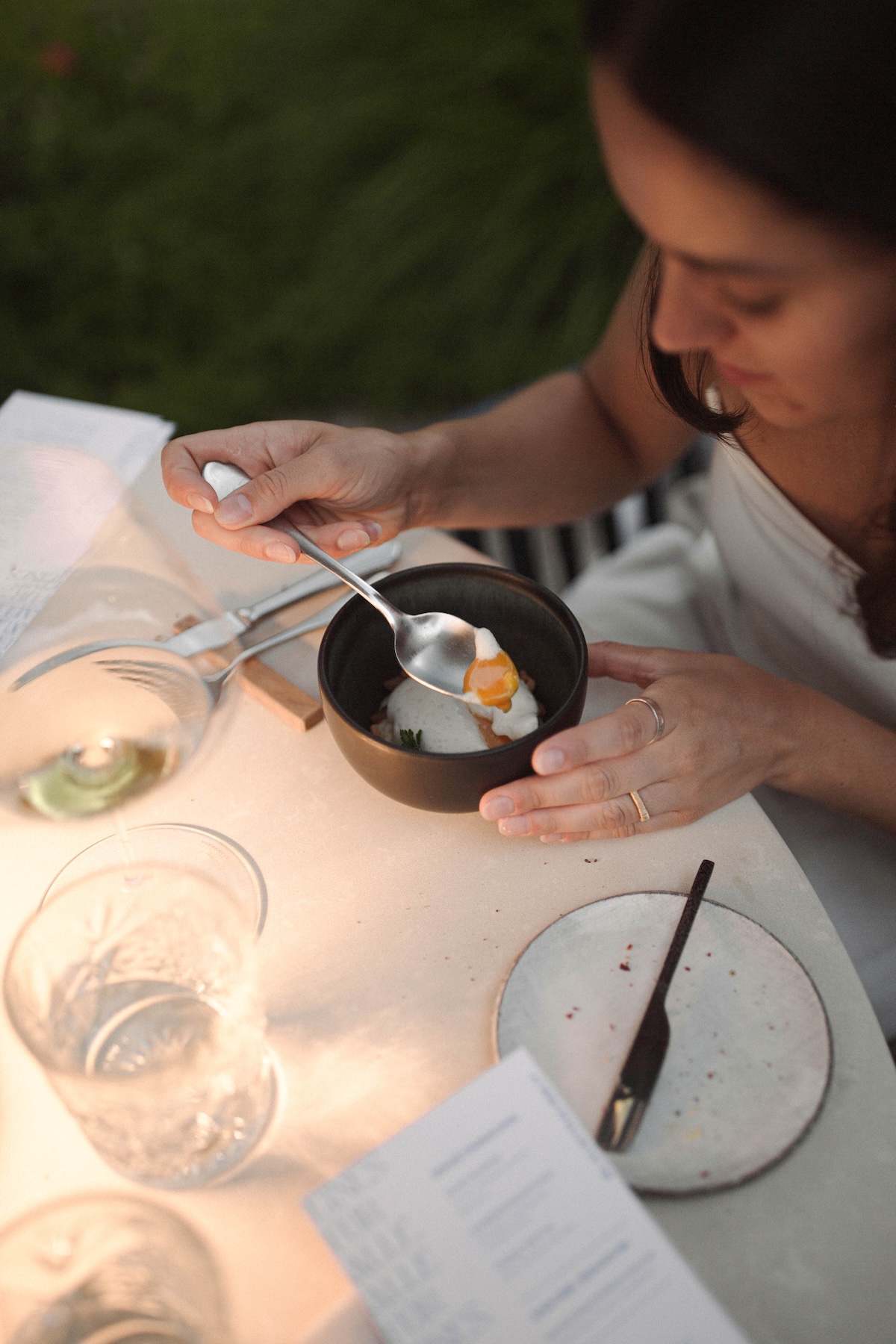
What follows a the Restaurant Blauen Traube is a procession of polite ambushes. A trout crème brûlée arrives where a sweet one ought to be, its caramelised crust replaced, with a perfectly straight face, by burnt chicken skin. A chestnut miso behaves as if it has always been miso. The risotto carbonara, his most ardently loved dish, performs the trick of being both at once and entirely itself. There is salt-in-bocca, the saltimbocca's slyer cousin; arctic char in olive oil; venison from the woods above; and, at the close, a tarte Tatin so faithful to its forebears it ought to come with footnotes (It doesn't. It comes with vanilla ice cream, the only correct answer). The cheesecake before it is set tableside in fresh sheep's milk that arrived that morning unpasteurised, the rennet stirred at the table, the buckwheat ice cream lifted from his grandmother.
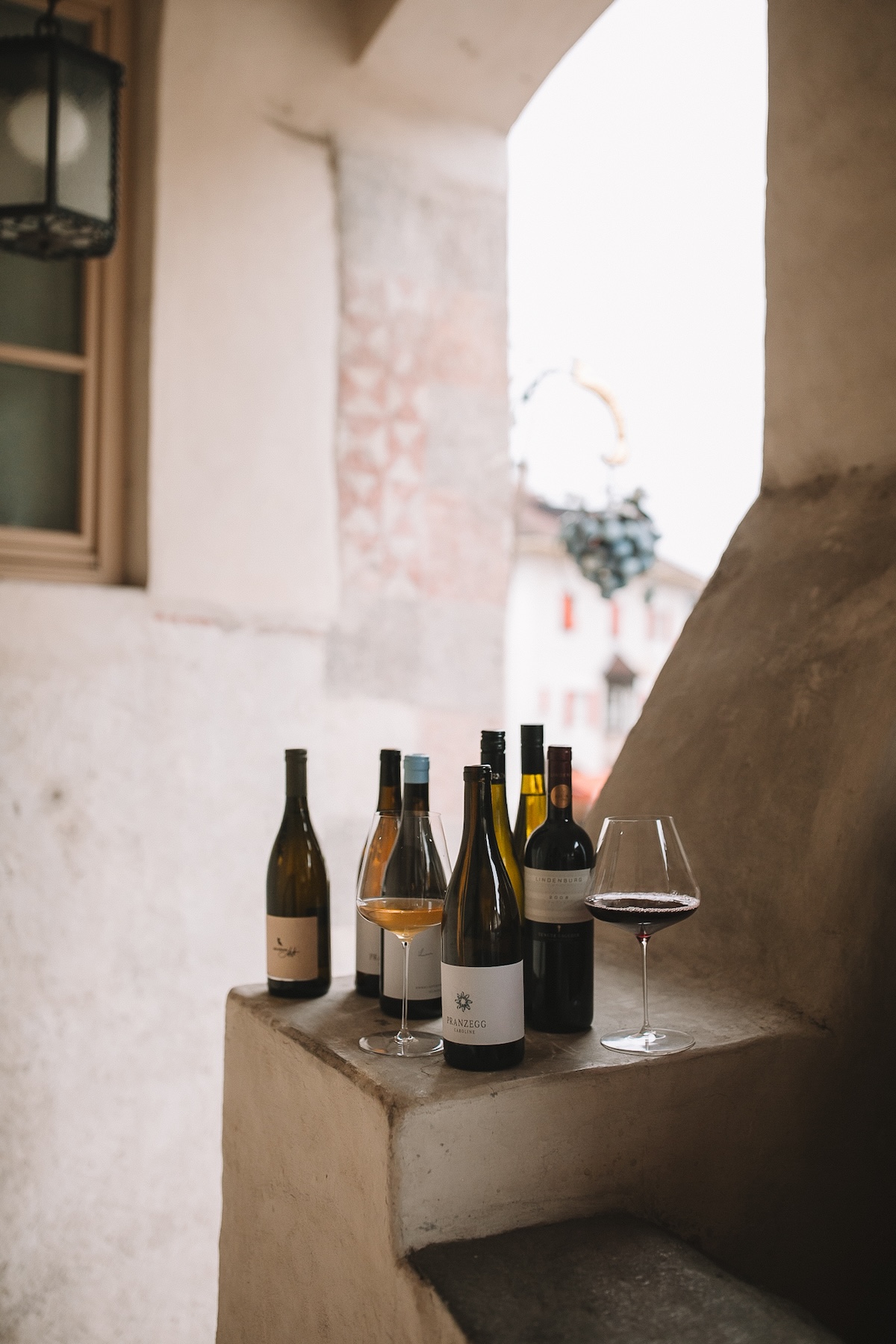
The plates come from a regional ceramicist who, like the best of them, has no shop. The wine list leans into small Alto Adige and northern-Italian growers. The team is young, mostly local, and conducts itself with that South Tyrolean blend of seriousness and unforced charm: Stefan Vorhauser at Huber's elbow, Michael Schwienbacher steering the room.
The accolades. Falstaff's Best Young Chef in 2020, four toques and 17.5 points at Gault&Millau by 2024, a listing in Identità Golose, a leap from 79th to 11th in the South Tyrolean Restaurant Ranking in a single year. None of which, mercifully, has gone to the room's head, though the foodie press has rather noticed.
Sundays and Mondays, the lights are off, the saw goes back on its peg, and Huber and his team disappear into the larders and wine cabinets of their colleagues, which is the most Wirtshaus thing imaginable. When the weather is kind, he is also to be found at altitude: Christoph is chef-patron of ROTWAND by Boutique Hotel Miramonti, the mountain restaurant at 1,818 metres in the Meran(o) 2000 ski-and-hiking area, where lunch is on a south-facing terrace beside what they call the highest coffee roastery in the Alps.
Wirtshaus zur Blauen Traube
Alte Landstraße / Strada Vecchia 44
39022 Algund / Lagundo
South Tyrol
Dinner Tuesday to Saturday, Sundays and Mondays dark. Reservations essential via blauetraube.it.
ROTWAND at Meran(o) 2000 bookings via hotel-miramonti.com.
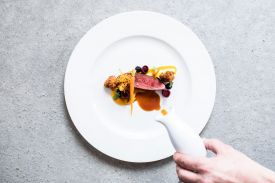
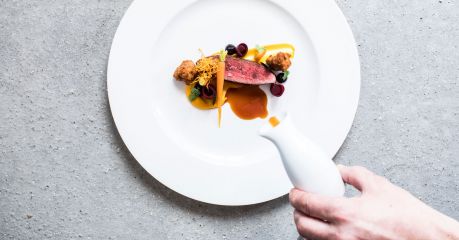
Food is high on this region's agenda, also known as the Garden of the Alps - the cuisine is a menagerie of hearty Laden Alpine dishes, Italian classics and lightness from the Mediterranean. It is not Italian nor Austrian; it is an epicurean marriage that occasionally dips into Hungary.
read more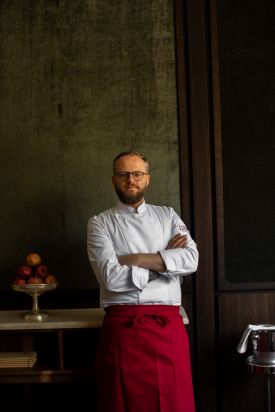
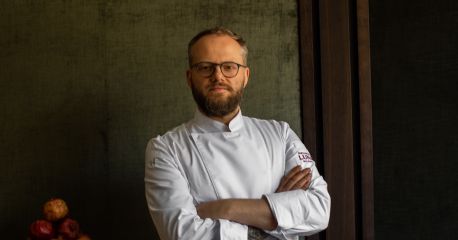
Step into a tale of timeless charm and fresh flavours. Luna Restaurant promises culinary magic, where centuries-old heritage meets bold Italian cuisine crafted for today’s tastes.
read more
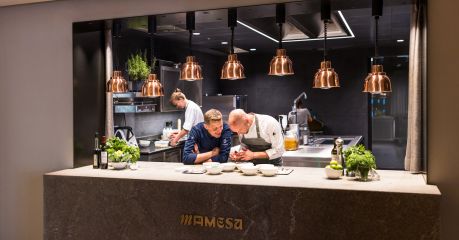
Marc Bernhart is the chef at the Weisses Kreuz Hotel in Burgeis, South Tyrol - a hip maverick who casts his flavour nets both close to home as well as wide.
read more
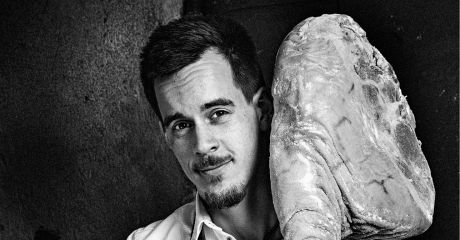
Chef Jonathan Burger, awarded the Michelin Green Star, is the likeable maverick behind the stoves at the legendary Hirschen in Schwarzenberg, a place that traces its hospitality roots back to 1755.
read more
From Arctic three-star pop-ups to Alps fire feasts, pistachio tiramisù, Roca x Macallan in Scotland, and De Niro’s NYC sequel — Europe’s edible underground is serving serious flavour.
read more
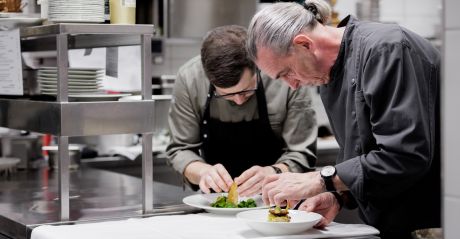
Alexander Hundt cooks at Toque level in a Bavarian town of twelve thousand. His tasting menus are a pleasure; his Chef's Table is a privilege.
read more
Gothenburg's foodie scene has sprung up to international attention in the last few years - check out this guide for the best on Sweden's cosy 'Little London' coast.
read more

The Roca brothers of the world-renowned El Celler de Can Roca, have collaborated with The Macallan to unveil TimeSpirit, a unique culinary experience celebrating 200 years of the iconic whisky distillery.
read more
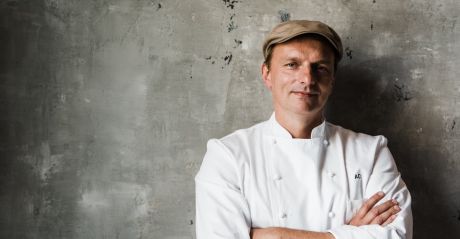
Robert De Niro and Chef Andrew Carmellini team up again to bring iconic Italian flavours to Hudson Yards in thier second outpost of unforgettable dishes and sleek design.
read more
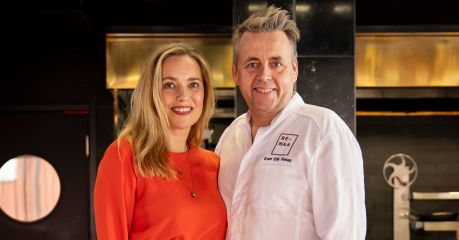
Discover a fleeting fusion of fine dining and Arctic beauty. This exclusive culinary pop-up by 3 star Michelin chef of RE-NAA blends Nordic flavours with nature at Nusfjord on the Lofoten archipelago.
read more
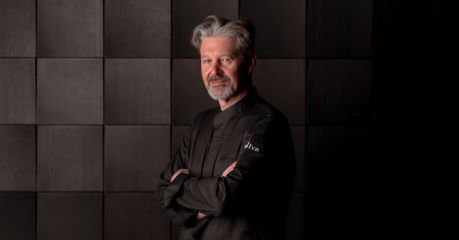
Michael Helfrich cooked at Noma, then came home to Pinzgau. At silva, he turns 36 hectares of Leogang forest into a tasting menu sourced within 50 kilometres.
read more
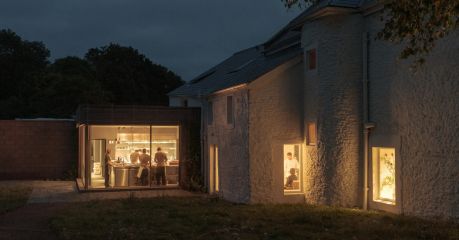
Michelin-starred Osip in Bruton, Somerset, from chef Merlin Labron-Johnson, pairs farm-to-fork dining with boutique rooms. A soulful retreat where food, design and Somerset terroir create a singular cultural escape.
Get the insider news and lowdown on what we've been up to, where we've been, and who we've met along the way. Be the first to discover new places and get the scoop on our favourites.