
JOIN the AFICIONADOS
Get the insider news and lowdown on what we've been up to, where we've been, and who we've met along the way. Be the first to discover new places and get the scoop on our favourites.

The light comes in low across the Marktplatz at six, catching the timber frame of the Design Boutique Hotel & SPA Goldene Rose and the gilt of the church beyond it, and for a moment Dinkelsbühl looks exactly like the postcard it has every right to be. Twelve thousand people. A church, a bakery, a near-perfect medieval street plan kept that way by six centuries of luck and one of careful restoration. What the postcard does not show, because it sits behind the 560-year-old facade and above the rooftops, is a five-star spa hotel with an infinity pool that looks the spire of St George's dead in the eye, interiors by NOA, the Bolzano practice that has made hospitality its specialism, and a kitchen the regional guides describe as operating at toque level.
The Design Boutique Hotel & SPA Goldene Rose is an inn that spent the better part of six centuries lodging queens and crown princes, Queen Victoria among them, and, since 2022, reinventing itself as something Bavaria did not previously own: a proper old-town spa hotel. Its restaurant is the Kantine Rosine; its bar, the Queen Vicky, keeps the royal guest's name in lights. Its kitchen is run by Chef Alexander Hundt.
Hundt is from the Pfalz. He took his professional qualification at the Hotelfachschule Heidelberg, Germany's oldest hotel school, trained at the Savoy, and went on, with his colleagues, to cook at a two-Michelin-star level. He has worked in a good many kitchens, and he talks about the trade as a chef does when he means it: cooking, he has said, rewards the person willing to look past the edge of their own plate. He runs the Kantine Rosine as a team rather than a one-man show, which is the first thing worth knowing about how he cooks.
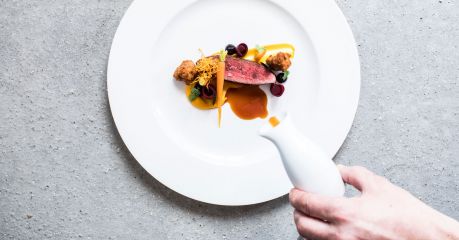
The second is what arrives on the plate. The kitchen's six-course standing tasting menu changes with the season and, on the evidence of a recent edition, is both precise and unafraid. It opened with monkfish cheeks set in a herb jelly against marinated asparagus, moved through a quail roulade lifted by a port wine foam, and continued to veal fillet stuffed and wrapped in leek with baked potato dumplings. A course of Brillat-Savarin and truffle on pumpernickel followed, an unexpected pairing that worked. Dessert is the house signature, the "Golden Rose": butter biscuit, rhubarb, raspberry. There’s also a four-course vegan menu option, and it can be taken with or without a wine pairing, though the pairing is the better way to go.
The wines are chosen by Marcel Scherb, the Kantine Rosine's new sommelier, and the range is deliberately wide. One menu moves from a Scheurebe grown on Rheinhessen limestone to a Pecorino from the Abruzzo coast, an Australian Cabernet from the Murray Darling, a Zweigelt from Burgenland, and a Cap Classique from a boutique estate at the Cape run, as it happens, by a South Tyrolean couple. The list is not assembled to showcase a single region. It is assembled to match the food, and Scherb's brief is to keep extending it.
There is humour in the kitchen too, and it is worth knowing before you sit down. The à la carte menu lists its seasonal asparagus as "Asparagus Tarzan," sold by the glass and the bottle as though it were wine. A scoop of sorbet appears under a heading that thanks a higher power. Hundt cooks seriously without taking himself seriously, a balance not every kitchen at this level manages.
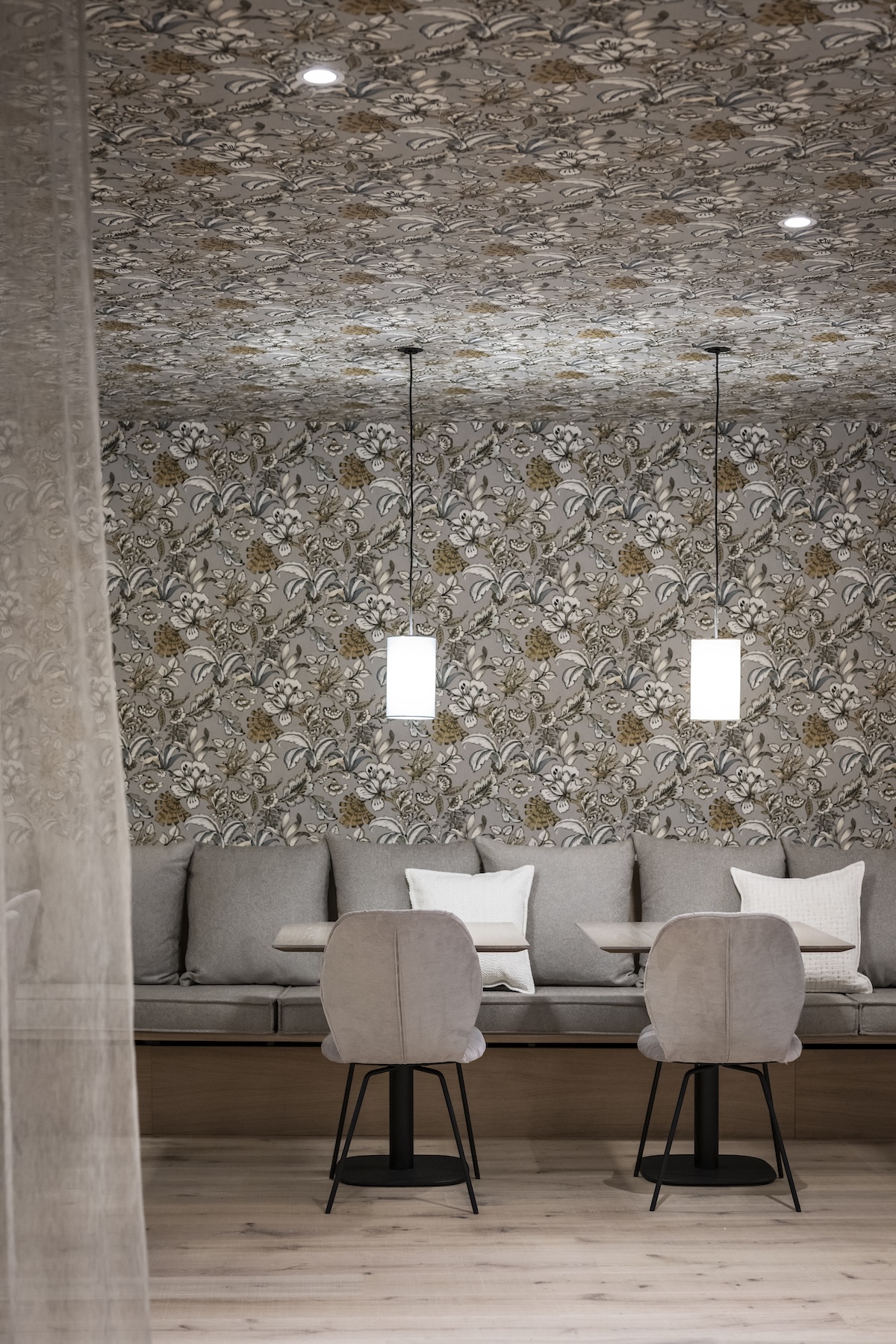

The fullest expression of Hundt's cooking is the Chef's Table, and it is a different proposition from the standing menu in one important respect. The seasonal tasting menu is fixed: the kitchen decides the courses, and the guest orders from a card. The Chef's Table inverts that. The guest chooses the evening, brings their preferences and the ingredients they most want to eat, and Hundt builds a six-course menu around them, prepared fresh that night, with a wine pairing matched to it by Scherb.
What makes the format worth booking is not only the bespoke menu. It is the access. The Chef's Table seats guests close to the kitchen, with Hundt himself moving between the pass and the table, explaining a technique, the source of an ingredient, the thinking behind a particular course. It is, in plain terms, an evening spent in the company of the chef who cooked it, with the food as the reason for the conversation rather than a substitute for it. Few restaurants offer that, and fewer still in a town this size.
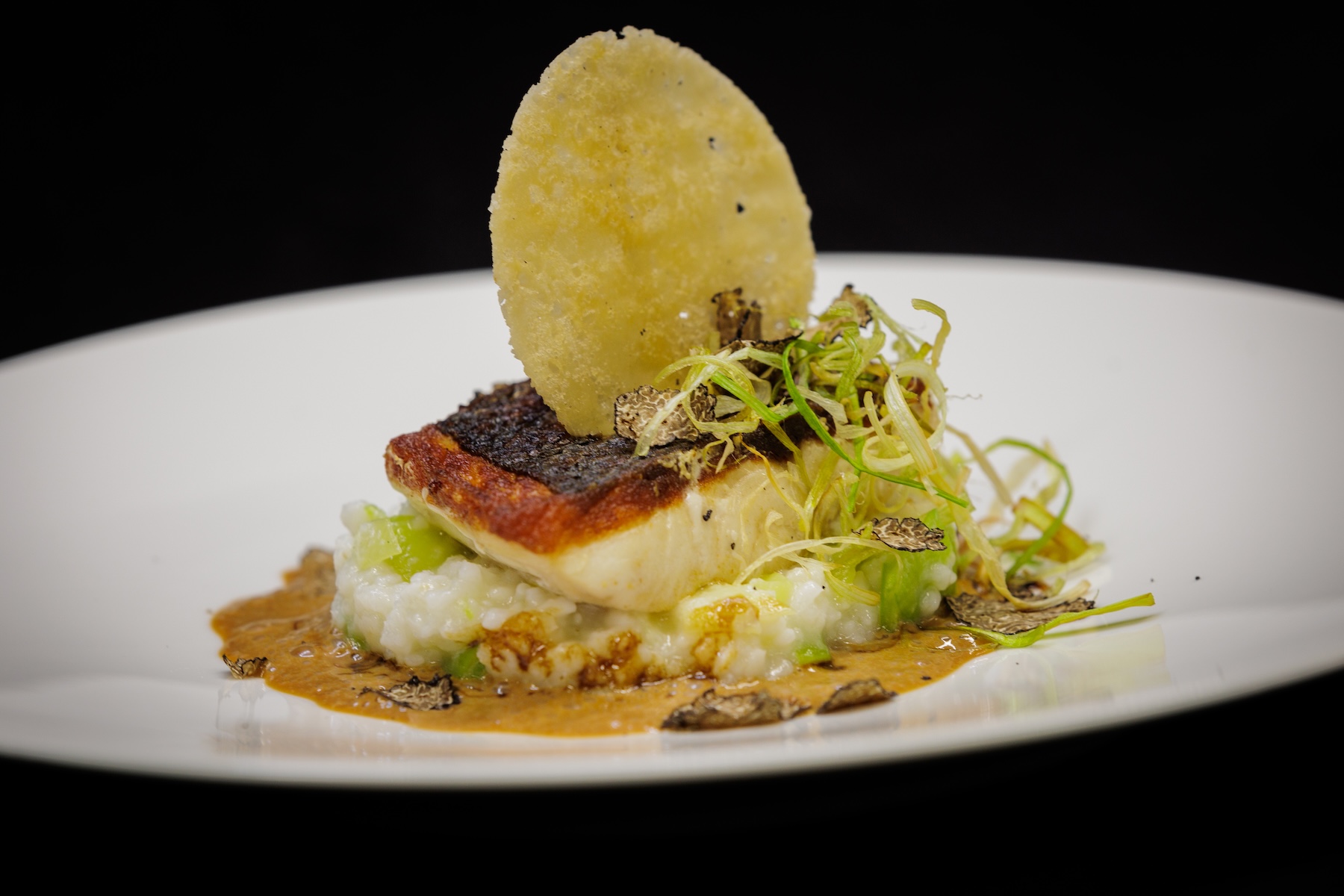
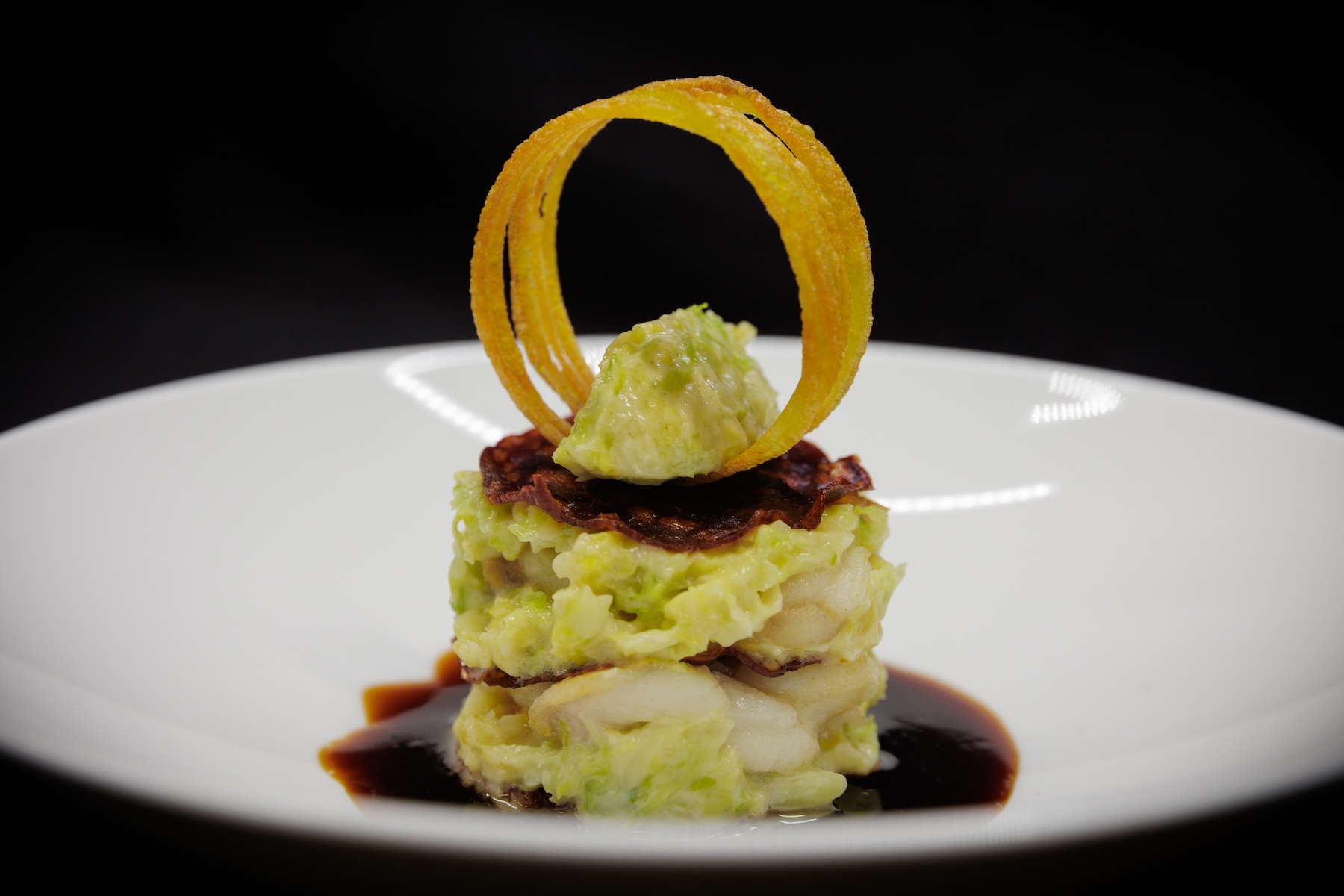


The case for Dinkelsbühl is straightforward. A chef with a two-star background and a clear preference for the team over the spotlight, a kitchen already recognised for the precision of its tasting menu, and, in the Chef's Table, the chance to have that kitchen cook to your own brief for an evening. The standing menu is reason enough to come. The Chef's Table is reason to plan the trip around it.
The Kantine Rosine at the Hotel Goldene Rose, Marktplatz 4, Dinkelsbühl, serves a seasonal tasting menu with an optional wine pairing. The Chef's Table is bookable on request for the evening of the guest's choosing: six courses, composed around the guest's preferences and prepared fresh, with an optional wine pairing curated by sommelier Marcel Scherb.
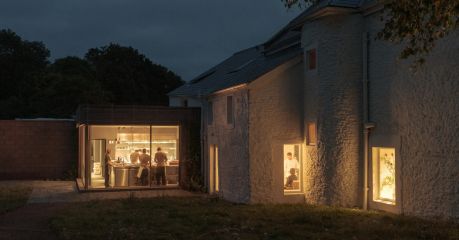
Michelin-starred Osip in Bruton, Somerset, from chef Merlin Labron-Johnson, pairs farm-to-fork dining with boutique rooms. A soulful retreat where food, design and Somerset terroir create a singular cultural escape.
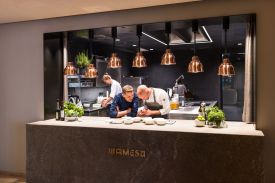
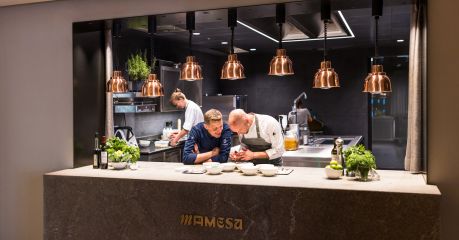
Marc Bernhart is the chef at the Weisses Kreuz Hotel in Burgeis, South Tyrol - a hip maverick who casts his flavour nets both close to home as well as wide.
read more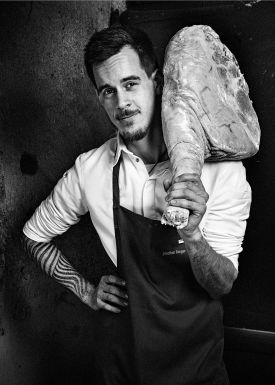
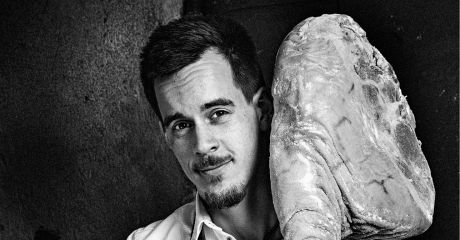
Chef Jonathan Burger, awarded the Michelin Green Star, is the likeable maverick behind the stoves at the legendary Hirschen in Schwarzenberg, a place that traces its hospitality roots back to 1755.
read more
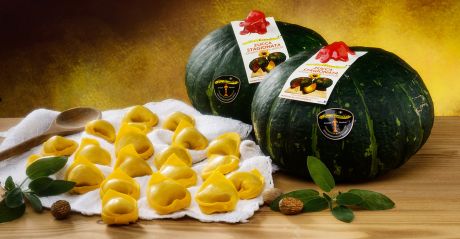
From Arctic three-star pop-ups to Alps fire feasts, pistachio tiramisù, Roca x Macallan in Scotland, and De Niro’s NYC sequel — Europe’s edible underground is serving serious flavour.
read more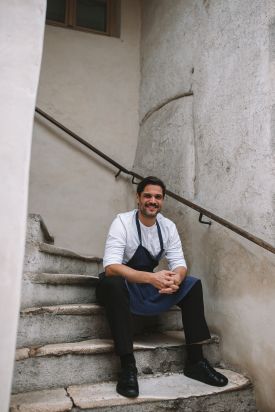
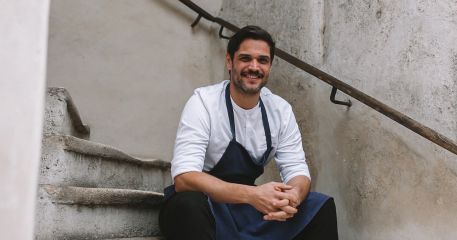
Christoph Huber, a 17th-century inn outside Merano, a chalkboard borrowed from French novelist Dumas, and one menu for everyone.
read more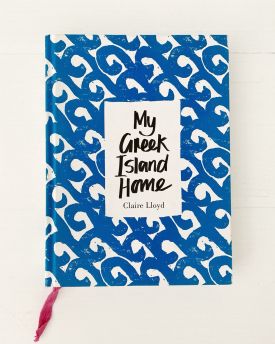
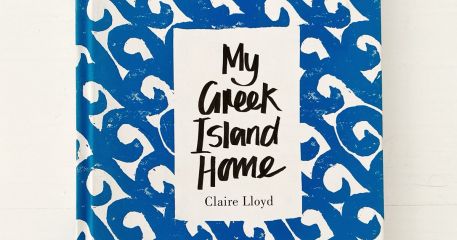
My Greek Island Home by Claire Lloyd is always out of the bookcase, an ever-present friend that tells the tale of falling in love with a Greek island and finding that a simpler life is not so bad after all.
read more
Food is high on this region's agenda, also known as the Garden of the Alps - the cuisine is a menagerie of hearty Laden Alpine dishes, Italian classics and lightness from the Mediterranean. It is not Italian nor Austrian; it is an epicurean marriage that occasionally dips into Hungary.
read more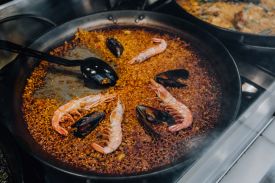
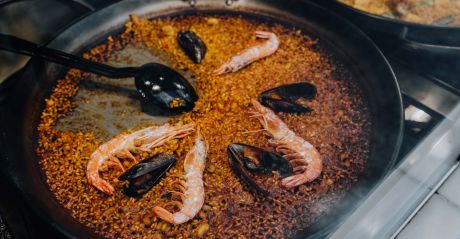
Madrid’s food scene is defined by Michelin stars, chef-led neighbourhood kitchens and daily dining culture, from Dabiz Muñoz to a new generation cooking with depth, continuity and social intelligence today.
read more
Chef Pieter Starmans returns to August, the Van Duysen convent hotel in Antwerp, with a looser menu, two secret gardens, and produce finally given the leading role.
read more
The Donauhof spent a decade coming back to life inside a 1902 Vienna building. Founder Cornelius Klimt on wine without dogma, the Sunday roast and generosity.
read more

A design and culture-led guide to Munich, exploring layered architecture, Bavarian craft, contemporary creativity and a refined approach to the good life.
read more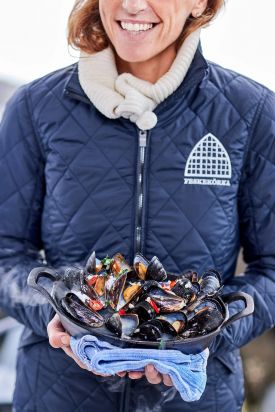
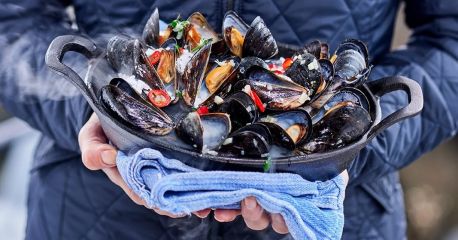
Gothenburg's foodie scene has sprung up to international attention in the last few years - check out this guide for the best on Sweden's cosy 'Little London' coast.
read more
Get the insider news and lowdown on what we've been up to, where we've been, and who we've met along the way. Be the first to discover new places and get the scoop on our favourites.