
JOIN the AFICIONADOS
Get the insider news and lowdown on what we've been up to, where we've been, and who we've met along the way. Be the first to discover new places and get the scoop on our favourites.

On the western shore of Lake Neusiedl, Stephanie and Eduard Tscheppe farm by hand and horse, and give every wine a name, a face and a family.
There is a girl on the bottle with a blunt bob and a look that suggests she has been out all night and is perfectly fine about it. Her name is Theodora. Her grandmother, Mechthild, is drawn with the settled gaze of someone who has seen sixty harvests. Her uncle Emmeram has a secret. Pour any of them at a table and the conversation turns, almost at once, from the wine to the family. That is entirely the point at Gut Oggau, the biodynamic estate that Stephanie Tscheppe-Eselböck and Eduard Tscheppe have tended in Burgenland since 2007.
To understand the wines, start with the land. Oggau sits on the western shore of Lake Neusiedl, a broad, reed-fringed steppe lake so shallow you could wade much of it, shared with Hungary and recognised by UNESCO as a cultural landscape. Behind the village rise the Leitha hills, the very last foothills of the Alps before the Pannonian plain opens out towards the east.
That meeting of hill, water and plain shapes everything. Summers here are long and properly hot, among the sunniest in Austria, and the lake acts as a vast, slow radiator, softening the shoulders of the season and drawing out the ripening. Nights come down cool off the hills, which is where the freshness in the glass is born. Underfoot the story is older still: Leithakalk, a limestone formed from the shells and corals of a sea that covered the basin millions of years ago, broken by islands of schist and running down to gravel near the shore.
The Tscheppes read these soils as temperament. The young generation of the family grows mainly on gravel with a little limestone, and the wines come out lively and open. The parents' vineyards sit on limestone and schist with more sun, so they are riper and rounder. The grandparents come from the oldest vines, single plots with deep roots and long memories. "Each one is related to one another because they breathe the same air," Stephanie has said. "Only nature makes a difference in their personality."

The estate the couple found in 2007 belonged to a 92-year-old woman with no children, who had long since stopped investing in the vineyards. What she left them were old vines and a 200-year-old wooden press. "We inherited old vines with deep roots," Eduard says, and the line works as well for the people as for the plants.
Eduard grew up around a conventional winery in Styria, run by his parents, yet he never took up their methods. From the outset the couple farmed biodynamically, by hand and with horses, and Gut Oggau is now Demeter certified. They started with nine hectares and have grown, carefully, to around fifteen. The soil between the rows is never opened; a permanent cover of grass holds it, because, as Eduard puts it, "there's such a fragile balance in the life in the soil." There is no fertiliser beyond a little compost and cow manure, and the vines are deliberately not overfed. "We try to make the plants struggle to a certain extent," Stephanie says. Struggle, here, is a form of care.
Pioneering runs in the Eselböck blood. Stephanie's parents, Walter and Eveline Eselböck, opened Taubenkobel in nearby Schützen am Gebirge in 1992, cooking from the farm long before it carried a label, with Eveline building one of Austria's early natural wine lists. Today Stephanie's sister Barbara runs Taubenkobel with her husband, the French chef Alain Weissgerber, and the restaurant holds two Michelin stars. The Gut Oggau wines sit on its list and in its pairings, so a dinner at one house is, in a sense, a visit to the other. Two sisters, a few kilometres apart, each keeping the family's creative thread alive in her own way.

The wines themselves are where the love and the playfulness meet. Stephanie and Eduard write each wine up as a person: age, temperament, foibles. Those descriptions go to an artist, who draws a black and white portrait to match, and the face goes on the front label with a name and a vintage. On the back, a few lines of character study. "We were searching for a way to describe the wines that everybody could follow," Stephanie explains.
The result is a three-generation family. The grandparents, Mechthild and Bertholdi, are pressed in that old wooden press and carry the weight and power of age. The middle generation includes Joschuari, Emmeram, Timotheus and Josephine, the last a peppery, purple red with a firm grip and a worldly air. The children, Atanasius, Theodora and Winifred, are lighter and more energetic; Theodora, the prankster with the bob, is reliable underneath it all. There are side plots, too, as in any family. Wiltrude, a sweet wine made only in certain years, is said to have had an affair with her husband's brother, Emmeram, who now quietly wonders whether Theodora might be his.
It would be easy to call this a marketing device, but it reads more like affection. The couple describe the wines as people because that is how they experience them, each with its own character drawn out by soil, sun and vintage, all treated equally and all given room to be themselves. Grapes from a newly acquired vineyard, still converting to their way of farming, are bottled under a series called Maskerade: masked faces, because those wines have not yet earned a place at the family table. Even the waiting is done with wit.

That sense of fun runs well beyond the label. The estate describes itself as more than a winery, a place where wine, food, art, design and music meet under a simple idea: everything is connected. Collaborations, they like to say, begin with a dinner. The Spanish artist Jaime Hayón has drawn new faces for the family, and with Fritz Hansen they coloured four of the Danish house's Grand Prix chairs using their own red wine, which may be the most literal expression of terroir in furniture yet attempted.
There is a small membership, Belong, that plants a tree on the estate in each member's name and sends wine through the year, and a three-day Root Time retreat with Eduard for those who want to understand the vineyard from the ground up. The newsletter is called Erste Reihe, the front row, and promises no noise, only them. All of it carries the same disarming warmth: considered, a little mischievous, and rooted in the land.
The estate sits on Hauptstraße 31 in Oggau, a lakeside village about an hour's drive from Vienna. The Heuriger, the traditional Austrian wine tavern, opens by appointment rather than to a fixed timetable, serving the family's wines with ham, cheese and simple, good things from the region. Estate tastings run on Wednesdays and Thursdays from April to September. Spring and late summer show the lake at its gentlest; harvest brings the horses into the rows.
Pair a visit with dinner at Taubenkobel, a short drive along the Leitha hills, and you see the whole family portrait: two sisters, one land, and a shared belief that the best things are made slowly, with love, and with a smile somewhere in the frame. For more of the region, see our guide to Burgenland.
Discover more at Gut Oggau.


Awarded two Michelin stars, this culinary haven blends art, nature, and bold flavours for an unforgettable dining journey crafted by visionary Chef Alain Weissgerber and Barbara Eselböck.
read more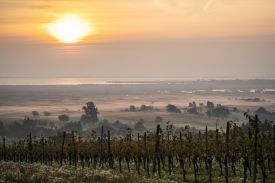
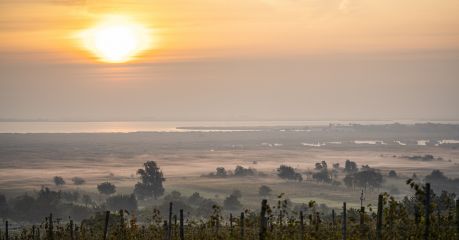
Pannonian wines carry the culture of the unique Burgenland climate, the long sunny summer and the ever so cold winters, sandwiched between the alpine foothills and the shores of Lake Neusiedl.
read more
The Donauhof spent a decade coming back to life inside a 1902 Vienna building. Founder Cornelius Klimt on wine without dogma, the Sunday roast and generosity.
read more
Ferragosto has emptied Italy's cities for two thousand years. Nine of our wine journals to fill the table, from Alpine natural wine to Adriatic Verdicchio.
read more
Wheat, olives and old bushvines on granite and shale, farmed by growers who share cellars, lend hands at harvest and put up almost no signage.
read more

The world within a Viennese coffee house is filled with so much more than just Sacher - glimpse Vienna & Austria's grand imperial past, always 'mit Schlag'.
read more

There are the typical Vienna to-dos for any foodie enthusiast who visits Austria’s capital city; from classic cafés to innovative restaurants to ice-cream parlours.
read more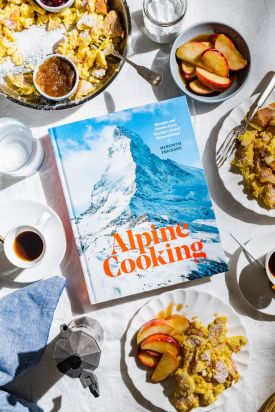
Food writer Meredith Erickson has travelled the wintry peaks and picturesque trails of the alpine region of France, Italy, Switzerland and Austria.
read more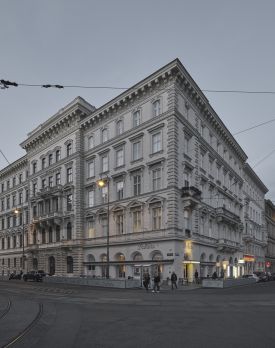
Vienna’s oldest café dating back some 150 years is reborn, restaurateurs David Figar and Rubin Okotie who took over the institution after the previous owner retired, reopened Café Bellaria “as a modern way of life.
read more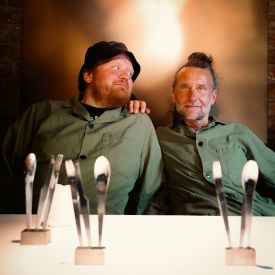
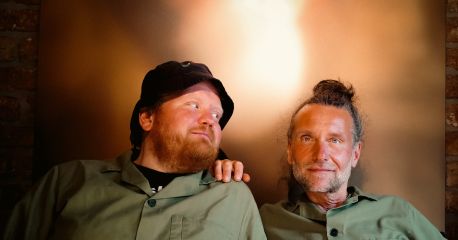
Two Michelin stars, vinyl spinning, and flavour turned loose — Mraz & Sohn is Vienna’s boldest table, where fine dining misbehaves beautifully and creativity dances between chaos and control.
read more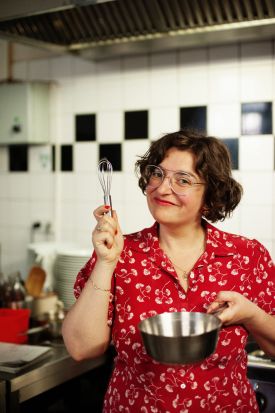
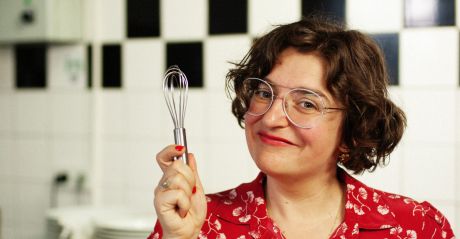
Affectionaltely dubbed the organic 'Queen of Dumplings', Vienna's Humble Legend Zur Herknerin in Vienna's Wiedner Hauptstraße 36 (hip fourth district) an absolute legend in Viennese dining circles – and deservedly, one of the hardest places to get a reservation.
read more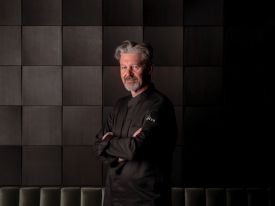
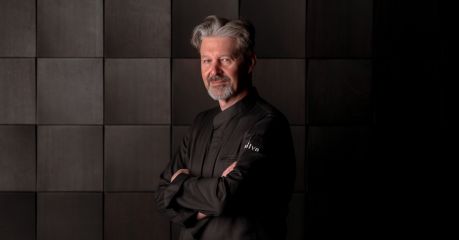
Michael Helfrich cooked at Noma, then came home to Pinzgau. At silva, he turns 36 hectares of Leogang forest into a tasting menu sourced within 50 kilometres.
read more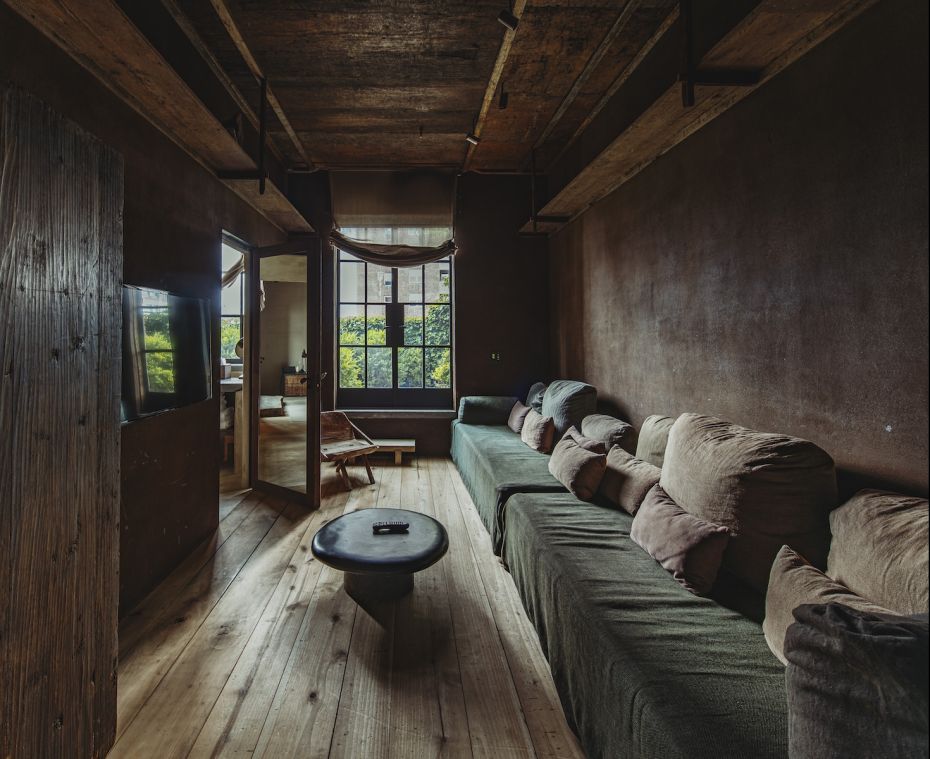
Get the insider news and lowdown on what we've been up to, where we've been, and who we've met along the way. Be the first to discover new places and get the scoop on our favourites.