
JOIN the AFICIONADOS
Get the insider news and lowdown on what we've been up to, where we've been, and who we've met along the way. Be the first to discover new places and get the scoop on our favourites.

First by public vote at the Architizer A+Awards 2026, then Gold at the Japan Space Design Award and JID AWARD: Né, a one-suite auberge in the hills of Shibata, has spent its first year being recognised for an architecture grown from the ground up.
Né took its name before it had a building. Ne is Japanese for root; né is French for born. When Kenta Fukunishi first walked the site, a ridge above the rice fields of Shibata looking out over Niigata's snow country, the name was the only thing agreed. His question was what kind of architecture could only be made here, and the answer came from the climate, the ground and the hands of local craftsmen. A year after Né opened in October 2025, that answer has been put before juries in architecture, interior design, timber and food, and each has reached the same verdict.
In July Né was named Popular Choice Winner in the Architecture + Environment category of the 14th Architizer A+Awards, ranked first by a public vote drawn from more than 80 countries against four other global finalists. It is a prize rarely given to a small building in a rural prefecture. The autumn brought the Japan Space Design Award 2026, where Né took Gold, first place, in Service and Hospitality Space, and JID AWARD 2026, which gave it Gold along with a Guest Judge Award. A Good Design Award 2026 followed.
The timber world added its own verdict: a Wood Design Award 2026, and an Excellence Award in the Excellent Facility category of the national Wood Utilisation Promotion Competition. The kitchen was judged on its own terms and took Gold at the Niigata Gastronomy Award 2026.

The land is part of the historical grounds of the Honma family, whose connection to this corner of Niigata reaches back more than 300 years. Small irrigation channels still cross the site, and they have shaped the surrounding rice fields for longer than most buildings in Japanese cities have stood. Fukunishi treated that continuity as the brief. The building would sit on the land without sealing it, and so it would contain no concrete at all.

Fukunishi took his Master of Architecture at the Weitzman School of Design at the University of Pennsylvania and has practised on both sides of the Pacific. His office, Kenta Fukunishi Architecture Office, builds with regional soil, timber and traditional craft, and at Né he chose every material in consultation with craftsmen from Shibata and across Niigata.
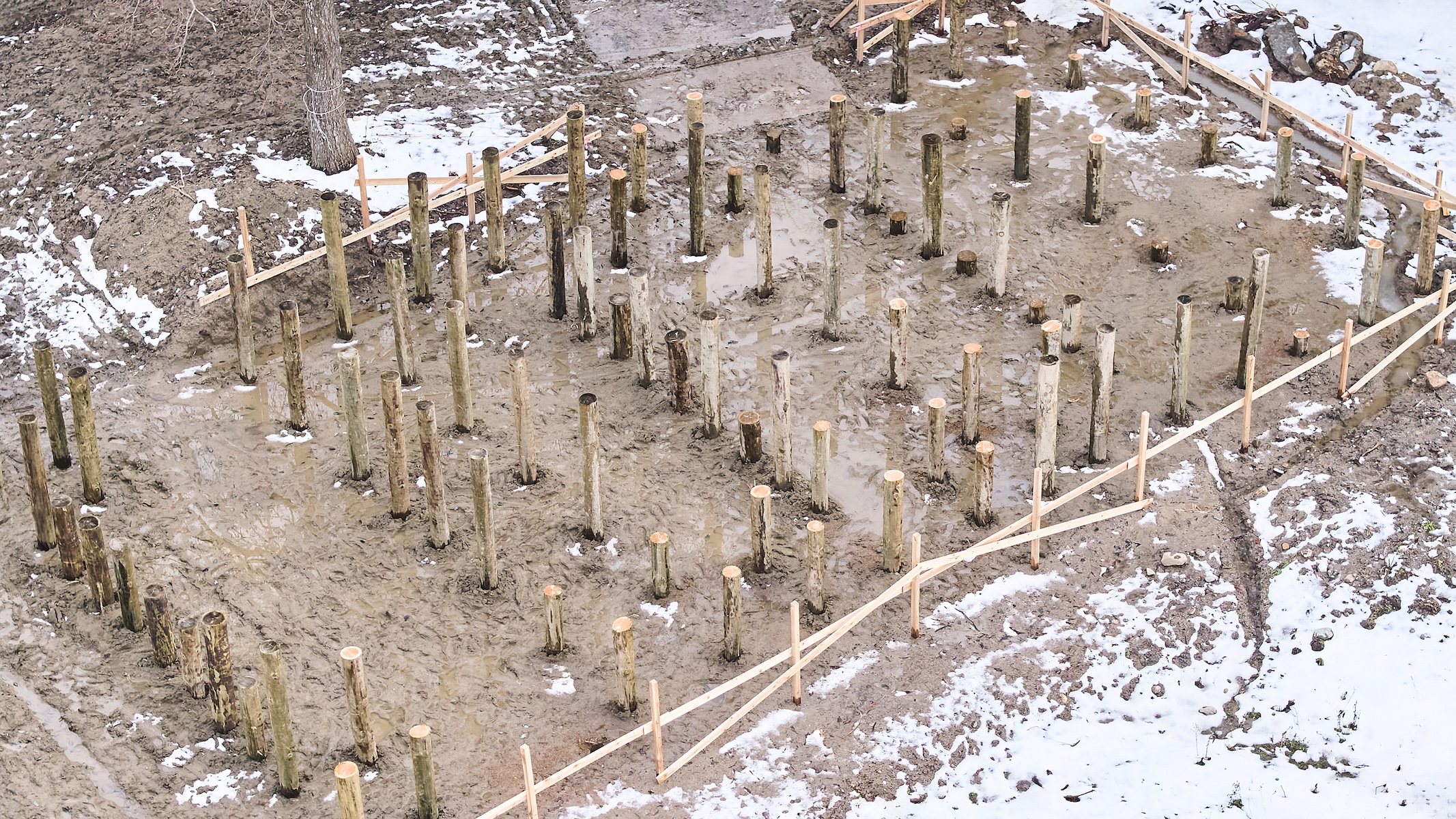
Instead of a slab, Né stands on 105 wooden piles driven into the ground in groups. Driving them compacts the soil, and the building rests on the friction between earth and timber. The piles were set precisely enough to join the sill beams directly, with no intermediate structure. There was no excavation, no soil carted away and no steel. In time the piles will decay, and the building is designed to return to the ground it came from.
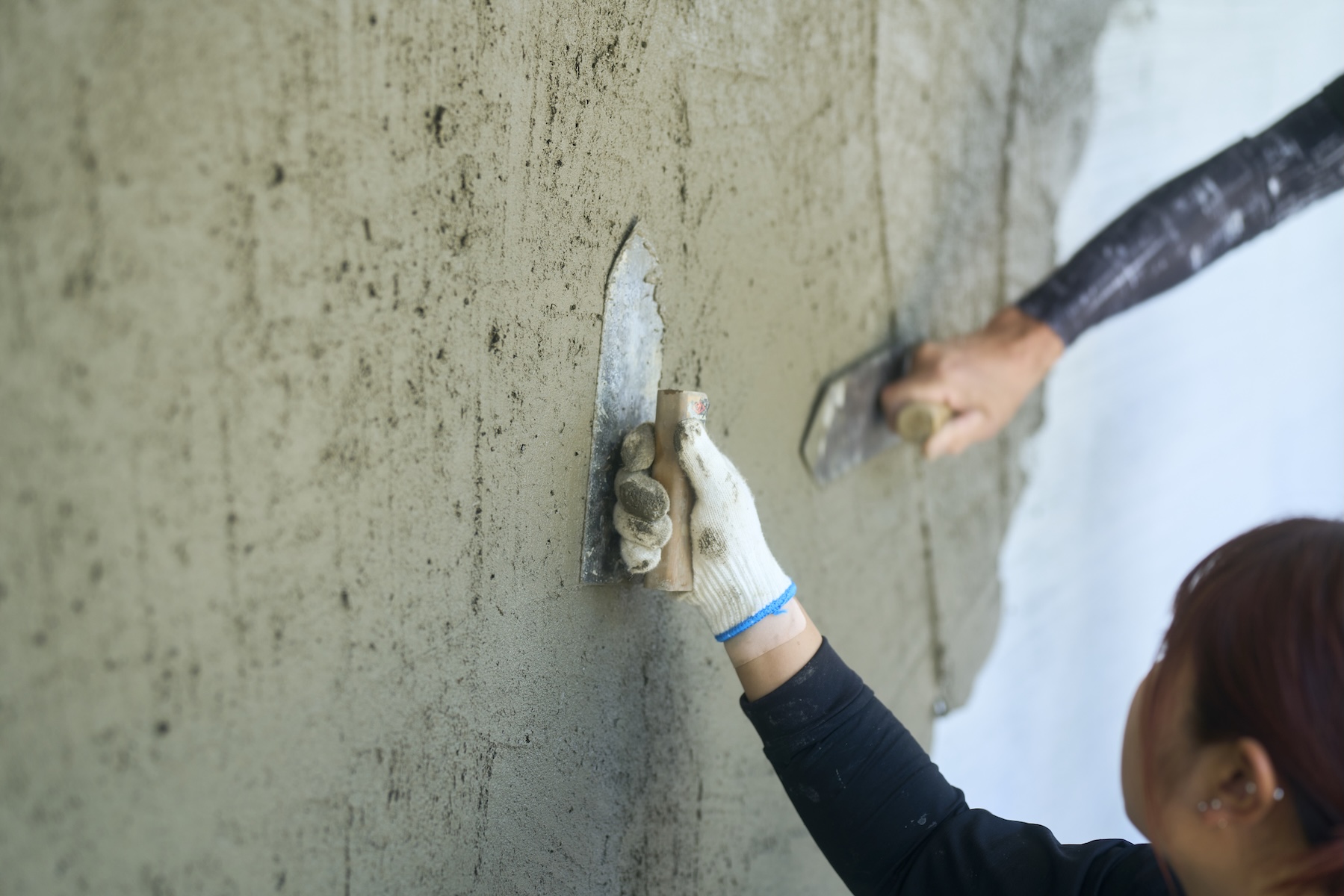
The walls are made from the ground beneath them. Soil dug from the building's footprint, neither imported nor amended, was aged and fermented for more than six months, then applied by hand in several coats of earthen plaster, inside and out, over laths of Shibata cedar. The load-bearing members are slender timbers of 120 by 45 millimetres. The finished walls carry the colour of the fields around them, and their form borrows from the aze and une of the paddies, the raised earthen ridges that divide them and the furrows in between. Some of the plaster substrates use 3D-printed elements, and the lighting is set directly into the plaster.

The floor is Shibata cedar cut into 90 millimetre squares, 2,220 of them laid in a wood-brick pattern. The joinery is Shibata cedar again, smoked and iron-treated. The roof is kawara tile fired from Niigata clay by Marusan Yasuda. Furniture is made in snow beech from the cold mountains nearby, with pieces woven from rice straw and igusa, the rush used for tatami. Kumagai Construction, third-generation builders, raised the house using classical Japanese carpentry.
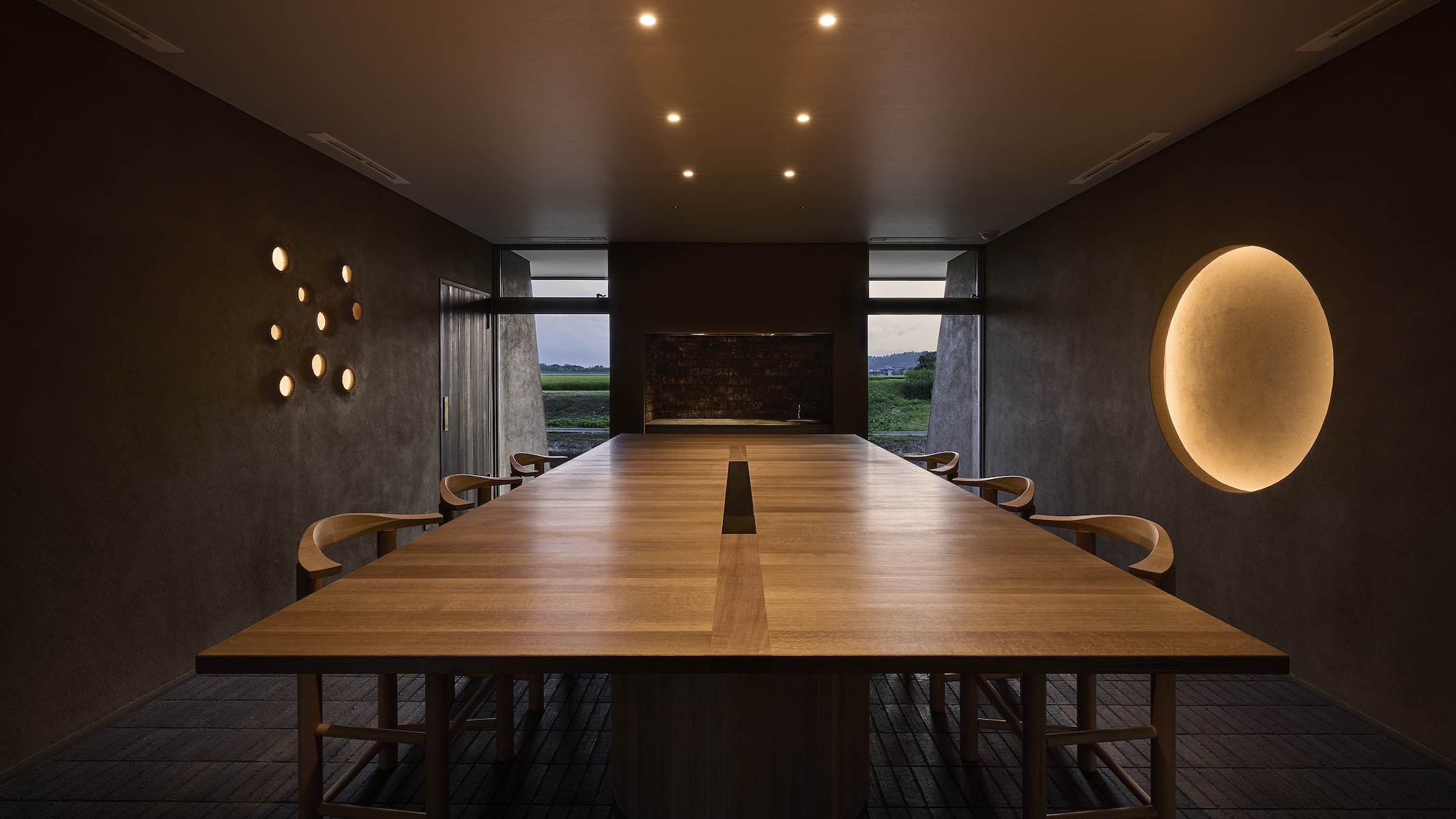
Head chef Makoto Fuse trained in France under Antoine Westermann, holder of three Michelin stars, and went on to lead IWAI OMOTESANDO in Tokyo. At Né he cooks one dinner a night for one party: thirteen courses built on fermentation, drying and ageing, drawing on mountain vegetables, river fish, seasonal game and the nearby coast, with sake from the surrounding breweries. The logic of the walls carries through to the plate.
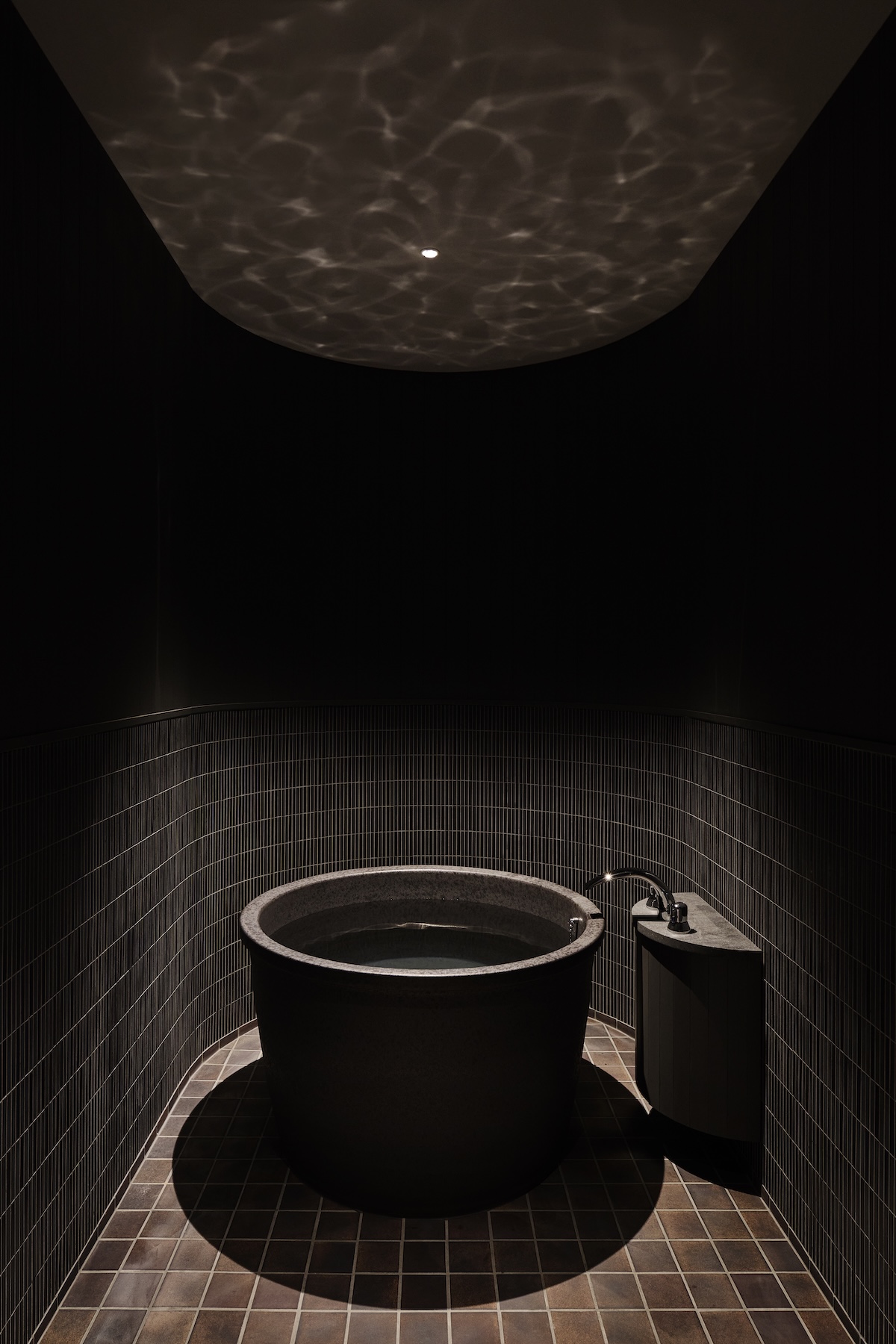
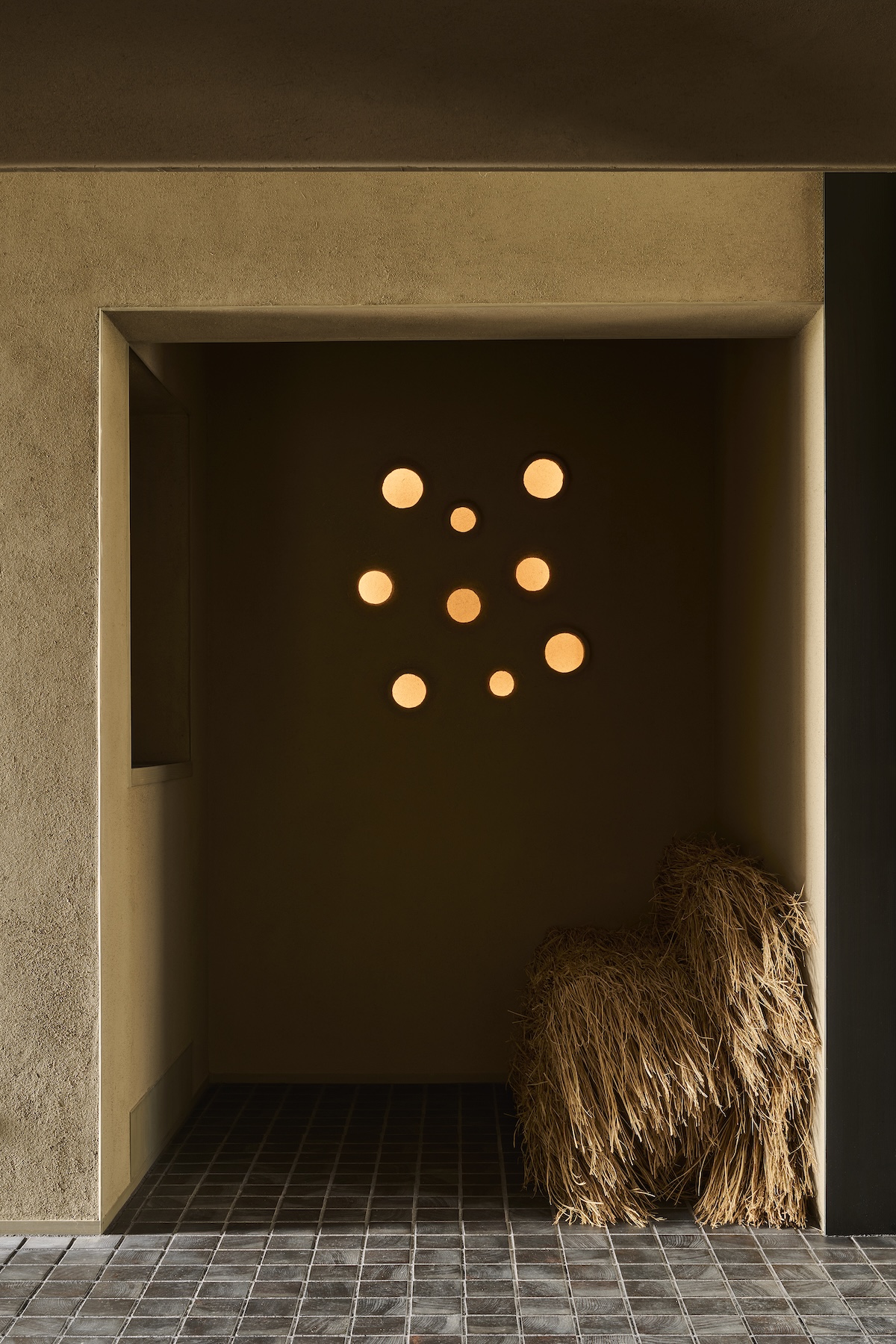
The estate also contains a sui, a barrel sauna set within the trees, available to guests by request. The pairing is canonical for snow country: heat from the wood-fired stove, immersion in natural spring water, then the long settling rest that follows. The body, properly recalibrated, is handed back to the table.
A second day extends the experience further. After breakfast, guests may visit the day-use baths at Kansuirō Onsen, enjoy a seasonal lunch, and let the previous evening's intensity decompress in the hot water and slow time. Transport is arranged. The closing is unhurried.
Hotel awards usually reward comfort or spectacle. Né has been rewarded for an argument: that a building can be made from the ground it stands on, held up without concrete, finished by local hands and, one day, given back to the earth. Architects, interior designers, timber specialists and food judges each reached that conclusion separately. The house has done what its name proposes. It has put down a root, and it has been born.
Auberge Né: Niigata Re-Find. A one-group-a-day auberge in the mountains of Shibata, Niigata, Japan. Architizer A+Awards 2026, Architecture + Environment, Popular Choice Winner. Recipient: Ahead of the Curve. Architecture: Kenta Fukunishi Architecture Office. Construction: Kumagai Construction. Photography: Hiroki Kawata. ne-auberge.jp
In October National Geographic named Niigata among its Best of the World destinations for 2027. It cited two things: the prefecture's fermentation culture, from miso and soy sauce to sake aged in the snow warehouses of Nagaoka, and the Echigo-Tsumari Art Triennale, which returns to around 200 villages from July to November 2027. Né was not on the list, nor did it need to be. Fermentation is already in its walls and on its plates.
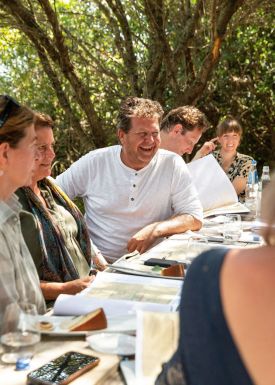
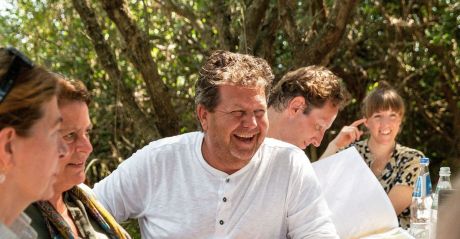
Farms, hotels, residencies and offices - meet the charismatic Founder of AEDES - an Amsterdam-based property development company as we talk about his mission to create a legacy for the future - rewilding, restoring, preserving heritage and pushing the boundaries of research and science.
read more

When passion, innovation and technology come together the results can be powerful. Climeworks, founded by university pals Dr. Christoph Gebald and Dr. Jan Wurzbacher, is an ambitious yet wholly operable business that captures existing carbon dioxide directly from the air.
read more

Ariane was living in New York as a lobbyist for sustainable and organic farmers when she felt the pull of her family’s farm in Tuscany. With her experience in sustainable agriculture, she decided to begin the journey to organic certification for her rice farm.
read more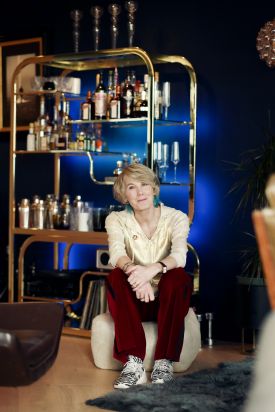

Entrepreneur turned sustainability crusader Sian Sutherland thinks we can and should be tackling the plastic crisis head on - PlasticFree’s goal of eradicating one trillion pieces of plastic waste from the global economy by 2025.
read more

Architect Matteo Thun doesn’t design buildings – he distils soul into structure. Nature, emotion and radical calm drive this icon of Alpine minimalism and timeless, tactile beauty.
read more

Norwegian-based architectural firm, Jensen & Skodvin Architects are well known for their striking, often extraordinary designs, some of which are found in wild and remote areas; others camouflaged in urban hubs, with their engaging use of tectonic architecture.
read more

From an unused ex carpark from the Olympics of 2004 - Architect Renzo Piano has created a sustainable cultural hub that focuses on giving back to Greece’s residents as well as its visitors, located four kilometres south of Athens in Killithea.
read more

Sweden is planning the world’s largest wooden city, to be constructed in Stockholm, and spanning over 250,000 square metres - acting as a ‘carbon sink’, capturing and storing carbon.
read more

Seashells, old Christmas trees, and bio-textiles – Bonnie Hvillum pioneers biodegradable design, collaborating from Big Beauty Store Hackney to ÅBEN Brewery, Noma, Calvin Klein, Moskal, and Rita Trindade of Through Objects.
read more

An unfussy architectural gem that floats above a bed of the greenest and most delicate fauna like a scene from the latest Hobbit epic, this is total immersion in nature from your spectacular viewing pods – here, less is definitely more.
read more

Rome's 'square colosseum', now home to fashion house Fendi's headquarters, is a historic architectural reminder of Mussolini's imprint on Italy's capital.
read more

Zaha Hadid Architect's coastal Salerno Maritime Terminal in Cilento, Italy carries her hallmark curves inspired by oysters and the waves, a coastal landmark.
read more
Get the insider news and lowdown on what we've been up to, where we've been, and who we've met along the way. Be the first to discover new places and get the scoop on our favourites.