JOIN the AFICIONADOS
Get the insider news and lowdown on what we've been up to, where we've been, and who we've met along the way. Be the first to discover new places and get the scoop on our favourites.

Christmas, New Year and the long blue weeks of kaamos at two timber villas in the lake country of Finnish Lapland, where the darkest time of the year turns out to be the most luminous.
At eleven on a December morning in Inari, the light arrives without the sun. It rises from the south as a blush along the treeline, turns the snow on the frozen lake the colour of cornflowers and, by early afternoon, has drifted off again, leaving the sky to the stars and, on a good night, to something greener.
The Finns call this season kaamos. The word comes from the Northern Sámi skábma, itself borrowed long ago from the Norwegian skamtid, the short time, and the Sámi calendar gives November the name Skábmamánnu, the month of the polar night. Around Ivalo and the southern reaches of Lake Inari the sun slips below the horizon in the first days of December and stays there until the second week of January. Yet it is rarely dark in any real sense. Sunlight still reaches the upper atmosphere, the snow gathers and returns whatever it is given, and for some five hours in the middle of each day the landscape lies in a long, suspended blue hour: indigo to the north, rose and apricot to the south, violet where the two meet overhead.
It is a light that asks you to slow down, and the north has always obliged.
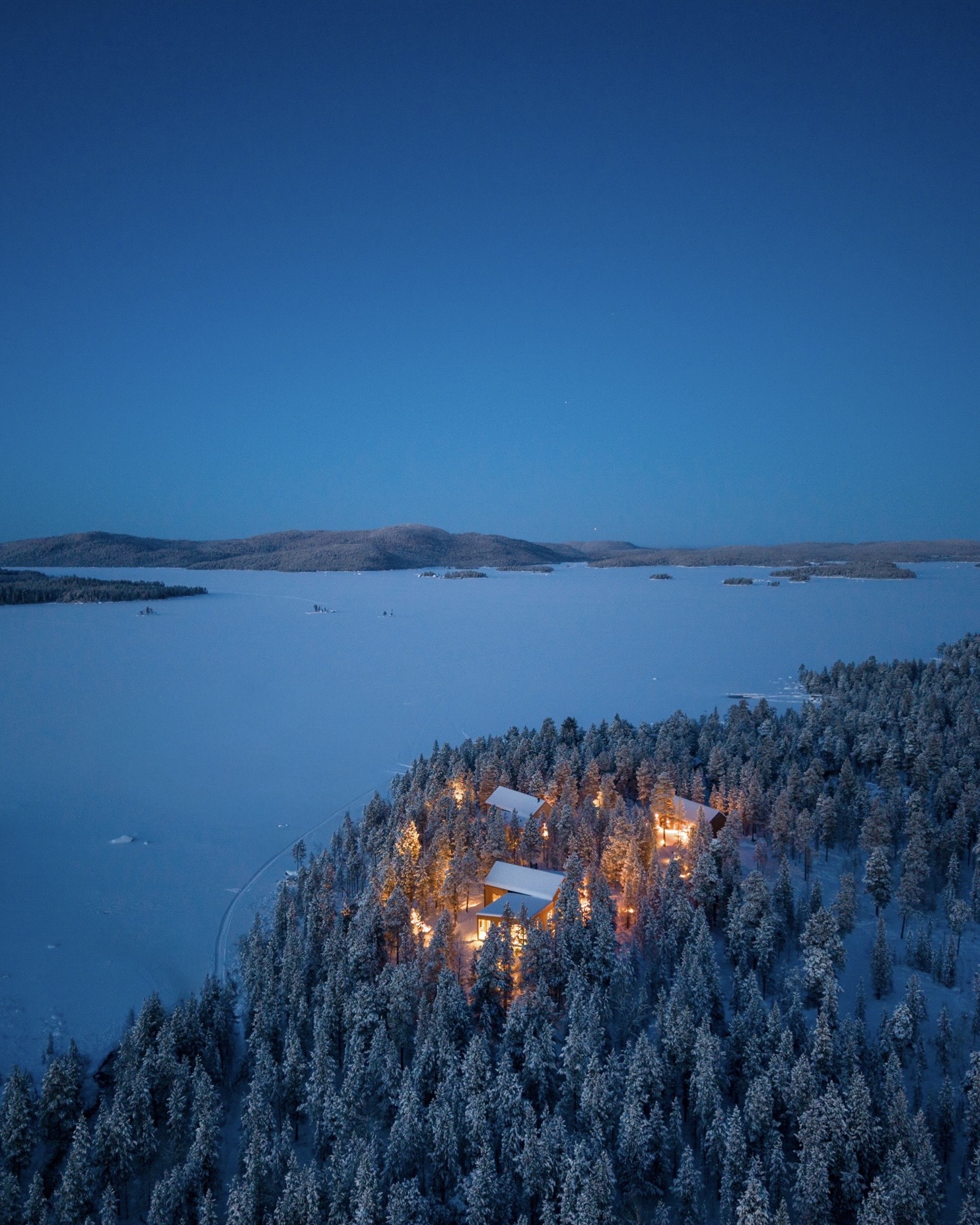
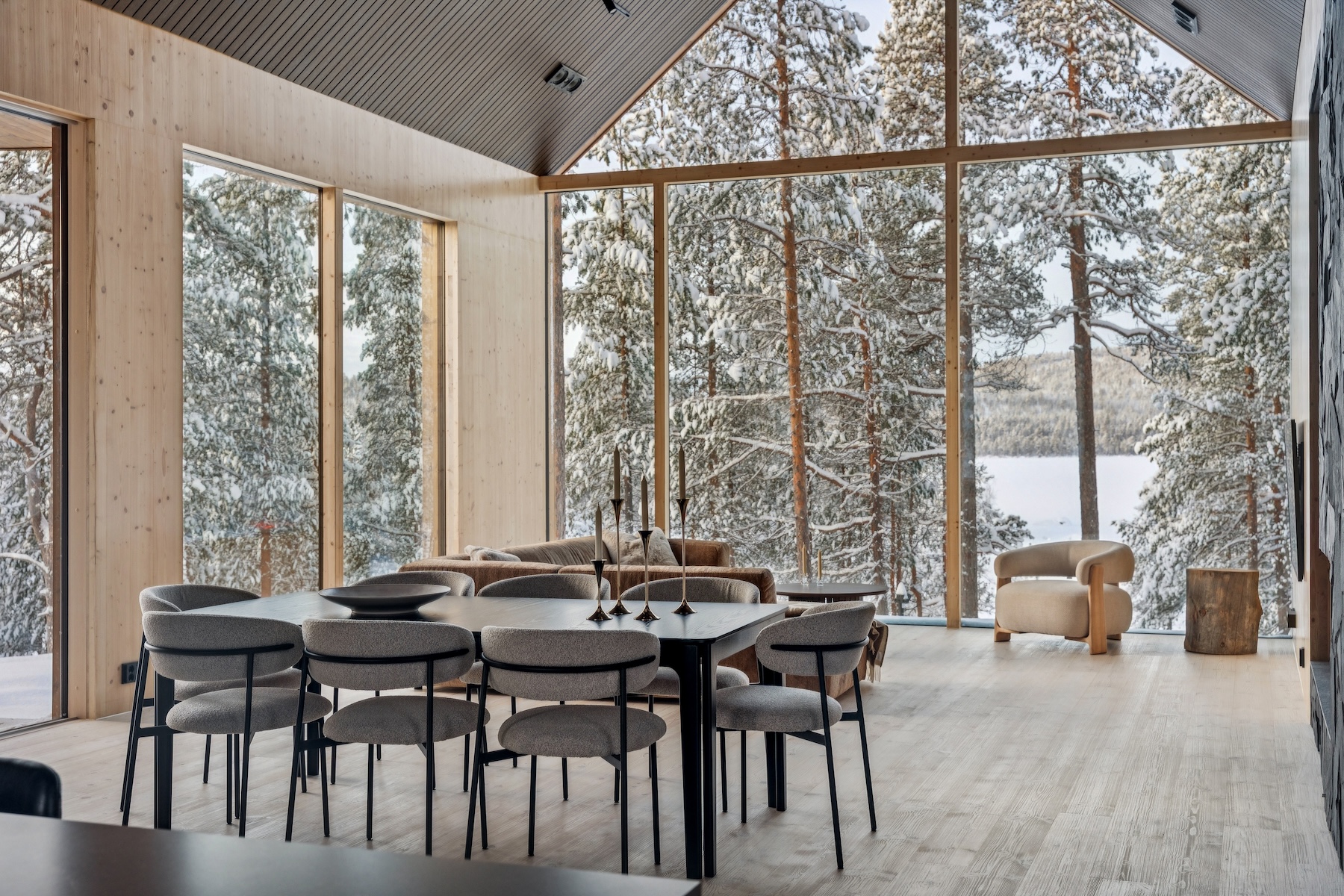
Inai Haven sits on the shore of Lake Ukonjärvi in the Inari lake basin, half an hour from Ivalo Airport: a private pair of contemporary timber villas built by two northern-born founders, Jesse and Sami. The buildings were created by renowned architects specialising in timber architecture, working in wood almost exclusively, and it shows. The façades are left unfinished to weather into the surrounding pine; the glazing is generous and deliberately placed, so that both living rooms face the northern sky. In summer those rooms fill with midnight sun. In winter they become private observatories.
Villa Lyra stands on the open lake edge, 163 square metres for six, with a master suite, two further bedrooms and a living room made for watching the sky. Villa Luna, at 211 square metres for eight, sits a little further back where the forest begins, a stream running beside it as a quiet soundtrack, its master suite joined by two bedrooms with their own bathrooms. They can be taken individually or together as one lakeshore estate, which is how families and close friends tend to use them over the holidays.
Inside, the palette is ash, oatmeal and sage: bouclé, linen, wool and brushed oak, with ceramics by a local studio. Each villa has its own sauna and outdoor jacuzzi, a wine store and an integrated sound system. On a minus twenty evening, with the wood creaking softly in the cold and the forest framed in the glass, the cosiness feels engineered, in the best sense: shelter and prospect in equal measure, and a window seat onto the wild.
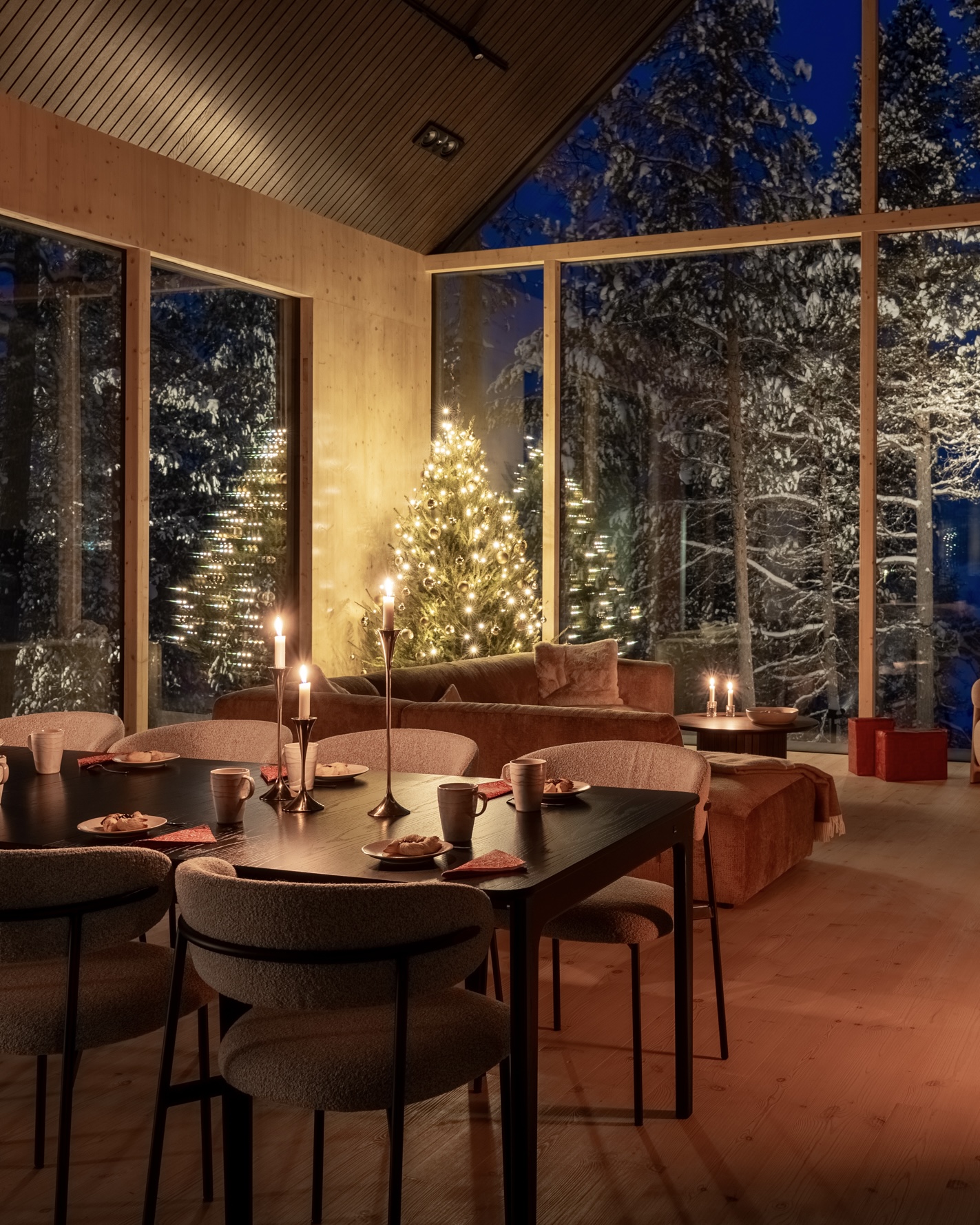
Finland keeps Christmas on Christmas Eve, and it begins with a moment of stillness. At noon on 24 December, Christmas Peace is declared from the Old Great Square in Turku, a tradition with roots in the fourteenth century and broadcast across the country, after which shops close and the nation, in effect, exhales.
Then comes the joulusauna. For centuries, Finnish families have scrubbed the sauna clean, lit it in the early afternoon and bathed before dinner, a cleansing of body and mind before the feast. Sauna culture in Finland was inscribed on UNESCO’s list of intangible cultural heritage in 2020, which describes the sauna as a sacred space, a church of nature, and places at its heart löyly, the steam released when water meets hot stones. At Inai Haven, the ritual needs no translation. You take your löyly with the lake in the window, step out into air sharp enough to ring, sink into the outdoor tub and watch the blue turn to ink.
Dinner is the other quiet luxury. Breakfast is laid in the villa kitchen while you sleep, using seasonal Lapland ingredients, and cleared away during the day. Lunch might be cooked over an open fire as part of an outing, or delivered. The evening meal is prepared partly in advance and then finished by a personal chef in front of you, with wine and candlelight, so that Christmas Eve feels like a family table rather than a restaurant booking. For something older, there is the kota, the traditional Lappish fire hut, where fish is grilled over an open flame, or a meal taken out on the ice itself.
Tuomas, the host and operations lead, plans each stay around the guests rather than a programme, with a 24-hour concierge behind him. That might mean a private husky ride on Christmas morning, a day spent with Sámi reindeer herders, ice fishing pitched anywhere from gentle to determined, or nothing at all beyond a long walk and a longer sauna.
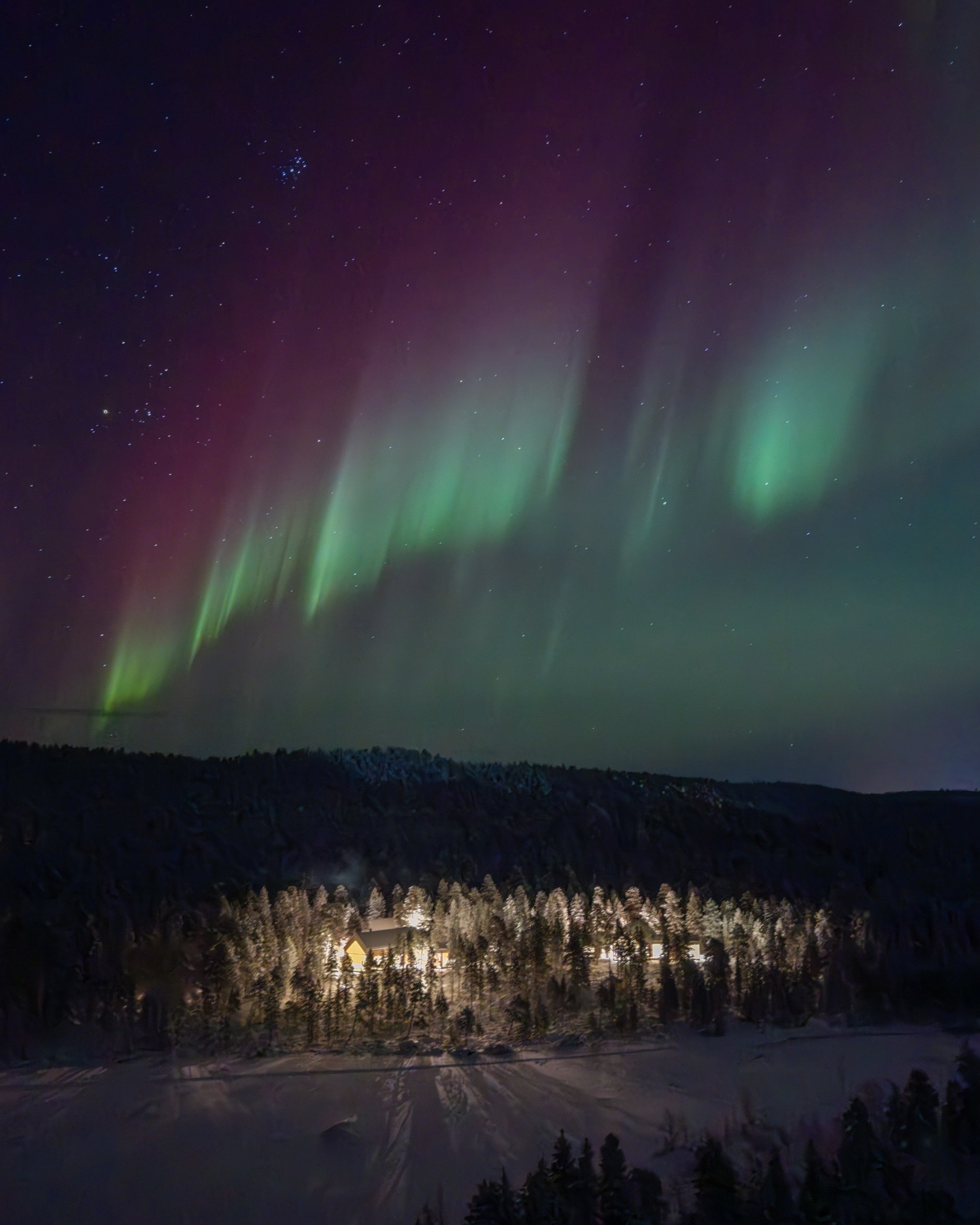
If Christmas belongs to the hearth, New Year belongs to the sky. Inari lies within the auroral zone, and the Finnish Meteorological Institute records the Northern Lights on around three nights in four in northern Lapland whenever the sky is clear enough to see them. The deep darkness of kaamos helps rather than hinders. Inai Haven’s signature outing is a four-hour Northern Lights journey on a frozen lake, and the snowmobile routes run out across the ice into the wilderness. For those who would rather not leave the warmth, the living rooms were designed for exactly this: a fire, a glass of something good, and green curtains of light moving silently over the lake.
The Finns see the year in with fireworks, with sparkling wine and with the old custom of dropping molten tin into cold water at midnight and reading the coming year in the shapes it makes. Out here, the aurora tends to steal the show.
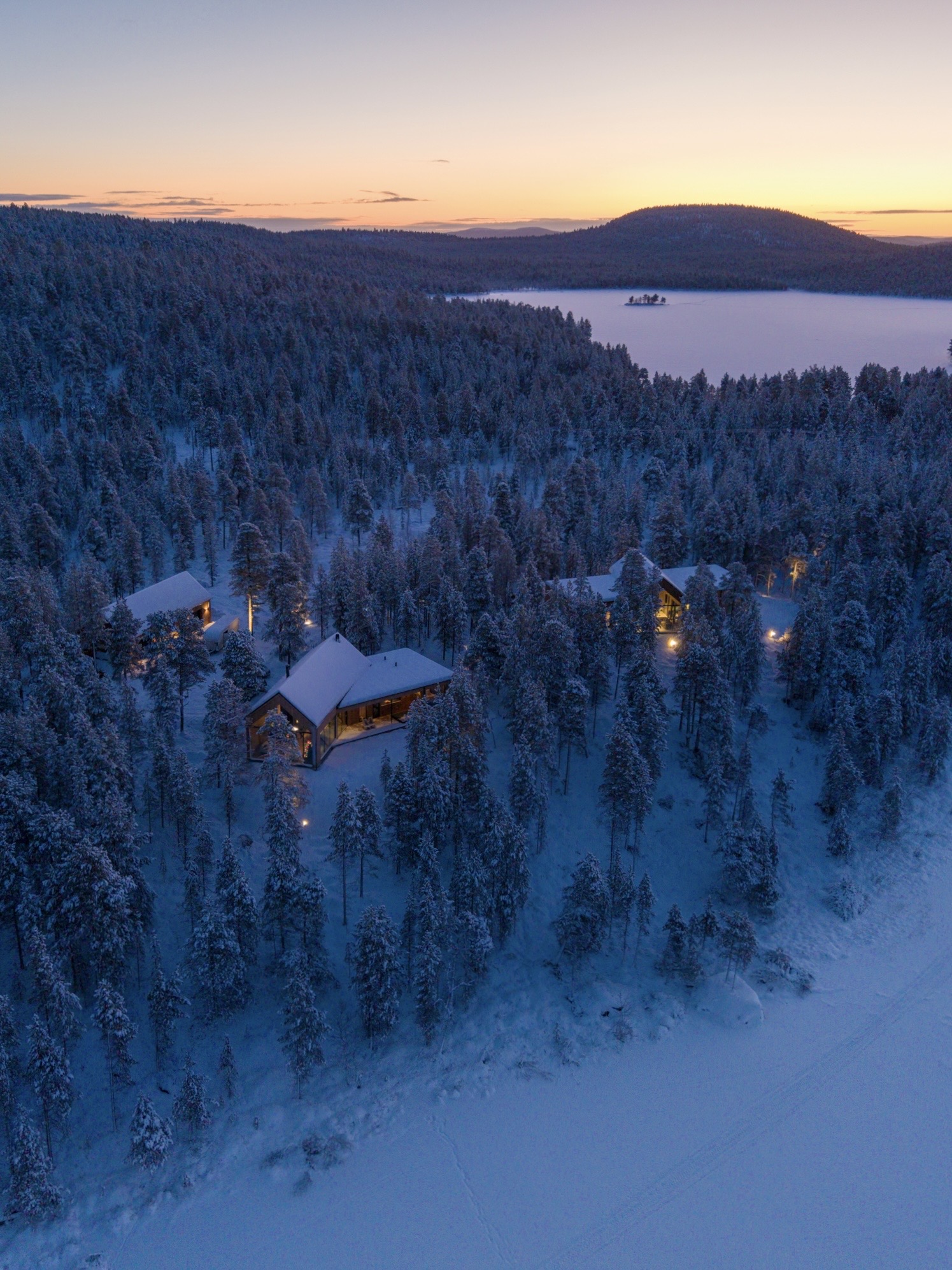
The holidays are only part of the story. January may be the most beautiful month of all, and certainly the calmest. Mornings start late and unhurried. The blue hour lengthens a little each day until, somewhere around the second week of the month, the sun lifts its rim above the southern horizon for the first time in five weeks, briefly and to considerable local satisfaction.
Up the road in Inari village, the cultural heart of the Finnish Sámi, Siida, the Sámi museum and nature centre, tells the story of the people and the landscape with real depth. At the end of the month the village hosts Skábmagovat, the world’s northernmost Indigenous peoples’ film festival, founded in 1999 to bring light through culture to the polar night. The 2027 edition runs from 28 to 31 January, with screenings in Siida, in the Sámi cultural centre Sajos and in an outdoor theatre built entirely of snow.
Out on the great lake, the island of Ukonsaari, Äijih in Inari Sámi, rises steep and hunched from the ice: the most important Sámi sacred site in Finland, where offerings were made for centuries. The main local tour operator stopped taking visitors there in 2019 out of respect, and it is best admired from a distance, as it has been for generations.
January temperatures average around minus twelve and can drop below minus thirty, which is why the evenings at Inai Haven feel the way they do. The sauna is always warm. The chef is on the way. And beyond the glass, the blue settles over the lake again, as it has every winter for as long as anyone here can remember.
Inai Haven is a member of The Aficionados. To plan a Christmas, New Year or January stay, contact the team at Inai Haven.
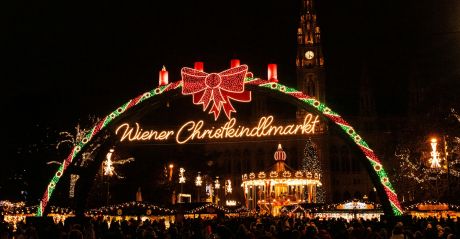
Austria's Vienna is an age-old hotspot for Christmas markets. A magical city of nostalgia, romance and old-time glamour, Advent glamour started here.
read more
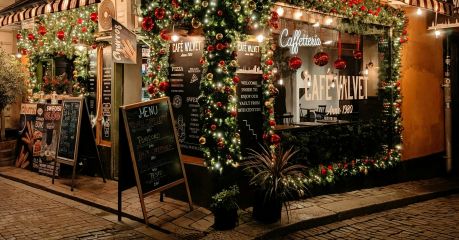
Your top tips on how to have a truly Swedish kinda Christmas. From the Christmas tree to food + decorations, celebrate how the Scandi-cool style crowd do.
read more
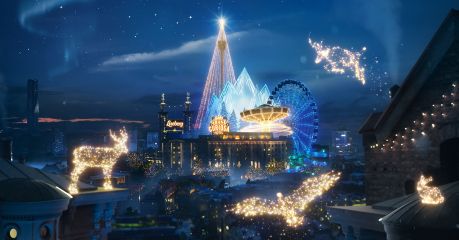
Whip out that tinsel and get your festive cheer on as Gothenburg’s epic Liseberg Park plays host to Sweden’s biggest Christmas Market. A land of mulled wine and carolling glory, five million twinkling lights, 700 Christmas trees and 70 rustic market stalls.
read more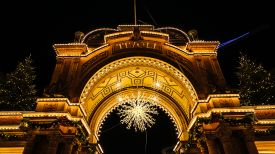
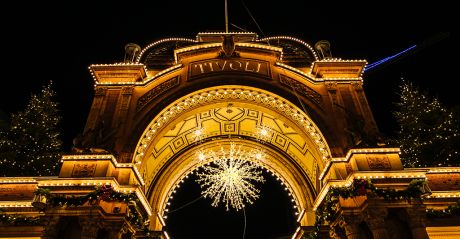
The famous Tivoli Gardens in Copenhagen stage a special winter theme of Winter wonderlands from fun rides, Christmas markets and festive biscuits.
read more
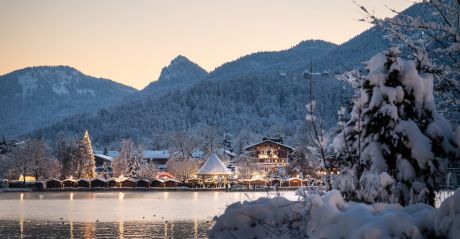
A lakeside Christmas market of twinkling lights and boats drifting below the mountains - Bavaria's Tegernsee is a winter wonderland of tradition meets cool.
read more
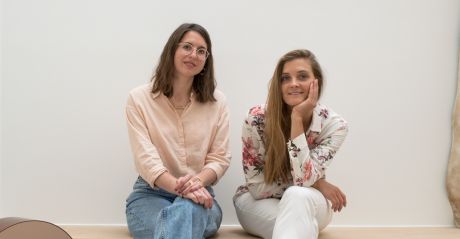
Just off Rue des Martyrs in Paris, in the 9th arrondissement, Zeuxis Contemporary Art Gallery created by Amélie du Chalard is the Maison d'Art Amelie - a showcase for paintings, engravings, sculptures, photographs, videos and works of art set within a magnificent apartment.
read more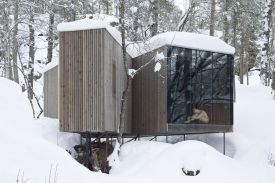
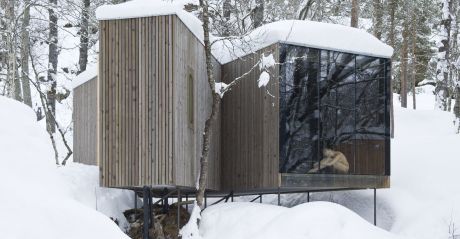
Four cute bastions of style and snuggle up in the duvet sentiments for winter, none of which are in France.
read more

Escape to Tinos – the Greek island of over 60 Cycladic villages, art, culture, great natural food, pristine beaches and enough churches (1500+) to feel totally blessed – and slip into a new way of living, the Tinos way.
read more

Giorgos and Alexandra Alexiou are simply two of the nicest people you can meet, a creative couple that fuse you with their beautiful Greekness. Meet the creative owners behind the fabulous Aenaon Villas on the Cycladic island of Santorini - they found a perch right on the edge of the Caldera.
read more

With a chill in the air as October comes to a slow close we are looking forward to officially entering November and with it, the opening of ski season. For a head start on the celebrations head to joyful Gurgl in Tirol for a start to the 2026-2027 season that goes off with a bang.
read more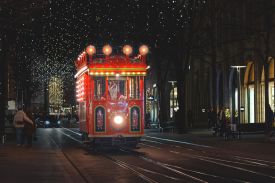
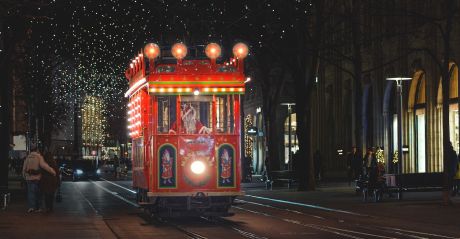
For the most festive of Christmas getaways, head to any one of Zurich's many markets, ice-rinks and parades, before settling back in the design den of the city.
read more
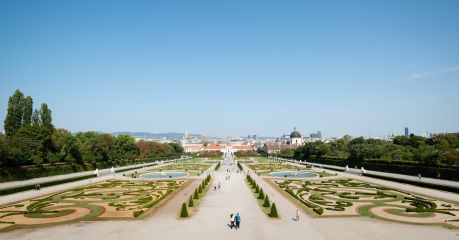
Founded in 1754 by Empress Maria Theresa, the oldest area, the medicinal garden, is replete with poisonous plants and the sultry tropical house is home to orchids, cacti and carnivorous plants.
read more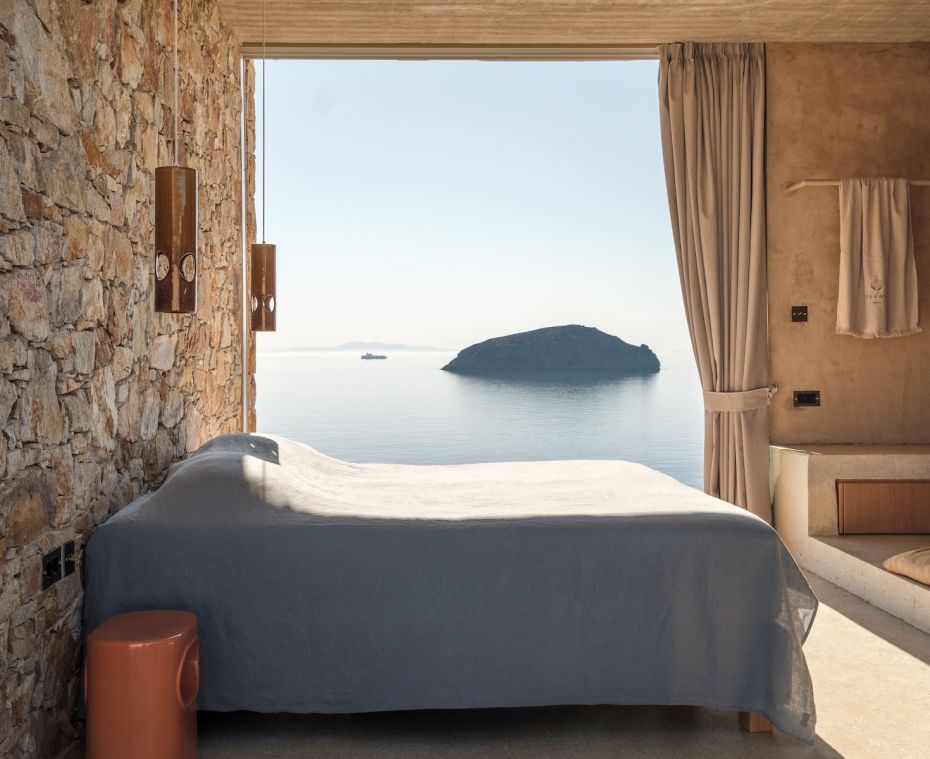
Get the insider news and lowdown on what we've been up to, where we've been, and who we've met along the way. Be the first to discover new places and get the scoop on our favourites.