
JOIN the AFICIONADOS
Get the insider news and lowdown on what we've been up to, where we've been, and who we've met along the way. Be the first to discover new places and get the scoop on our favourites.

High on the Dovrefjell plateau, Snøhetta has built a small viewing pavilion facing the mountain it is named after, so that visitors can watch some of Europe's last wild mountain reindeer without frightening them off. It is a long morning's drive from Juvet.

Most architects would be flattered to see their name on a building. Snøhetta went one better and pointed a building at its name. The Oslo studio took its title from the Snøhetta massif, the snow-capped peak that rises above the Dovrefjell in central Norway, and in 2011 it built the Norwegian Wild Reindeer Centre Pavilion at Hjerkinn, with one long wall of glass looking straight across the plateau towards it.
From outside, the pavilion is a plain box of steel and glass, set at around 1,200 metres and reached on foot along a path of about a kilometre and a half from the car park. The surprise is inside. One wall has been carved into a deep, rippling form of solid pine, shaped by digital milling and then finished by hand, so that it looks like rock or snow worn smooth by the wind. It doubles as a bench, and it is warm to sit against, which on the Dovrefjell counts for a great deal. The building is there for the Norwegian Wild Reindeer Foundation, as a shelter for school groups, researchers and anyone else prepared to wait for the herds.


Wild mountain reindeer once ranged across much of Europe. Today Norway holds almost all that remain, and the Dovrefjell herds are among the most important. They are a different animal from the domesticated reindeer of the far north: shy, fast, and quick to abandon a valley if it fills with people, which is precisely why the pavilion keeps its distance and asks you to do the same.
The plateau has a second resident worth the binoculars. Musk oxen, brought over from Greenland in the last century, now graze the Dovrefjell in shaggy, prehistoric-looking groups. They are best admired from a respectful distance, as they are considerably less shy than the reindeer and rather less forgiving.
Sightings depend on the season, the weather and luck. Late summer and autumn tend to be the most rewarding, though the view of the Snøhetta massif alone justifies the walk on any clear day.
Our base for this part of Norway is Juvet Landscape Hotel at Alstad, near Valldal: a scatter of glass-fronted rooms raised on stilts among the pine and birch above the river Valldola, designed by Jensen & Skodvin so that each one frames a different stretch of forest, rock or water. It shares a principle with the reindeer pavilion. In both places the building does very little and the landscape does the rest.
The drive from Juvet to Hjerkinn takes about three and a half hours. In summer, the most dramatic way out is over the hairpins of Trollstigen to Åndalsnes, then along the Romsdalenvalley to Dombås and up onto the plateau. Leave early, take a flask and allow time to stop, because the road gives you very little reason to hurry.
For more on the studio behind the pavilion, from the Oslo Opera House to its work in the Alps, read Named for a Mountain.


Norway’s Husky-sledding hotspot in Jotunheimen National Park is the perfect winter adventure across the ice packed snows of nature pure, here's why.
read more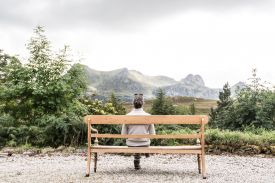
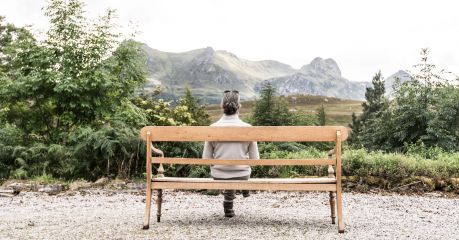
The ancient Caledonian forest and its temperate pines are still in evidence and here red deer, osprey, golden eagle and the native wolf can be seen. Sea cliffs, mirror-like lochs and peaty bogs reveal more diversity from guillemots, otters and seals.
read more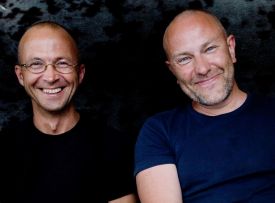

Norwegian-based architectural firm, Jensen & Skodvin Architects are well known for their striking, often extraordinary designs, some of which are found in wild and remote areas; others camouflaged in urban hubs, with their engaging use of tectonic architecture.
read more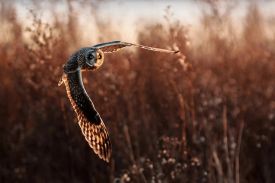
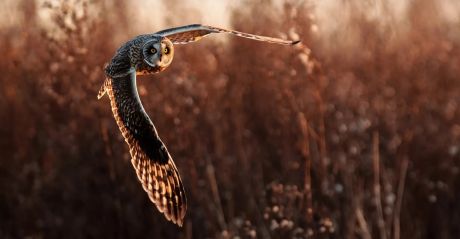
Remote, raw, and radical – Orkney’s conservation fight is rewriting the story of island survival with dogs, birds, and 6,000 stoats. Nature is taking back control.
read more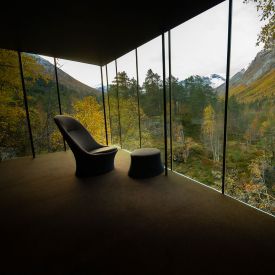
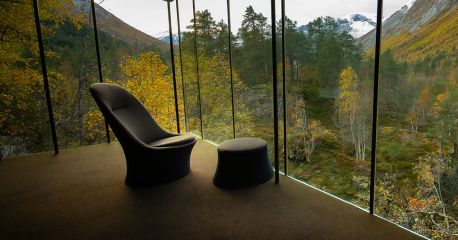
Where wilderness meets radical architecture, soulful stays and culture-led adventures – join us in chasing raw nature, good people and unapologetically beautiful escapes across the wild corners of the world.
read more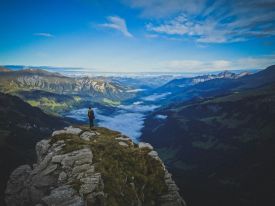
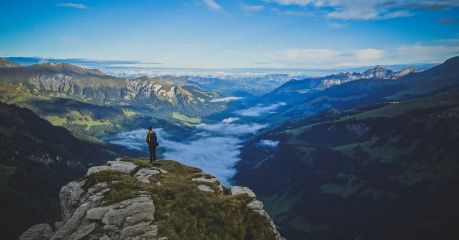
High above Adelboden, three peaks hold the line: Wildstrubel, Lohner and Bunderspitz. This is the Bernese Alps as pilgrimage — elemental, poetic and shaped by silence, not speed.
read more

White sands, turquoise seas and towering peaks: Lofoten’s beaches feel impossibly tropical in the Arctic, where surf breaks, midnight sun and wild solitude create Europe’s most otherworldly shoreline experience.
read more

A restoration den of raw genius – a weathered Tuscan house close to Montefollonico that has been allowed to expose her weathered elements and complemented with chic salvaged interiors. An imaginative retreat of utter, rustic romance.


Escape to Tinos – the Greek island of over 60 Cycladic villages, art, culture, great natural food, pristine beaches and enough churches (1500+) to feel totally blessed – and slip into a new way of living, the Tinos way.
read more

Adventure cycling through the Alps is in itself a wondrous experience – pedalling the heights through the UNESCO Dolomites is the peak (no pun intended) and is surely on every cycle-adrenalin-junkies’ bucket list.
read more

Cool design, contemporary styling and a hug to local island culture make our pick of five easy-to-get-to Cycladic island escapes of Santorini, Tinos, Naxos, Syros, Sérifos and Koufonisia, all the more irresistible.
read more
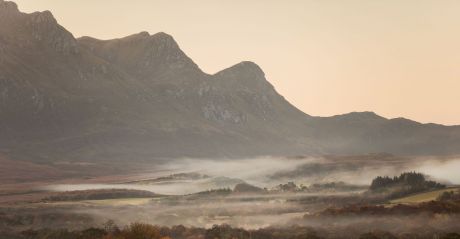
One percent of Scotland. Thirteen estates. A 200-year plan to bring the Highlands back to life. This is what it looks like when conservation becomes a calling.
read more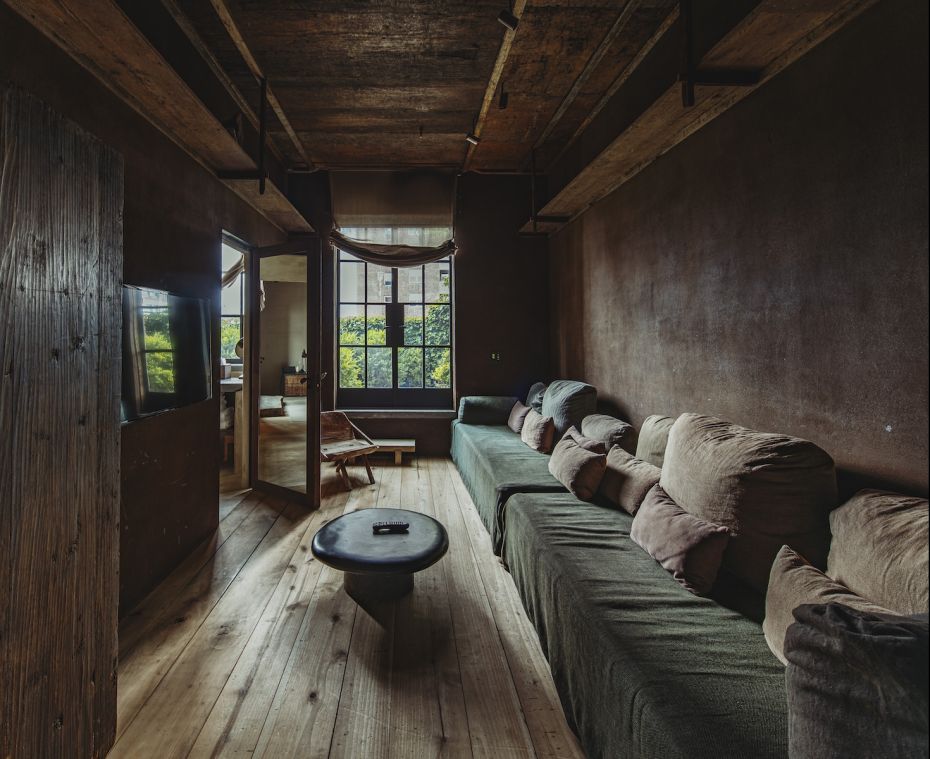
Get the insider news and lowdown on what we've been up to, where we've been, and who we've met along the way. Be the first to discover new places and get the scoop on our favourites.