JOIN the AFICIONADOS
Get the insider news and lowdown on what we've been up to, where we've been, and who we've met along the way. Be the first to discover new places and get the scoop on our favourites.

Saanen sits at the head of its valley in the Bernese Oberland, on the quiet seam where German-speaking Switzerland meets the French. Its old core is a cluster of timbered Bernese chalets, larch fronts gone silver-brown with age, several carved with dates and inscriptions from the 16th and 17th centuries. It is also the parish that gives the whole municipality its name, and its best-known neighbour, Gstaad, is a village within that same municipality, barely four kilometres and a few minutes down the valley. That closeness is the draw: Saanen keeps the heritage and the working-village calm, while Gstaad's promenade, boutiques and railway station are close enough to reach on foot or by a short train hop.
Above Saanen's rooftops rises the tower of the St Mauritius church, a Romanesque foundation recorded in 1228, widened with Gothic arches in the 1400s and given its wooden bell tower a century later. Inside, 15th-century frescoes of saints and biblical scenes still line the walls. In 1957 the violinist Yehudi Menuhin chose this church for his first summer concerts, and the Menuhin Festival has brought world-class musicians to the valley every high summer since, reaching its 70th season in 2026.
The land shows in the local produce. The Saanen goat, a pure-white dairy breed, took its name from these pastures and is now milked worldwide, while the high Alps yield Berner Alpkäse and its aged, wafer-shaved cousin Hobelkäse, eaten in the village's wood-lined stuben.
The valley opens northward into the Simmental through Zweisimmen, the region's gateway at 945 metres. Its station is where the narrow-gauge GoldenPass line from Montreux, running up through Gstaad, meets the standard-gauge trains from Spiez and the Bernese lowlands, so most rail arrivals to the Saanenland change here. Zweisimmen's own St Maria church carries an almost complete late-medieval cycle of Marian frescoes beneath a painted canopy ceiling finished in 1456. A little further down the Simme lie the small hamlets of Grubenwald, Mannried and Schlatt, each a few farmhouses and a chapel along a gentle valley-floor walk, easy to overlook from Gstaad yet only minutes away.
In winter the whole area links as Gstaad Mountain Rides, one of the broadest ski regions in the Alps, with around 200 kilometres of pistes over nine connected sectors between 1,000 and 3,000 metres. Rinderberg above Zweisimmen is the largest single sector, and Glacier 3000 is the only glacier skiing in the Bernese Oberland, holding snow into spring. Cross-country loops at Sparenmoos, winter walking paths and toboggan runs fill in the lower ground. In summer the same peaks, among them Wispile, Rinderberg and the Videmanette, become a web of marked hiking trails above the young river Saane, which rises in these mountains.
Access is straightforward for an alpine region. Gstaad-Saanen has its own mountain airfield, the GoldenPass railway connects the valley to Montreux and Interlaken, and the international airports at Geneva, Bern, Basel and Zurich are all within reach for a long weekend in the peaks.
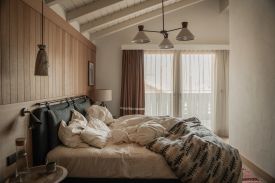
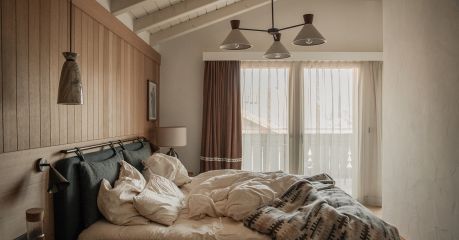
An adults-only hotel-chalet chameleon married to a curatorial melange of mid-century nostalgia and a dialogue of soft luxury perched in altitudinous Adelboden.
read more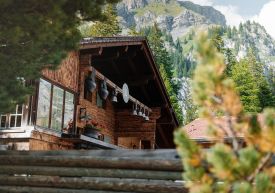
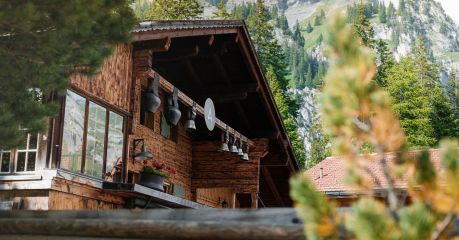
Ditch the noise. Chase altitude. High above Kandersteg, Chalet Arva is a raw, fuss-free alpine escape where wild nature rules, simplicity thrives, and adventure meets tranquility. Let the mountains pull you in.
read more
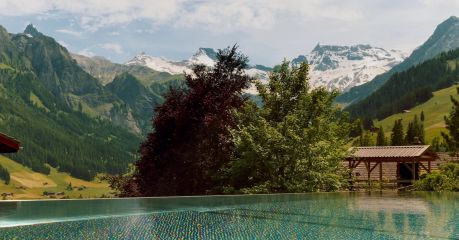
The village of Adelboden in the Bernese Oberland region makes for an excellent basecamp with easy access to five separate ski areas: Sillerenbuhl, Tschentenalp, Engstligenalp, Elsigenalp and Lenk.
read more
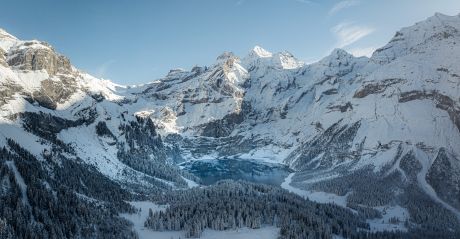
Oeschinensee is no postcard—it’s a pulse-quickening, alpine daydream where glaciers whisper, cliffs defy gravity, and wild swimming in sapphire waters is an initiation, not a choice.
read more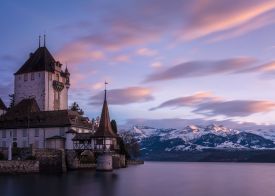
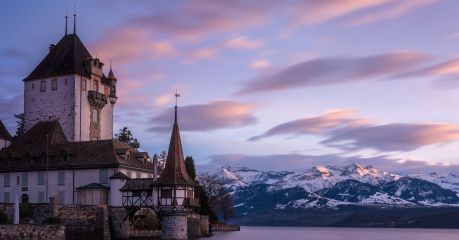
The gateway to the Bernese Oberland, Thun is an attractive historic riverfront town that dates back to the 12th century. Sandwiched between the mountains and Lake Thun (Thunersee) with the river Aare skirting the old town, Thun is naturally picturesque and close to neighbour Interlaken.
read more
Get the insider news and lowdown on what we've been up to, where we've been, and who we've met along the way. Be the first to discover new places and get the scoop on our favourites.