
JOIN the AFICIONADOS
Get the insider news and lowdown on what we've been up to, where we've been, and who we've met along the way. Be the first to discover new places and get the scoop on our favourites.

What would a mechanical watch look like if nobody had ever made one? Since 2010 an industrial designer in Antwerp has been answering it with Ressence watches, disc by disc, and leaving out the hands altogether.
Suppose, for a moment, that the mechanical watch had been invented this century. Nobody would mount two metal hands on a spindle, perch them above a printed dial and cover the arrangement with a pane of glass that catches every lamp in the room. Nobody would add a small knurled button on the flank for the wearer to pull, twist and eventually lose. A designer starting from nothing would begin with the person reading the time, and work backwards to the gears.
That is more or less what Benoît Mintiens did. An industrial designer from Antwerp, he had spent his career on high-speed trains for SNCF, cabin interiors for Air France and, memorably, a tin for Frisk mints, before a visit to the Basel watch fair left him unmoved. "I was so disappointed by the lack of creativity," he has said, "that I decided to start designing watches myself." He founded Ressence in 2010, and showed the first pieces at Baselworld that spring. The name is a contraction of renaissance de l'essentiel.
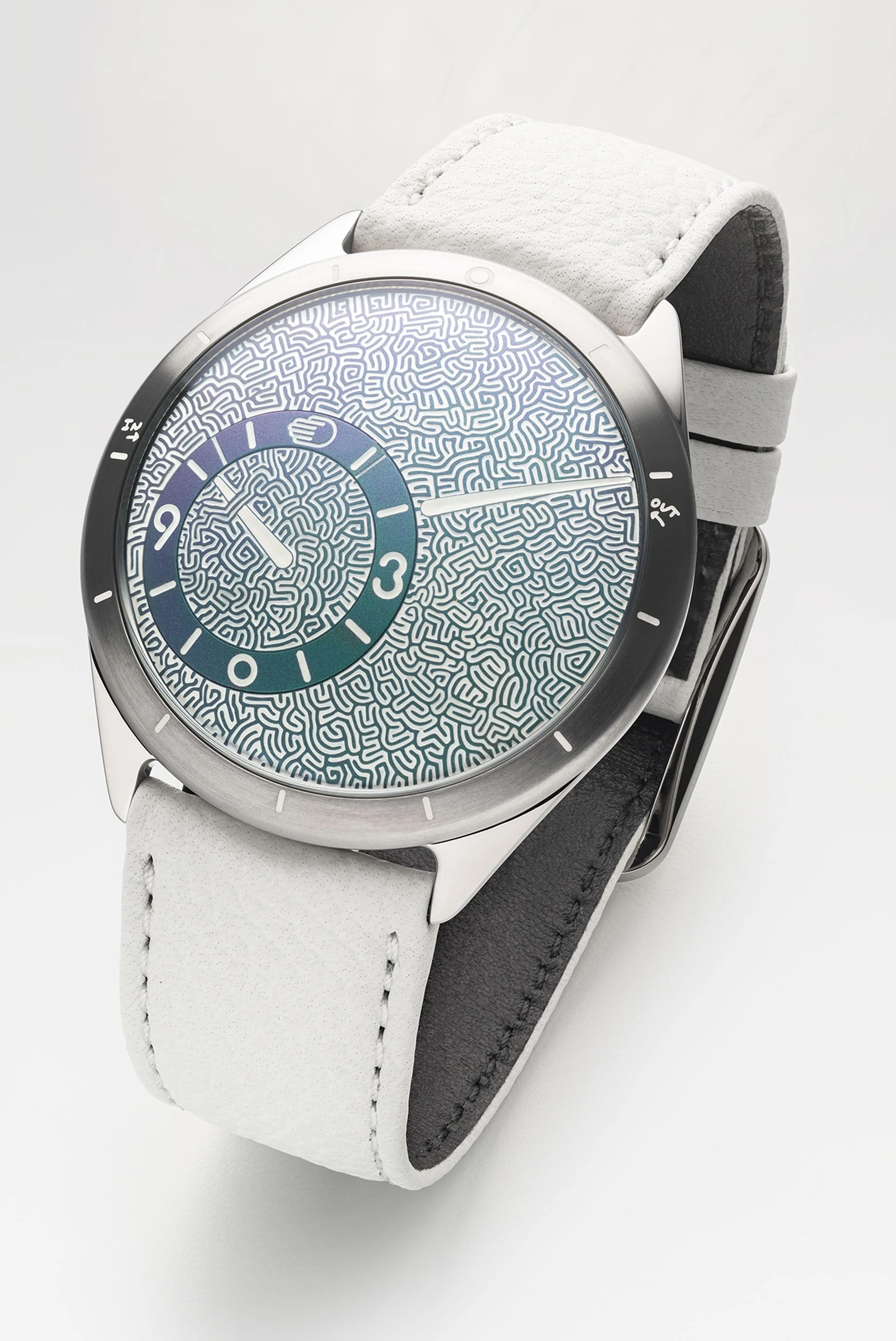
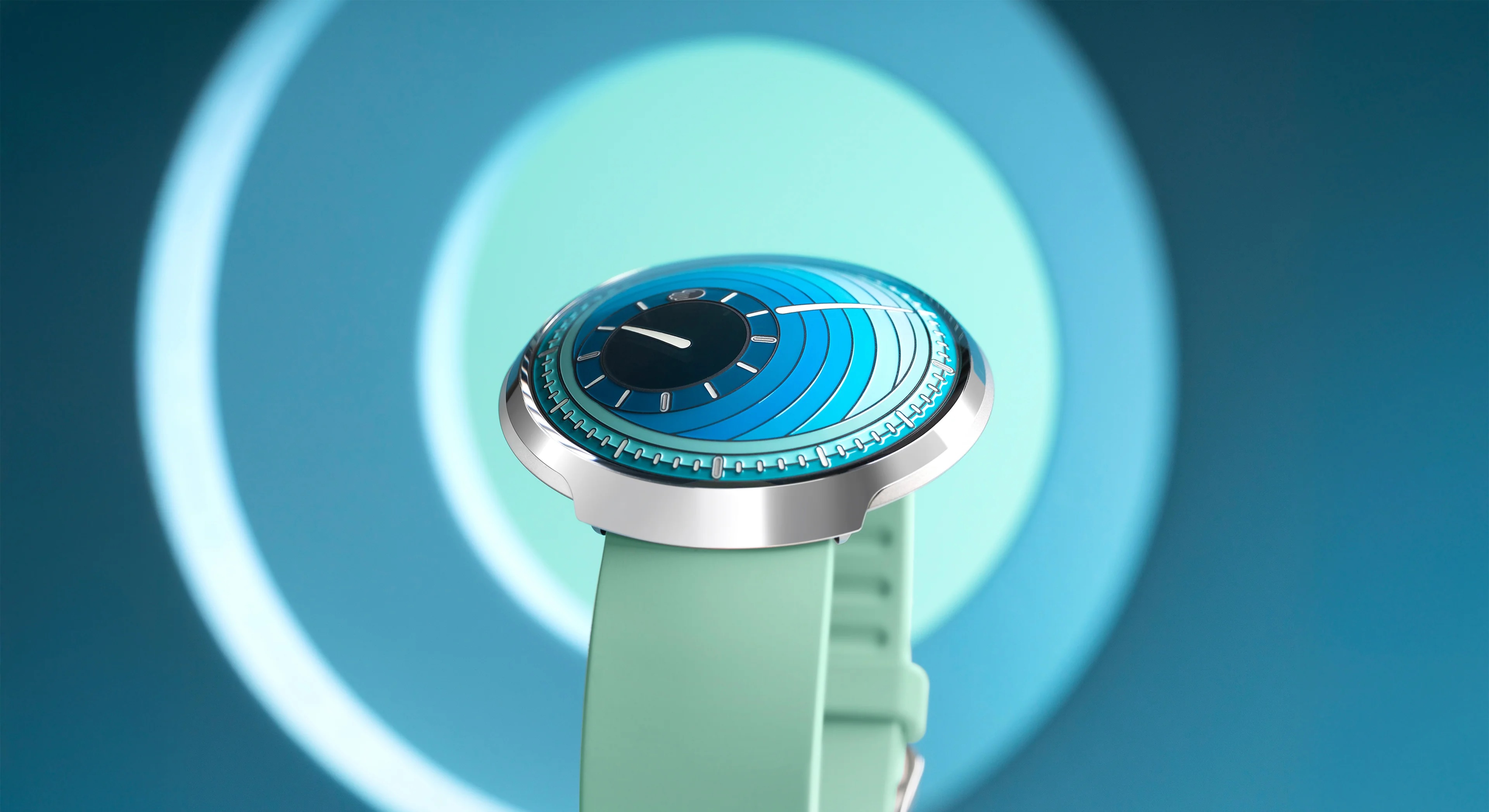
The hands went first. In their place came ROCS, the Ressence Orbital Convex System: a set of convex discs that revolve continuously across a single domed surface, each carrying its own small indication, so the face turns slowly like an orrery. "Traditional hands protruding above the dial are the evidence of the mechanics beneath," Mintiens explains. "I choose to focus on the user experience of reading the time rather than the distraction of the mechanics involved."
The crown followed. There is nothing at three o'clock on a Ressence; the caseback takes over the winding and setting, and the case is left as smooth as a river stone.
Then the dial. For the 2013 Type 3, which took the Horological Revelation Prize at the Grand Prix d'Horlogerie de Genève, the display was immersed in oil. With the refraction against the sapphire all but gone, the discs seem to sit at the very surface, as if painted on the underside of the crystal. Making it work demanded two sealed chambers, a magnetic transmission to carry motion from the dry movement to the oil display, a bellows to absorb the oil's expansion as temperatures change, and a hydraulic shock absorber to keep the magnets coupled. By 2015, the Type 5 had taken the idea diving.
Mintiens has a word for all this: Simplication, which the brand defines as a dedication to innovation, minimalism and human connection. "We design the relationship first," he told Wallpaper*, "and then we design the product." The ideal, in his phrase, is a watch you "forget it's there, until you need it". The watches are conceived in Antwerp and made in Switzerland, built, in the brand's words, for modern life rather than the museum.
Fifteen years in, Ressence makes its own engines. The Type 11, unveiled at Watches and Wonders 2026, carries the RW-01, the first movement designed and developed in-house: 439 components, two barrels and a central balance arranged in a triangle, and 60 hours of reserve, in a 41 mm pebble of titanium at CHF 23,000 before tax. Mintiens calls it the "Now" watch, "contemporary but not futuristic".
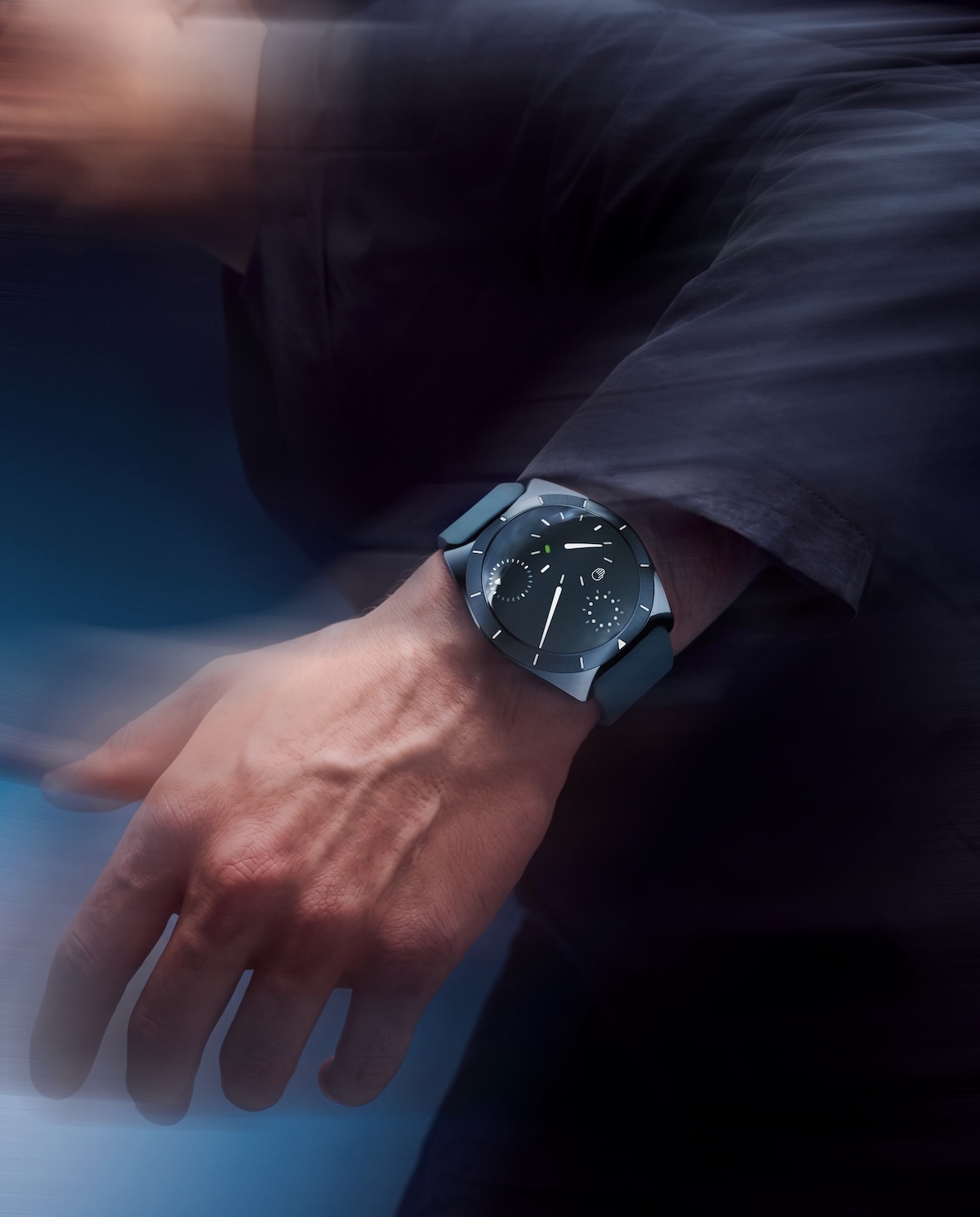
The newest addition, the Type 10 DN, or Dark Night, takes the idea further still. Ressence asked what a mechanical watch would look like if it evolved following the laws of nature rather than those of engineering, and answered with one flowing form in Dark Night Blue: case running into strap, an oil-filled display rising towards the crystal and 538 components kept out of sight, in an edition of 100. "The complexity remains inside," as the brand puts it. "Simplicity is what you experience."
To mark the anniversary, Ressence published a book, Ahead of Time, whose introduction carries a single line from its founder: "The future offers more than the past." In an industry that guards its traditions closely, it reads almost as a provocation. On the wrist, watching the discs drift quietly through their orbits, it seems simply accurate.
Discover more at Ressence.





The master of reductive design, Belgium architect and interior designer Vincent Van Duysen is a behemoth legend of pared-back aesthetic and minimalist style over a spectrum of design disciplines, including furniture, textiles, and lighting.
read more
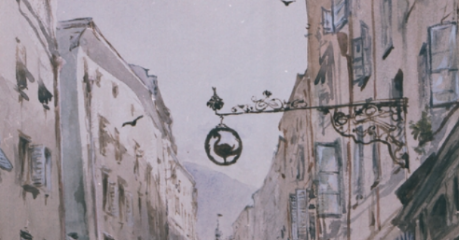
When dealing with one of the oldest buildings in Salzburg, it takes the architect’s clever manipulation of architecture and design to create an exciting, inspiring atmosphere that coverts the old and the new to extreme yet complimentary dimensions.
read more

This Stockholm design guide sees a legacy of craft meet cutting-edge fashion, art + architecture, creating a refined experience for all design aficionados from all walks.
read more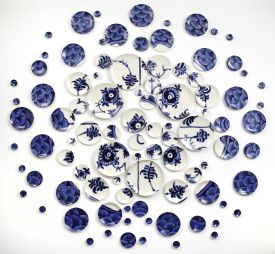
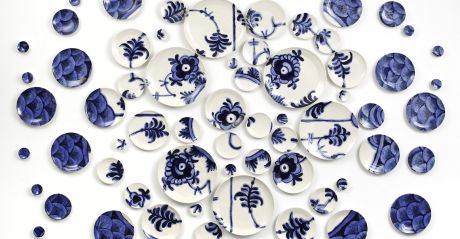
A city of effortless cool & pioneering Scandi design Copenhagen has long been at the heart of the world’s ceramics stage, from practical to the performative.
read more

Lisbon, Portugal's legendary capital simply bursts with heritage, azulejo tiles, Pastéis de Nata & art - this is a design guide you can shop, see & drink.
read more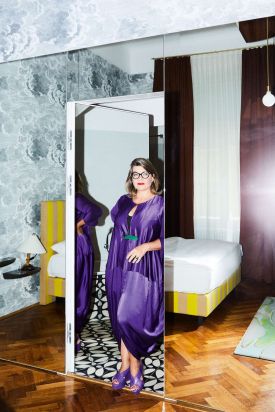

Director of internationally acclaimed Vienna Design Week, Lilli Hollein had never yet turned her eye to interior design until Vienna's Hotel Altstadt came knocking.
read more

Zaha Hadid Architect's coastal Salerno Maritime Terminal in Cilento, Italy carries her hallmark curves inspired by oysters and the waves, a coastal landmark.
read more

Salzburg’s striking Building Academy stands as a contemporary ode to Austria’s longstanding ability to wow us with her architecture and design.
read more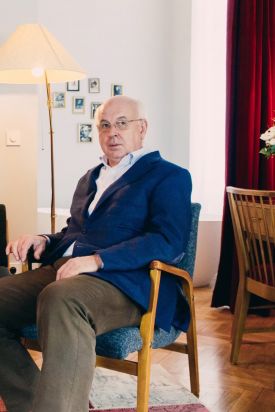

Architect and interior designer Roland Nemetz designs 'his' suite at the boutique Hotel Altstadt Vienna - part of a series of creatively inspired interiors that capture the soul of artsy Wien.
read more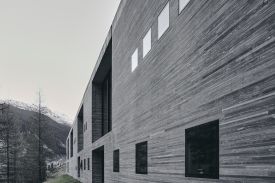
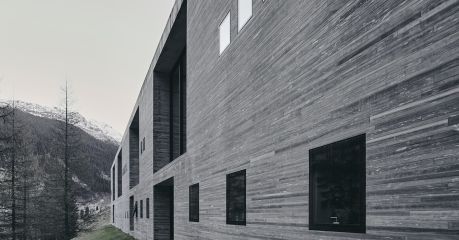
This tiny mountain hamlet is home to some stunning architecture, a sort of magnet for the craft and its followers, not least those that flock to the legendary architect Peter Zumthor's famed Therme Vals - an aqueous world that brings the mountain indoors.
read more

Peek into our Hotel Altstadt Vienna interior design series at room 64, this time designed by celebrated Viennese architect, Adolf Krischanitz.
read more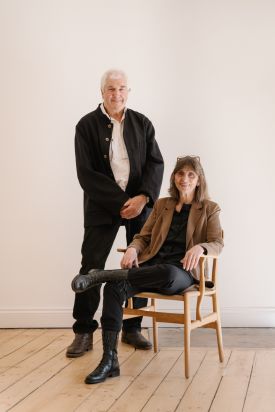

Behind some of Scotland's landmark conservation and restoration projects including the award-winning Kyle House, Hotel Lundies and Killiehuntly Farmhouse in the Highlands.
read more
Get the insider news and lowdown on what we've been up to, where we've been, and who we've met along the way. Be the first to discover new places and get the scoop on our favourites.