JOIN the AFICIONADOS
Get the insider news and lowdown on what we've been up to, where we've been, and who we've met along the way. Be the first to discover new places and get the scoop on our favourites.

One of the oldest villages in South Africa, Riebeeck Kasteel lies beneath the Kasteelberg in a valley of wheat, olive groves and vineyards, an hour north of Cape Town. A party sent inland by Jan van Riebeeck came over a rise in February 1661, looked down on the valley and named it for their commander, though the ground had belonged for far longer to the Zonqua Khoi, who grazed cattle across it. The valley later provisioned the fleets running between the Dutch Republic and Batavia, and it has been farmed ever since.
Two estates were granted here in 1704 and both still work. Kloovenburg sits at the entrance to the village between the Kasteelberg and the Riebeekberg, growing Shiraz and pressing some of the best olive oil in the country. Allesverloren, a little further toward Riebeek West, takes its name from a homestead burned out while its owner was away, all is lost, and has been in the Malan family since 1872. Jan Smuts was born just up the road.
The village itself is low and white, a grid of oak-shaded streets around a square, with the mountain standing over everything. Writers, painters and people who left the city have been settling here for decades, and the result is a place of galleries, antique shops and a monthly market that is unusually alive for a population of under three thousand. The Royal Hotel holds the longest stoep in the country, and it is the right place for a gin at the end of the afternoon.
The eating is better than the size suggests. Au Bouchon Rouge is a French brasserie with a serious wine list, JAM 1937 turns out inventive small plates around the corner, and The Barn cooks Mediterranean with a view down the valley. The Wine Kollective sells the region at cellar-door prices, and the growers of the Swartland are half an hour south in the Paardeberg, in a wine country that runs almost entirely on introduction. The olive festival fills the village every May.
Beyond the valley, Cape Town is an hour up the N7, Wellington half an hour east, and the Atlantic at Paternoster ninety minutes northwest, where Wolfgat serves twenty people at a sitting from the strandveld and the sea.
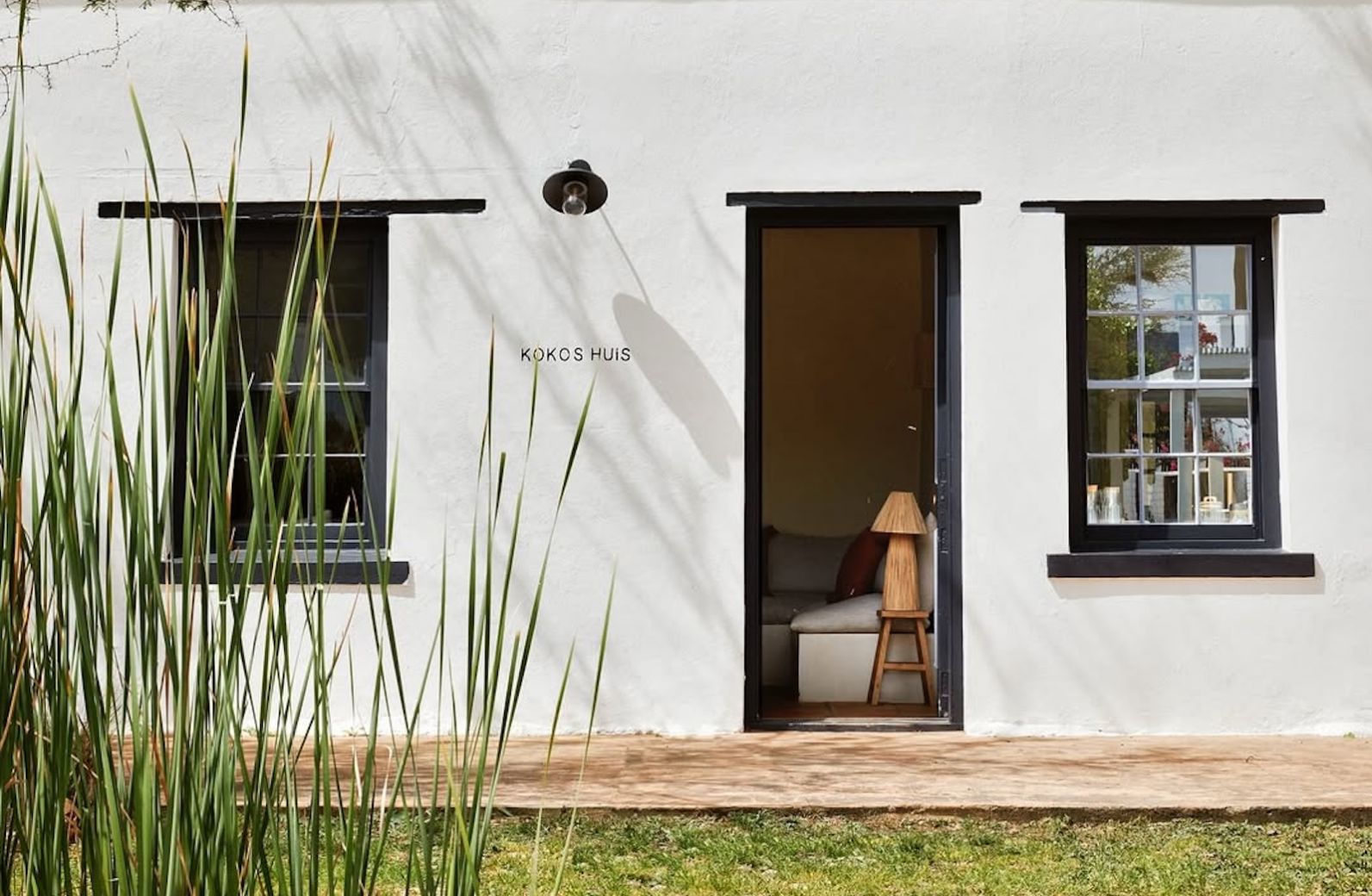
A gorgeously plain Cape farm building at the edge of Riebeek Kasteel, holding terracotta, raffia and pigment, nine keys, a palm-shaded pool and the Swartland's closed cellars.
read more
Get the insider news and lowdown on what we've been up to, where we've been, and who we've met along the way. Be the first to discover new places and get the scoop on our favourites.