JOIN the AFICIONADOS
Get the insider news and lowdown on what we've been up to, where we've been, and who we've met along the way. Be the first to discover new places and get the scoop on our favourites.

Sérifos lies in the western Cycladic Islands, between Kýthnos to the north and Sífnos to the south, under three hours by fast ferry from Piraeus. Greek mythology names it as the island where Perseus, son of Zeus, was raised, and where he returned with the head of Medusa to turn King Polydectes and his court to stone. Islanders say the hills followed suit, and the bare, rust-streaked granite rising above the harbour lends the story some weight.
The terrain is steep and spare. Dry-stone terraces climb towards Troullos, the island's highest point, threaded by kalderímia (old stone mule paths) that once linked villages, chapels and mines. Many are now waymarked, making hiking on Sérifos some of the most rewarding in the Cyclades, with routes from Chora to Panagia, Galani and Kallitsos, and down to the southern bays. Thyme, sage and capers grow from the rock, goats work the slopes, and in spring the ravines fill with oleander.
Chora (Χώρα), the hilltop capital, is built around the remains of a Venetian kástro whose walls reuse marble blocks from the ancient city on the same summit. Stepped alleys wind up to the square at Piatsa, the neoclassical town hall and a line of restored windmills. Below, the port of Livadi gathers tavernas and fishing boats along its bay. Village life follows the church calendar, and summer panigýria (saints' day feasts) bring long tables, local wine and music to chapel courtyards. The cooking is simple: capers, chickpeas, fennel pies and soft local cheeses.
On Sérifos, heritage sits a short walk from almost anywhere. The fortified Monastery of the Taxiarches (Μονή Ταξιαρχών), built in 1572 above Galani and dedicated to the Archangels Michael and Gabriel, still keeps the high whitewashed walls raised against pirate raids. The Aspros Pýrgos (White Tower), a Hellenistic marble watchtower, stands above the road to Megalo Livadi, while the ruined Kastro tis Grias overlooks Koutalas bay. Iron ore shaped the island's modern story. By the early 20th century Sérifos was the second mining centre in Greece after Lavrio, and at Megalo Livadi the neoclassical headquarters of the mining company, rusted rails, wagons and loading piers remain where they were left. In 1916 miners striking for an eight-hour day were fired on here, and a monument to the union leader Konstantinos Speras and the workers who died stands by the shore.
The beaches are generous for such a rocky island. Psilí Ámmos and Ágios Sóstis are fine pale sand backed by tamarisk; Livadákia is a short walk from the port; Kaló Ampéli, Vagiá and Ganema are reached by dirt tracks and are often near empty. In the north, Sykamiá and Platýs Gialós sit in deep, sheltered coves.


Perched on the edge of the Caldera, individually crafted houses cling to rock formations, blending whitewashed minimalism, handcrafted detail and a refined boutique aesthetic beyond the typical villa.
read more

Housed within a fabulously restored Venetian-styled mansion house, this design hotel with nine suites and a stunning rooftop bar has put the island of Syros back on the map.
read more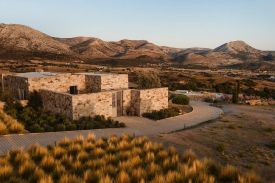
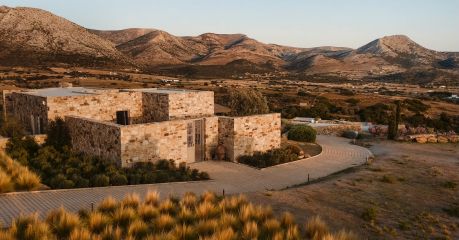
Ayiopetra is a design-led boutique hotel in Naxos, beside the 6th-century BC Temple of Demeter, blending Cycladic architecture, agricultural heritage and curated interiors into an adults-only retreat.
read more

Forget the crowds. Tinos doesn’t perform for tourists - it just exists, cool and unshaken, carved from marble, kissed by salt and wind. A Cycladic retreat where time bends, and creativity flows.
read more

Éros Kéros Villas, on the slow-pace Cyclades island of Koufonisia, come drenched in Aegean blue vistas – a sun-kissed boutique retreat of four cubic Cyclades-style merchant houses that lazily gaze onto the island of Keros.
read more

A tiny dot in the Cyclades Islands, Syros shimmers in the Aegean Sea, surrounded by a circle of Cycladic isles such as Tinos, Serifos, Mykonos, Paros and Sifnos. Like all island adventures, the best way to arrive in Syros is by via classic Greek, sun-drenched ferry into the ancient town of Hermoupolis/ Ermoupoli.
read more

No crowds, no rush—just sun, sea, and island time. Koufonisia (Koufonisi) is the Cyclades' best-kept secret, where boats outnumber cars and the Aegean calls the shots.
read more

Explore Santorini’s edgy design, boutique hotels and volcanic drama. Discover the Cyclades icon’s best stays, beaches, culture and wines – a place where beauty and history collide.
read more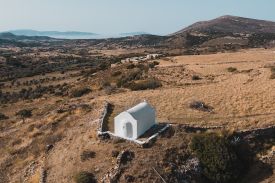
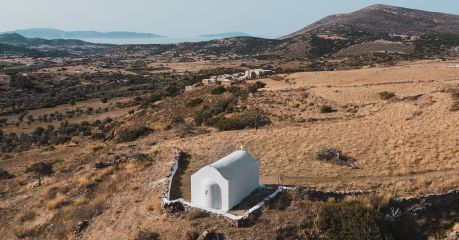
Naxos Greece is marble and myth, beaches and villages, a Cycladic ferry hub where legends linger, food sings and the Portara frames sunsets that stop time across the Aegean horizon.
read more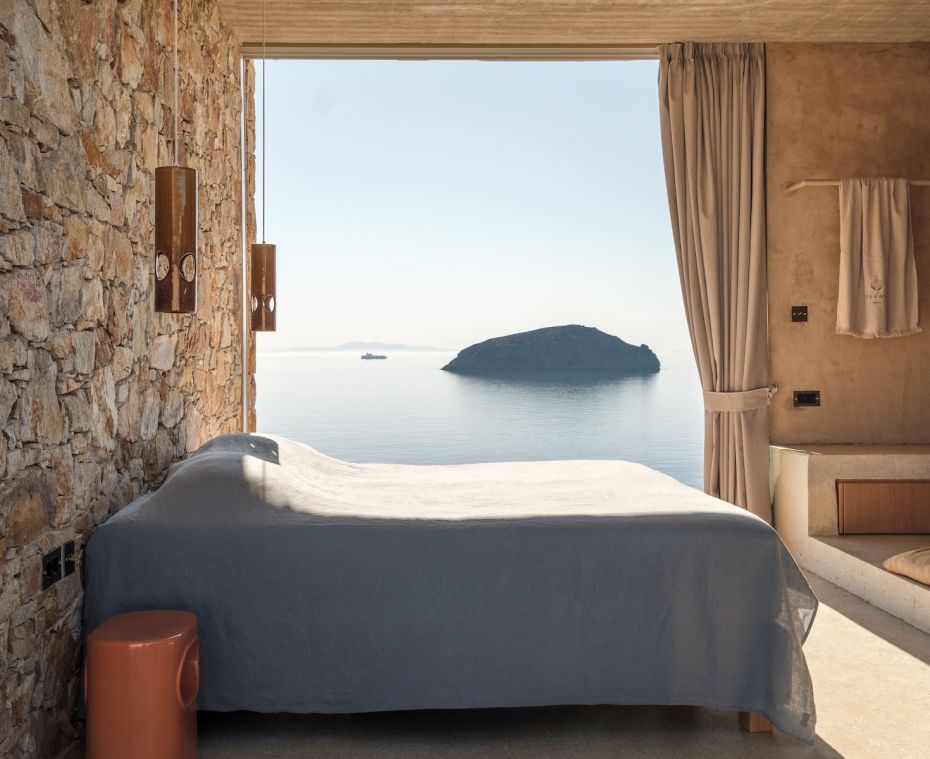
Get the insider news and lowdown on what we've been up to, where we've been, and who we've met along the way. Be the first to discover new places and get the scoop on our favourites.