JOIN the AFICIONADOS
Get the insider news and lowdown on what we've been up to, where we've been, and who we've met along the way. Be the first to discover new places and get the scoop on our favourites.

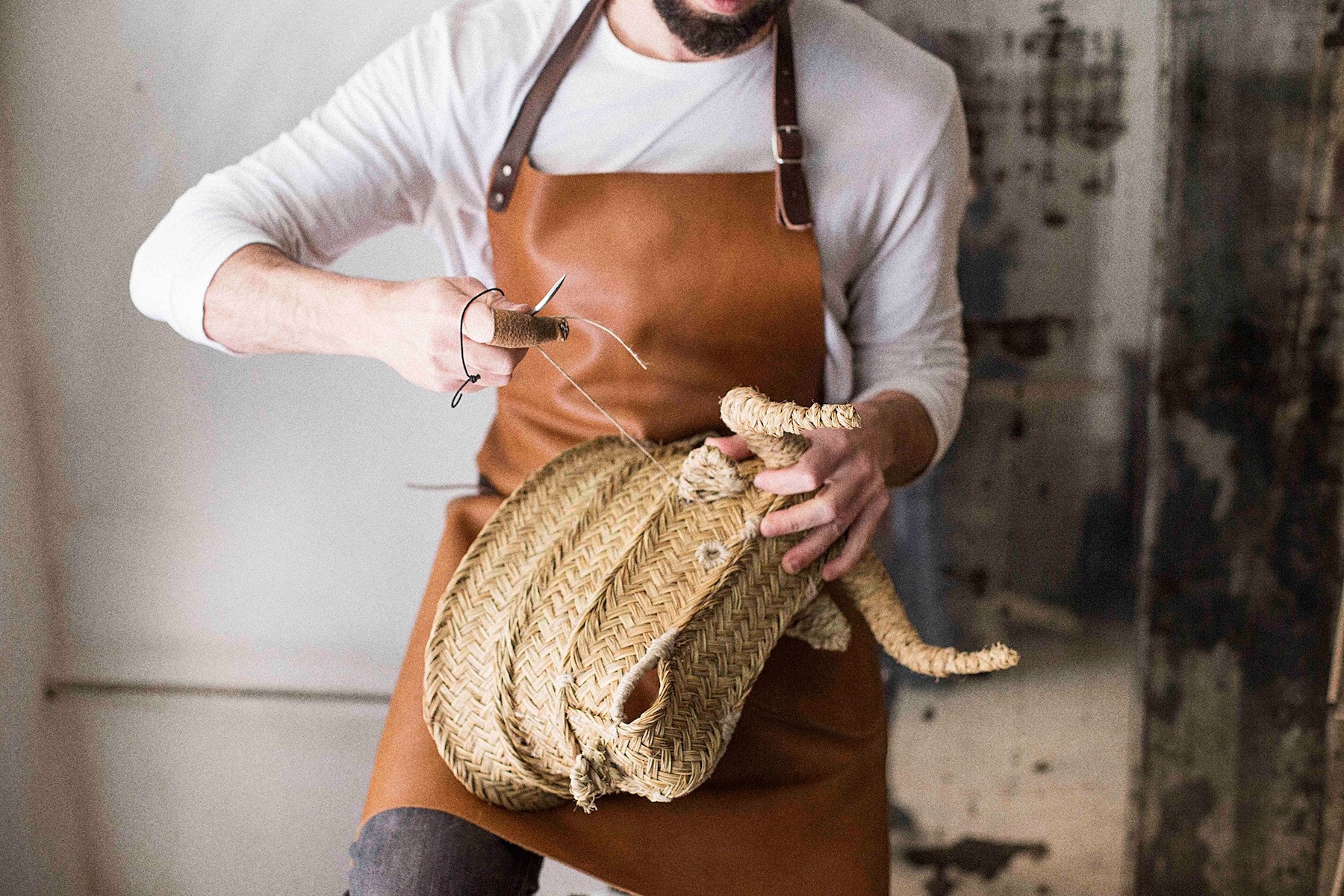
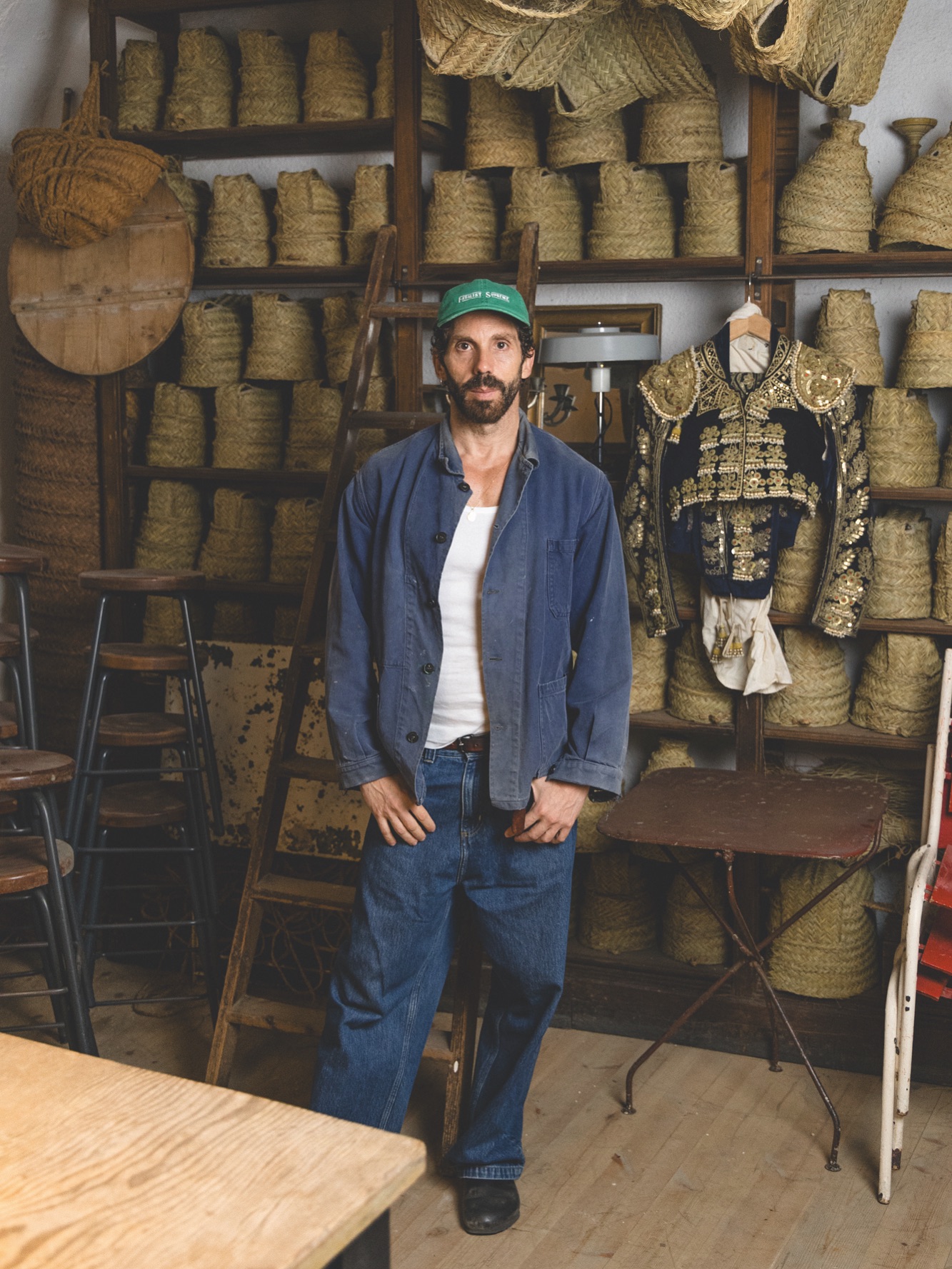
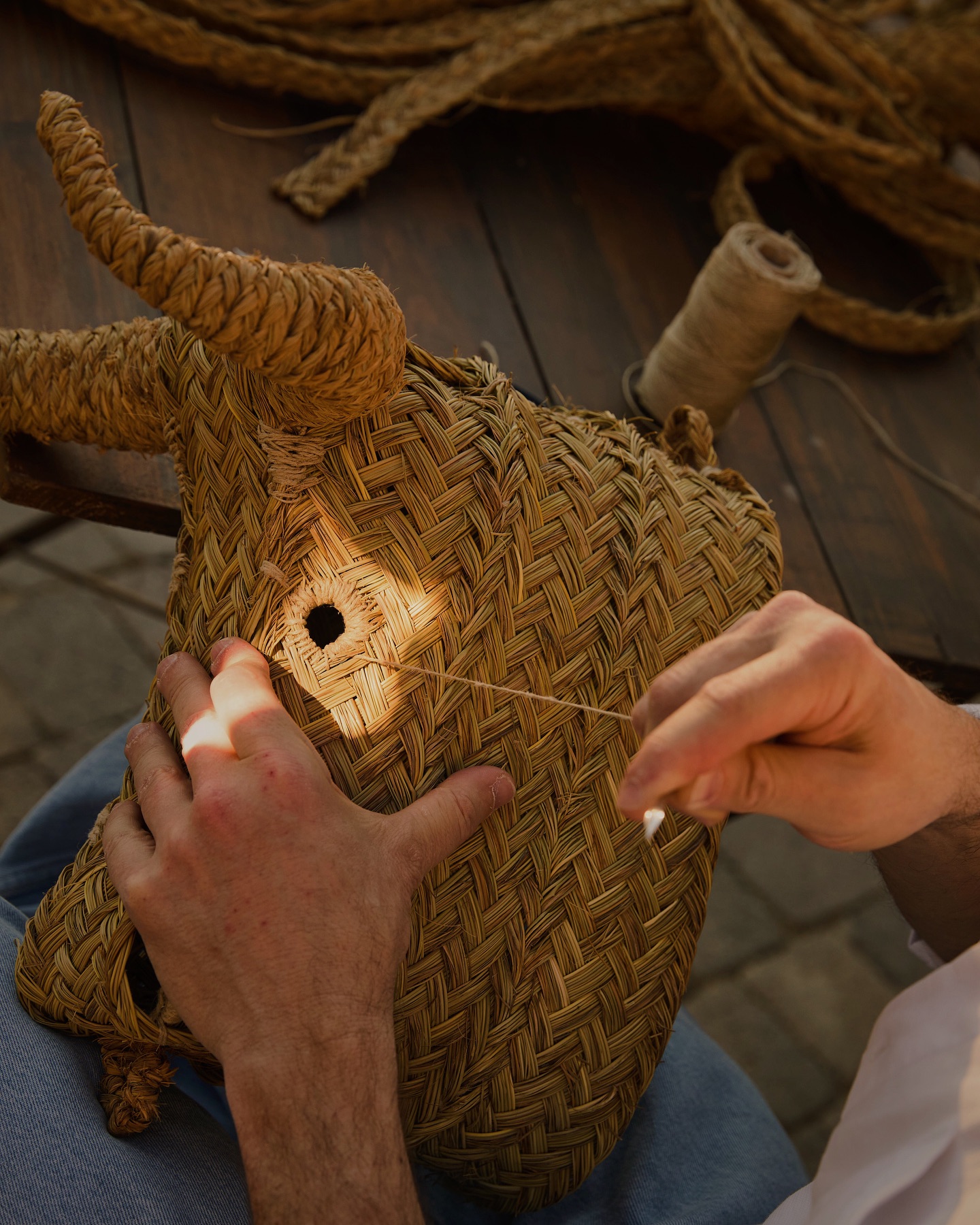
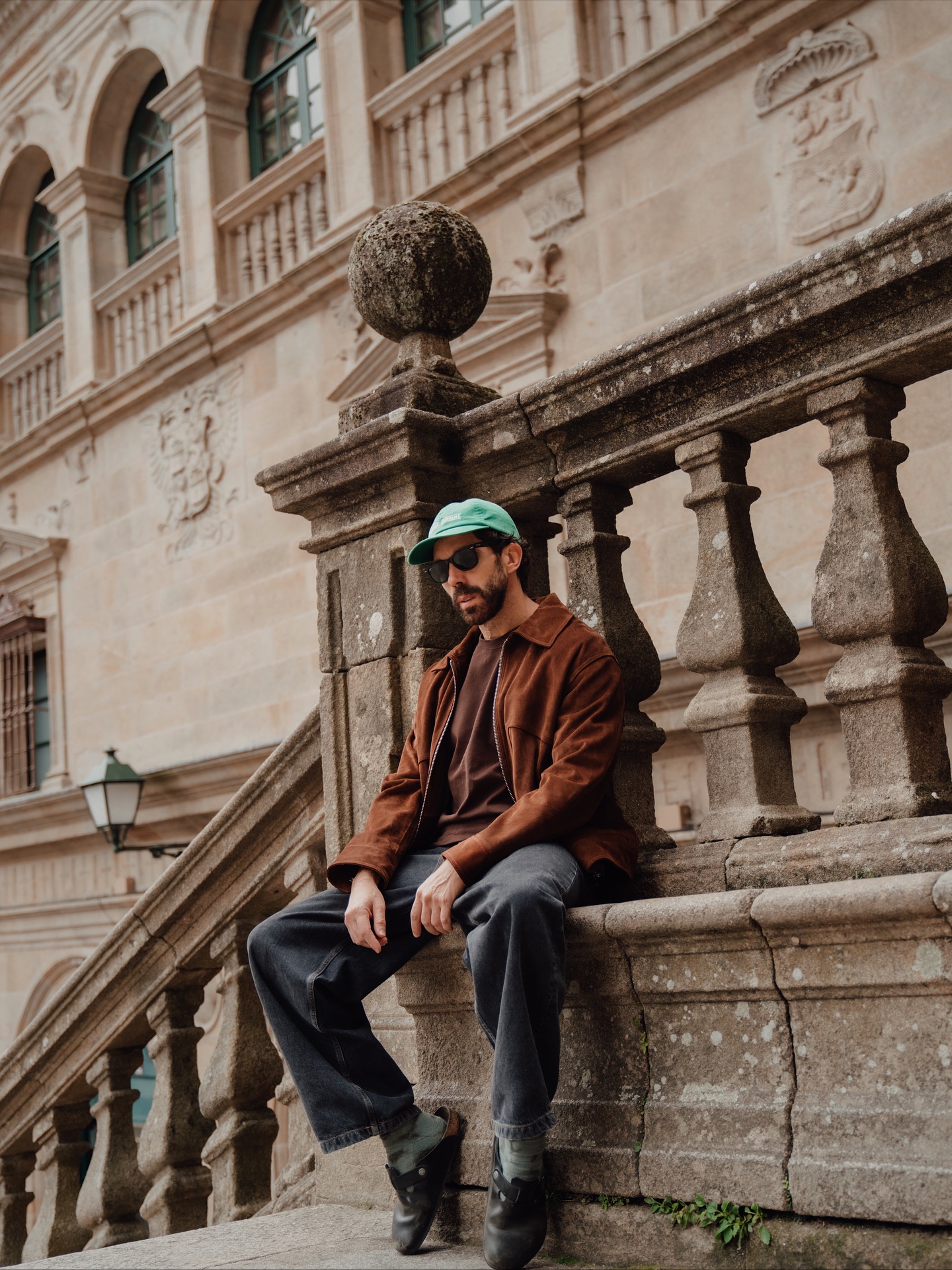
Highly regarded within Spain’s contemporary craft landscape, Javier Sánchez Medina creates handwoven objects, sculptural forms and spatial pieces using natural fibres, with esparto grass at the core of his practice. Acclaimed for his material rigour and quietly influential approach, his work sits at the intersection of design, art and tradition, grounded in process rather than gesture.
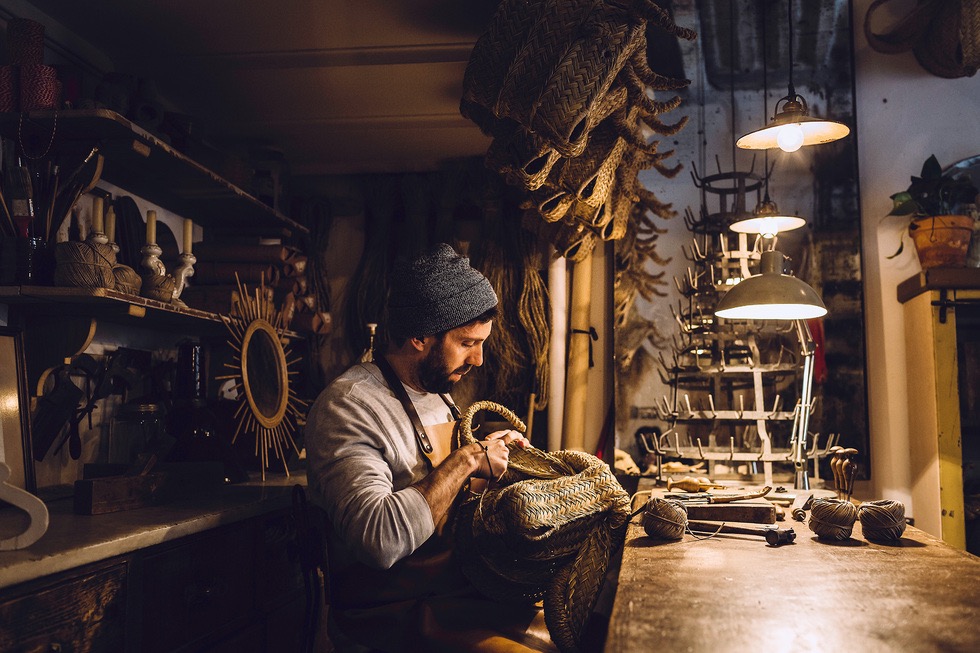
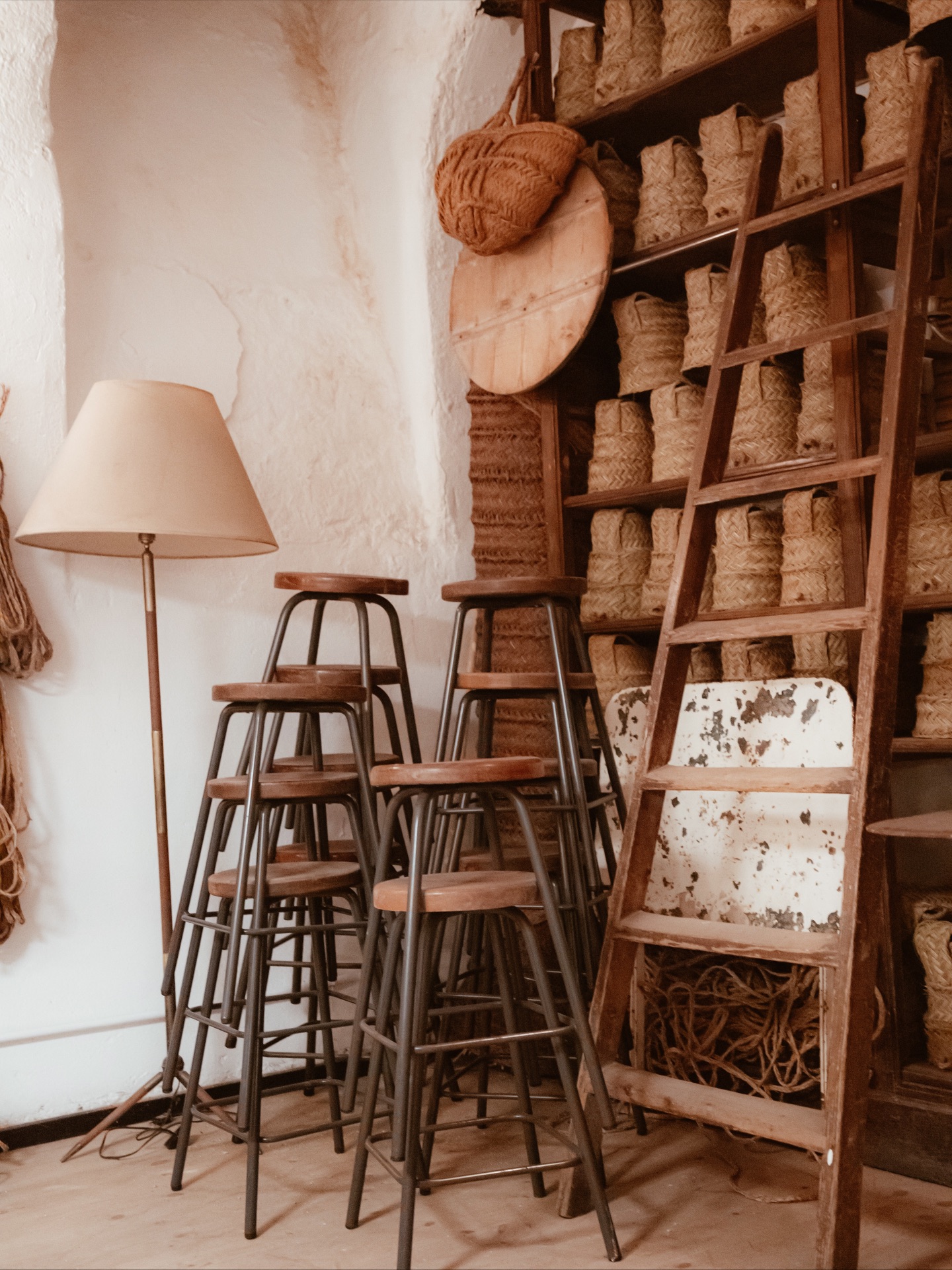
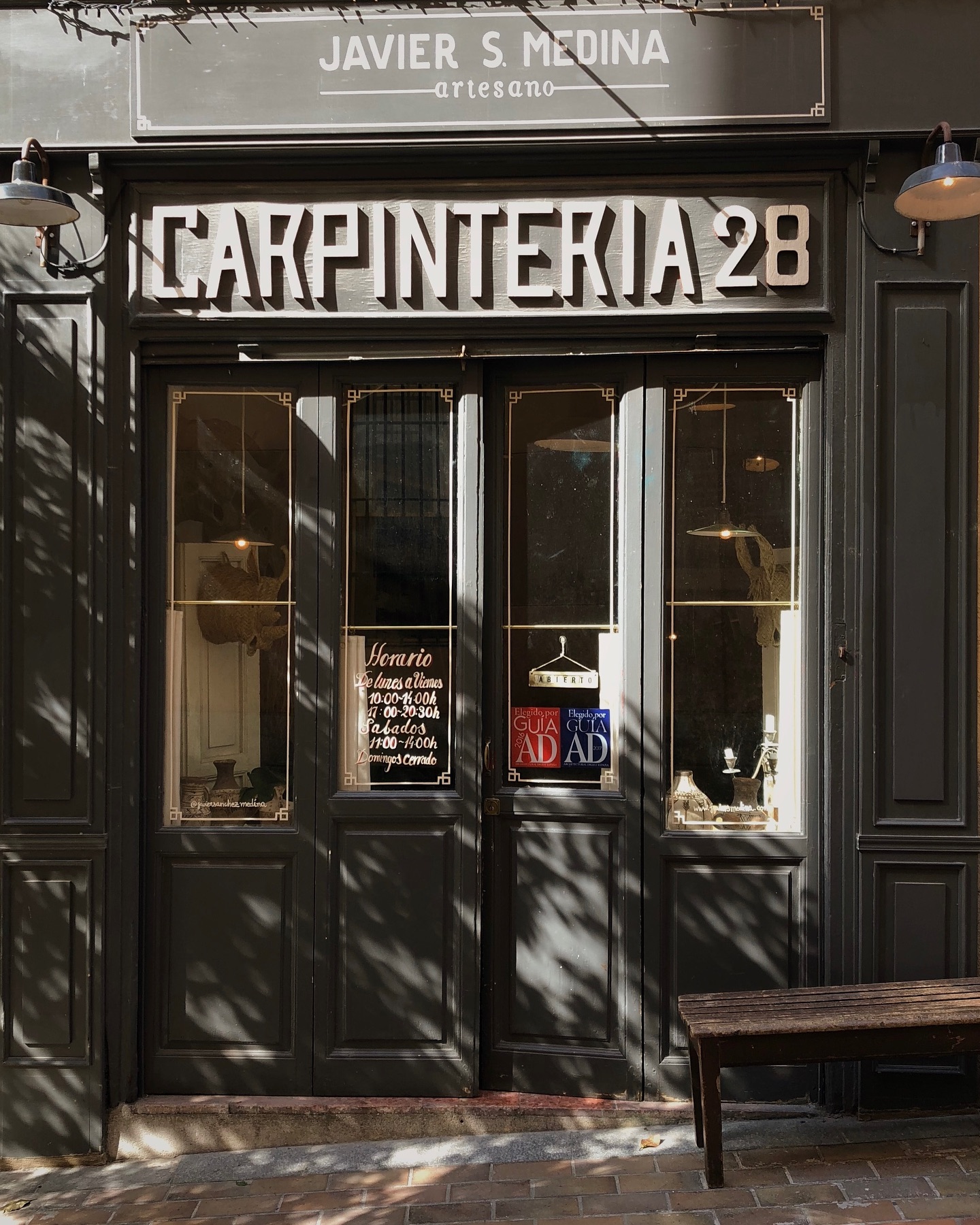
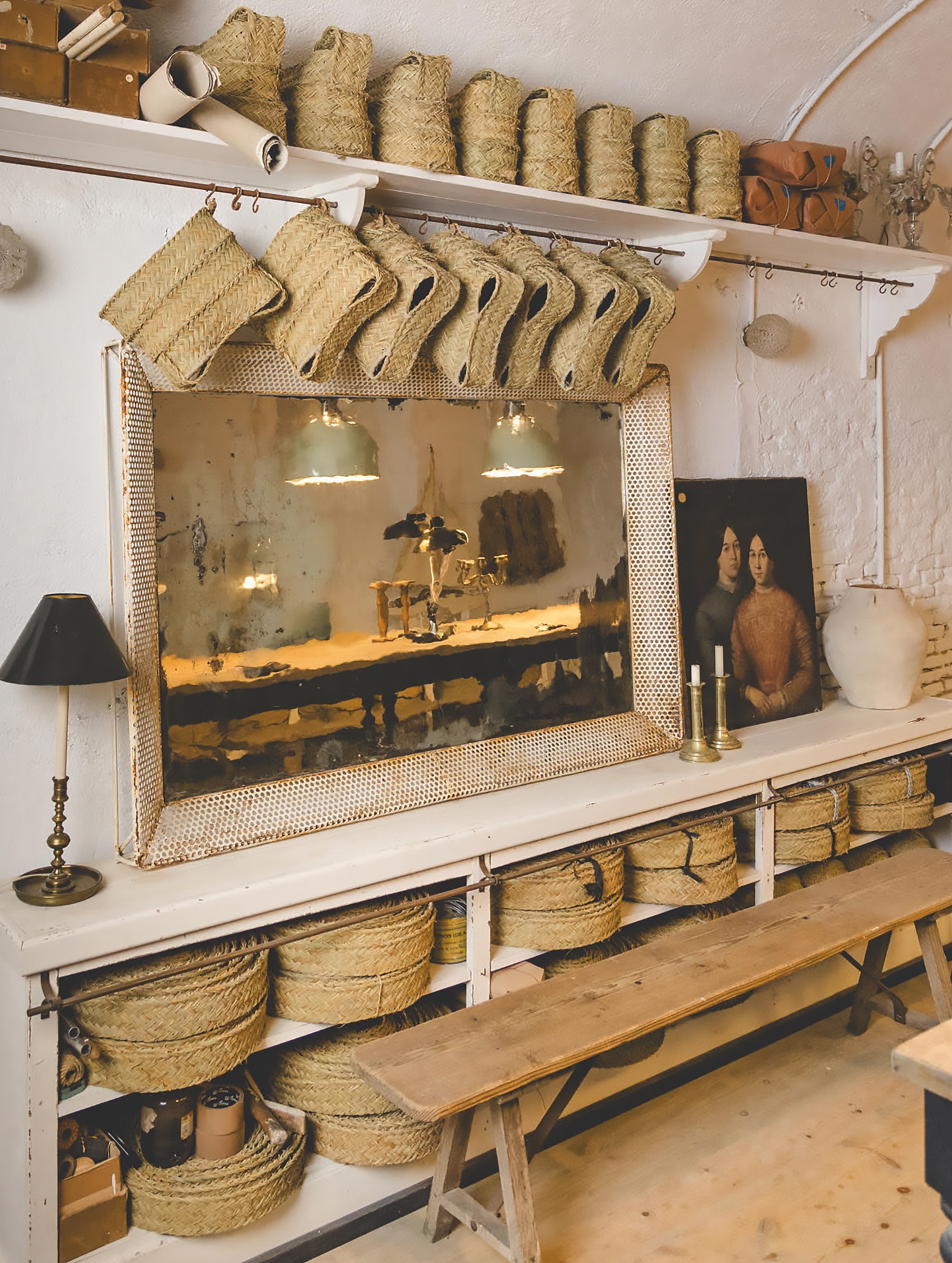
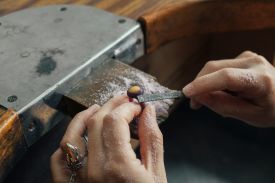
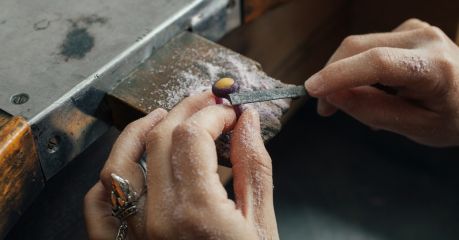
In Malasaña, where Madrid’s older network of neighbourhood workshops once shaped the city’s working rhythm, Sánchez Medina maintains a practice defined by restraint, continuity and deep material intelligence. His studio operates quietly, rooted in hand tools and techniques that resist acceleration. It is a space shaped by making rather than display, where time is measured in gestures rather than outputs.
Material leads every decision. “I work with natural fibres, and it’s the material itself that determines how it can be worked, while also imposing its own limits,” he explains. Esparto grass, central to his practice, carries its own authority. “On some occasions, I haven’t been able to take on certain commissions because the material made it impossible, setting boundaries that simply couldn’t be pushed.” The refusal to override these limits is not ideological. It is practical, learned through years of working with fibres that reward attention and punish force.
Craft, for Sánchez Medina, is inseparable from repetition and memory. “Craft always carries an important element of repetition and history,” he says. Creativity emerges through careful relocation rather than reinvention. Traditional techniques remain intact while their context shifts. “Elder artisans have taught me techniques they used for decades to make baskets, and I have applied those same techniques to build a piece for a gallery.” The reference point is always the craft itself. “The people who devoted their lives to it have been my greatest teachers. I remember my grandmother working with these materials and fibres, and I feel that, in part, everything comes from there.”
This fidelity has drawn the attention of international fashion and luxury houses with collaborative projects for Loewe, Dior, Tiffany & Co., Zara and Disney, each drawn less to surface aesthetics than to the integrity of his process. In every case, the work remains anchored in material logic, time and handcraft, with scale and context adapting around those fixed points. What they encounter is not a surface aesthetic but a working logic. “Luxury brands and fashion houses are primarily drawn to the authenticity and the natural process behind my work,” he notes. What remains fixed is clear. “For me, what’s non-negotiable is precisely that: the process and the time that process requires.” Design can adapt, scale can shift, but the way something is made, and the duration it demands, are immovable.
The Malasaña workshop plays a central role in sustaining this approach. After nearly twenty years in the neighbourhood, Sánchez Medina describes the studio as a form of refuge. “Having this small space right in the city centre, in an area that has always felt very neighbourhood-oriented, has been a bit like living in a small town.” As Madrid has intensified, the studio has become a counterpoint. “It’s almost a small oasis within the chaos, a place where I can pause, slow down, and work in a way that respects the processes and the time each piece requires.”
That same sensibility shapes his teaching and experiential work. The aim extends beyond the object. “The idea behind these experiences is that people don’t just leave with an object, but that a sense of community is created as well.” Making becomes collective, social and unhurried. “They don’t just take home an object, they take an experience, meaningful connections, and often new friendships.”
In a design culture increasingly driven by immediacy, Javier Sánchez Medina’s work holds its ground through continuity. It listens to material, honours time and proves that contemporary relevance can be built through fidelity rather than noise.
Madrid’s design culture is shaped by a new generation working close to materials and making, spanning furniture, fashion, sustainability-led studios and major annual design events in a production-led contemporary city.
read more
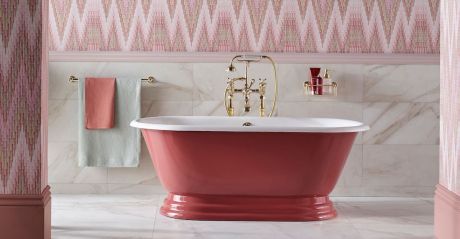
Set up in the 1980s, by Drummond Shaw, the company began as a vintage salvage company, restoring old rolltop baths to a characterful beauty, perfect for upmarket interiors and of course, indulgent deep soaks.
read more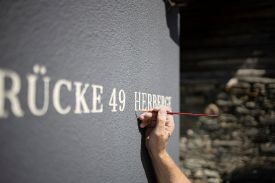
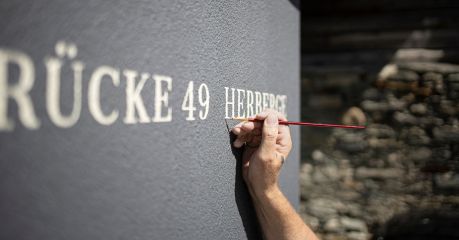
Ruth’s original manifesto to listen to what the house wanted to be has served her well. Reinvented for the curious traveller, Brücke 49 has been welcoming guests for nearly a decade.
read more
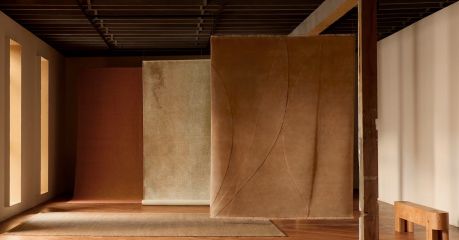
A Barcelona artist. Master weavers in India. A process the rug world has never seen before. Armadillo's Gaia collection exists somewhere between craft and fine art.
read more

Built as an ‘alqueria’ (an Arabic farmhouse) in the 12th century during Mallorca’s Arab rule, which then became a Jesuit monastery in the 18th century, the house and grounds were in ruins; the estate utterly overgrown.
read more
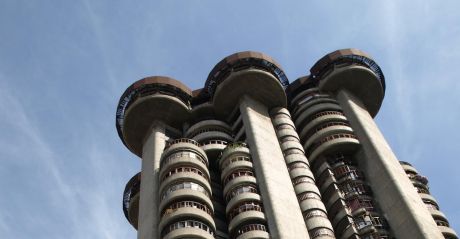
Madrid’s architecture reflects governance, density and adaptation, from modernist icons and Brutalist infrastructure to contemporary reuse, favouring endurance, urban life and continuity, rewarding close reading and repeat visits.
read more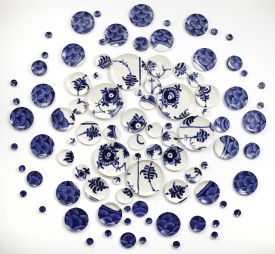
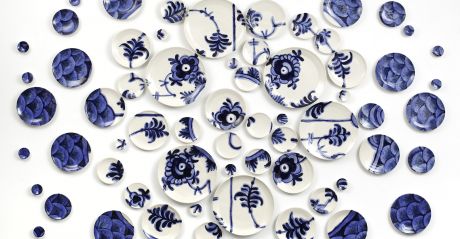
A city of effortless cool & pioneering Scandi design Copenhagen has long been at the heart of the world’s ceramics stage, from practical to the performative.
read more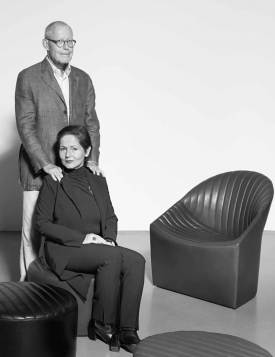
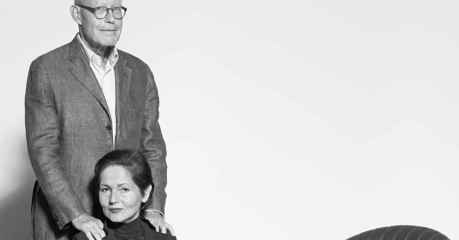
Cult furniture brand Wittmann has accumulated a distinctive mark over four generations, working with Austrian and international designers and architects, from Josef Hoffmann and Friedrich Kiesler to Matteo Thun and Edward B.Tuttle.
read more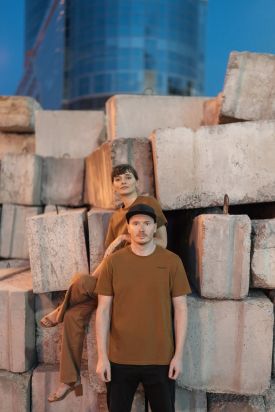

Trading in Kyiv, Ukraine since 2014, by husband-and-wife team Dan Vakhrameyev and Kateryna Vakhrameyeva, the co-founders of +kouple bring sleek lighting, innovative solutions and a Scandi-inspired design element to interiors.
read more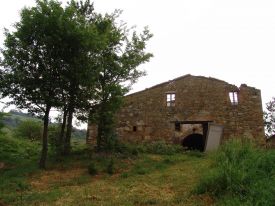
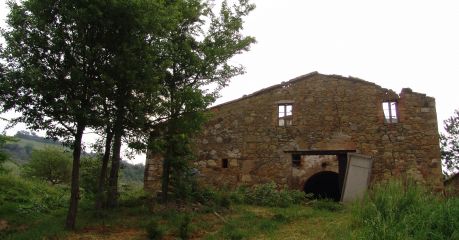
As the property neared finishing, Fabio took the decision to keep the garden wild and naturally indigenous – where the boundaries between garden and rural countryside were blurred.
read more

The oldest ceramic company in the Netherlands, Royal Makkum Tichelaar’s roots go back to 1572 - today they work alongside architects, designers and artists to continue their legacy.
read more

De La Espada leads a new era of collectible design and cultural craft. Explore their collaborations with Sam Baron, Anthony Guerrée and more, rooted in Portuguese savoir faire.
read more
Get the insider news and lowdown on what we've been up to, where we've been, and who we've met along the way. Be the first to discover new places and get the scoop on our favourites.