JOIN the AFICIONADOS
Get the insider news and lowdown on what we've been up to, where we've been, and who we've met along the way. Be the first to discover new places and get the scoop on our favourites.

Né, the new auberge in Shibata, Niigata, Japan, has been named one of five global Finalists in the 14th Annual Architizer A+Awards 2026 in the Architecture +Environment category, competing for the Popular Choice prize. The architecture it celebrates was, quite literally, grown from the ground up.
There is a small linguistic trick at the heart of Né. Read it in Japanese, and ne means root, the part of a thing from which the rest grows, the source that holds beneath the surface. Read it in French, and né means born, the past participle of naître, that quietly miraculous verb. One language reaches downward, the other emerges. Both, as it turns out, were the brief.
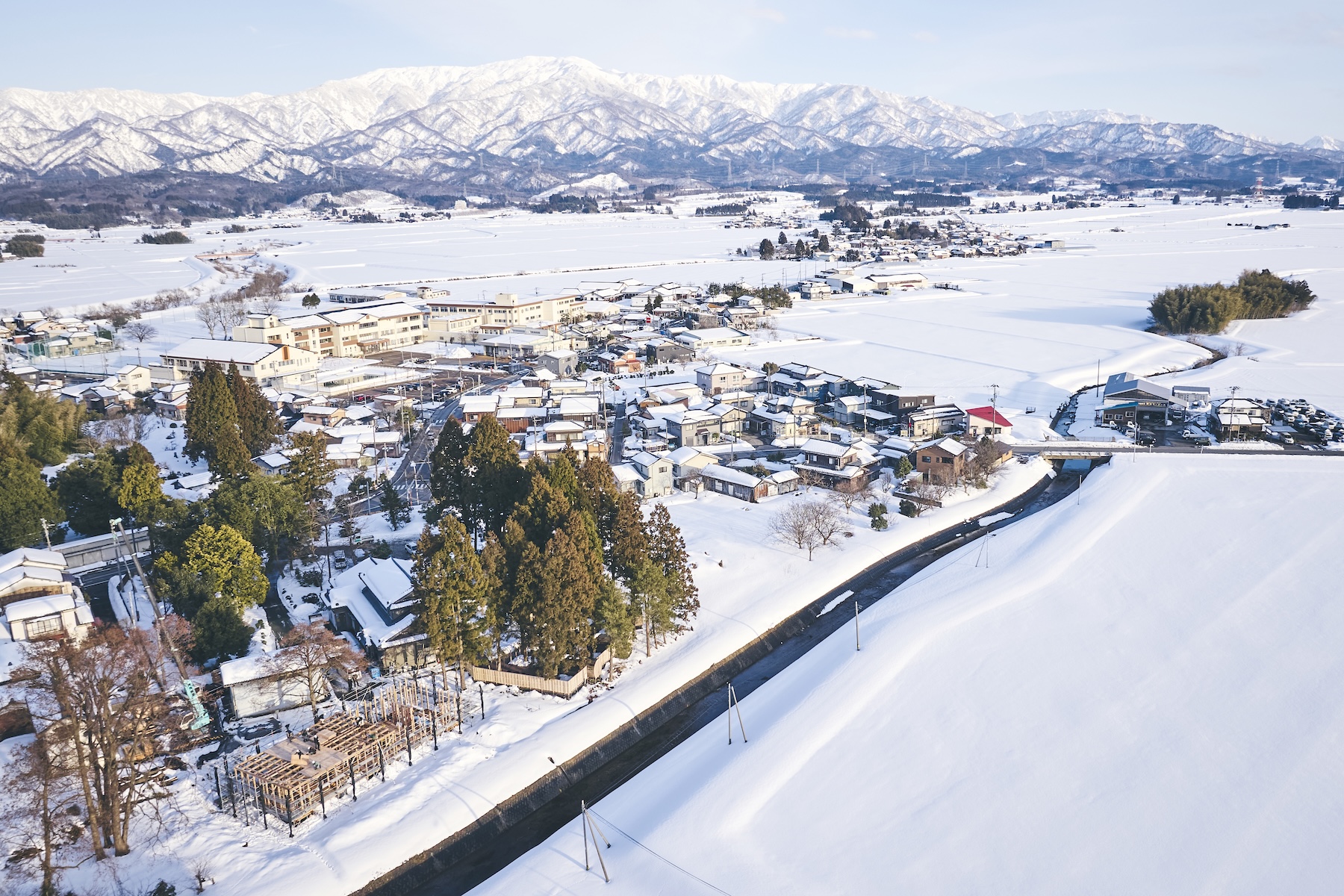
When the architect Kenta Fukunishi first walked the site, only the name had been agreed. Even so, it suggested a direction: an architecture that took root in the land and gave rise to new value rather than installing itself upon old. The site itself helped. Standing on a ridge above the rice fields of Shibata, looking out across the snow country of Niigata in winter, Fukunishi found himself asking what kind of architecture could only be made here. The answer, he decided, would have to come from the climate, the materials, and the craft of the place. If the table inside was to serve food drawn from the surrounding land, perhaps the building around it could too. The design began with that question, and almost everything that followed flowed from it.

The land beneath Né is not blank. It belongs to the historical grounds of the Honma family, whose connection to this stretch of Niigata reaches back more than three hundred years. Water lineages run through the site: small irrigation channels that have shaped the rice fields here for longer than most of the buildings in our cities have stood. To build on such a place demands a particular kind of humility and a willingness to be answerable to people who will not be in the room when the cement mixer turns up. Fukunishi's first decision was that there would not be a cement mixer. There would not, in fact, be any concrete at all.
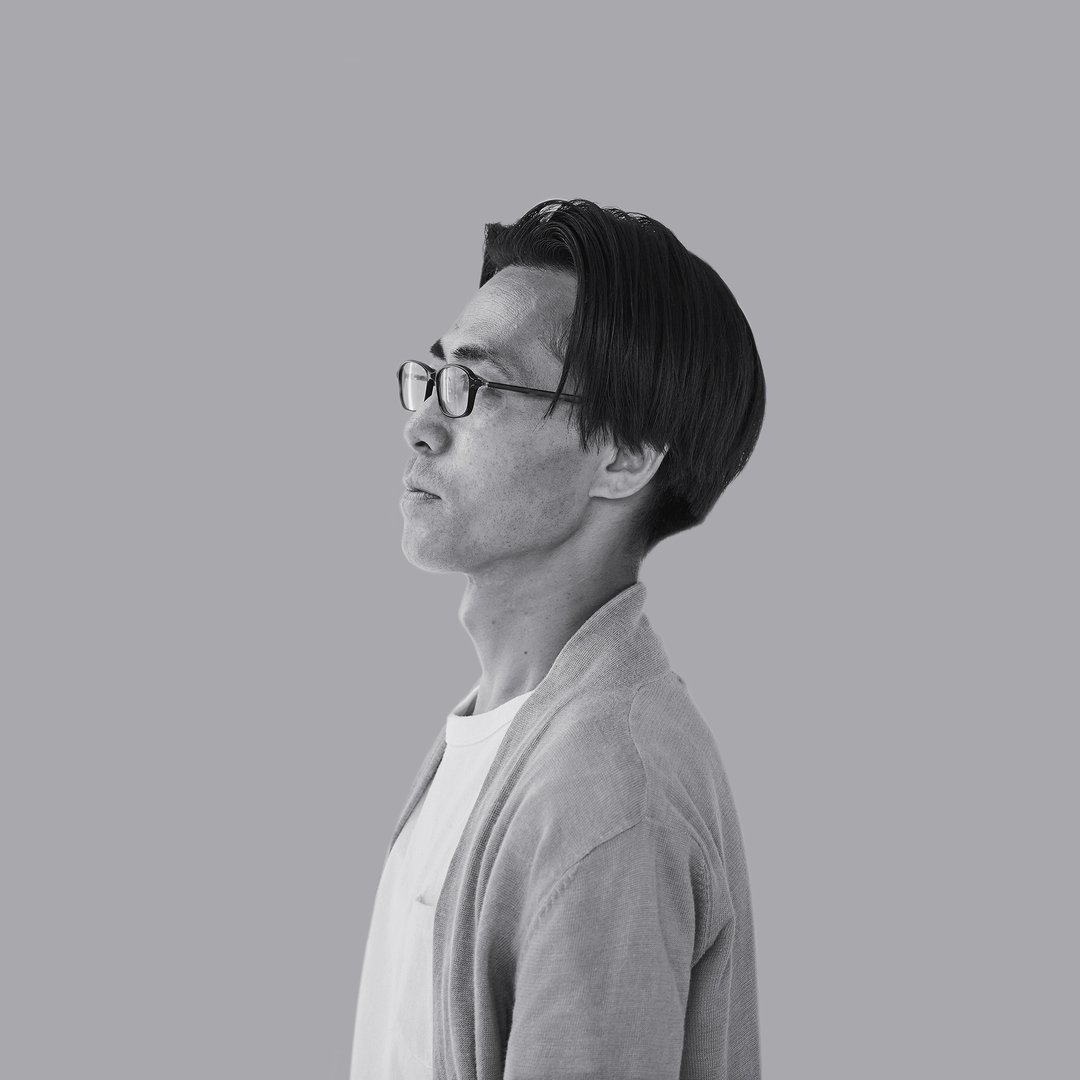
A word about Fukunishi himself, since the building is, in many respects, an extended argument that began in his head. He holds a Master of Architecture from the Weitzman School at the University of Pennsylvania, and has practised on both sides of the Pacific, but the centre of gravity of his work has remained obstinately local. His preoccupation is with architecture rooted in the soil, timber, and traditional craftsmanship of the region in which it stands. He is, broadly speaking, allergic to the idea that contemporary minimalism must necessarily arrive in trucks. Né is, perhaps, the cleanest articulation yet of that conviction.
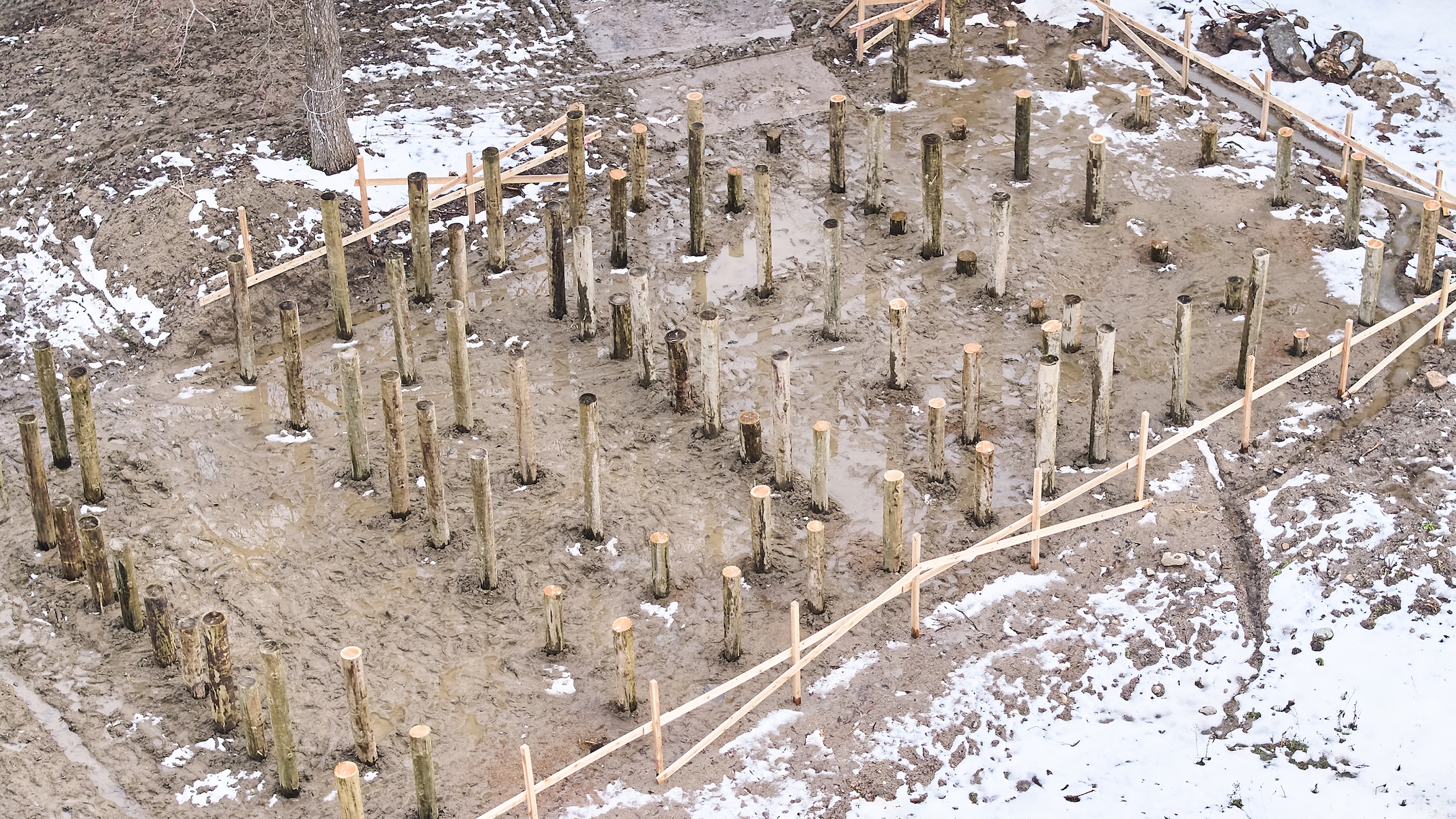
Building foundations are dull, until they aren't. Conventional practice would have called for steel piles driven down to the bearing stratum, with concrete poured over the top to lock everything into place. It is the obvious solution. It also disrupts the soil, displaces it, sterilises it, and ensures that whatever rises above will one day need to be jackhammered out of its own grave. Fukunishi baulked. To impose that on land tended by the Honma family for three centuries, with the long-term hope that the building might one day return to the earth without trauma, struck him as a small architectural sin.
The alternative was to drive numerous wooden piles into the ground in a grouped configuration, compacting the soil so the building floats on the friction between earth and timber rather than the weight of poured stone. Pile-driving precision was raised so that the wood and the sill beams above could be structurally integrated without an intermediary. No excavation. No soil disposal. No steel. The result is, in essence, a building that rests in the ground rather than on it: a structural argument made entirely in wood, and a quiet refusal of one of construction's least examined habits. The considerable cost savings are an incidental grace.
Standing before the rice fields, Fukunishi's eye was drawn to the aze, the small earthen ridges that divide each paddy, and the une, the furrows that run between them. The vocabulary of rural Niigata is, among other things, the vocabulary of compacted earth, shaped by hand into low walls that hold water and divide land. He wondered whether the building might be made the same way.
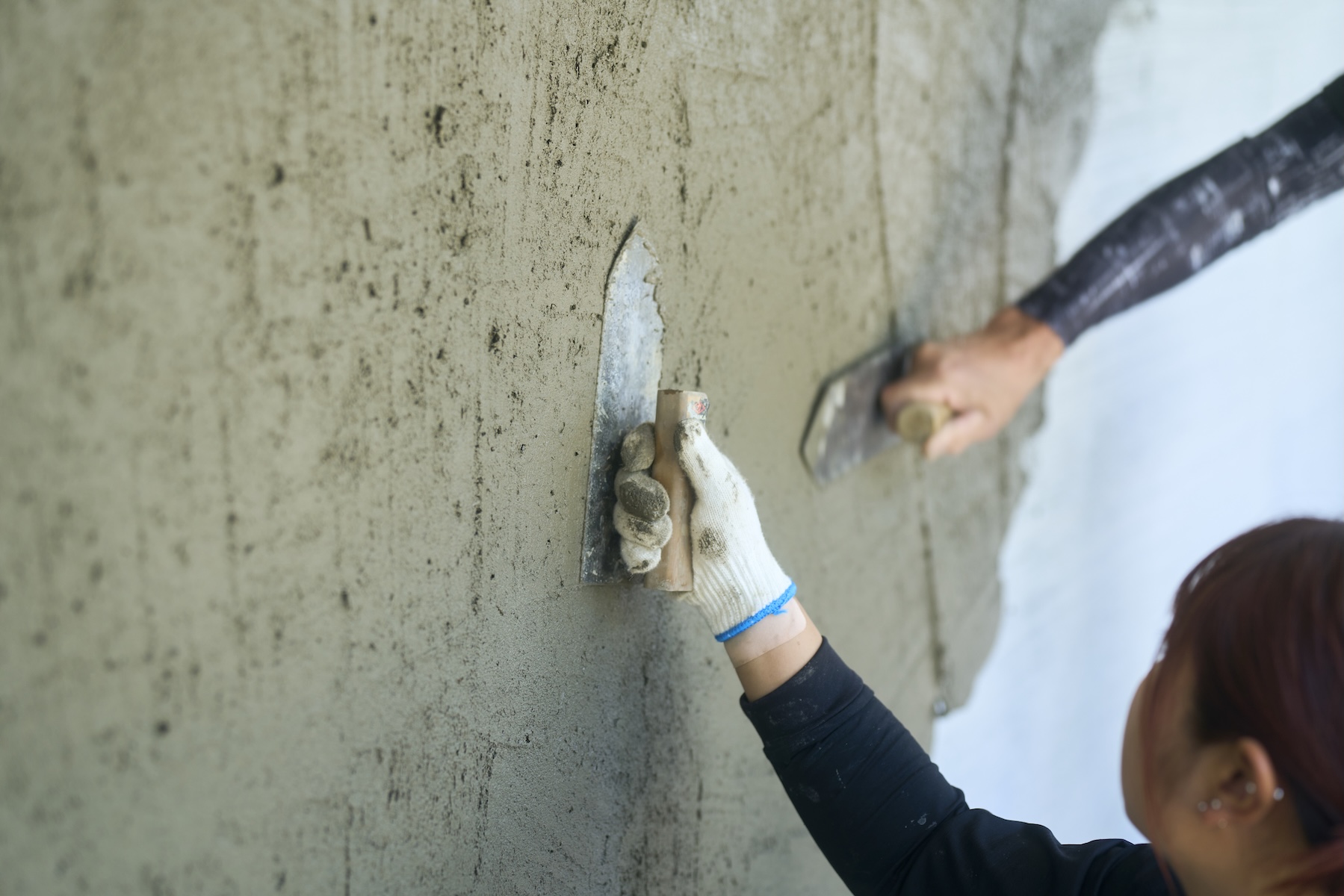
The soil for Né's walls was therefore collected from the site itself. Not transported in, not amended, not corrected. It was then aged and left to ferment for over six months, much as a miso might be, or a wine. (Fermentation, the persistent verb of this region, will recur a few paragraphs hence.) When the soil was ready, it was applied by hand as earthen plaster, both inside and out. The colour of the building is therefore the colour of the ground it stands on. Walk the site, and the architecture and the landscape rhyme.
The structural logic follows the same principle. Wooden laths of Shibata cedar form the base layer of the walls, with slender 120 by 45-millimetre timbers laid as load-bearing members and the panel material configured to restrain buckling. The walls do their structural work without excess: less material, more thinking. Inside, the rooms read as spaces hollowed from earthen masses, shaped in continuity from exterior to interior. There is no false threshold between in and out, only a softening of climate.
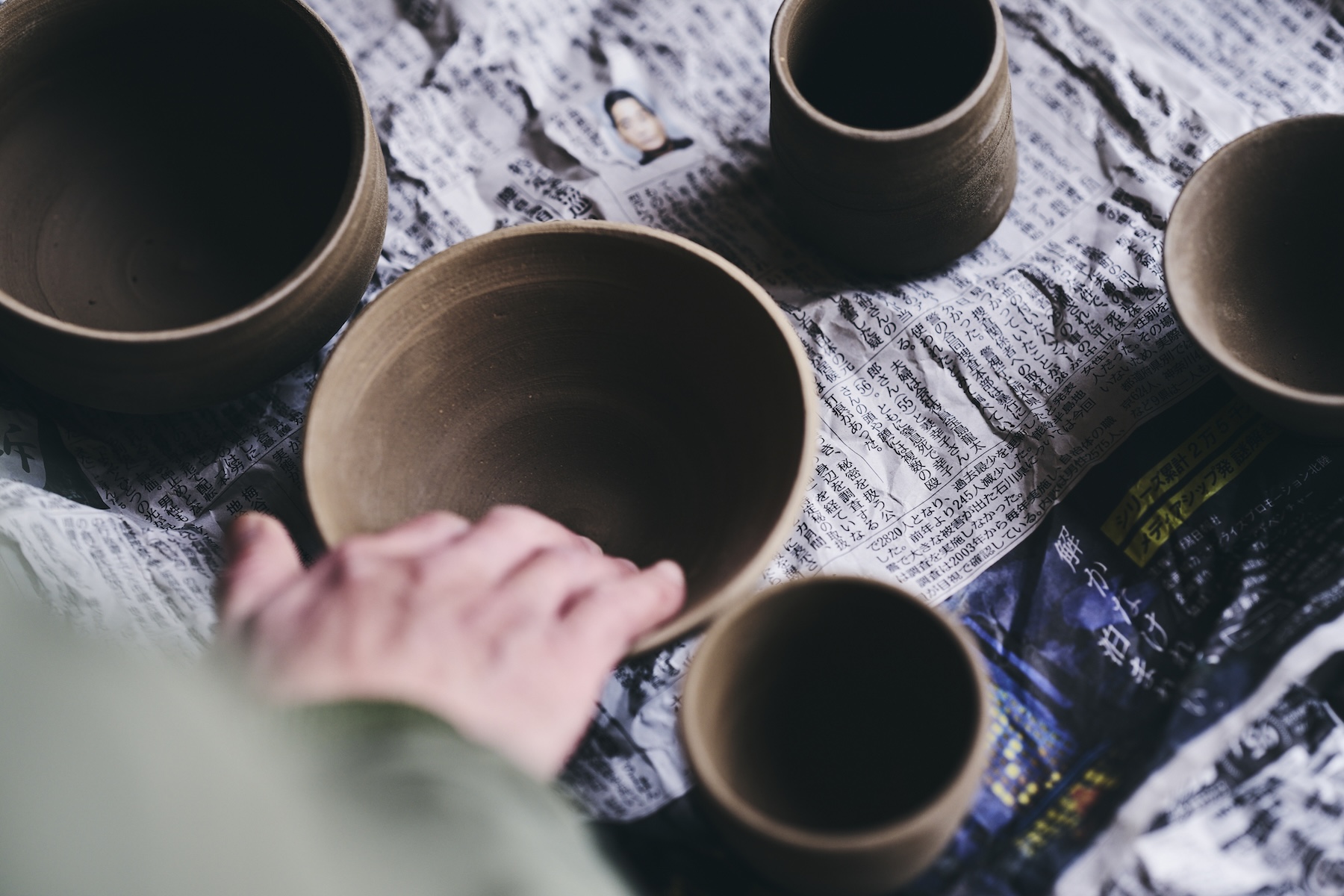
Material selection began in conversation. Early in the process, Fukunishi sat down with the craftsmen of Shibata and Niigata to learn what the region could supply, what handled well, and what required a particular reverence. The list that emerged is a kind of cultural map.
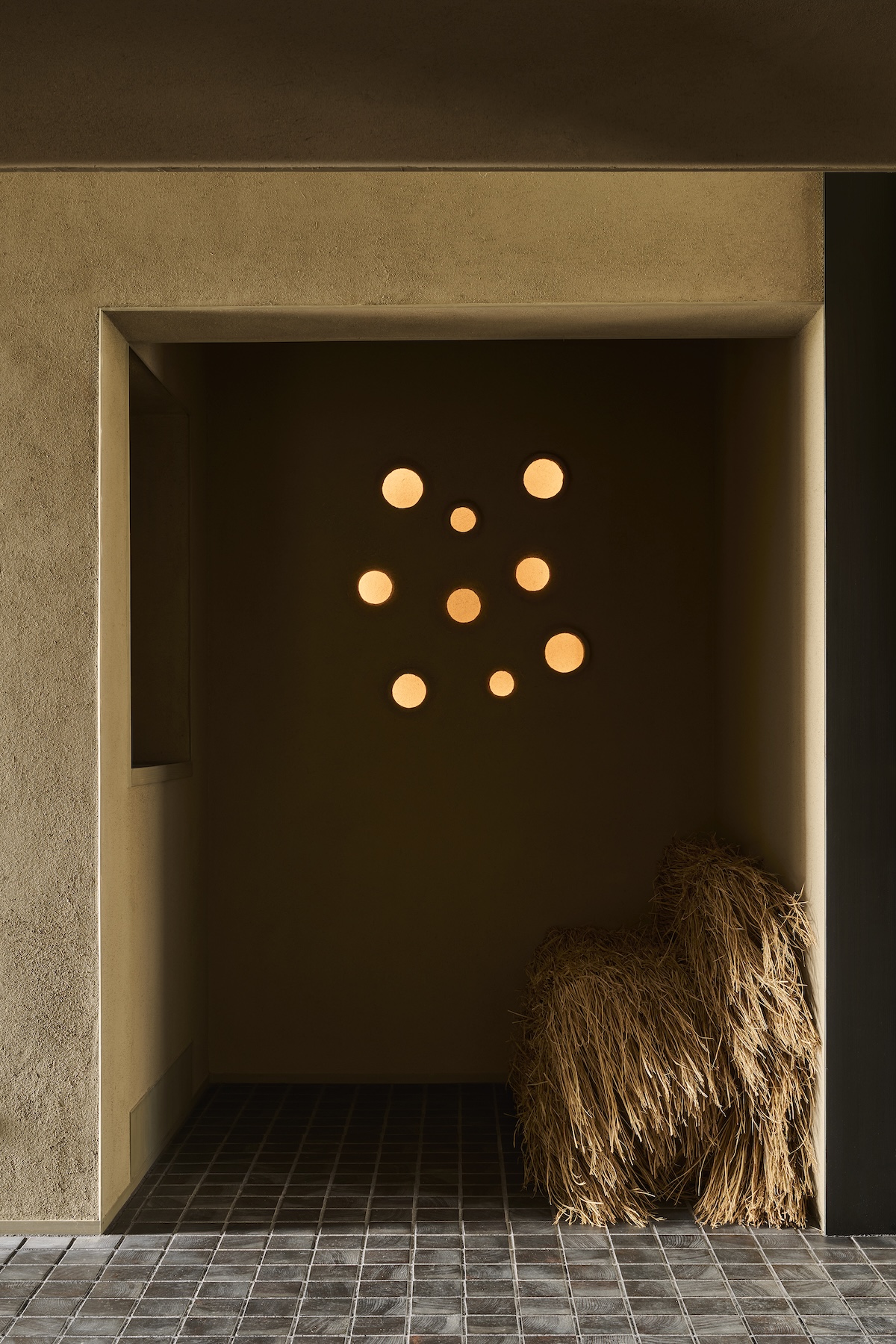
The flooring is made from Shibata cedar, cut into ninety millimetre squares and laid in 2,220 pieces, the wood-brick pattern giving the room a quiet rhythm beneath the foot. The joinery is smoked Shibata cedar, iron-treated, darkening the grain to a tone close to the soil walls themselves. The roof is laid in kawara tiles fired from Niigata clay by Marusan Yasuda, a tile maker whose work has long been engineered for snow country: heavy enough to resist the wind, durable enough to hold under the weight of winter. The furniture is made from snow beech harvested in the same cold mountains, dense and slow-grown, with a small body of pieces woven from natural rice straw and igusa, the rush traditionally used for tatami. Lighting is embedded directly into the plaster, so the walls themselves seem to glow.
There is one cheerful contradiction in all of this. Parts of the plaster wall substrates were created using 3D-printed elements, marrying a craft technique that predates writing with a manufacturing method that still smells faintly of the future. Né is not a museum. It is, instead, an argument that tradition and innovation might collaborate without either losing its dignity. The third-generation builders Kumagai Construction held the line throughout: classical Japanese carpentry of the highest order, paired with the energy and insulation performance that any contemporary winter requires.
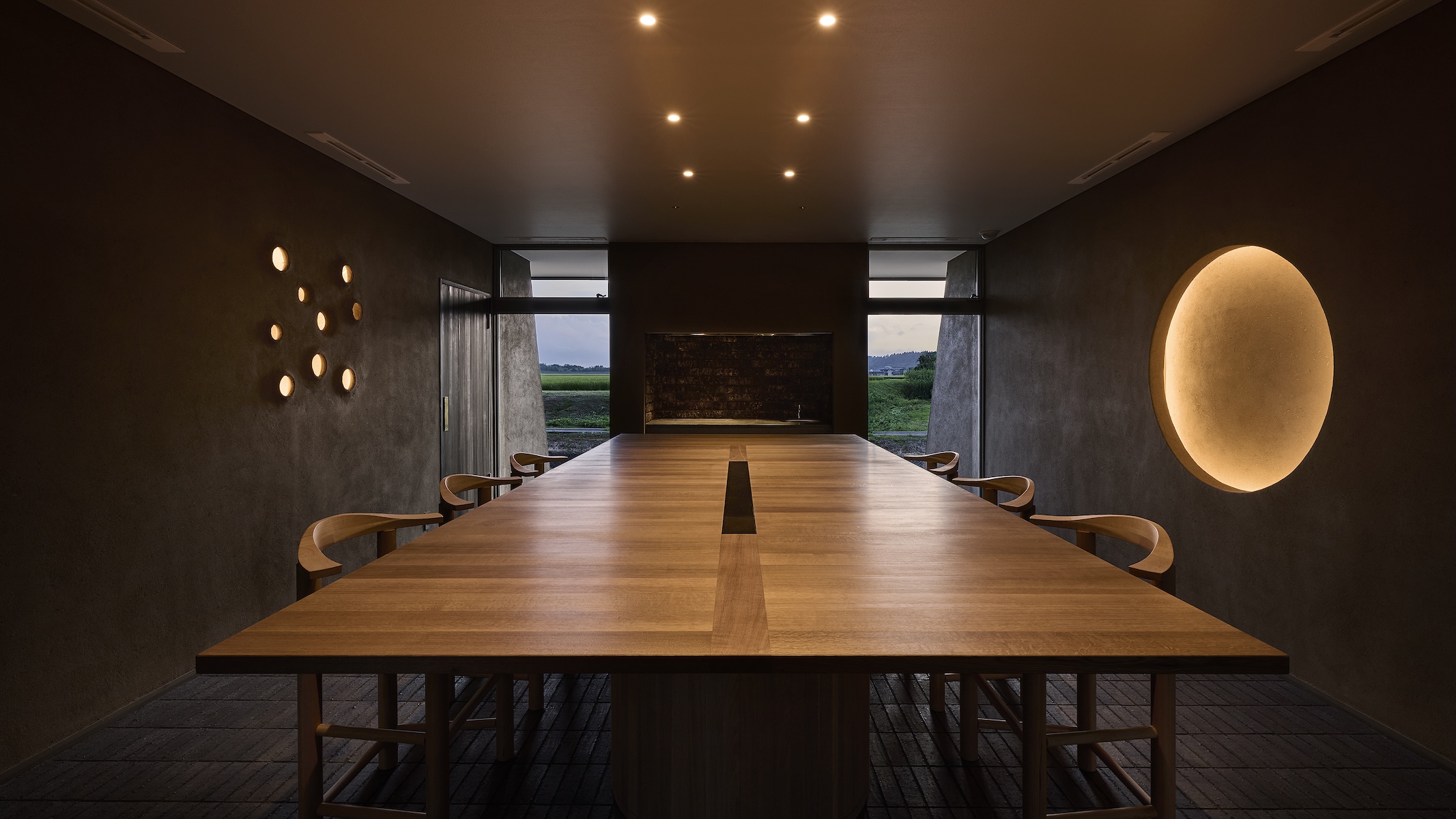
If the architecture answers the question of what can be built from a place, the cuisine answers what can be eaten from it, and the relationship is intentional. Né's culinary direction sits in the hands of Makoto Fuse, whose stated intention is to "create the conditions for the land to endure." The course is structured around fermentation, drying, and aging: Niigata's vocabulary of patience. Mountain vegetables, river fish, seasonal game, and coastal elements arrive in a sequence that compresses the year into a single evening, paired with the sake of the surrounding breweries. Producers are not credited at the end of the meal in the manner of a polite footnote. They are the meal.
To stay at Né is, accordingly, not to be served by the land but to be briefly drawn into its circulation. One leaves with a relationship rather than a receipt.
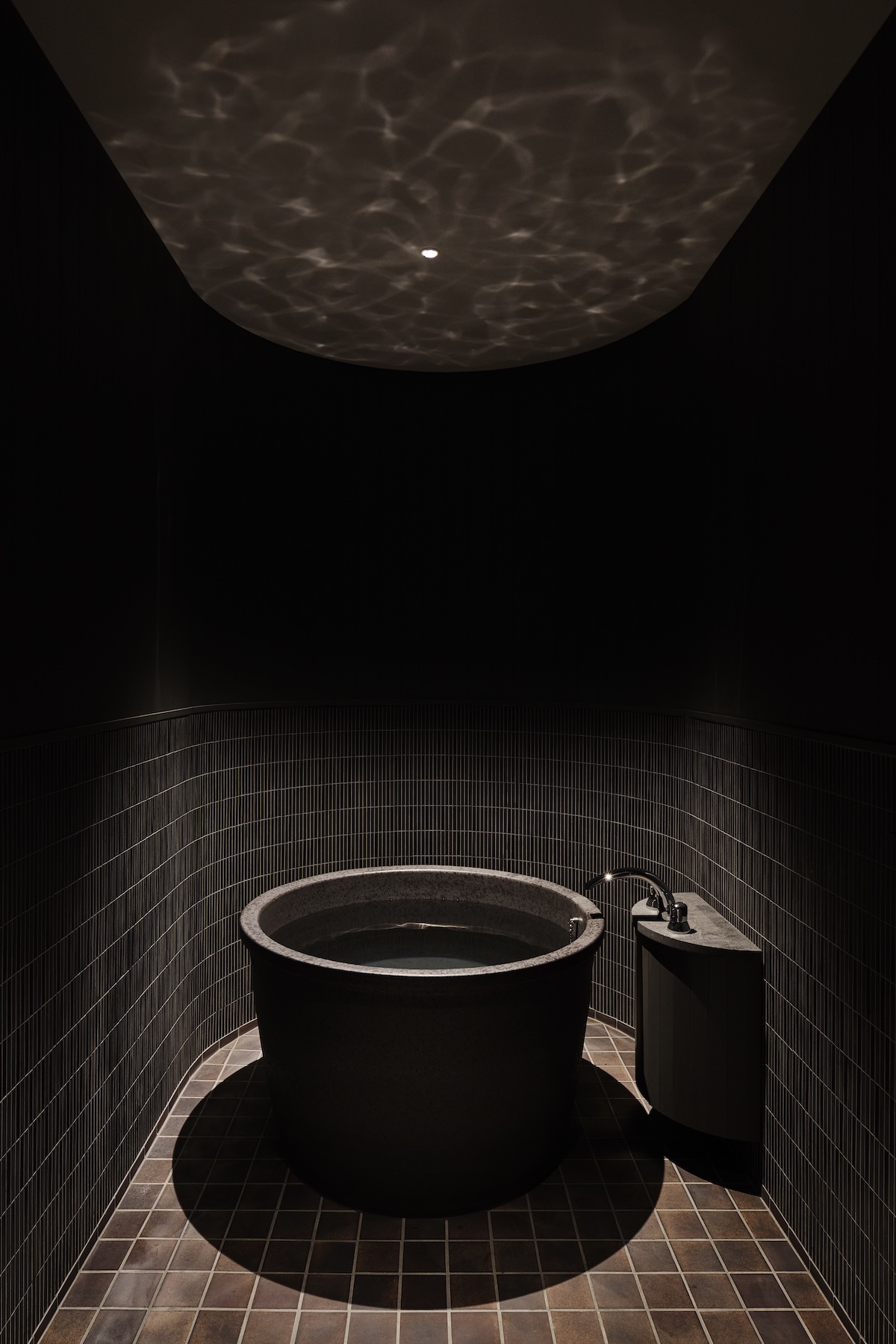
The estate also contains a sui, a barrel sauna set within the trees, available to guests by request. The pairing is canonical for snow country: heat from the wood-fired stove, immersion in natural spring water, then the long settling rest that follows. The body, properly recalibrated, is handed back to the table.
A second day extends the experience further. After breakfast, guests may visit the day-use baths at Kansuirō Onsen, take a seasonal lunch, and let the previous evening's intensity decompress through hot water and slow time. Transport is arranged. The closing is unhurried.
The Architizer A+Awards are not, as a rule, given to small buildings in rural prefectures, and that Né should find itself one of five global Finalists in the Architecture +Environment category is therefore worth dwelling on. The nomination is not for spectacle. It is for an argument. The argument is that an auberge in rural Japan can be designed and built without concrete, using earth from its own ground, timber from its own forests, clay from its own region, and the intelligence of craftsmen who live within walking distance, and that the result will be of a standard worth the world's attention.
Fukunishi's design, in this sense, is doing more than its host expects of it. It is offering a usable answer to the questions that the next decade of architecture is going to find unavoidable. What might it mean to stop importing materials? To refuse the foundational assumption that concrete is the only serious base for a serious building? To trust craft enough to let it lead, and innovation enough to let it follow?
For now, on a quiet ridge above the rice fields of Shibata, the soil that was once underfoot has become wall, and the wall has become room, and the room has become table. The building has done exactly what its name proposed. It has put down a root, and it has been born.


Seashells, old Christmas trees, and bio-textiles – Bonnie Hvillum pioneers biodegradable design, collaborating from Big Beauty Store Hackney to ÅBEN Brewery, Noma, Calvin Klein, Moskal, and Rita Trindade of Through Objects.
read more
Farms, hotels, residencies and offices - meet the charismatic Founder of AEDES - an Amsterdam-based property development company as we talk about his mission to create a legacy for the future - rewilding, restoring, preserving heritage and pushing the boundaries of research and science.
read more
Ruth’s original manifesto to listen to what the house wanted to be has served her well. Reinvented for the curious traveller, Brücke 49 has been welcoming guests for nearly a decade.
read more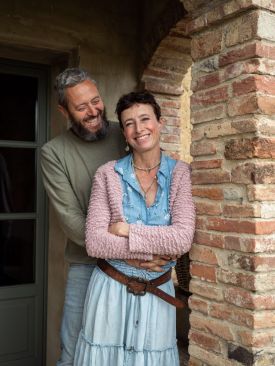

As the property neared finishing, Fabio took the decision to keep the garden wild and naturally indigenous – where the boundaries between garden and rural countryside were blurred.
read more

Entrepreneur turned sustainability crusader Sian Sutherland thinks we can and should be tackling the plastic crisis head on - PlasticFree’s goal of eradicating one trillion pieces of plastic waste from the global economy by 2025.
read more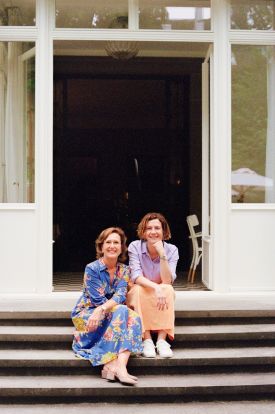

Design rebels, hospitality mavericks, and fearless creators—Rebel Femmes is a roll call of women shaping travel, style, and architecture with attitude. Iconic hotels, bold visions, and cultural game-changers.
read more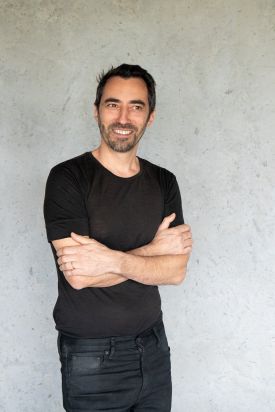

From a featherlight aluminium chair to a forest retreat carved from calm, Harry Thaler is the South Tyrolean designer crafting quiet revolutions in sustainable design, interiors and Alpine architecture.
read more
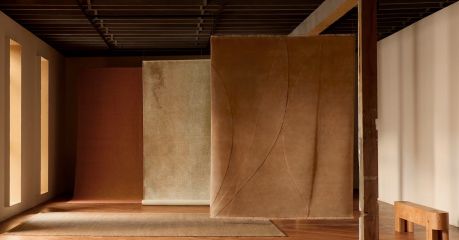
A Barcelona artist. Master weavers in India. A process the rug world has never seen before. Armadillo's Gaia collection exists somewhere between craft and fine art.
read more

Zaha Hadid Architect's coastal Salerno Maritime Terminal in Cilento, Italy carries her hallmark curves inspired by oysters and the waves, a coastal landmark.
read more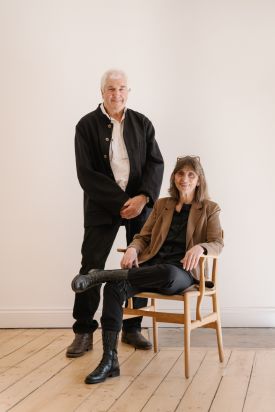

Behind some of Scotland's landmark conservation and restoration projects including the award-winning Kyle House, Hotel Lundies and Killiehuntly Farmhouse in the Highlands.
read more

Norwegian-based architectural firm, Jensen & Skodvin Architects are well known for their striking, often extraordinary designs, some of which are found in wild and remote areas; others camouflaged in urban hubs, with their engaging use of tectonic architecture.
read more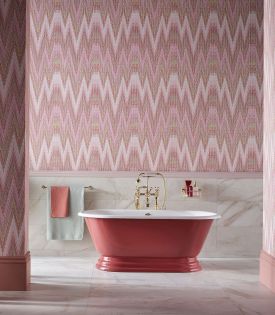
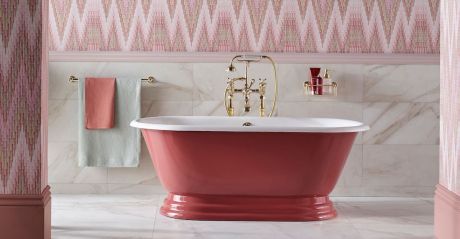
Set up in the 1980s, by Drummond Shaw, the company began as a vintage salvage company, restoring old rolltop baths to a characterful beauty, perfect for upmarket interiors and of course, indulgent deep soaks.
read more
Get the insider news and lowdown on what we've been up to, where we've been, and who we've met along the way. Be the first to discover new places and get the scoop on our favourites.