JOIN the AFICIONADOS
Get the insider news and lowdown on what we've been up to, where we've been, and who we've met along the way. Be the first to discover new places and get the scoop on our favourites.

A new gondola system above Ponte di Legno is the latest work from a studio that has made the Alpine landscape its primary material.
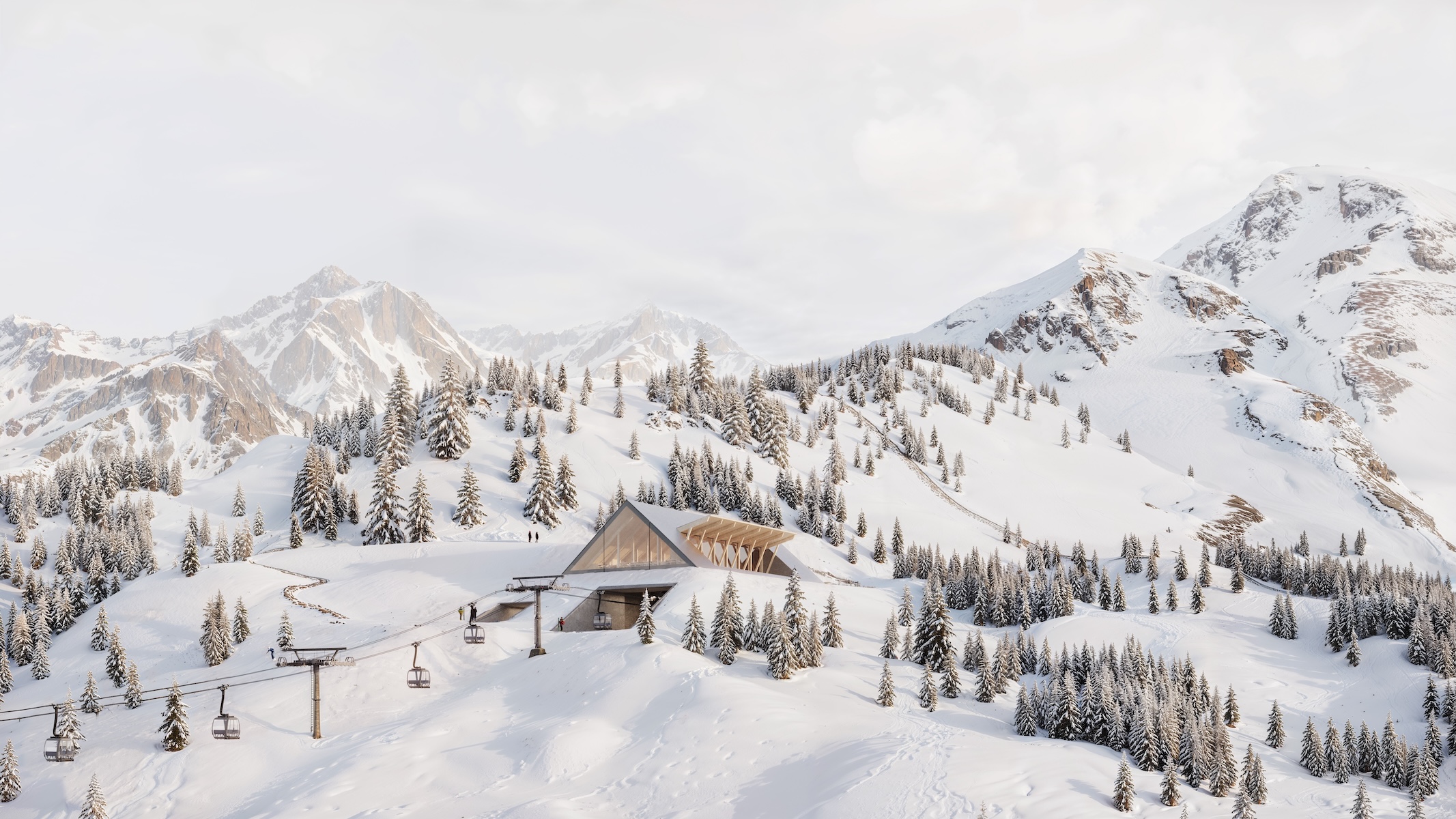
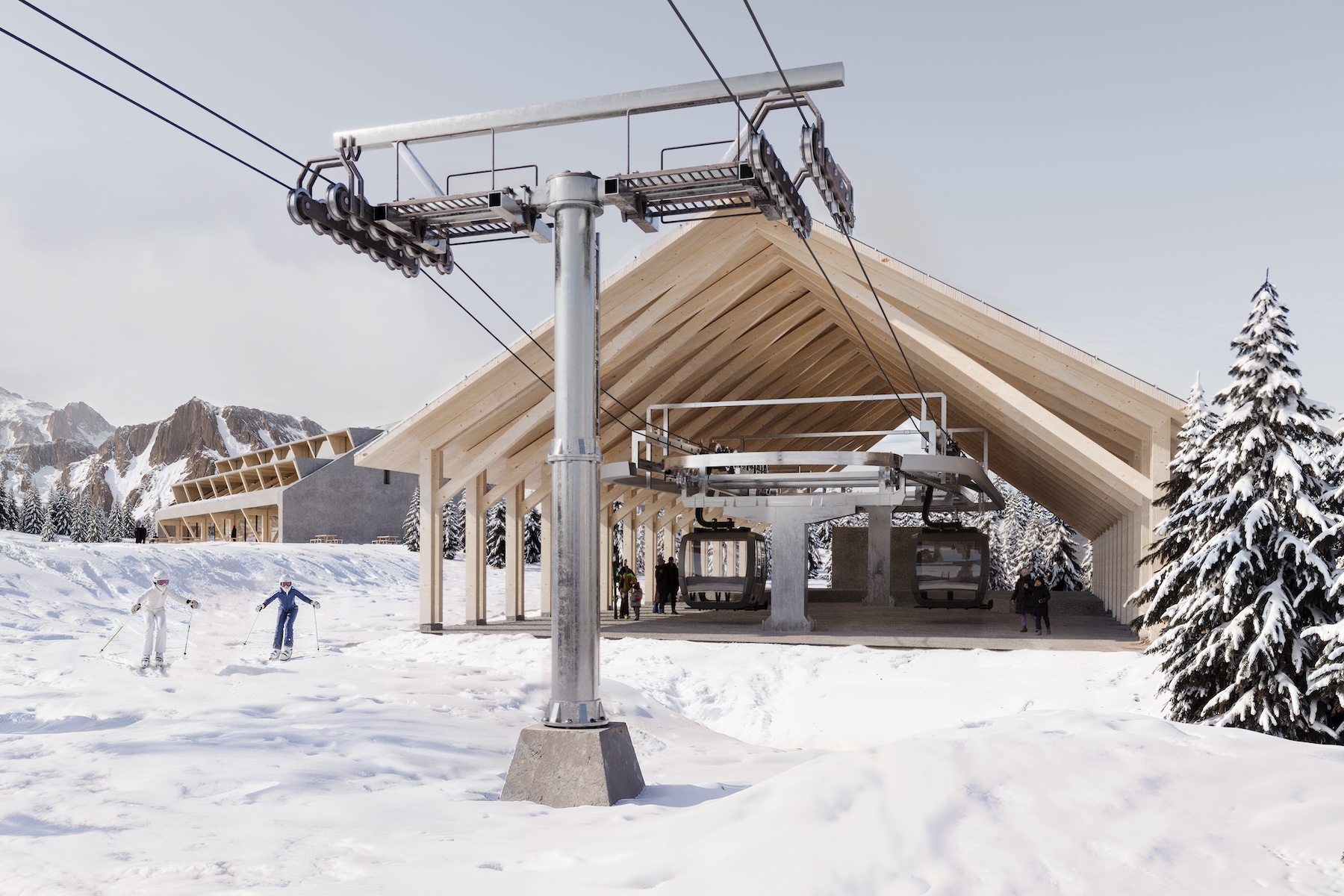
Set within the alpine terrain of northern Lombardy, Peter Pichler Architecture has designed a new series of mountain stations and a summit hut along the Valbione to Corno d'Aola to Angelo axis, reaching up to 2,200 metres above sea level. The project replaces two existing ski lifts with a single continuous gondola system, establishing a clear vertical connection from valley floor to summit. But to describe it in infrastructure terms alone is to miss the point. What the studio has designed is a narrative: a visual and spatial sequence of architectural moments embedded within the alpine landscape, each station a considered pause rather than a waypoint, calibrated to the specific character of its surroundings.
The Valbione gondola journey unfolds as a series of architectural pauses rather than a straight ascent. Was there a moment along the route where the landscape itself began to influence the design decisions most strongly?
The landscape began to shape the project's outline most vividly at the points where major shifts in the scenery occurred. Specific moments in the ascent, such as changes in altitude and shifts in tree density, turning into a broad alpine view that opens up the eyesight towards the distant peaks, naturally invite visitors to take a moment and comprehend the scenery unfolding before their eyes. The design team was inspired by these instances to slow the journey and allow each station to respond to its surroundings.
Timber defines the stations and the summit hut both structurally and atmospherically. How did considerations around sustainability, sourcing and longevity shape the way it was used at this altitude?
The use of timber was primarily advised due to its structural and atmospheric qualities, but its longevity and sustainability proved efficient in a high-altitude context as well, where minimising weight for transporting material plays a major role in the building process. Timber also allows the architecture to age naturally; and considering the difficulty and cost of moving materials to this altitude, maintaining a strong and lasting relationship with the environment was of utmost importance.
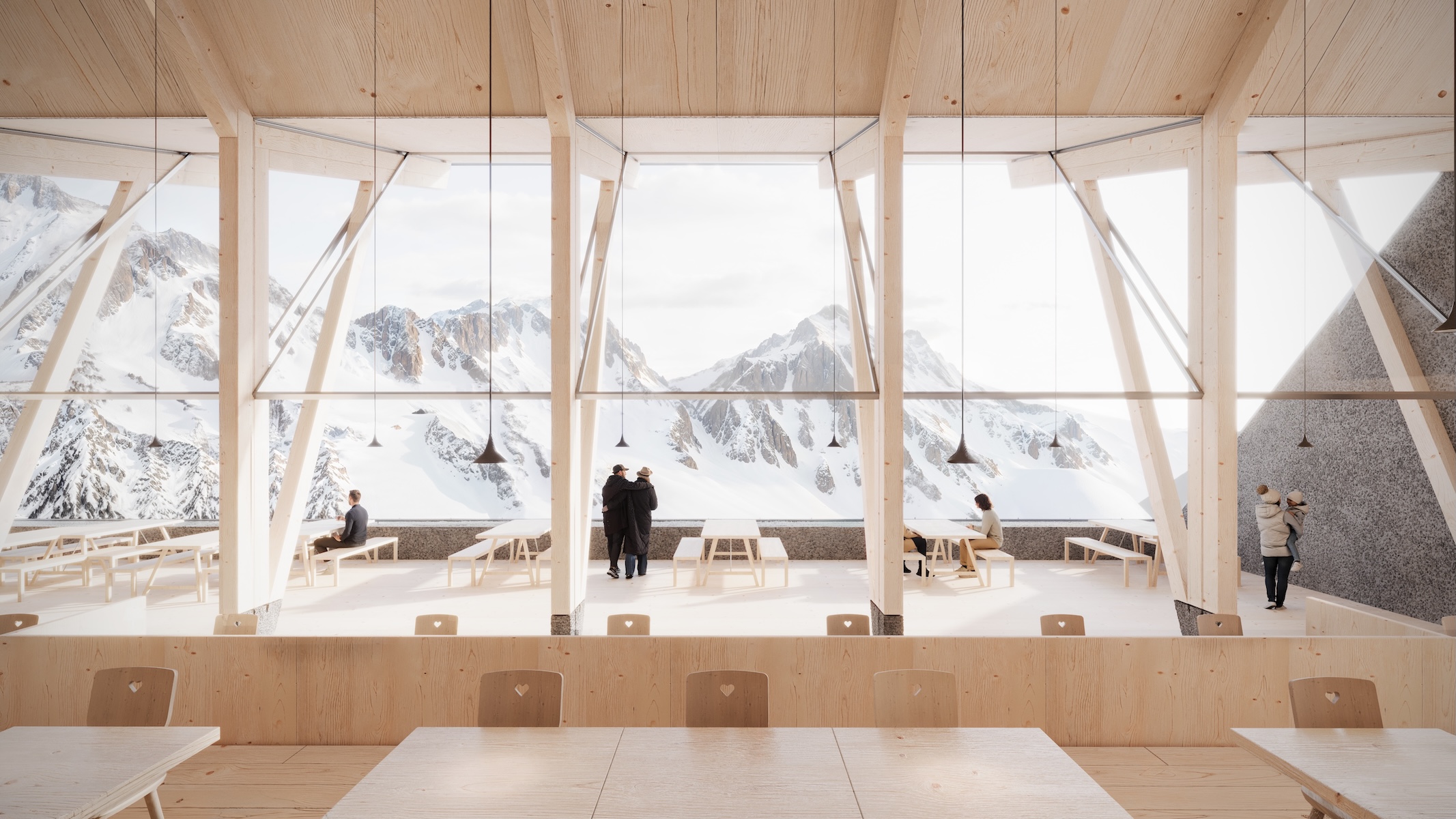
The summit hut balances openness, shelter and collective use in a demanding Alpine environment. Were you thinking more about climatic resilience, social life, or simply the pleasure of warmth after a cold ride up?
It was very much a mixture of all three. Attending carefully to extreme climate conditions, such as snow loads, wind and drastic temperature shifts, was essential from the outset; but the hut as a social place, encouraging gathering and refuge after a cold ascent, played an equally important role. The balance is translated architecturally through large sliding glass openings on the façade: shelter in winter, and in summer a full opening toward the landscape, letting inside become one with the outside and allowing nature to flow effortlessly into the architecture.
There is a particular kind of architectural intelligence that reveals itself not in the object but in the sequence. The building you arrive at is only part of the story; it is the journey toward it, the framing of light and distance, the calibration of arrival, that carries the real argument. Peter Pichler Architecture has been making this argument, quietly and consistently, across a body of work spanning hospitality, cultural infrastructure, and now mountain mobility. The studio operates with a consistent set of values regardless of typology: material honesty, landscape responsiveness, and the conviction that infrastructure, at its best, becomes cultural experience.
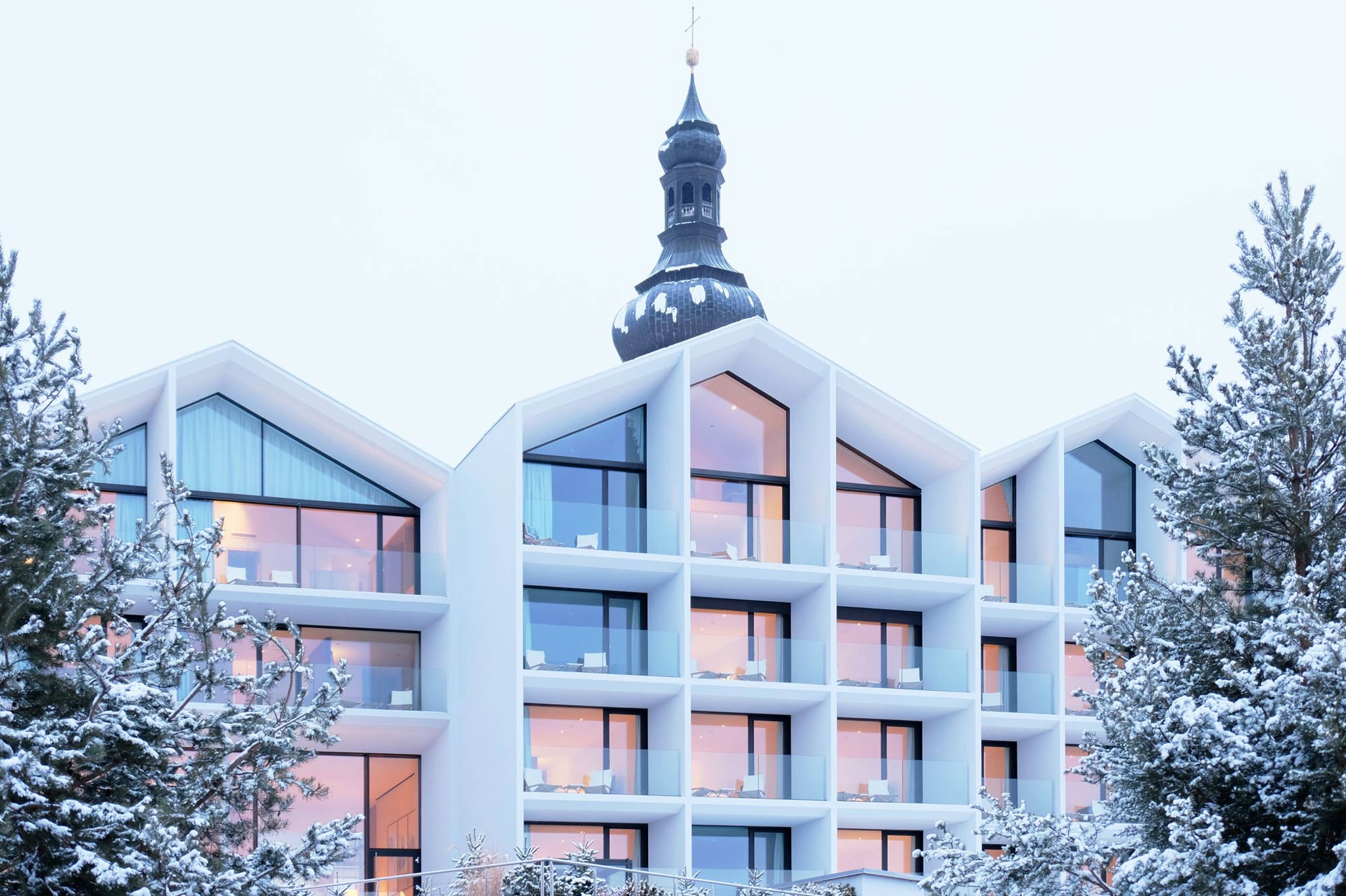
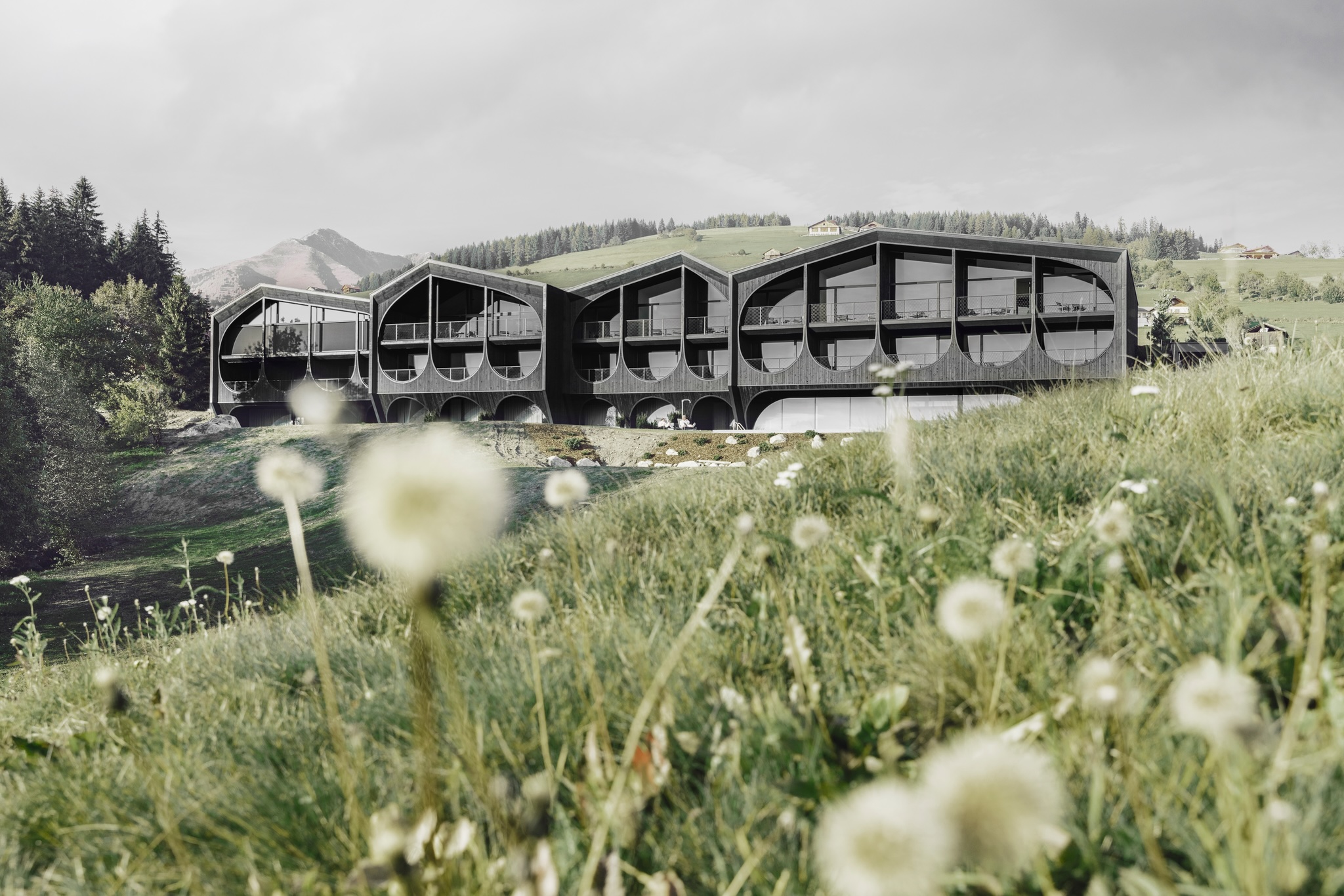
Members of The Aficionados will know the studio's hospitality work well. The Schgaguler Hotel in Castelrotto, South Tyrol, remains a benchmark for considered mountain hospitality architecture: a long, horizontal composition of dark timber and glass lying low against the meadow, refusing to impose itself on the landscape it inhabits. Milla Montis in Maranza extended that argument upward, its modular timber volumes at elevation reading the mountain panorama with a precision that feels earned rather than imposed.
The through line from those hotels to the gondola stations above Ponte di Legno is unmistakable: roof geometries drawn from regional alpine typology, reinterpreted rather than reproduced; structural clarity as an expressive condition; materials chosen for their relationship to place and time as much as for their performance.

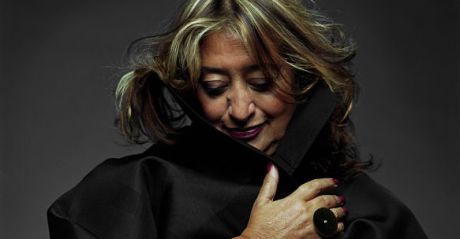
Zaha Hadid Architect's coastal Salerno Maritime Terminal in Cilento, Italy carries her hallmark curves inspired by oysters and the waves, a coastal landmark.
read more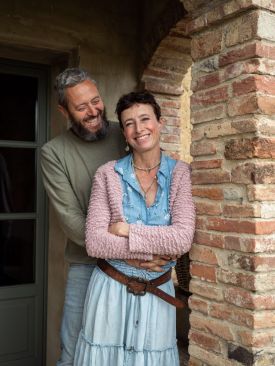
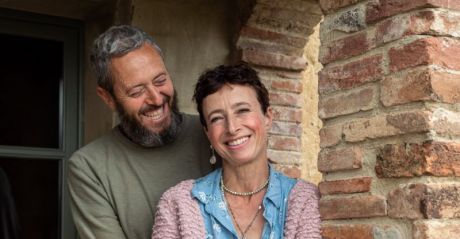
As the property neared finishing, Fabio took the decision to keep the garden wild and naturally indigenous – where the boundaries between garden and rural countryside were blurred.
read more
The master of reductive design, Belgium architect and interior designer Vincent Van Duysen is a behemoth legend of pared-back aesthetic and minimalist style over a spectrum of design disciplines, including furniture, textiles, and lighting.
read more
Taking their cues from the pomegranate tree fresco, you’ll find accents of sage-green, terracotta and ochre scattered on cushions – the only colour against a sea of grey, black and beige.
read more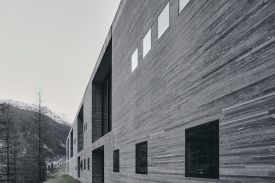
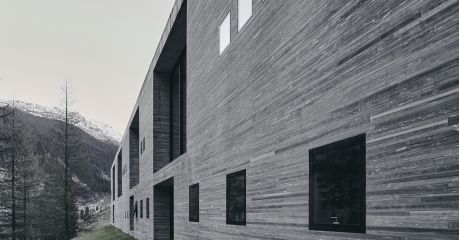
This tiny mountain hamlet is home to some stunning architecture, a sort of magnet for the craft and its followers, not least those that flock to the legendary architect Peter Zumthor's famed Therme Vals - an aqueous world that brings the mountain indoors.
read more
Behind some of Scotland's landmark conservation and restoration projects including the award-winning Kyle House, Hotel Lundies and Killiehuntly Farmhouse in the Highlands.
read more

Architect Matteo Thun doesn’t design buildings – he distils soul into structure. Nature, emotion and radical calm drive this icon of Alpine minimalism and timeless, tactile beauty.
read more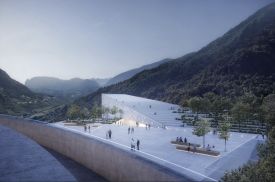
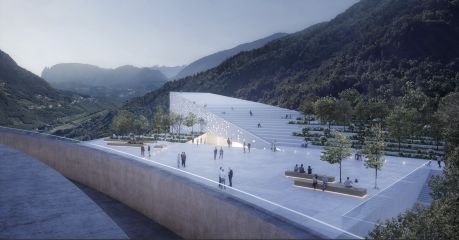
A project in the making by Snøhetta, winner of an international design competition, with remarkable modelling by Zoa Studio, this project has been brought to life with a combination of renderings and real-life drone, video and photography footage.
read more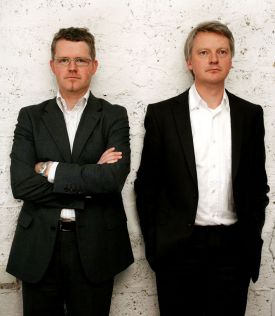
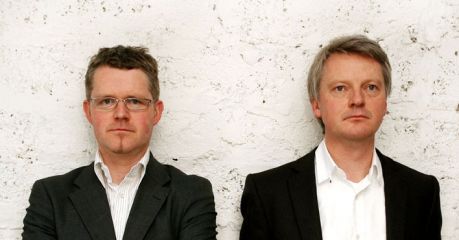
Brothers Tarla and Antoin MacGabhann are the creative talents behind some of Ireland's more modernist eco builds including the little design hotel Breac.House in Donegal.
read more
A powerhouse of architecture, design and restoration works - we feature three of their recent Italian hotels, creating a legacy of how to convert buildings into fabulously designed places to stay.
read more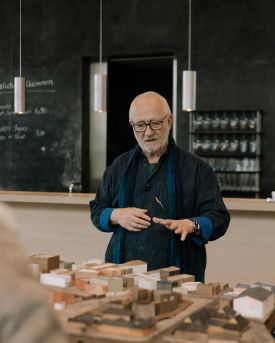
Zumthor celebrates his eightieth year this rare exhibition of his models includes many notable highlights as the London Serpentine pavilion project in 2011, the shimmering cube Kunsthaus Bregenz on Lake Constance, thermal baths in Vals.
read more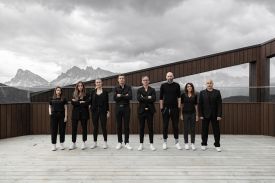
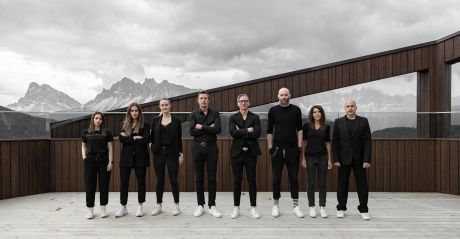
Gian Marco Giovanoli and Armin Sader are driven by a holistic approach to architecture, with a modus operandi of creating ‘contemporary, clever architecture with a strong sense of aesthetics’.
read more
Get the insider news and lowdown on what we've been up to, where we've been, and who we've met along the way. Be the first to discover new places and get the scoop on our favourites.