JOIN the AFICIONADOS
Get the insider news and lowdown on what we've been up to, where we've been, and who we've met along the way. Be the first to discover new places and get the scoop on our favourites.

Cutting through the heart of Rhineland-Palatinate in western Germany, the Moselle does not flow so much as deliberate. In a series of extravagant loops through a steep-sided valley of blue slate and Devonian sandstone, the river travels twice the distance a straight line would require; as if reluctant to leave. That unhurried quality is not incidental. It is, in every meaningful sense, the point.
The valley's identity is written in geology. The Blaue Schiefer, the blue slate that lines the river's steep banks and defines its terraced vineyards, stores the sun's heat through the day and releases it through the night. It is this exchange, this slow warmth held in stone, that makes the Mosel's Rieslings among the most geologically expressive wines on earth: precise, mineral, shimmering with acidity, grown on gradients no machine can work and no other valley quite replicates. Romans planted here in the first and second centuries AD, drawn by the same south-facing aspect that drives the valley's agriculture today. The vine-culture is not a tradition. It is a continuity.
The village of Trittenheim, set within one of the river's most pronounced meanders and encircled on three sides by water, is the Middle Moselle distilled. Its hillside vineyards, the Apotheke and Laurentiusberg among them, climb at angles that require everything to be done by hand: hand-planting, hand-harvesting, hand-tending, generation after generation. The village moves to an agricultural logic, its Winzerhäuser built low and slate-roofed, its church modest, its lanes narrow. There is nothing performative here. The work is real, and the wine; firm, focused, alive with the flavour of cold mornings and warm stone; speaks of it plainly.
Trier anchors the valley's upper reaches with a weight of history few German cities can match. The Porta Nigra, the Imperial Baths, the Basilica of Constantine: Roman Trier was the seat of emperors, and the city has never quite relinquished that authority. Its position near Luxembourg and the French border gave it centuries of contested relevance: a crossroads town that belonged, at various moments, to multiple empires, and carries the cultural complexity of that inheritance with quiet confidence.
Further downstream, the valley narrows and the castle ruins multiply: Burg Eltz, drawn back into a tributary ravine as if in deliberate concealment, and the fortress above Cochem commanding the river with medieval certainty. The Moselle meets the Rhine at Koblenz, but the journey is the thing: a valley that has been inhabited, cultivated and deeply known for two thousand years, and that still, in late afternoon light, feels like somewhere entirely its own.
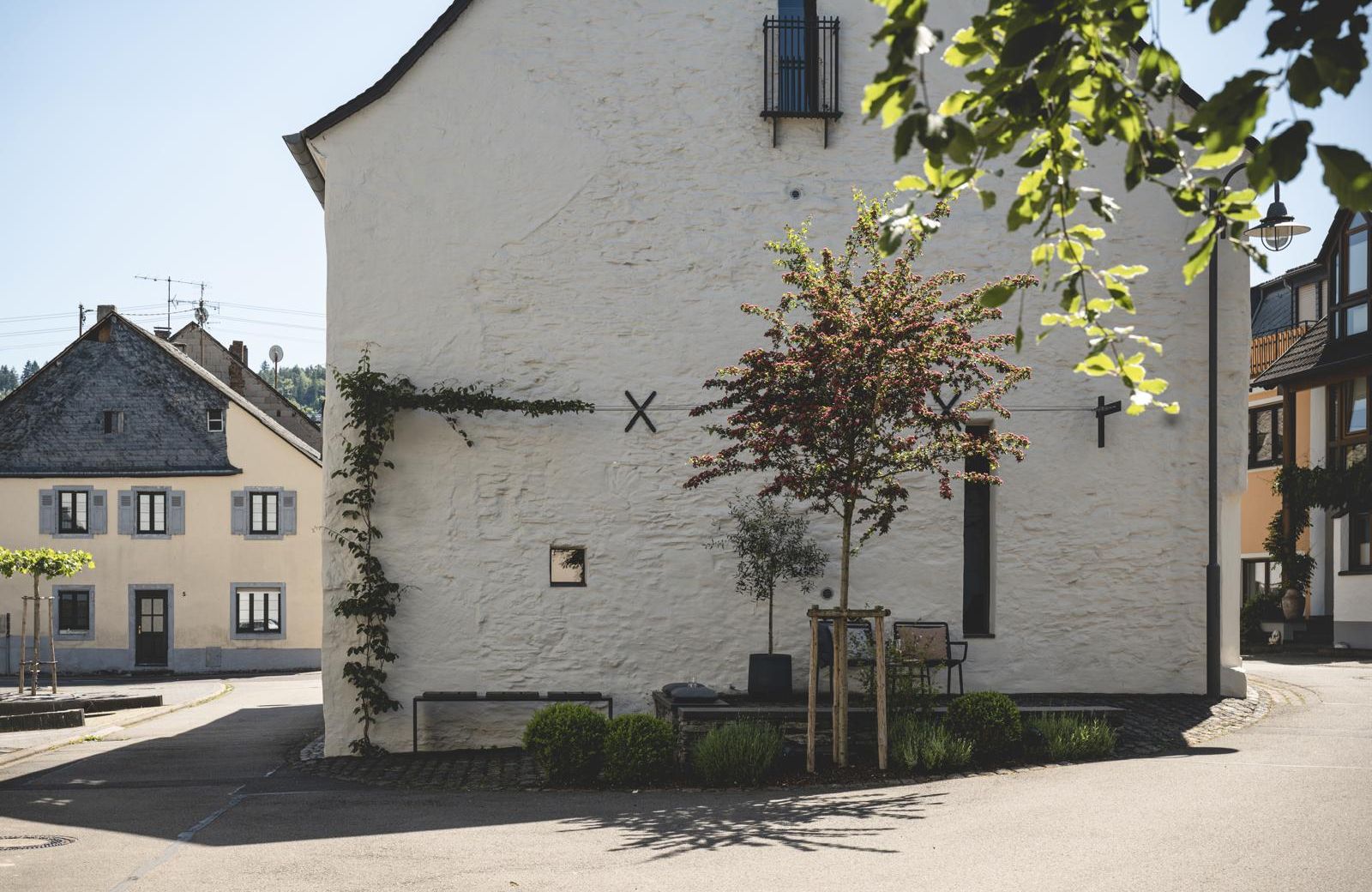
Two thousand years of vines, empire and river commerce, written into the slate and stone of western Germany. Rhineland-Palatinate does not perform its history. It simply continues it.
read more
Get the insider news and lowdown on what we've been up to, where we've been, and who we've met along the way. Be the first to discover new places and get the scoop on our favourites.