JOIN the AFICIONADOS
Get the insider news and lowdown on what we've been up to, where we've been, and who we've met along the way. Be the first to discover new places and get the scoop on our favourites.

How a Cornish barber's experiments became Britain's most theatrical perfume house – a place where heritage is the raw material and mischief is very much the method.
Penhaligon's is a British perfume house founded in London in 1870 by Cornish barber William Henry Penhaligon, now owned by the Spanish fragrance group Puig and known for its heritage perfumery, elaborate storytelling, and ribbon-tied, eminently collectable bottles. Its first fragrance, Hammam Bouquet, appeared in 1872; in 2025, it marked 155 years.
Here is the thing one must grasp about Penhaligon's before anything else: it does not, strictly speaking, sell smells. It sells stories and provides a bottle of scent as evidence. Other houses will tell you about top notes and base notes, and the rare jasmine picked, no doubt, by moonlight. Penhaligon's would rather tell you about a feuding aristocratic family, a candlelit Victorian laboratory, or a barber with ideas above his station – and then hand you something to wear that makes the tale faintly plausible. It is theatre quite as much as perfumery, and it has been getting away with it for over a century and a half.
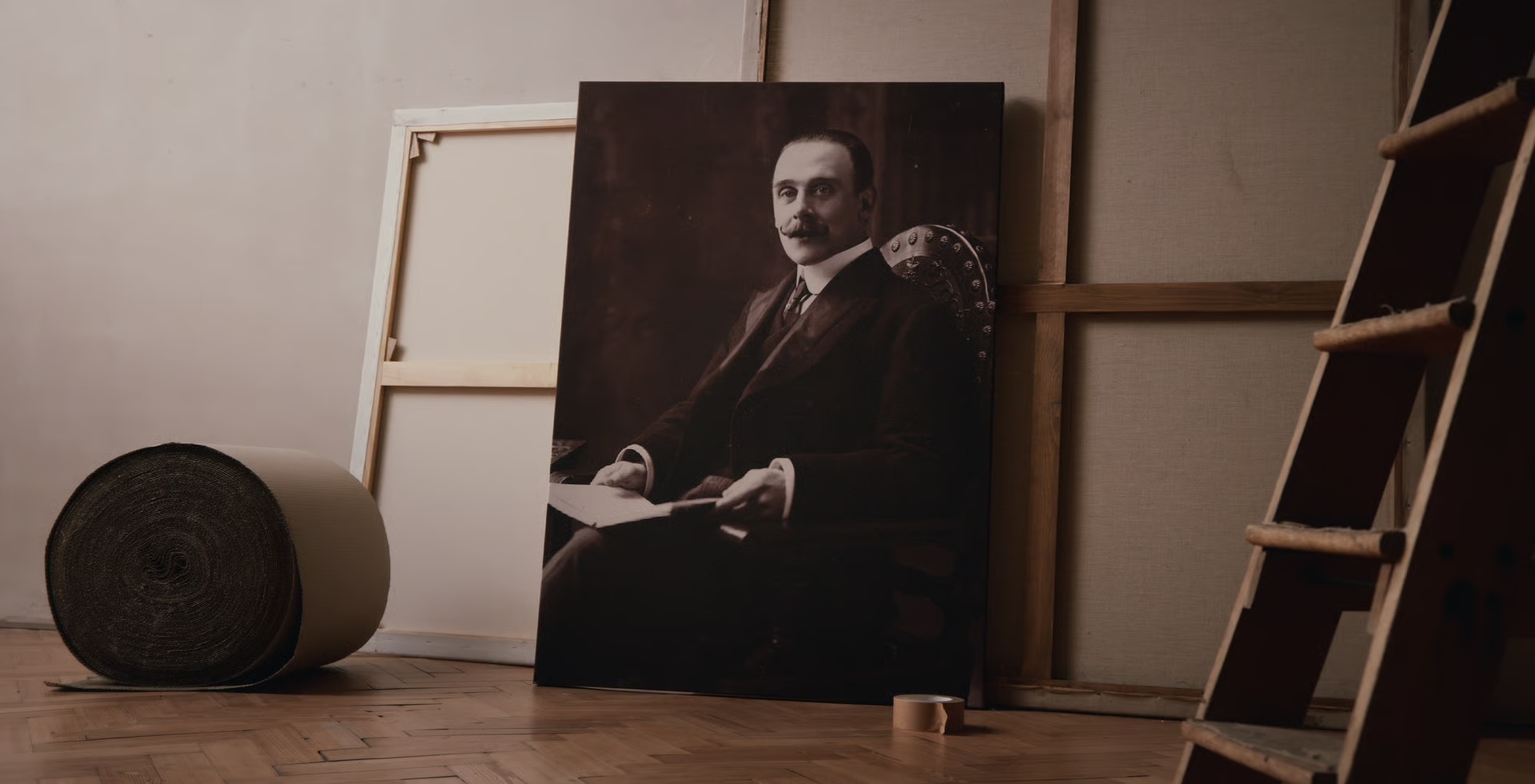
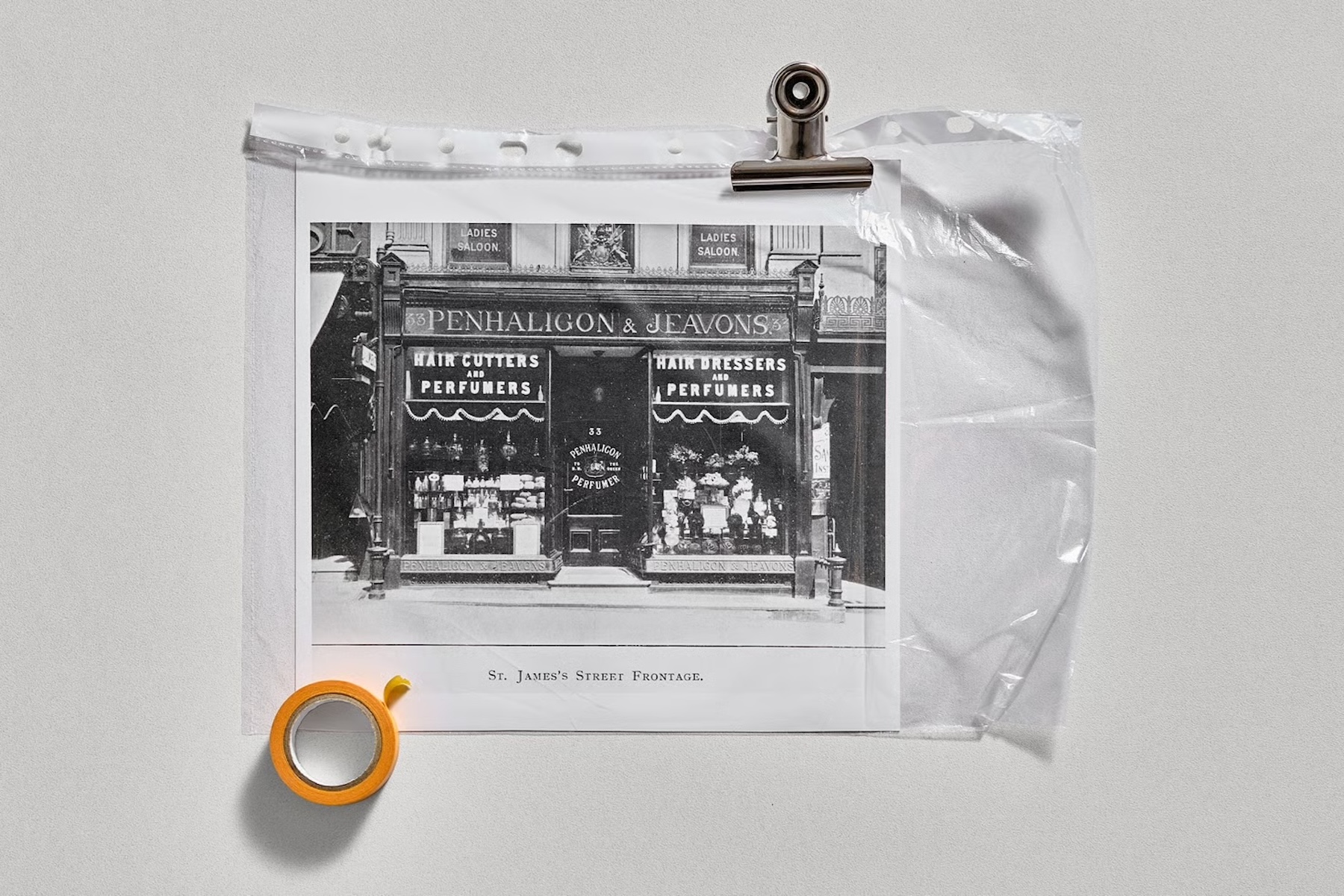
Penhaligon's was founded in London in 1870 by William Henry Penhaligon, a Cornish barber from Penzance with ambitions a good deal larger than Penzance. He arrived in the city in the late 1860s and set up shop on Jermyn Street, in the steam-wreathed orbit of the London Hammam. Surrounded daily by the heady, resinous air of the Turkish baths – an education no perfumery school could hope to improve upon – he began to blend. In 1872 he bottled the result: Hammam Bouquet, a warm, animalic and frankly rather scandalous scent that announced a perfumer where there had previously been merely a man with scissors. Penhaligon duly became Court Barber and Perfumer to Queen Victoria – the first of the house's long and intimate dalliances with the Crown.
The legacy passed to his son Walter, who in 1902 created what remains the house's most enduring signature, Blenheim Bouquet, composed for the Duke of Marlborough. Where the perfumery of the day leaned floral and sweet, Blenheim went smartly the other way – crisp citrus, pepper and pine – and in doing so set a tone the house has never quite been persuaded to abandon, elegant, faintly contrarian, unmistakably British.
The royal favour endured, too. Penhaligon's holds royal warrants and has served as an official supplier to the British royal household for decades, a relationship that continues to the present day.
It very nearly ended. The original Jermyn Street shop was flattened during the Blitz in 1941, and the house drifted for some years before a revival took proper hold with a new flagship in Covent Garden in 1975. In 2015 it was acquired by the Spanish fragrance group Puig, which has since furnished it with both the resources and – rather more usefully – the nerve to become one of the most distinctive niche houses in the world. In 2025 it marked 155 years, an age at which most enterprises have long since mislaid their sense of fun.
If the first century built the heritage, the last decade has been spent gleefully spending it. Penhaligon's discovered – or, more accurately, remembered – that its founder was never merely a chemist but a showman, a man who understood that a fragrance is immeasurably improved by a good story to wear with it. The modern house has simply turned the volume up.
Consider Potions & Remedies, launched in 2023 and drawn from the splendid conceit of William Penhaligon's "forgotten formulas" – a candlelit laboratory of herbs and elixirs promising to cure, or indeed to procure, altered states. Its members answer to names such as Eau the Audacity and A Balm of Calm, bottled in apothecary-style flacons dressed in vintage-style labels and faux-prescriptions. It is heritage played, with a perfectly straight face, as a wink. The newest member of that collection, the eau de parfum Bold Blend, continues exactly this trick: a bracing, woody scent sold under the cheerfully bossy instruction to shed the shy.
That lightness is rather the point. Penhaligon's has spent the past decade reimagining its grandeur for a younger and more playful audience – embracing British wit, mischief and a generous dash of the theatrical, without ever quite letting go of the Victorian apothecary at its heart. The past is the raw material; the tone is gleefully, almost incorrigibly, present tense. The house describes itself, rather wonderfully and entirely without embarrassment, as perfume for "rebels of the future" – and one is inclined, against one's better judgement, to let it.
Ask a Penhaligon's devotee what first drew them in and the answer is rarely, if one is being honest, the juice. It is the bottle.
The house's classic design dates to William himself: clear, flask-shaped glass, a round stopper and a ribbon knotted at the neck – restrained, architectural and instantly recognisable across even the most crowded dressing table. But it is the more recent collections that have elevated the flacon into a genuine collectable.
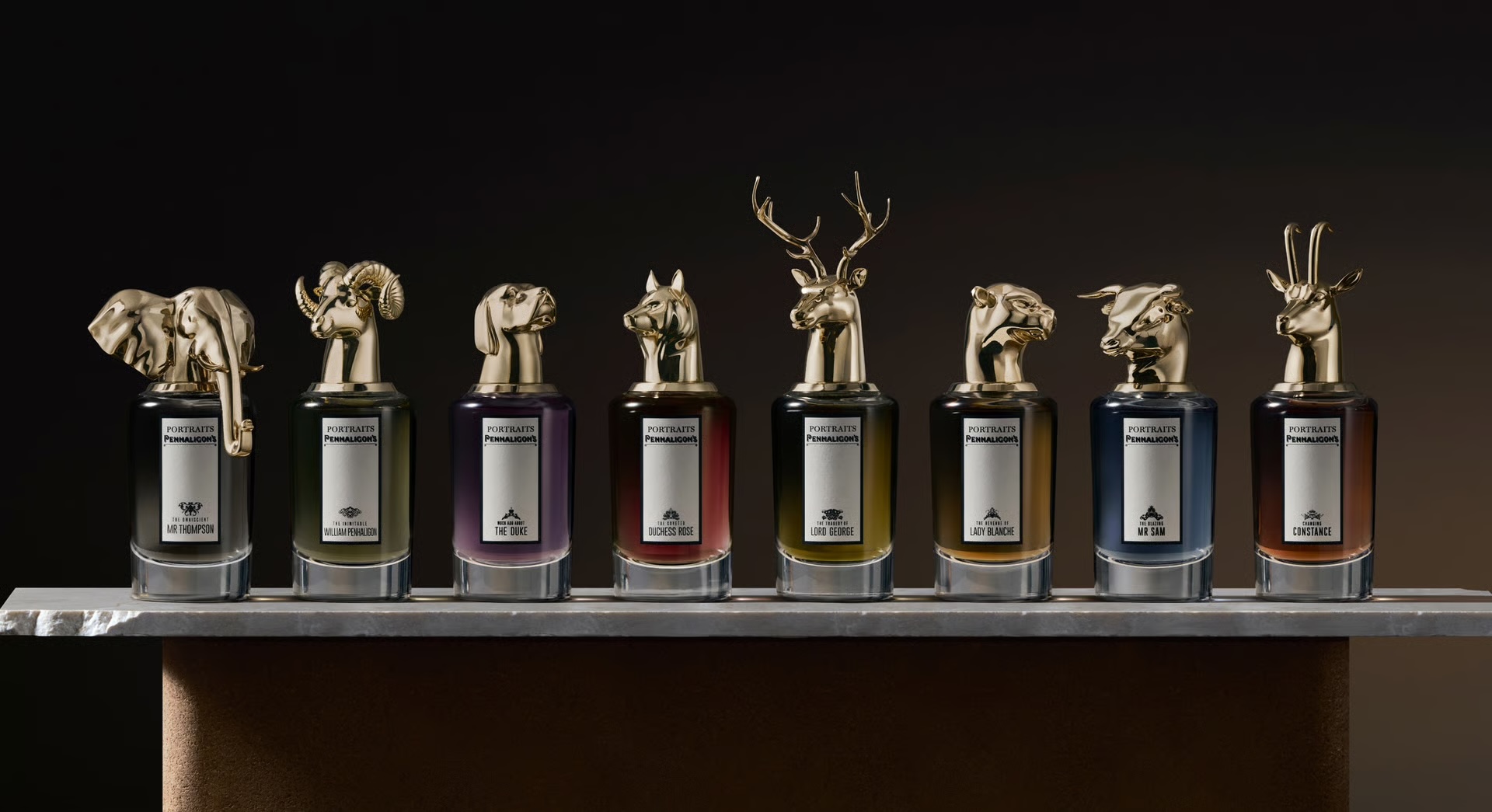
The Portraits collection, launched in 2016, is the obvious culprit. An imaginary aristocratic family – feuding, scheming, gloriously eccentric, pitched somewhere between a country-house murder mystery and a particularly well-bred soap opera – each member granted a fragrance and a heavy, hand-finished metal animal-head cap to suit their character. Lord George wears a stag; the cast has grown over the years through the work of perfumers, including Alberto Morillas, with illustrator Kristjana Williams supplying the riotous, jungle-rich packaging. The caps are weighty, sharp-antlered and almost absurdly tactile. People buy a second bottle, quite shamelessly, simply because they like having the animal.
This is also why the boutique experience matters so enormously. There is a particular pleasure in walking into a Penhaligon's, where the staff conduct themselves less like salespeople than like sympathetic accomplices. The fragrance profiling sessions, the engraved bottles, the coloured leather sleeves and enamel charms, the scented tissue and the coachman's knot tied at the neck of every wrapped gift – none of it is incidental, and all of it is rather the point. It is the house insisting, with great charm and not a flicker of apology, that a fragrance is an object, an heirloom and an experience, and not merely a smell. Little wonder the bottles so often survive on a shelf long after the last drop has gone – kept, never discarded, as objects in their own right.
What Penhaligon's does so well is hold two things at once. There is the weight of the past: the Cornish barber, the bathhouse, the royal warrants, the bottle reduced to rubble in the Blitz and the house that flatly refused to disappear. And there is the lightness of the present: the animal-head caps, the apothecary labels, the wink, the spritz and the standing invitation to be a little bolder than one was yesterday.
It is, in the house's own rather lovely phrase, a passage of time and scent – burnished by history, gilded with pleasure, and very much still enjoying itself.
When was Penhaligon's founded? Penhaligon's was founded in London in 1870 by Cornish barber William Henry Penhaligon, making it one of Britain's oldest fragrance houses. Its first fragrance, Hammam Bouquet, followed in 1872.
Who owns Penhaligon's? Penhaligon's has been owned since 2015 by the Spanish fragrance and fashion group Puig.
What is Penhaligon's known for? Penhaligon's is known for its British heritage perfumery, its royal warrants, its narrative-driven collections such as Portraits and Potions & Remedies, and its distinctive ribbon-tied bottles.
Why are Penhaligon's bottles considered collectable? Penhaligon's pairs its signature ribbon-tied glass flacons with elaborate, hand-finished caps – most famously the metal animal heads of the Portraits collection – and offers in-boutique engraving, leather sleeves and charms, so each bottle becomes a keepsake rather than a disposable container.
What is the Portraits collection? Launched in 2016, Portraits is a collection built around an imaginary, eccentric aristocratic family, with each character's fragrance topped by a hand-finished metal animal-head cap.
What is Penhaligon's most famous fragrance? Blenheim Bouquet, created in 1902 for the Duke of Marlborough, remains the house's most enduring signature, alongside its very first scent, Hammam Bouquet (1872).

Six spruce yoga shalas built deep in the forest, mountain views and pine silence in place of a soundtrack. Inside Forsthofgut's forest yoga, from Sun Salutations to snow-lit Yin.
read more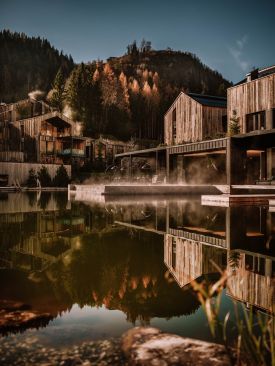
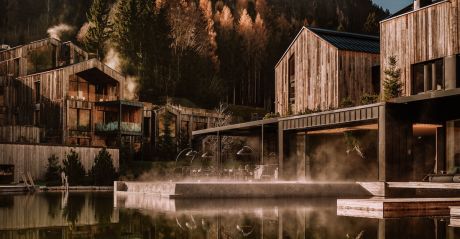
Wellness and the Alps have always been inextricably linked due to the abundance of fresh mountain air, crystal clear water and the proximity of nose-tingling pine forests.
read more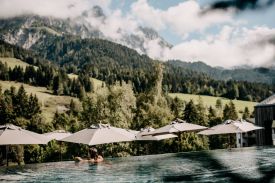
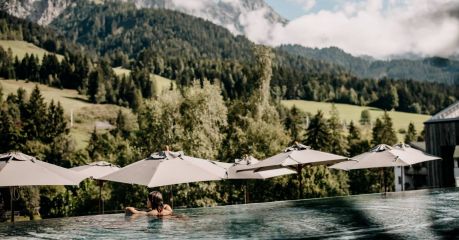
The perfect summer pairing must be spa and hike – and where better to indulge than in a luxury retreat hotel clasped in the alpine mountains framed by snow-dusted peaks.
read more

Natural beauty guru Yael Alkalay founded Red Flower in NYC in 1999, an environmentally and socially responsible beauty product, infused with aromatherapy and botanicals.
read more
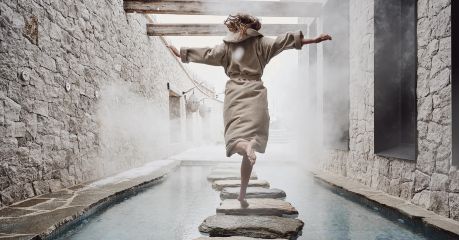
Driftwood, spring water and elemental heat. Engel Spa is a raw Alpine hideaway where design restores and nature recalibrates. This is wellness with altitude and intention.
read more
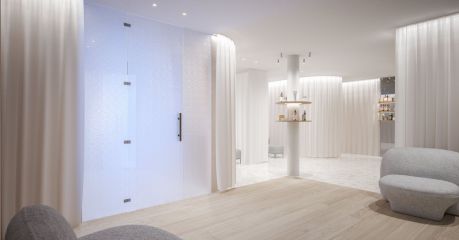
Cryotherapy at minus 110°C, metabolic diagnostics and breathwork in the pine groves. Inside waldSPA Health, Naturhotel Forsthofgut's new longevity concept, built on four pillars: Roots, Strength, Breath, Mind.
read more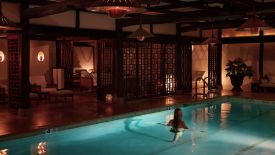
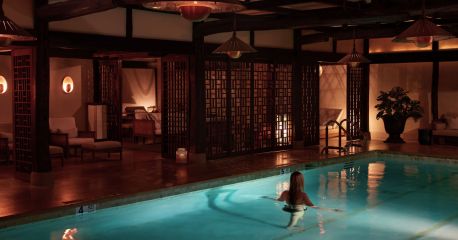
Manhattan goes minimalist. Hidden in The Greenwich Hotel, Shibui Spa channels Japanese Onsen rituals, ancient bodywork and luxury healing in a space built from 250-year-old temple wood.
read more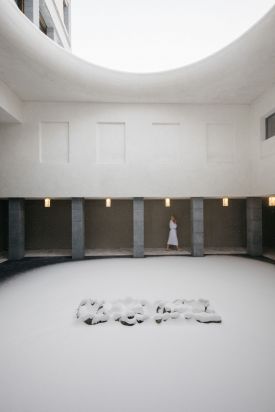
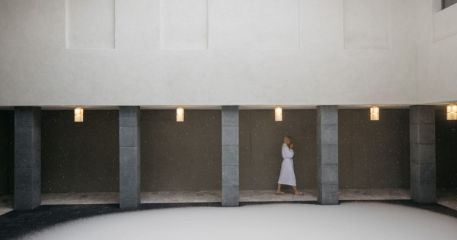
A spa sanctuary of raw architecture and rooted calm — MAISTRA 160 in Pontresina cocoons guests in an elemental world of stone, steam and alpine air, where design becomes a healing ritual.
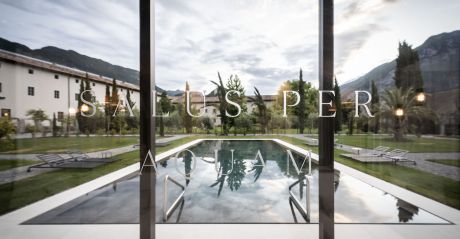
A design-led spa near Lake Garda, where monastic calm, minimalist architecture and garden rituals converge within the cloistered sanctuary of Monastero Arx Vivendi in Arco, Trentino.
read more
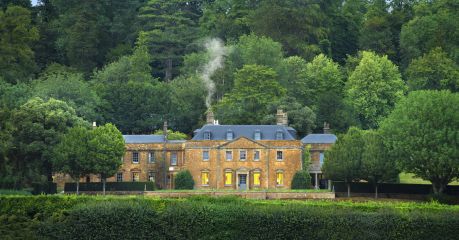
The Newt in Somerset is a luxury retreat near Bruton, blending Georgian heritage, Karen Roos interiors, Piet Oudolf gardens, a restorative spa and fine dining by Chef Gelf Alderson.
read more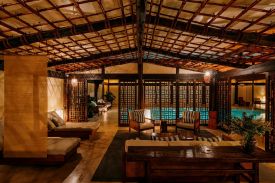
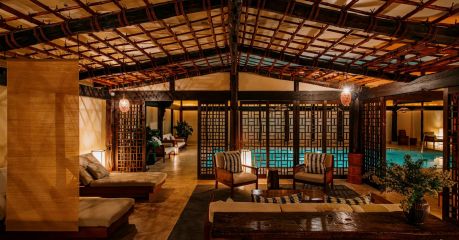
From sound temples on the Turkish Riviera to stone-carved Alpine spas, Japanese rituals beneath Manhattan and yoga residencies in South Tyrol, this edit explores design-led wellness where architecture and nature restore balance.
read more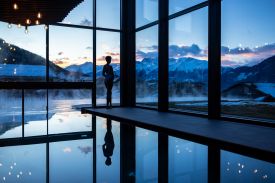
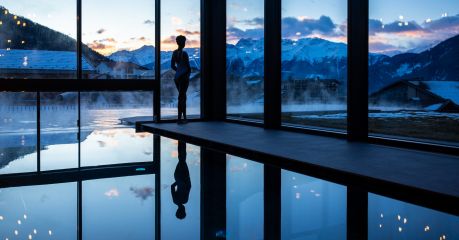
At Weißes Kreuz in Burgeis, Aura mea is one of South Tyrol’s best spa experiences, adults only wellness shaped by ancient stone, Sarner Porphyry, panoramic pools and Alpine stillness.
read more
Get the insider news and lowdown on what we've been up to, where we've been, and who we've met along the way. Be the first to discover new places and get the scoop on our favourites.